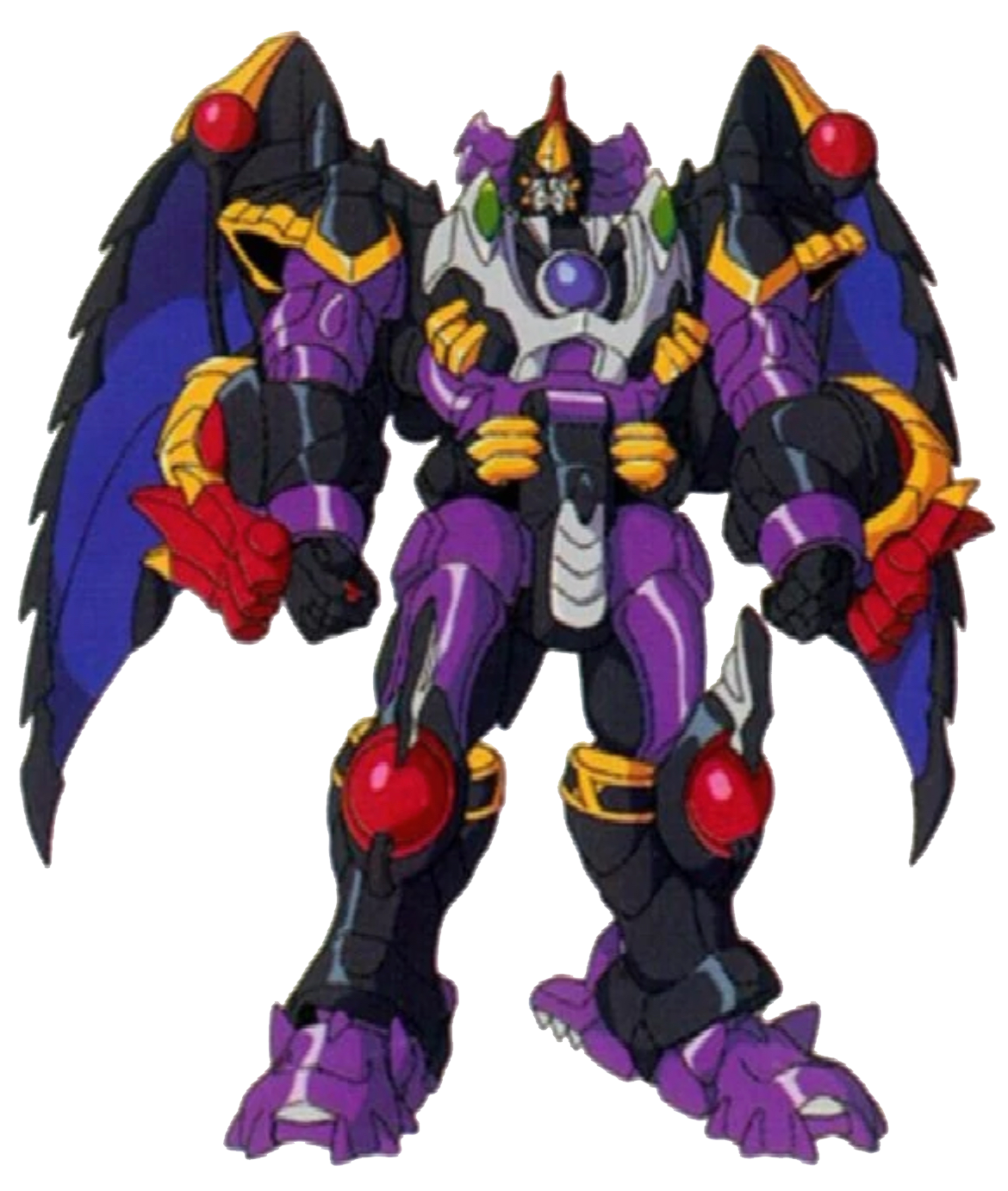
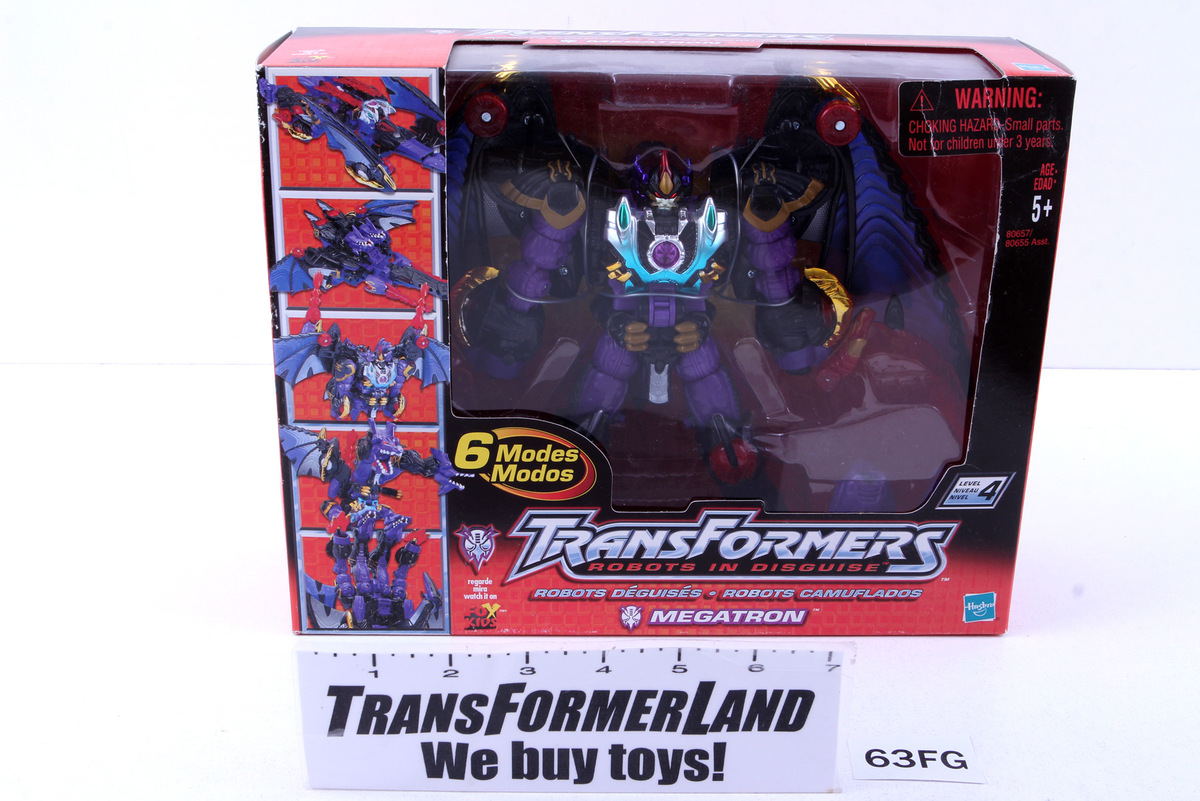
The 2001 Robots in Disguise (RiD) Megatron is a seminal figure in Transformers history, representing a bold shift in engineering as a "Six-Changer" that successfully bridged the gap between organic and vehicular aesthetics. Originally released in Japan as "Gigatron" for the Car Robots line in 2000, this figure arrived in Western markets in 2001, captivating collectors with its intricate transformation sequences and striking translucent purple and vac-metal chrome finish.
As we look back from the vantage point of 2026, the RiD 2001 Megatron remains a hallmark of "over-engineered" excellence. Unlike the G1 Megatron, who famously transformed into a handgun, or the Beast Era Megatrons who took on reptilian forms, the 2001 iteration offered a unique hybrid identity. It provided fans with a robot mode, a bat, a two-headed dragon, a jet, a car, and a giant hand. This article provides a technical and historical deep dive into the figure's design, its six official modes, its legacy in the secondary market, and how it compares to its eventual upgrade, Galvatron.
The Historical Context: From Beast Era to Car Robots
To understand why the 2001 Megatron is so significant, one must understand the state of the Transformers franchise at the turn of the millennium. The brand had just concluded the Beast Machines era, which was controversial among fans for its highly stylized, organic designs. Hasbro and Takara sought to return to "Vehicles in Disguise," leading to the creation of the Car Robots line (rebranded as Robots in Disguise in the US).
Megatron was the centerpiece of this new direction. While the Autobots in this line were largely realistic vehicles (like the Car Brothers), Megatron and his Predacons maintained a more "alien" and "monstrous" aesthetic. Megatron himself was designed by Takara's veteran engineers to be a "multiformer," a concept that hadn't been explored with a primary series antagonist since the days of G1 Sixshot.
The 2001 RiD Megatron was a massive Voyager/Ultra-class equivalent figure. It featured a sophisticated paint job consisting of deep purple, black, and gold, accented by "vac-metal" (vacuum-metalized) chrome on the chest and wings. This high-end finish, combined with its sheer complexity, set a new standard for what a leader-class toy could be.
Technical Specifications and Engineering
The engineering of the 2001 Megatron is characterized by its high part count and the use of multi-rotational joints. Because the figure had to accommodate six distinct shapes, the "skeleton" of the toy is a marvel of hinge-and-swivel architecture.
Material Quality and Durability
The figure is primarily constructed from high-density ABS plastic. One of the most notable technical aspects of the 2001 release is the durability of its joints. Despite the complexity, the figure rarely suffers from "floppiness," a testament to the friction-lock systems used in the knees and shoulders. However, collectors in 2026 often note that the vac-metal chrome on the chest is prone to "flaking" or "tarnishing" if handled with oily hands or exposed to high humidity over decades.
Articulation
In robot mode, Megatron boasts:
- Head: 360-degree swivel.
- Shoulders: Universal joints (rotation and outward swing).
- Elbows: 90-degree bend with bicep swivel.
- Waist: 360-degree rotation (essential for several transformation modes).
- Hips: Ratcheted universal joints.
- Knees: Double-jointed for transformation, allowing for deep bends.
Detailed Analysis of the Six Transformation Modes
The primary draw of the 2001 Megatron is its versatility. Each mode utilizes the figure's mass in different ways, often hiding the robot components through clever folding panels.
1. Robot Mode
The robot mode is imposing, standing approximately 10.5 inches tall. The design is asymmetrical, with the "bat wings" forming a cape-like structure behind the shoulders. The head sculpt is particularly noteworthy, featuring a "crown" of horns and a stern, traditional Transformer faceplate that moved away from the more expressive, "rubbery" faces of the Beast Era. His primary weapons are two "Twin Dragon" swords that can be combined at the base to form a dual-bladed staff.
2. Gargoyle (Bat) Mode
In this mode, the robot legs fold upward to form the bat's haunches, and the arms tuck into the torso. The bat head is actually hidden inside the robot's chest, flipping out to reveal a creature with a snapping jaw. The wingspan is impressive in this mode, making it one of the most popular display options for collectors who prefer the "Predacon" side of the character.
3. Two-Headed Dragon Mode
The "Twin-Headed Dragon" is arguably the strongest of the beast modes. The robot's feet become the two dragon heads, which are mounted on long, articulated necks. The robot arms form the front legs of the dragon. This mode highlights the "multi-headed" nature of the character, which was a recurring theme in the RiD 2001 animated series, where Megatron would often use different heads for different elemental attacks.
4. Jet (Space Cruiser) Mode
The jet mode is a sleek, "Cybertronian" style spacecraft. It is not meant to look like an Earth-based vehicle. Instead, it resembles a high-speed interceptor. The wings sweep forward, and the robot's legs form the rear thrusters. While it has visible "under-kibble," the silhouette is remarkably distinct from the robot mode, a difficult feat for a six-changer.
5. Transport (Car) Mode
Often referred to as the "Turbo Car," this mode is a futuristic racing vehicle. It uses the same base logic as the jet mode but repositions the wings to act as side skirts or spoilers. Small rolling wheels are integrated into the figure’s underside, allowing it to function as a traditional vehicle toy. It is perhaps the weakest of the modes due to its "abstract" nature, but it fits the "Car Robots" theme of the line.
6. Giant Hand Mode
The most unique—and perhaps most infamous—mode is the "Giant Hand." In this configuration, the entire figure folds into a massive fist. In the animated series, this was used as a crushing attack or as a way for Megatron to seize his enemies. From a design perspective, it is a brilliant use of the figure's joints, though it requires a specific stand or creative balancing to display effectively.
Comparison: Megatron vs. Galvatron (2001)
Shortly after the release of Megatron, a "recolor" and "retool" was released under the name Galvatron (known as Devil Gigatron in Japan). While the base mold is the same, there are significant differences that collectors should be aware of.
| Feature | Megatron (RiD 2001) | Galvatron (RiD 2001) |
|---|---|---|
| Primary Color | Translucent Purple / Black | Pearl White / Gold |
| Number of Modes | 6 Official Modes | 10 Official Modes |
| Chrome Color | Red/Gold Vac-Metal | Gold Vac-Metal |
| Rarity (2026) | Common (high production) | Rare (sought after for extra modes) |
| Unique Modes | N/A | Elephant, Pterodactyl, Griffin, Boat |
The "extra" four modes for Galvatron were actually just clever re-arrangements of the existing parts. While Megatron can technically be folded into these shapes, they were not included in his original instruction manual and are not considered "official" for that version of the character.
Common Issues and Collector's Checklist
If you are looking to acquire an original 2001 RiD Megatron in 2026, there are several "red flags" and maintenance points to consider. This figure is now a vintage item, and time affects certain materials more than others.
- Chrome Wear: The most common issue. Check the chest piece and the tips of the wings. If the red or gold chrome looks "dull" or has white spots, the vacuum metalization is failing.
- Wing Hinges: The large wings are attached via plastic friction hinges. Over time, these can develop stress marks (white lines in the plastic). Ensure the wings can still hold their weight in both robot and bat modes.
- The Twin Dragon Swords: These are often lost. Ensure both swords are present, as they are essential for the robot mode's silhouette and for completing the "Dragon" necks in beast mode.
- Missile Launchers: Megatron comes with two spring-loaded missiles. The springs in these 2001-era toys were quite powerful; check that the firing mechanism hasn't seized or that the internal plastic hasn't become brittle.
The 2001 Megatron in the 2026 Market
As of 2026, the RiD 2001 Megatron sits in a unique "sweet spot" for collectors. It is old enough to be nostalgic for "Millennial" and "Gen Z" collectors who grew up with the Fox Kids cartoon, but it was produced in high enough quantities that it isn't as prohibitively expensive as G1 items.
A Mint-In-Box (MIB) specimen currently commands a premium, especially if the tape is original and the box shows minimal shelf wear. However, "loose but complete" figures are the most common way to enjoy this toy. Because the transformation is so complex, many collectors prefer buying a figure that has already been "broken in," as the joints on a 25-year-old "New Old Stock" figure can sometimes be dangerously tight.
For more information on historical Transformers pricing and archives, the TFW2005 Resource Database remains the industry standard for tracking the secondary market. Additionally, Transformer World provides high-resolution galleries of every mode for comparison.
Frequently Asked Questions
Is the 2001 Megatron related to the G1 Megatron?
In the context of the Robots in Disguise (2001) animated series, this Megatron is a completely different character from the original 1984 version. RiD was originally a "stand-alone" universe, though later lore (via Transformers: Timelines) suggested he might be a dimensional traveler or a reformatted version of a previous leader.
How difficult is the transformation?
On a scale of 1 to 10, the RiD Megatron is a solid 8. While the individual steps aren't impossible, remembering the specific orientation of the wings and waist for each of the six modes can be challenging without the instruction manual. It is highly recommended to use a video guide for your first few attempts to avoid snapping the smaller plastic tabs.
Are there any "3rd Party" upgrades for this figure?
While the 3rd Party (unlicensed) market is massive in 2026, very few companies have attempted to "improve" the RiD Megatron. This is largely because the original toy's engineering was already so dense that there is very little room to add more "fillers" or accessories without compromising the six modes.
What is the "Hand Mode" supposed to represent?
The Hand Mode (or "Devil Hand") is a literal giant fist. In the show, it represented Megatron's overwhelming power. Tactically, it allowed him to grab Autobots or even the giant Fortress Maximus. It is one of the few instances in Transformers history where a leader-class figure transforms into a literal body part.
Can Megatron transform into the Galvatron modes?
Yes. Physically, the molds are identical. The only thing stopping Megatron from becoming the "Elephant" or "Griffin" modes is the lack of instructions in his box. Collectors have long since mapped out these transformations, and you can easily find "10-mode Megatron" guides online.
Final Recommendation for Collectors
The 2001 Robots in Disguise Megatron is more than just a toy; it is a piece of industrial design history. It represents a period where Transformers designers were pushing the absolute limits of what could be achieved with plastic and hinges. If you are a fan of complex engineering or "multiformers," this figure is a mandatory addition to your collection.
When purchasing, prioritize the chrome condition and the tightness of the wing joints. While a loose sword can be replaced, damaged vac-metal is nearly impossible to repair to factory standards. Whether you display him as a regal robot, a menacing dragon, or a giant hand, this Megatron remains one of the most visually interesting figures ever to lead the Predacon forces.