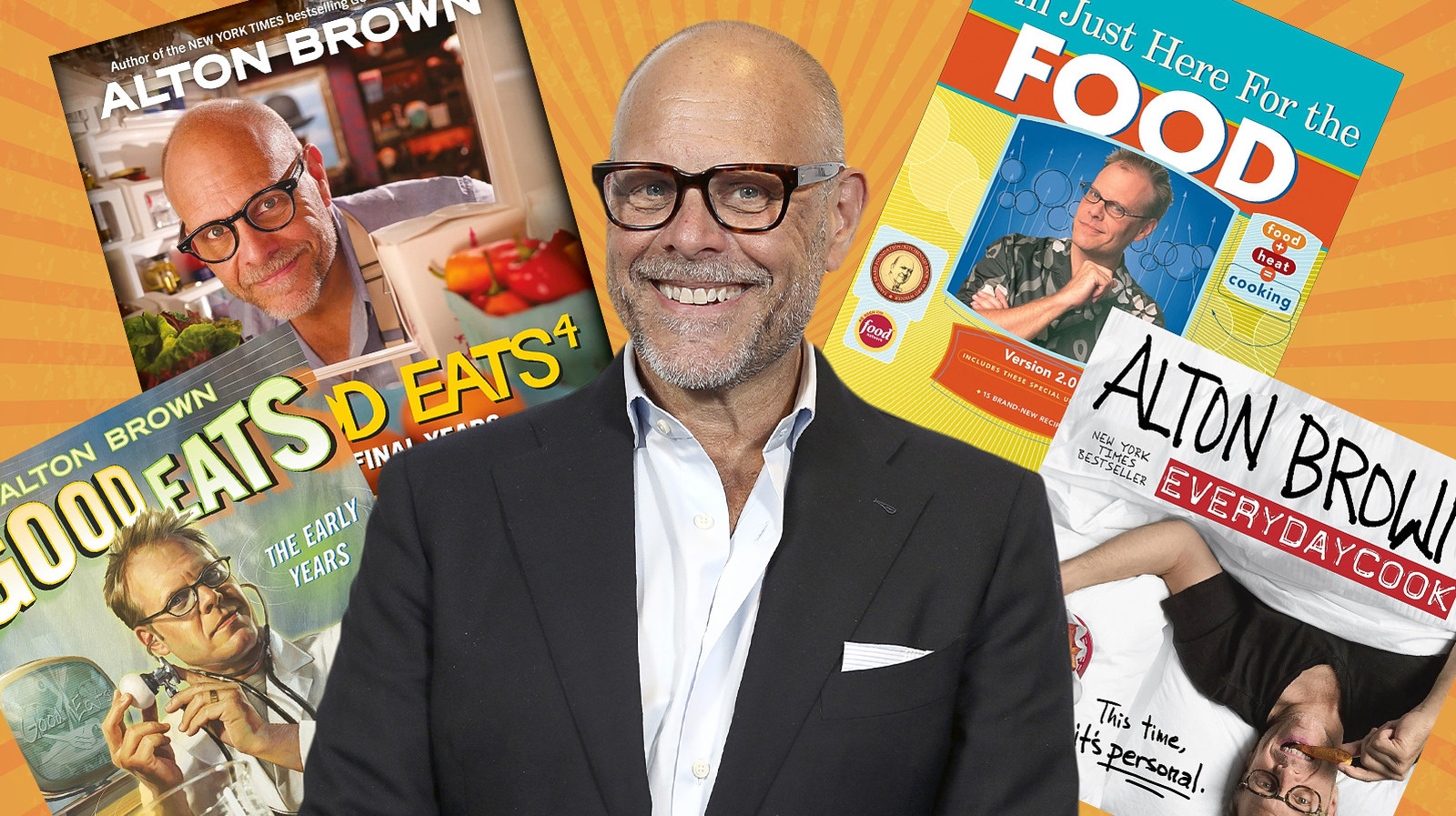
Alton Brown transformed food television by blending scientific inquiry, cinematography, and quirky humor into a unique educational format. From the instructional depth of Good Eats to the high-stakes commentary of Iron Chef America and the strategic sabotage of Cutthroat Kitchen, his shows provide a masterclass in both culinary technique and media production.
The Architectural Foundation: Good Eats (1999–2012, 2019–2021)
To understand any Alton Brown show overview, one must start with Good Eats. Premiering in 1999, the show departed from the "dump and stir" format prevalent at the time. Brown, who attended film school before culinary school, envisioned a program that was part "Mr. Wizard," part "Monty Python," and part Julia Child.
The primary objective of Good Eats was not just to provide recipes but to explain the science and history behind them. Brown famously utilized a variety of props—often hardware store items—to demonstrate physical and chemical reactions in food. Whether explaining the protein structure of gluten using Koosh balls or demonstrating heat transfer with a flashlight, the show prioritized understanding the "why" over the "how."
The "Good Eats" Technical Style
The show’s visual language was revolutionary for the Food Network. It utilized "Dutch angles," POV shots from inside ovens or refrigerators, and a rotating cast of recurring characters. These characters, such as the "Nutritional Anthropologist" or "W" (the mysterious equipment specialist), helped contextualize ingredients and tools within a larger cultural and scientific framework.
Good Eats: Reloaded and The Return
By 2026, the legacy of Good Eats has been solidified through two major expansions. Good Eats: Reloaded (2018) saw Brown revisiting classic episodes to update scientific data and refine techniques that had evolved over two decades. This was followed by Good Eats: The Return, which introduced entirely new episodes to the Discovery+ and Food Network lineups. These iterations maintained the original's commitment to the "no multitaskers" rule—the philosophy that every kitchen tool, with the exception of the fire extinguisher, should serve more than one purpose.
The Commentary King: Iron Chef America and Beyond
While Good Eats established Brown as an educator, Iron Chef America established him as the definitive voice of culinary competition. Taking on the role of the "Resident Foodie Philosopher" and lead commentator, Brown brought a level of technical gravitas to the high-energy Kitchen Stadium.
His role was multifaceted:
- Technical Translation: Explaining complex modernist techniques (like spherification or nitrogen freezing) to a general audience.
- Historical Context: Providing the origins of the "Secret Ingredient."
- Play-by-Play Analysis: Identifying the strategic moves made by Iron Chefs and challengers in real-time.
Brown’s encyclopedic knowledge was further utilized in spin-offs like The Next Iron Chef, where he moved from the commentator’s booth to the role of host and occasional judge. His presence added an element of academic rigor to what could have otherwise been a purely theatrical competition.
Strategy and Sabotage: Cutthroat Kitchen
In 2013, Brown pivoted to a more mischievous persona with Cutthroat Kitchen. Unlike his previous shows, which focused on education or elite craftsmanship, Cutthroat Kitchen was a study in culinary game theory.
The premise involved four chefs given $25,000 each, which they could use to bid on "sabotages" against their opponents. These sabotages ranged from making a chef cook in a giant high-chair to forcing them to harvest their own water from a water cooler.
Why Cutthroat Kitchen Mattered
The show highlighted Brown’s interest in the psychological aspects of cooking. It forced contestants to demonstrate "culinary agility"—the ability to adapt when their tools, ingredients, or environments were compromised. While the tone was more cynical than Good Eats, it reinforced a core Brown tenet: a true cook understands the fundamental principles well enough to succeed even under absurd conditions.
The Documentary Lens: Feasting on Asphalt and Feasting on Waves
Brown’s interest in food extends beyond the kitchen and into the cultural landscape of America. In Feasting on Asphalt, he embarked on motorcycle journeys across the United States to document "road food" before it was entirely replaced by homogenized chain restaurants.
- Feasting on Asphalt (2006): Focused on the history of the American road trip and the transient nature of regional cuisine.
- Feasting on Asphalt 2: The River Run (2007): Followed the Mississippi River, exploring the deep culinary roots of the American South and Midwest.
- Feasting on Waves (2008): Applied the same documentary rigor to the Caribbean, exploring island food culture via boat.
These series are often cited by fans as Brown's most personal work. They lack the frantic energy of his game shows, opting instead for a contemplative, almost elegiac look at how geography shapes flavor.
Comparison of Major Alton Brown Television Projects
As of 2026, these shows are widely available through various streaming platforms. The following table summarizes the core differences in their presentation and intent.
| Show Title | Primary Genre | Role | Key Philosophy |
|---|---|---|---|
| Good Eats | Educational / Instructional | Creator, Writer, Host | Science and "the why" of cooking. |
| Iron Chef America | Competition / Commentary | Commentator | Elite technique and ingredient history. |
| Cutthroat Kitchen | Game Show / Reality | Host / Provocateur | Strategic resource management and agility. |
| Feasting on Asphalt | Documentary / Travel | Host | Preservation of regional food identity. |
| Iron Chef: Quest for an Iron Legend | Competition | Host | Modernizing the legacy of Kitchen Stadium. |
The "Brownian" Philosophy: Why His Shows Endure
The enduring popularity of Alton Brown's programming stems from a specific set of principles that he has maintained for over 25 years. Understanding these principles helps viewers navigate his diverse filmography.
1. The Rejection of the "Multitasker"
One of Brown's most famous catchphrases is his disdain for kitchen gadgets that only perform one task (like a strawberry huller or a specialized quesadilla maker). His shows consistently advocate for versatile tools: the chef's knife, the cast-iron skillet, and the digital scale. By teaching viewers to use basic tools effectively, he empowers them to be better cooks rather than better consumers.
2. The Integration of Pop Culture
Brown has never been afraid to reference film noir, classic horror, or 80s sitcoms to make a point about chemistry. This interdisciplinary approach makes his educational content accessible to people who might not otherwise be interested in the "boring" parts of food science.
3. Rigorous Fact-Checking
In an era of rapid information exchange, Brown has maintained a reputation for accuracy. Whether he is discussing the smoke point of oils or the history of the Dutch Oven, his content is backed by extensive research. This reliability has allowed his shows to remain relevant as reference material long after their original air dates.
Frequently Asked Questions
Which Alton Brown show is best for beginners?
Good Eats remains the gold standard for beginners. Unlike competition shows that focus on speed, Good Eats breaks down fundamental tasks—such as boiling an egg or searing a steak—into manageable steps based on physical laws. By starting here, a novice cook builds a foundation of knowledge that applies to every other recipe they encounter.
Is Cutthroat Kitchen scripted?
While the sabotages and challenges are carefully planned by the production team (and often tested by "culinary producers" to ensure they are physically possible), the reactions and the cooking are not scripted. The chefs are genuinely under intense pressure, and the outcomes of the auctions dictate the actual difficulty of the round.
Why did Good Eats end and then come back?
The original run of Good Eats ended in 2012 because Brown felt he had covered the majority of the "basic" culinary curriculum and wanted to explore other formats. However, the rise of streaming and the evolution of food science (such as the widespread availability of sous-vide and air frying) provided fresh material, leading to the creation of Good Eats: Reloaded and The Return.
Where can I watch Alton Brown's shows in 2026?
Most of Alton Brown's catalog is owned by Warner Bros. Discovery. Currently, the primary hub for his work is the Max streaming service, which includes the full runs of Good Eats, Cutthroat Kitchen, and Iron Chef America. Some earlier travelogues like Feasting on Asphalt may require separate digital purchases or may be found on niche culinary streaming apps.
Does Alton Brown actually write his own shows?
Yes. Unlike many food personalities who rely on a large room of writers, Brown was the lead writer for Good Eats. He is known for being deeply involved in every stage of production, from the initial storyboard to the final edit, which accounts for the highly consistent "voice" found across his different projects.
Final Recommendation
For those looking to explore the "Alton Brown Universe" in 2026, the most effective path is a chronological one. Begin with Good Eats (specifically the "Reloaded" episodes) to understand the scientific basics of the kitchen. Once you have a grasp of the fundamentals, move to Iron Chef America to see those principles applied at the highest professional level. Finally, for entertainment that tests the limits of culinary creativity, Cutthroat Kitchen provides a fascinating, if chaotic, look at how chefs think under fire.
Regardless of which show you choose, the primary takeaway from Brown's work is that cooking is not a mystery—it is a craft governed by predictable rules. Once you learn the rules, you can break them with intention.