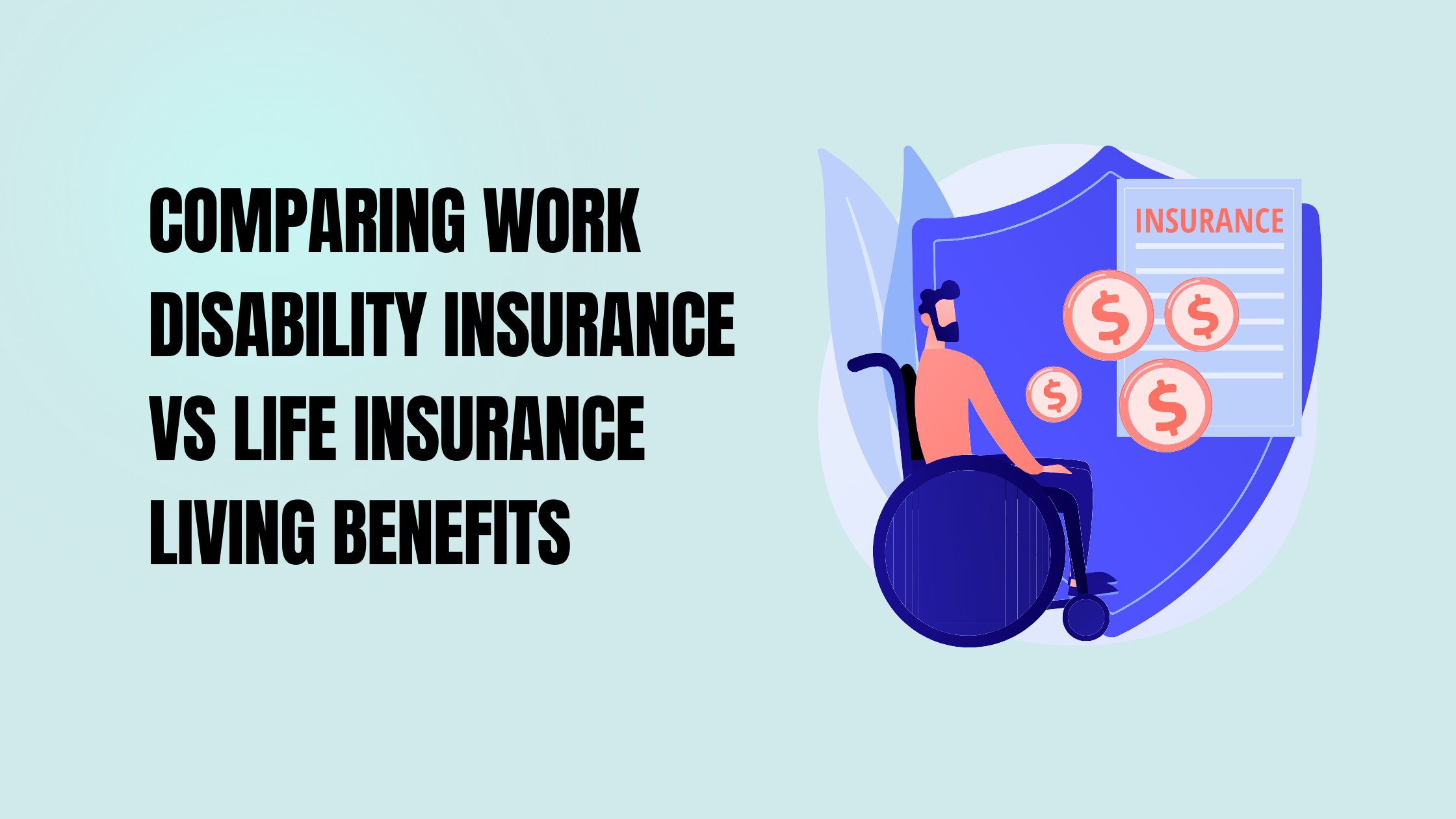
Disability insurance often outranks life insurance in financial priority because the statistical probability of suffering a long-term disability during your working years is significantly higher than the risk of premature death. While life insurance protects your beneficiaries after you pass, disability insurance protects your most valuable asset—your ability to earn an income—ensuring your financial survival during your lifetime.
Understanding the Hierarchy of Risk Management
When constructing a comprehensive financial plan in 2026, the primary goal is to safeguard against "catastrophic loss." Most individuals instinctively reach for life insurance to protect their families. However, from a technical risk-assessment perspective, the "risk of living" with a disability is often more financially devastating than the "risk of dying."
Disability insurance (DI) serves as a replacement for your paycheck if you become sick or injured and cannot work. Life insurance (LI) provides a lump sum to survivors upon your death. While both are essential components of a healthy portfolio, specific economic and statistical factors often push disability coverage to the top of the priority list for working professionals.
1. Higher Statistical Probability of Occurrence
The most objective reason disability insurance takes precedence over life insurance is the sheer mathematical likelihood of needing the policy. According to the Social Security Administration, approximately one in four of today’s 20-year-olds will experience a disability that keeps them out of work for at least a year before they reach retirement age. In contrast, the probability of a healthy non-smoking professional dying during those same years is significantly lower.
In 2026, medical advancements have continued to decrease mortality rates, meaning people are surviving accidents and illnesses that might have been fatal decades ago. However, surviving a major medical event often results in a long recovery period or permanent functional limitations. This "morbidity risk" (the risk of illness or injury) has decoupled from "mortality risk" (the risk of death), making disability insurance the more likely safety net you will actually utilize during your career.
2. The "Living Death" Financial Paradox
In financial planning circles, a long-term disability is sometimes referred to as a "living death." This term, while somber, accurately describes a specific economic reality: when an individual dies, their personal expenses (food, clothing, medical costs, travel) cease. When an individual becomes disabled, those expenses not only continue but frequently increase due to the need for specialized medical care, home modifications, or personal assistance.
A life insurance policy provides for the survivors' needs, but a disability insurance policy must provide for the survivors and the disabled policyholder. Without DI, a family faces the "dual burden" of losing their primary engine of wealth (the income) while simultaneously facing a surge in household liabilities. Because the financial drain of a disability can exceed the financial impact of death, the protection of that income stream becomes the more urgent priority.
3. Protection of Human Capital
For most professionals under the age of 50, their "Human Capital"—the present value of all future earnings—is their largest single asset. If you earn $150,000 per year and have 20 years left in your career, you are effectively a $3 million asset, excluding raises and inflation adjustments.
Most people would never dream of leaving a $3 million home or a $3 million commercial building uninsured, yet many leave their ability to earn that $3 million entirely exposed. Disability insurance is the only financial product specifically designed to insure the "valuation" of your career. While life insurance protects the legacy of that capital, disability insurance protects the actualization of it. If the income stops, the ability to fund every other part of a financial plan—mortgages, college savings, and even life insurance premiums—evaporates.
4. The Inadequacy of Government Safety Nets
Many workers mistakenly believe that Social Security Disability Insurance (SSDI) provides an adequate fallback. However, the requirements for SSDI are notoriously stringent. To qualify, you must have a condition that is expected to last at least 12 months or result in death, and you must be unable to perform any job in the national economy, not just your specific profession.
As of 2026, the Social Security Administration reports high initial denial rates for disability claims. Furthermore, the average monthly benefit from SSDI often falls near or below the poverty line for many families, covering only a fraction of a professional-tier salary. Private disability insurance "outranks" life insurance in the sense that it fills a massive gap left by the government that life insurance (via Social Security Survivor Benefits) does not leave quite as wide.
5. Employer Group Policy Limitations
While many employees have "Group Long-Term Disability" (LTD) through their workplace, these policies often have structural flaws that make individual supplemental coverage necessary. Group policies are generally not portable; if you lose your job or change careers, you lose your coverage. Additionally, if the employer pays the premiums, the benefits are typically taxable as ordinary income, often leaving the recipient with only 40% to 50% of their original take-home pay.
Individual disability insurance policies, which are paid with after-tax dollars, provide tax-free benefits. They also allow for "Own-Occupation" definitions, meaning if you are a surgeon and can no longer perform surgery, the policy pays out even if you could technically work as a consultant or teacher. Life insurance is rarely subject to these complex "definition of task" hurdles, making the acquisition of a high-quality, private disability policy a more nuanced and critical technical requirement for high earners.
6. Preservation of Retirement Assets
One of the most catastrophic side effects of a disability is the forced liquidation of retirement accounts. When income stops, many families are forced to take early distributions from 401(k)s or IRAs to cover daily living expenses. This creates a "triple loss":
- The immediate loss of the funds.
- The loss of future compound interest on those funds.
- The immediate tax penalties and liabilities associated with early withdrawal.
By maintaining robust disability insurance, you create a firebreak that protects your retirement eggs. In fact, many modern DI policies in 2026 offer "Retirement Protection Riders" that specifically pay into a trust to replace the contributions you would have made to your retirement plan while disabled. Life insurance does nothing to protect your retirement if you are still alive but unable to work.
7. The "Partial Disability" and Residual Benefit Advantage
Life insurance is a binary product: it pays if you are deceased and does not pay if you are alive. Disability insurance is far more sophisticated, offering "Residual" or "Partial" disability benefits. These riders allow a policyholder to collect a portion of their benefit if they can still work but experience a loss of income (usually 15-20% or more) due to an injury or illness.
This is critical for professionals who may suffer from degenerative conditions, such as Parkinson’s disease or multiple sclerosis, or those recovering from burnout and mental health struggles. You may be able to work 20 hours a week instead of 50. In this scenario, life insurance is irrelevant, but a disability policy with a residual rider would bridge the income gap. This flexibility makes DI a more versatile tool for the "gray areas" of health that most people encounter as they age.
8. Inflation and Cost-of-Living Adjustments (COLA)
If you become disabled at age 35, you may need your insurance benefits to last for 30 years. Over three decades, the purchasing power of a fixed monthly benefit will be decimated by inflation. High-quality disability insurance policies offer Cost-of-Living Adjustment (COLA) riders that increase your monthly benefit each year you remain disabled, indexed to the Consumer Price Index (CPI).
While some life insurance policies have "increasing death benefits," they are rarely as tightly coupled to the actual cost-of-living needs of a surviving policyholder. Because a disability can last for the majority of an adult's life, the technical inclusion of a COLA rider in a DI policy provides a level of long-term economic security that life insurance simply isn't designed to address for a living claimant.
Comparison: Life Insurance vs. Disability Insurance
The following table summarizes the technical differences and why disability insurance often carries more "utilization weight" in a financial plan.
| Feature | Life Insurance (Term/Perm) | Disability Insurance (Long-Term) |
|---|---|---|
| Primary Trigger | Death of the insured | Illness or injury preventing work |
| Statistical Likelihood | Lower (during working years) | Higher (approx. 25% for 20-year-olds) |
| Beneficiary | Heirs / Named beneficiaries | The insured and their family |
| Taxability of Benefit | Generally tax-free | Tax-free (if paid with after-tax dollars) |
| Duration of Benefit | Lump sum payout | Monthly until age 65, 67, or 70 |
| Partial Payouts? | No (Binary trigger) | Yes (Residual/Partial riders) |
| Primary Goal | Debt payoff and legacy | Income replacement and survival |
| Impact of Inflation | Fixed death benefit (usually) | Can include COLA riders |
Frequently Asked Questions
Can I have both disability and life insurance?
Yes, and for most people, a combination is ideal. However, if your budget is limited, many financial experts suggest prioritizing disability insurance first, especially if you are single or do not have dependents who rely on a death benefit. Once the income is protected, you can then add life insurance to cover specific debts like a mortgage or to provide for children.
Is disability insurance more expensive than life insurance?
Generally, yes. Because the probability of making a claim on a disability policy is much higher than on a term life policy, the premiums reflect that increased risk. A typical long-term disability policy might cost 1% to 3% of your annual income, whereas term life insurance is often significantly cheaper for the same amount of "coverage" value.
What is the "Elimination Period" in disability insurance?
The elimination period is essentially a deductible measured in time. It is the period between the onset of disability and the date benefits begin to accrue. Common periods are 60, 90, or 180 days. Choosing a longer elimination period can significantly lower your premiums, but you must have sufficient emergency savings to cover your expenses during that gap.
Does disability insurance cover mental health issues?
Most modern policies in 2026 cover mental health and substance abuse disorders, though many individual and group policies have a "two-year limitation" for these specific claims. If you are in a high-stress profession, it is vital to check the specific language regarding mental health coverage in your policy, as these are some of the most common causes of long-term claims.
Does "Own-Occupation" really matter?
For specialized professionals (doctors, lawyers, engineers, pilots), it is the most important part of the policy. Without "Own-Occ," an insurance company could stop your benefits if they decide you are healthy enough to work as a telemarketer or retail clerk, even if you can no longer perform the high-paying job you were trained for.
Practical Recommendation
To properly secure your financial future in 2026, start by auditing your current employer-provided benefits. If you only have group coverage, look for a "supplemental" individual disability policy that is non-cancelable and guaranteed renewable. This ensures that even if your health changes or you leave your employer, your coverage remains intact. Prioritize a policy with an Own-Occupation definition and a Residual Benefit rider to ensure that any loss of income, whether total or partial, is covered. Only after your income is fully protected should you focus on expanding life insurance death benefits to meet your legacy goals.