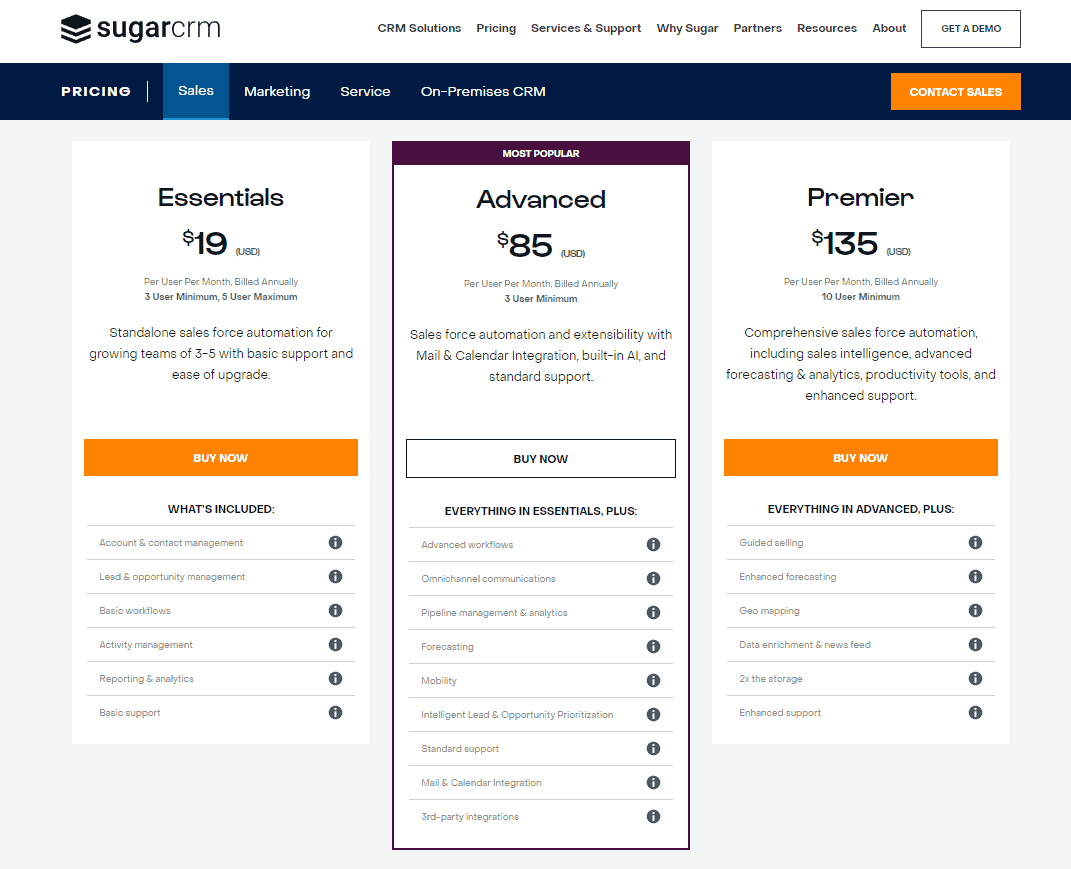
SugarCRM remains a premier choice for enterprise organizations seeking a high-performance, flexible CRM that prioritizes automation over manual data entry. In 2026, it distinguishes itself through its "no-touch" user experience and SugarPredict AI, offering a sophisticated alternative to Salesforce for teams requiring deep customization and lower total cost of ownership.
For global enterprises, the CRM market is no longer about simple contact management; it is about predictive intelligence and seamless cross-departmental workflows. SugarCRM has evolved into a comprehensive platform—encompassing Sugar Market, Sugar Sell, and Sugar Serve—designed to unify the customer journey. This review examines how the platform stands up to the rigorous demands of enterprise-scale operations, evaluating its technical architecture, AI capabilities, and long-term value proposition.
The Enterprise Landscape: Why SugarCRM?
The enterprise sector often struggles with "CRM rot," where high-cost platforms become glorified spreadsheets because they are too difficult for employees to use or too rigid to adapt to complex business processes. SugarCRM addresses these pain points by focusing on three core pillars: automation, predictability, and platform flexibility.
The No-Touch Information Philosophy
A significant hurdle for enterprise sales teams is the "busy work" associated with CRM maintenance. SugarCRM’s "no-touch" philosophy aims to capture data automatically from emails, calendars, and external social signals. By 2026, this has matured into a sophisticated background processing layer that ensures the CRM is updated without constant manual intervention from account executives. This leads to higher data integrity, which is the foundation for any meaningful executive reporting or AI-driven forecasting.
Modular Architecture for Global Scale
Enterprise teams frequently operate across multiple jurisdictions with varying data residency requirements and business units. SugarCRM’s architecture, built on the Sidecar framework, allows for significant UI and logic customization without breaking the core upgrade path. Whether an organization utilizes SugarCloud (powered by AWS) or a private cloud environment, the platform maintains a consistent performance profile even when handling millions of records and thousands of concurrent users.
Core Features and Functional Performance
To understand the value of SugarCRM for large teams, one must look beyond the basic interface and into the specialized modules that drive revenue and retention.
SugarPredict: AI-Driven Insights
By 2026, SugarPredict has become the centerpiece of the platform’s enterprise value. Unlike generic AI add-ons, SugarPredict is deeply integrated into the data layer. It analyzes historical patterns to provide:
- Predictive Lead Scoring: Identifying which leads are most likely to convert based on hundreds of internal and external data points.
- Churn Risk Detection: For the "Sugar Serve" module, the AI identifies accounts showing signs of dissatisfaction or declining engagement before they reach the renewal stage.
- Opportunity Forecasting: Providing sales managers with a "probability of close" that is often more accurate than the salesperson’s own estimation.
SugarBPM: Advanced Workflow Automation
Enterprise processes are rarely linear. SugarBPM (Business Process Management) allows technical administrators to build complex, multi-stage workflows with visual designers. This includes conditional branching, automated approvals, and time-based escalations. For a global enterprise, this means a lead generated in EMEA can be automatically routed, vetted, and assigned to the correct regional specialist within seconds, ensuring compliance with local service level agreements (SLAs).
Omnichannel Customer Service (Sugar Serve)
For enterprise support teams, Sugar Serve provides a unified console that pulls in queries from email, chat, phone, and social media. The "Service Console" uses a prioritized queue system, ensuring that high-value enterprise accounts are flagged for immediate attention. The integration between Sell and Serve ensures that account managers are immediately notified when a major client opens a high-priority support ticket, preventing awkward "blind" sales calls.
Technical Specifications and Integration
An enterprise CRM is only as good as its ability to talk to the rest of the tech stack. SugarCRM’s commitment to an "open" philosophy makes it a favorite for IT departments managing complex ecosystems.
RESTful API and Integration Framework
SugarCRM provides a comprehensive RESTful API that allows for deep integration with ERP systems (like SAP or Oracle), marketing automation tools, and proprietary internal databases. In 2026, the use of webhooks and a robust integration platform as a service (iPaaS) connector library means that syncing data across the enterprise occurs in near real-time. This is critical for finance departments that need to see closed-won deals reflected in their billing systems instantly.
Security and Compliance
For enterprise organizations, security is non-negotiable. SugarCRM adheres to high industry standards, including:
- SOC 2 Type II Compliance: Ensuring rigorous controls over data security and privacy.
- GDPR and CCPA Readiness: Tools for data anonymization, right-to-be-forgotten requests, and audit logs are built directly into the administrative panel.
- Encryption: Data is encrypted both at rest (AES-256) and in transit (TLS 1.2+).
- Role-Based Access Control (RBAC): Extremely granular permissions allow enterprises to restrict data access down to the field level, ensuring that sensitive information is only visible to authorized personnel.
Enterprise Comparison: SugarCRM vs. Competitors
When evaluating SugarCRM for a large-scale deployment, it is helpful to compare it against the other two "titans" of the industry: Salesforce and Microsoft Dynamics 365.
| Feature | SugarCRM (Enterprise/Advanced) | Salesforce (Unlimited) | Microsoft Dynamics 365 (Sales Ent) |
|---|---|---|---|
| Primary Advantage | Low TCO & High Flexibility | Massive Ecosystem/AppExchange | Native Microsoft 365 Integration |
| AI Implementation | Included (SugarPredict) | Extra Cost (Einstein) | Included (Sales Copilot) |
| Deployment Options | Public Cloud, Private, On-Prem | Public Cloud Only | Public Cloud, Hybrid |
| UI Customization | High (Sidecar Framework) | High (Lightning/LWC) | Medium (Model-driven apps) |
| Hidden Costs | Low (Minimal "add-on" bloat) | High (Per-feature pricing) | Moderate (Storage/API limits) |
| Data Ownership | Full Control | Tenant-based | Tenant-based |
While Salesforce offers a larger marketplace of third-party apps, many enterprise IT directors in 2026 prefer SugarCRM because it avoids the "feature-tax" model. In SugarCRM, many advanced features that would require separate licenses in Salesforce are included in the core enterprise subscription.
Practical Implementation and Potential Drawbacks
Despite its strengths, SugarCRM is a powerful tool that requires a strategic approach to implementation. It is not a "plug-and-play" solution for a 5,000-user organization.
The Learning Curve and Admin Requirements
SugarCRM’s power comes from its configurability. For an enterprise team, this means you will need dedicated SugarCRM administrators or a partnership with a specialized implementation consultant. While the end-user interface is intuitive, the backend "Logic Hooks" and BPM engines require technical proficiency. Organizations transitioning from a simpler CRM like Pipedrive or HubSpot may find the sheer volume of options overwhelming at first.
Migration Challenges
Moving decades of enterprise data into SugarCRM requires a meticulous data mapping strategy. Because SugarCRM allows for complex relational data structures (one-to-many, many-to-many), the migration phase is the most common point of failure. It is recommended to use specialized ETL (Extract, Transform, Load) tools to ensure that historical relationships between leads, accounts, and opportunities remain intact.
Cost Analysis: Total Cost of Ownership (TCO)
In 2026, SugarCRM remains one of the most price-competitive enterprise CRMs. While the initial license cost is a factor, the real savings are found in the long-term TCO.
- Subscription Transparency: SugarCRM typically bundles its AI, reporting, and mobile capabilities into its higher-tier plans, whereas competitors often charge separate monthly fees for AI assistants or advanced analytics.
- Implementation Costs: While you will spend significantly on initial setup and customization, the "open" nature of the code means you aren't locked into proprietary languages (like Salesforce's Apex), making it easier to find developers or use internal IT resources.
- Maintenance: The "no-touch" features reduce the amount of time required for data cleanup, which is a hidden cost in many enterprise environments.
Final Verdict for Enterprise Teams
SugarCRM is an ideal fit for enterprise teams that have outgrown mid-market solutions but want to avoid the "Salesforce Trap" of escalating costs and rigid ecosystem dependencies. It excels in environments where business processes are unique and require a CRM that can bend to the workflow, rather than forcing the workflow to bend to the CRM.
In 2026, the platform's focus on AI-driven predictability and automated data capture makes it a high-utility asset for organizations focused on efficiency. If your organization prioritizes data ownership, deep integration with legacy systems, and a clear, predictable pricing model, SugarCRM is a top-tier contender.
Next Steps for Evaluation
- Audit Current Workflows: Identify the top five "manual" tasks your sales and service teams perform daily.
- Request a Scoped Demo: Ask for a demonstration specifically showing how SugarBPM can automate those five tasks.
- Perform a Gap Analysis: Compare the "out-of-the-box" features of Sugar Sell Premier against your current license requirements in other platforms.
- Consult with IT: Review the SugarCloud security whitepapers to ensure they meet your internal compliance and data residency mandates.
Frequently Asked Questions
Does SugarCRM support offline access for mobile enterprise teams?
Yes. The SugarCRM mobile application includes robust offline capabilities. Users can view, edit, and create records while disconnected from the internet. Once a connection is re-established, the app automatically synchronizes changes with the central server, resolving any data conflicts based on pre-defined administrative rules. This is essential for field sales and service teams operating in areas with inconsistent cellular coverage.
How does SugarCRM handle multi-currency and multi-language requirements?
SugarCRM is designed for global operations, supporting dozens of languages and all global currencies. It allows for a "Base Currency" for corporate reporting while allowing individual regions to work in their local currency. Exchange rates can be updated manually or via API to ensure that global pipelines and forecasts are converted accurately in real-time.
Can we host SugarCRM on our own private cloud?
Yes. While many enterprises opt for the managed SugarCloud environment for its ease of maintenance, SugarCRM offers flexible deployment options. Organizations with extreme security requirements or those in highly regulated industries (like defense or certain financial sectors) can deploy SugarCRM on their own private cloud infrastructure or on-premise servers.
What is the typical implementation timeline for a 1,000+ user team?
For an enterprise-level deployment, the timeline usually ranges from 4 to 9 months. This includes the discovery phase, data mapping and migration, custom development for integrations (ERP/Marketing), User Acceptance Testing (UAT), and phased training rollouts. Smaller "Quick Start" implementations are possible, but they often bypass the deep customization that provides the most value to large teams.
How does SugarCRM’s AI (SugarPredict) differ from ChatGPT or other LLMs?
While Generative AI (like LLMs) focuses on creating content, SugarPredict is a "Predictive AI" built on machine learning models. It looks at the structured data within your CRM—such as how long deals stay in a certain stage or the characteristics of customers who churn—to identify mathematical patterns. While SugarCRM also integrates with Generative AI for drafting emails or summarizing cases, its core strength lies in its ability to predict business outcomes based on your specific historical data.