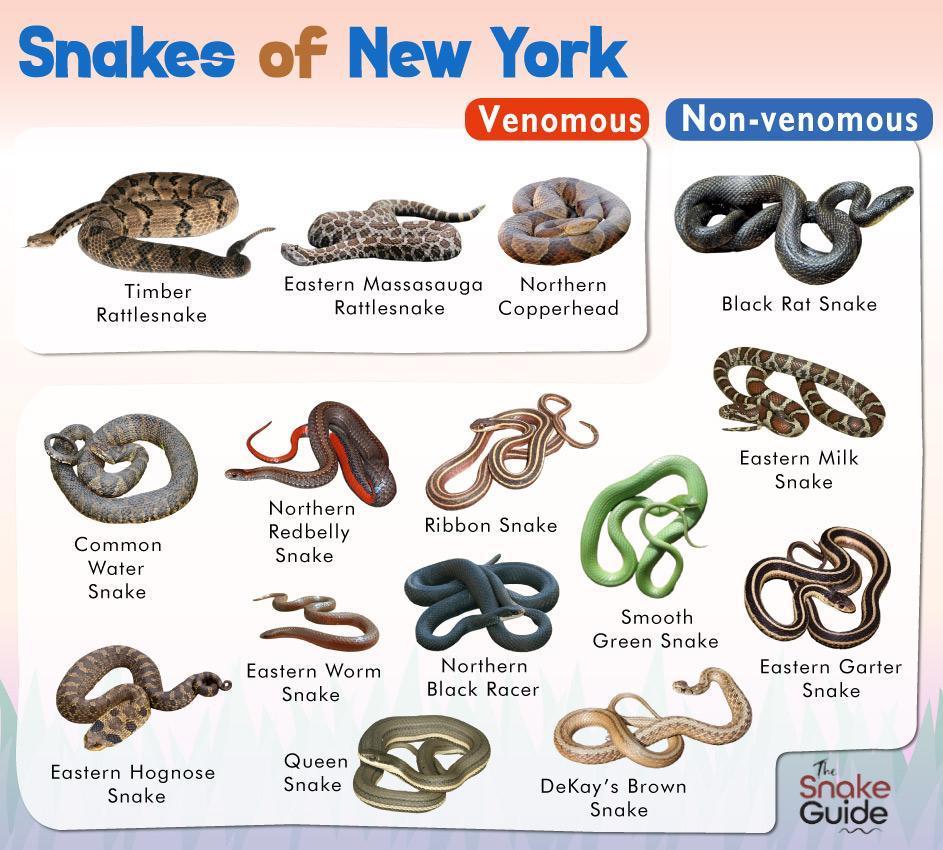
Yes, there are venomous snakes in New York State. The state is home to three native venomous species: the Timber Rattlesnake, the Massasauga, and the Northern Copperhead. While these serpents inhabit various ecosystems across the region—from rocky ridges to remote wetlands—they generally avoid human contact, and encounters remain relatively uncommon for the average resident or outdoor enthusiast.
Understanding where these reptiles live, how to identify them, and what safety protocols to follow allows residents and visitors to explore New York’s diverse state parks, forests, and rural landscapes with confidence.
Overview of New York’s Native Venomous Snakes
New York State features a rich biodiversity, which includes approximately 17 species of snakes. Out of these, only three possess venom potent enough to be medically significant to humans. All three venomous species belong to the viper family (Viperidae), specifically the subfamily Crotalinae, commonly known as pit vipers.
Pit vipers share distinct biological characteristics that set them apart from non-venomous colubrid snakes found in the region. Most notably, they possess heat-sensing pits located between their eyes and nostrils, which help them locate warm-blooded prey in low-light conditions. They also feature vertical, cat-like pupils and broad, triangular heads.
However, relying solely on head shape or pupil structure can be misleading in the field, as many non-venomous snakes—such as water snakes and milk snakes—will flatten their heads defensively when threatened to mimic vipers. Proper identification requires looking at a combination of patterns, scale structures, and geographic context.
The Three Native Species at a Glance
| Common Name | Scientific Name | Primary Habitats in NY | Distinctive Features |
|---|---|---|---|
| Timber Rattlesnake | Crotalus horridus | Forested hills, rocky ridges, talus slopes | Heavy-bodied, rattle at tail tip, variable dark crossbands on a yellow/brown or black background |
| Northern Copperhead | Agkistrodon contortrix | Rocky deciduous forests, wetland edges, talus outcroppings | Copper-colored head, hourglass-shaped crossbands along the body |
| Massasauga | Sistrurus catenatus | Wet meadows, shrub swamps, floodplains, peatlands | Small-bodied rattlesnake, grey or light brown with distinct dark dorsal blotches |
Detailed Profiles of New York’s Venomous Species
To prevent accidental interactions and appreciate the ecological role these animals play, it is essential to examine each species' behavior, exact geographic distribution, and physical characteristics.
1. Timber Rattlesnake (Crotalus horridus)
The Timber Rattlesnake is the largest venomous snake in New York, historically ranging across wide swathes of the state. Today, their populations are more localized due to habitat fragmentation and historical persecution.
- Distribution: They are primarily found in the Hudson Valley, the Catskills, the Taconic and Shawangunk ridges, parts of the Southern Tier, and scattered pockets around the Lake George and Champlain regions.
- Physical Description: Adults typically measure between 36 and 60 inches in length. They are heavy-bodied with a noticeable rattle at the tail. Coloration varies widely; "yellow phase" individuals feature dark brown or black crossbands on a yellowish-brown background, while "black phase" individuals are heavily melanistic, masking the pattern in dark charcoal or black.
- Behavior: Timber rattlesnakes are generally docile unless provoked, handled, or stepped upon. When threatened, they coil, vibrate their tail to produce a sharp buzzing sound, and prepare to strike. They feed primarily on small mammals like mice, voles, and chipmunks.
2. Northern Copperhead (Agkistrodon contortrix)
The Northern Copperhead is recognized by its striking coloration and its preference for rocky, wooded environments mixed with early successional fields or wetland borders.
- Distribution: In New York, copperheads are largely restricted to the lower Hudson Valley, the Palisades region, and select areas of the Taconic Highlands. They are absent from northern New York and western counties.
- Physical Description: Ranging from 24 to 36 inches long, copperheads feature a distinct copper-red or reddish-brown head. Their bodies are light tan, pinkish-tan, or grey, overlaid with a series of distinct hourglass-shaped or dumbbell-shaped crossbands that are wider at the sides and narrow along the spine.
- Behavior: Copperheads rely heavily on camouflage. When approached, their primary defense strategy is to remain completely motionless, trusting their cryptic patterns to hide them from predators. This freeze response frequently leads to accidental bites when people step too close without noticing them.
3. Eastern Massasauga (Sistrurus catenatus)
The Massasauga is a small, secretive rattlesnake that is currently listed as an endangered species in New York State. Because of its rarity and declining habitat, encountering one is an exceptional event.
- Distribution: Modern New York populations are extremely restricted, primarily residing in specific wetland complexes in central and western New York, such as parts of the Cicero Swamp north of Syracuse and localized areas in Oswego County.
- Physical Description: These snakes are much smaller than timber rattlers, usually measuring between 18 and 30 inches. They feature a grey or light brown background punctuated by a row of bold, dark brown blotches down the back and smaller alternating blotches on the sides. They possess a small rattle that sounds more like a buzzing insect than a loud rattle.
- Behavior: Massasaugas inhabit wet environments, including fens, sedge meadows, and swamp borders. They feed on frogs, small rodents, and occasionally other snakes. They are timid and will attempt to escape or rattle quietly if disturbed.
Geographic Distribution and Habitat Preferences
Venomous snakes in New York are not uniformly distributed. Understanding regional variations helps outdoor recreationists know when and where to exercise heightened caution.
The Greater New York City Area and Long Island
Neither venomous snakes nor native populations of rattlesnakes or copperheads naturally inhabit Long Island or New York City proper. While historical records indicate occasional sightings centuries ago, urbanization and habitat loss have eliminated them from these areas. Non-venomous species, such as the Eastern Garter Snake and the Northern Water Snake, are common in city parks and suburban yards, but residents do not need to worry about encountering wild venomous pit vipers in Central Park or suburban Long Island neighborhoods.
The Hudson Valley and Catskills
This region represents a stronghold for both the Timber Rattlesnake and the Northern Copperhead. The steep, rocky hillsides, ancient stone walls, and deciduous forests provide ideal over-wintering dens known as hibernacula. During spring and autumn, snakes congregate around these rocky outcrops before dispersing into surrounding valleys and forests for the summer foraging season.
Upstate and Western New York
As one moves further north into the Adirondacks or across the Tug Hill Plateau, venomous snakes become exceedingly rare or absent due to cooler climatic conditions. However, pockets of the Southern Tier and specialized wetland zones in central-western New York sustain localized populations of massasaugas and timber rattlers.
Ecological Importance and Conservation Status
Venomous snakes occupy a vital niche in New York's ecosystems. As apex predators of the small-mammal world, species like the Timber Rattlesnake and Copperhead help regulate populations of mice, voles, and other rodents that act as reservoirs for tick-borne pathogens, including Lyme disease. By keeping rodent numbers in check, these reptiles indirectly benefit human health and forest regeneration.
Despite their ecological value, New York’s venomous snakes face severe threats:
- Habitat Loss and Fragmentation: Real estate development, road construction, and utility expansions divide contiguous forests and disrupt traditional migration corridors between summer foraging grounds and winter dens.
- Persecution: Fear and misinformation often lead to the illegal killing of snakes on sight, even in areas far from human habitation.
- Poaching: Illegal collection for the pet trade or black-market wildlife trafficking continues to threaten vulnerable populations, particularly timber rattlesnake rookeries.
Recognizing these pressures, the New York State Department of Environmental Conservation (NYSDEC) classifies all three native venomous species under protective regulations. It is illegal to capture, kill, keep, or sell Timber Rattlesnakes, Northern Copperheads, or Eastern Massasaugas without specialized scientific permits.
Safety Guidelines and Best Practices for Outdoor Recreation
Encounters with venomous snakes are rare, but hikers, campers, gardeners, and property owners living near rocky or wooded habitats should follow established safety protocols to minimize risk.
Preventive Measures Outdoors
- Stay on Established Trails: Walk in the center of cleared hiking paths and avoid walking through thick tall grass, dense brush, or piles of fallen timber without looking ahead.
- Watch Where You Step and Place Your Hands: Never step blindly over logs, boulders, or rock ledges. When rock scrambling, check handholds and ledges before grabbing them.
- Wear Appropriate Footwear: Always wear sturdy over-the-ankle hiking boots and long pants when traversing rocky or heavily wooded terrain. Avoid wearing sandals or walking barefoot in snake country.
- Use a Flashlight at Night: Pit vipers are frequently nocturnal during hot summer months. Always use a flashlight or headlamp when walking outside after dark in rural or wooded areas.
Property Management Around Rural Homes
Homeowners living in wooded or rocky areas of the Hudson Valley or Southern Tier can take simple steps to discourage snakes from lingering near living spaces:
- Manage Vegetation: Keep lawns mowed short near the house, clear tall weeds, and trim low-hanging tree branches or shrubs where snakes might seek cover.
- Eliminate Shelter: Store firewood elevated off the ground and away from the foundation of the home. Clear away junk piles, discarded building materials, and thick mulch layers that attract rodents and, consequently, snakes looking for prey.
- Seal Foundations: Ensure gaps, cracks, and foundation vents are sealed tightly to prevent mice and snakes from entering crawl spaces or basements.
What to Do in the Event of a Snakebite
While snakebites are medical emergencies, they are rarely fatal when treated promptly and properly with modern antivenom protocols. If you or someone with you is bitten by a venomous snake in New York, follow these critical steps:
- Move Away Safely: Immediately move a safe distance away from the snake to prevent a secondary strike. The snake may strike defensively if cornered or handled.
- Call 911: Seek emergency medical assistance immediately. Time is of the essence, and transport to a hospital with access to specialized antivenom (such as CroFab) is necessary.
- Keep the Victim Calm: Keep the affected individual calm and still to slow down the circulation of venom through the lymphatic system.
- Position the Limb: Keep the bite area at or slightly below heart level if possible. Remove any rings, watches, or tight clothing near the bite site before swelling begins.
- What NOT to Do:
- Do NOT apply a tourniquet or constriction band.
- Do NOT attempt to cut the wound or suck out venom with your mouth or a suction device.
- Do NOT apply ice or immerse the wound in cold water.
- Do NOT consume alcohol or caffeinated beverages.
- Do NOT attempt to capture, kill, or handle the snake for identification; modern medical treatment relies on clinical symptoms, and medical staff do not require the snake to administer antivenom.
Frequently Asked Questions
Are non-venomous snakes common in New York?
Yes, New York hosts around 14 species of non-venomous snakes. Common examples include the Eastern Garter Snake, Northern Water Snake, Eastern Milk Snake, Black Rat Snake, and Common Ribbon Snake. These species play similar ecological roles and are completely harmless to humans, though they may bite defensively if cornered.
Do venomous snakes chase humans?
No. None of New York’s venomous snakes pursue humans. Snakes are ectothermic (cold-blooded) and view humans as massive, dangerous predators rather than prey. When a snake approaches a person, it is usually attempting to reach a safe hiding spot, a den, or an escape route that happens to lie in that direction.
Can venomous snakes climb trees?
While New York’s pit vipers are primarily terrestrial, Timber Rattlesnakes are surprisingly proficient climbers and can occasionally be found ascending low-slung branches, fallen timber, or rock ledges to bask in the sun or search for bird nests and arboreal prey. However, they do not drop from trees onto unsuspecting passersby.
What should I do if I find a venomous snake in my yard?
If you discover a venomous snake on your property, maintain a safe distance of at least six feet. Do not attempt to move, harass, or kill it. In most cases, the snake will move along on its own within a short time. If the snake is in a high-traffic area near your doorway and poses an immediate safety hazard, contact local animal control, a licensed wildlife rehabilitator, or the NYSDEC regional office for guidance.
Are snakebite kits effective?
Medical authorities, including the American Red Cross and the American College of Emergency Physicians, strongly advise against using commercial snakebite kits (such as blade-and-suction kits). These devices have been scientifically proven to be ineffective at removing venom and frequently cause severe tissue damage, nerve injury, or infection at the bite site.
Conclusion
New York State does indeed support venomous snake populations, specifically the Timber Rattlesnake, Northern Copperhead, and Eastern Massasauga. However, their distributions are geographically restricted, and encounters are infrequent. By respecting their natural habitats, practicing basic safety precautions during outdoor recreation, and understanding their ecological value, residents can safely coexist with these remarkable native reptiles.