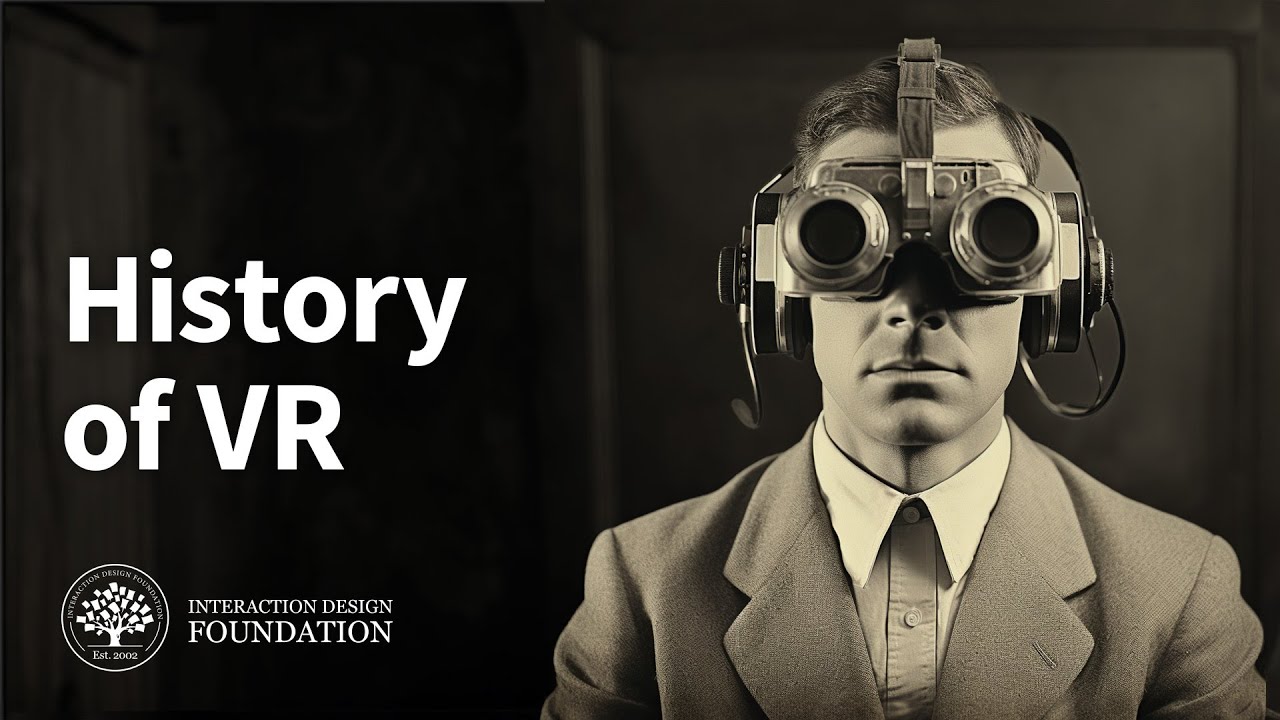
The history of virtual reality (VR) technology spans nearly two centuries, beginning with 19th-century stereoscopic viewers and culminating in the sophisticated spatial computing systems of 2026. This evolution reflects a transition from static mechanical optical illusions to high-fidelity, standalone digital environments that leverage advanced optics, low-latency tracking, and integrated artificial intelligence.
The Pre-Digital Era: Stereoscopy and Panoramic Vision
Long before the advent of microchips, the fundamental concepts of virtual reality—immersion and depth perception—were explored through analog means. In 1838, Sir Charles Wheatstone demonstrated that the human brain processes two different two-dimensional images (one from each eye) into a single three-dimensional object. This discovery led to the invention of the stereoscope, the earliest ancestor of the modern head-mounted display (HMD).
Throughout the 19th and early 20th centuries, devices like the Brewster Stereoscope and later the popular View-Master (introduced in 1939) allowed users to "travel" to distant locations via static 3D imagery. While these devices lacked interactivity, they established the optical principles of binocular vision that remain the foundation of VR hardware today.
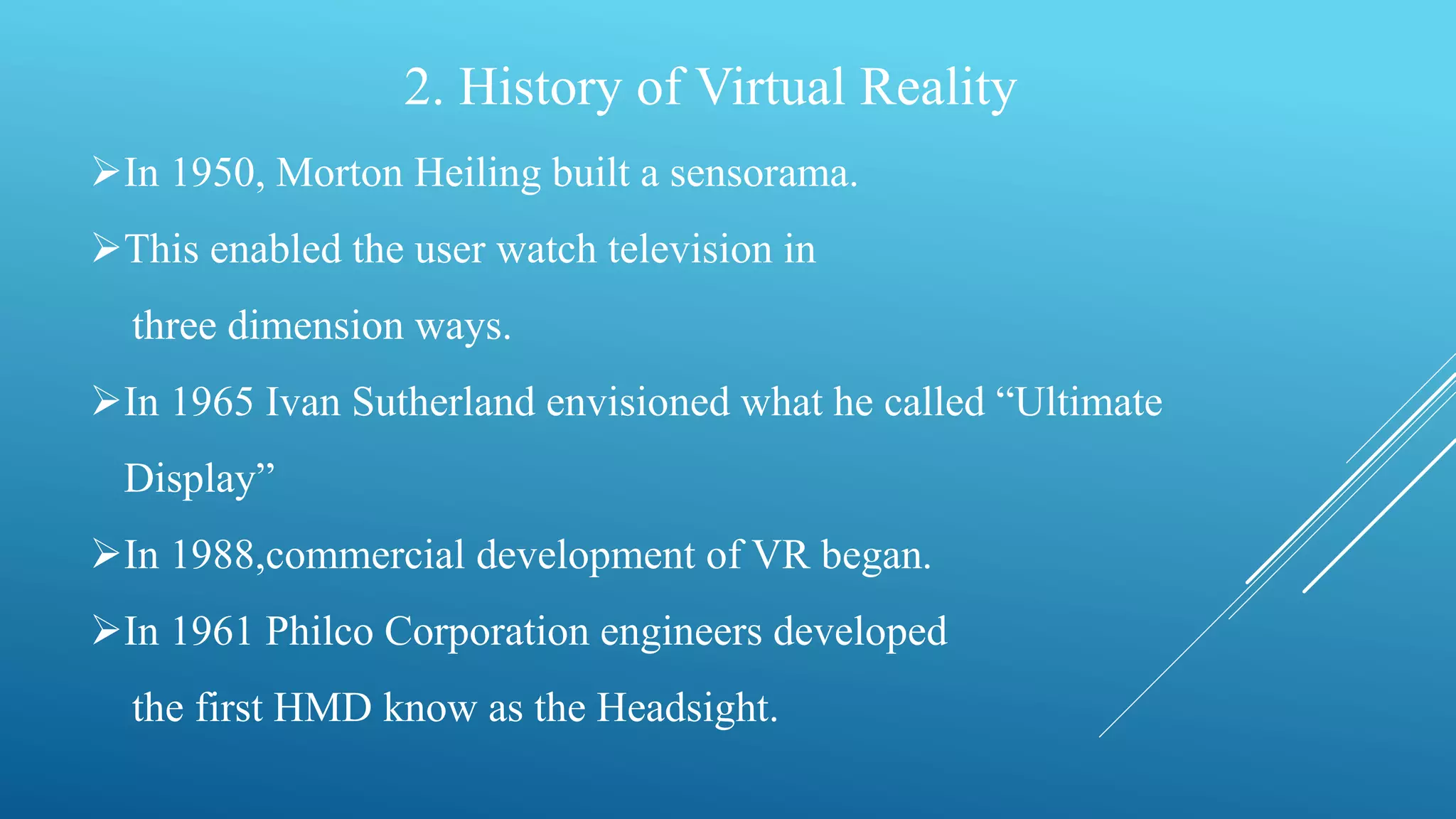
In the mid-20th century, the focus shifted from static images to multisensory experiences. In 1962, cinematographer Morton Heilig patented the Sensorama, a mechanical booth that simulated a motorcycle ride through New York. It featured a stereoscopic 3D display, fans for wind, odor emitters, and a vibrating seat. Heilig’s vision was "Experience Theater," an attempt to engage all senses to create a convincing simulation of reality. Although it was not a commercial success, the Sensorama proved that immersion required more than just visual stimuli.
The Birth of the Digital Head-Mounted Display
The transition from mechanical simulation to computer-generated environments occurred in the late 1960s. In 1968, computer scientist Ivan Sutherland, with his student Bob Sproull, created the first augmented reality (AR) and virtual reality HMD system, titled "The Sword of Damocles."
This device was so heavy it had to be suspended from the ceiling, hence its ominous name. Unlike the Sensorama’s filmed content, Sutherland’s device displayed simple wireframe rooms generated by a computer. Crucially, it featured head tracking, allowing the perspective of the digital environment to change as the user moved. This established the technical prerequisite for "presence"—the psychological feeling of actually being inside a digital space.
During the 1970s and 1980s, the development of VR was primarily driven by military and aerospace needs. Flight simulators became increasingly complex, and NASA began developing the Virtual Interface Environment Workstation (VIEW) in the mid-80s. The VIEW system integrated an HMD with data gloves to allow researchers to interact directly with digital models, a precursor to the gesture-based controls used in 2026.
The 1980s and the Coining of "Virtual Reality"
While various terms like "artificial reality" and "cyberspace" existed, the term "Virtual Reality" was popularized in the mid-1980s by Jaron Lanier, founder of VPL Research. Lanier’s company was the first to sell VR goggles (the EyePhone) and wired gloves (the DataGlove) to the public—or at least to the very wealthy public, as these systems cost tens of thousands of dollars.
VPL Research proved that a market for VR existed outside of government labs, but the technology of the era was severely limited. Computers lacked the processing power to render high-resolution textures, resulting in significant "latency" (the delay between movement and visual update). This latency often caused severe motion sickness, a hurdle that would take decades to overcome.
The 1990s: The First Consumer Wave and Market Failure
By the early 1990s, VR entered the mainstream consciousness through film, literature, and arcade gaming. Companies like Virtuality launched arcade machines where players could wear headsets and compete in networked 3D environments. These were popular but expensive to maintain.
The consumer electronics industry attempted to bring this tech home, leading to several high-profile failures:
- Sega VR (1993): Announced for the Genesis console, it featured head tracking and stereo sound. However, after internal testing reported headaches and motion sickness, Sega famously cancelled the project before release.
- Nintendo Virtual Boy (1995): Marketed as a portable 3D console, it used red LEDs on a black background. It was not true VR (as it lacked head tracking and was used on a tabletop), and its monochrome display and ergonomic issues led to its discontinuation within a year.
The failure of 90s VR was a result of a "hardware gap." The ambition of developers far outpaced the capabilities of CRT displays and 16-bit or 32-bit processors. The industry entered a "VR Winter" that lasted nearly fifteen years, during which the technology was relegated to specialized medical, industrial, and military training.
The Modern Renaissance: From Oculus to Standalone VR
The modern era of VR began in 2012 when a teenager named Palmer Luckey launched a Kickstarter campaign for the Oculus Rift. Luckey’s prototype utilized high-resolution smartphone screens—which had become cheap and powerful due to the mobile revolution—and sophisticated IMU (Inertial Measurement Unit) sensors to provide a wide field of view with much lower latency than previous attempts.
The success of the Rift caught the attention of Silicon Valley, leading to Facebook’s (now Meta) acquisition of Oculus for $2 billion in 2014. This sparked a global "arms race" in VR development:
- HTC and Valve released the Vive in 2016, introducing "room-scale" VR and 6DOF (Six Degrees of Freedom) controllers that allowed users to walk around a physical room and interact with digital objects with high precision.
- Sony entered the fray with PlayStation VR (PSVR) in 2016, bringing VR to millions of console gamers.
- Mobile VR (Google Cardboard and Samsung Gear VR) provided a low-cost entry point but was eventually phased out in favor of dedicated hardware.
The most significant turning point occurred in 2019 with the release of the Oculus Quest. By moving the processing power into the headset itself and using "inside-out" tracking (onboard cameras instead of external sensors), Meta eliminated the need for a tethered PC. This move democratized access and set the standard for the industry.
Technical Milestones in VR History
The following table summarizes the technological leaps that transformed VR from a laboratory curiosity into the spatial computing devices of 2026.
| Era | Key Innovation | Major Device | Primary Limitation |
|---|---|---|---|
| 1830s-1930s | Stereoscopy | Wheatstone Stereoscope | Static images only; no interactivity. |
| 1960s | Multisensory/Digital HMD | Sensorama / Sword of Damocles | Mechanical complexity; massive weight. |
| 1980s | Commercial Gesture Control | VPL DataGlove | Prohibitively expensive; low frame rates. |
| 1990s | Early Consumer Arcade VR | Virtuality 1000CS | High latency; caused motion sickness. |
| 2010s | Low-Latency Mobile Displays | Oculus Rift / HTC Vive | Required expensive PCs and tethered cables. |
| 2020-2024 | Standalone / Mixed Reality | Meta Quest 3 / Vision Pro | Battery life; "Screen-door effect" still present. |
| 2025-2026 | Neural Interfaces / Micro-OLED | 2026 Flagship HMDs | High cost for premium "spatial computing" units. |
The Current Landscape: 2026 and Beyond
As of 2026, the distinction between Virtual Reality (VR) and Augmented Reality (AR) has largely blurred into a single category: Mixed Reality (MR) or Spatial Computing. Modern devices no longer just block out the world; they use high-resolution color "passthrough" to blend digital objects with the user's physical environment.
The hardware of 2026 has solved many of the historical "pain points." Micro-OLED displays now offer resolutions exceeding 4K per eye, virtually eliminating the "screen-door effect" (the visible gaps between pixels). Foveated rendering, which uses eye-tracking to only render the area where the user is looking at full detail, has allowed standalone headsets to produce graphics that rival high-end PCs of the previous decade.
Furthermore, the integration of Generative AI has changed how VR environments are built. Users can now generate entire immersive worlds or 3D assets using voice commands, a far cry from the painstakingly coded wireframes of Ivan Sutherland's era.
Frequently Asked Questions
Why did virtual reality fail to take off in the 1990s?
The failure was primarily due to a lack of processing power and display technology. The headsets of the 90s were heavy, provided low-resolution images, and had high latency, which led to significant physical discomfort. Furthermore, the high cost of components meant that consumer versions, like the Virtual Boy, had to make compromises (like a monochrome display) that made them unappealing.
What is the difference between 3DOF and 6DOF in VR history?
3DOF (Three Degrees of Freedom) allows a user to look in any direction (pitch, yaw, roll) but does not track physical movement through space. Early mobile VR like Google Cardboard was 3DOF. 6DOF (Six Degrees of Freedom) adds the ability to move forward/backward, up/down, and left/right. The transition to 6DOF was essential for true immersion and reducing motion sickness.
Who is considered the "Father of Virtual Reality"?
While many contributed, Morton Heilig is often called the Father of VR for his work on the Sensorama, while Ivan Sutherland is credited with inventing the first functional computer-driven head-mounted display. Jaron Lanier is credited with naming the field and attempting the first commercialization.
How has tracking technology evolved?
Originally, VR tracking was mechanical or ultrasonic. In the 2010s, "outside-in" tracking used external base stations or cameras to track the headset. In the 2020s, "inside-out" tracking became the standard, using cameras built into the headset to map the room and determine the user's position, allowing for much greater freedom of movement.
Is VR only used for gaming?
No. While gaming was the initial catalyst for the 2010s renaissance, VR history shows a long-standing use in medical training (surgical simulations), military flight training, architectural visualization, and remote collaboration. In 2026, it is increasingly used for "spatial computing"—replacing traditional monitors with virtual workspaces.
Recommendation for New Users
If you are exploring VR for the first time in 2026, prioritize hardware that supports color passthrough and eye tracking. These features significantly reduce the learning curve and physical discomfort associated with older models. For those interested in the historical aspect, many early VR experiences and 19th-century stereoscopic photos have been "remastered" and are available as educational apps on modern standalone headsets.