To visit the famous beach in the Bahamas with pigs, you must travel to Big Major Cay in the Exuma Cays. Located approximately 82 miles southeast of Nassau, this uninhabited island is accessible only by boat. Visitors typically reach the beach via organized powerboat tours from Nassau, local charters from Staniel Cay, or day excursions from Great Exuma.
The phenomenon of the swimming pigs has transformed from a quirky local legend into a global bucket-list staple. As of 2026, Big Major Cay remains the "original" home of these animals, though several other islands in the Bahamas have introduced similar attractions. For travelers seeking the authentic experience, understanding the logistics of the Exuma Cays is essential. This guide covers the transport options, ethical interaction guidelines, costs, and strategic timing necessary to ensure a successful trip to the world's most famous porcine paradise.
The History and Location of Big Major Cay
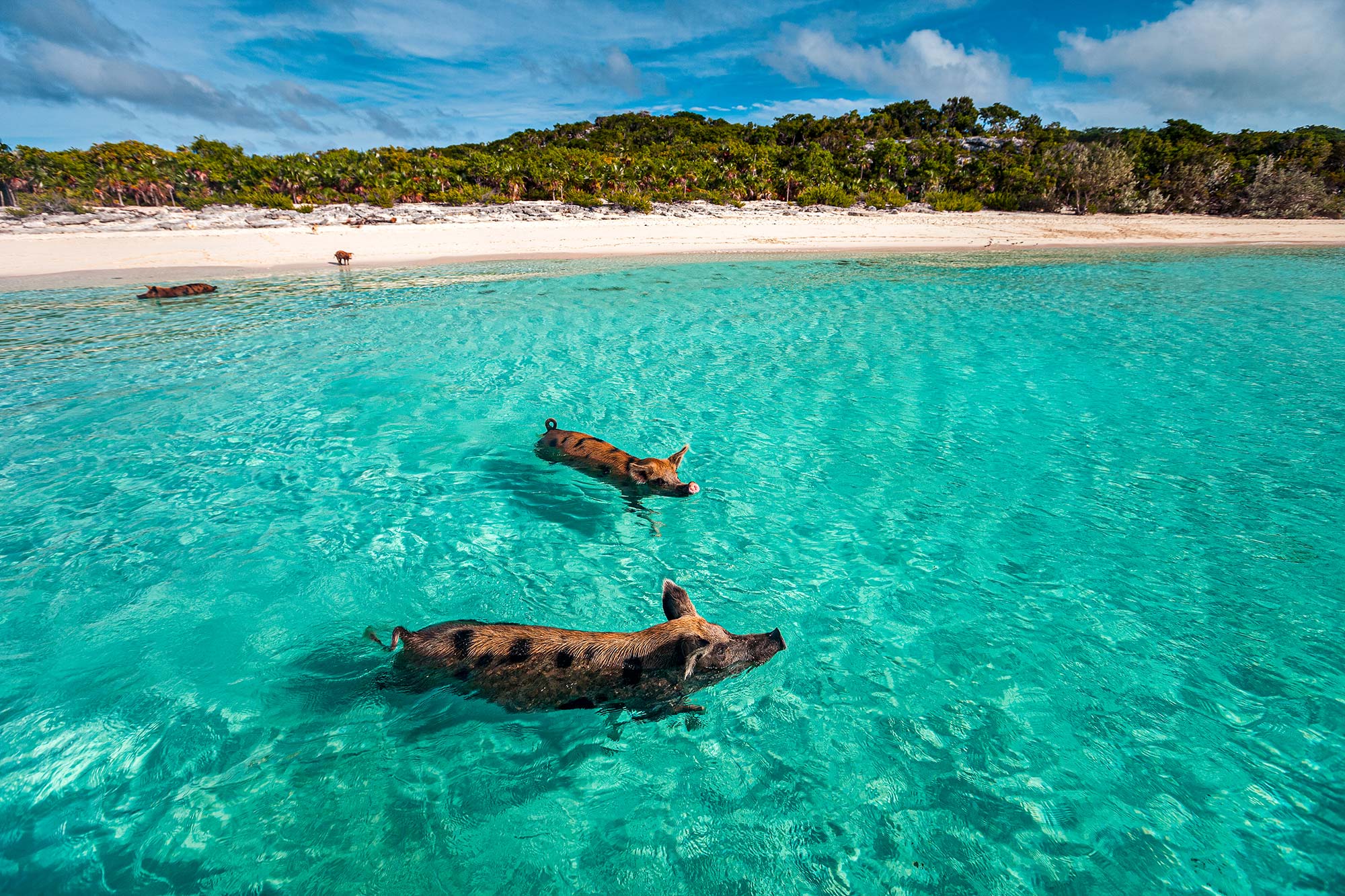
Big Major Cay is a small, rugged island located within the Exuma Cays, an archipelago of 365 cays and islands. Unlike the resort-heavy areas of New Providence (Nassau), the Exumas are characterized by sapphire-blue waters and secluded beaches. The island itself provides a natural habitat for the pigs, featuring a small forest for shade and a protected cove that allows the animals to swim safely in relatively calm waters.
The origin of the pigs is shrouded in local folklore. While some stories suggest they were survivors of a nearby shipwreck, the more grounded historical explanation is that residents from the nearby inhabited island of Staniel Cay moved the pigs to Big Major Cay in the 1990s. This was done to keep the odors and agricultural mess away from the village. Over time, the pigs associated the sound of approaching motorboats with food, eventually learning to swim out to the vessels to greet visitors.
By 2026, the colony has become a significant economic driver for the region. The pigs are now protected by the Bahamas Ministry of Agriculture and Marine Resources, following increased global attention on their welfare. While they are feral, they are monitored to ensure they have access to fresh water and supplemental nutrition during dry seasons.
Choosing Your Starting Point: Nassau vs. Exuma
The most critical decision for any traveler is where to depart from. Because Big Major Cay is remote, your choice of "base camp" dictates the cost, duration, and comfort of your journey.
Departing from Nassau
Most international travelers stay in Nassau or on Paradise Island. To reach the pigs from here, you have two primary options:
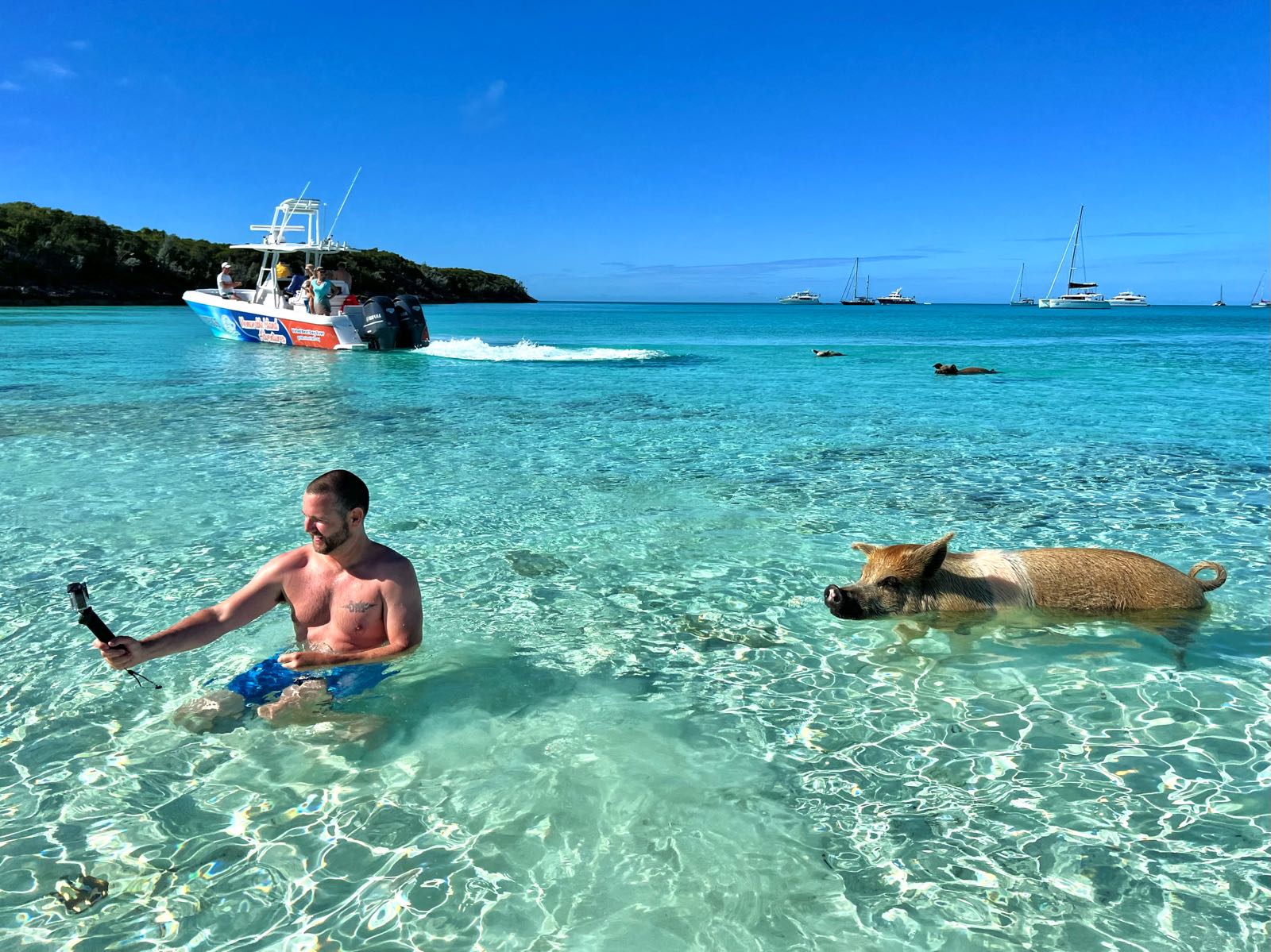
- Powerboat Tours: These are high-speed, 40-foot to 50-foot vessels that carry 20–30 passengers. The journey takes roughly 2 to 3 hours each way across the "Tongue of the Ocean," a deep-water trench. These tours are full-day affairs (typically 8:00 AM to 5:00 PM) and often include stops at Allen’s Cay (to see iguanas) and a lunch break.
- Domestic Flights to Staniel Cay: You can take a 35-minute flight from Nassau’s Lynden Pindling International Airport (LPIA) or a private terminal (FBO) to the Staniel Cay airstrip. From there, you hire a local boat for a 10-minute ride to the pigs. This is the most efficient but most expensive method.
Departing from Great Exuma (George Town)
If you are staying in the southern part of the Exuma chain, tours depart from Barraterre or George Town. The boat ride from Great Exuma to Big Major Cay is generally shorter and more scenic than the trek from Nassau, usually taking 1 to 1.5 hours. These tours provide a more intimate look at the Exuma Cays, passing through the beautiful sandbars of Musha Cay and Little Exuma.
Staying on Staniel Cay
For the most immersive experience, staying on Staniel Cay is the gold standard. As the closest inhabited island, it allows you to rent a small skiff and visit the pigs at sunrise before the tour boats arrive from Nassau. This avoids the crowds and offers a much more personal interaction with the animals.
Logistics, Tour Operators, and Costs
In 2026, prices for these excursions have stabilized after several years of post-pandemic fluctuations. Below is a breakdown of what you can expect to pay for a standard day trip to see the swimming pigs.
| Feature | Powerboat from Nassau | Flight + Boat from Nassau | Day Trip from Great Exuma | Local Skiff (Staniel Cay) |
|---|---|---|---|---|
| Average Cost | $400 - $550 USD | $650 - $850 USD | $300 - $450 USD | $250 - $400 (per boat) |
| Travel Time | 2.5 hours (one way) | 35 min flight + 10 min boat | 1.5 hours (one way) | 10 minutes |
| Group Size | Large (20-40 people) | Medium (8-15 people) | Medium (10-20 people) | Private (up to 4 people) |
| Experience | High energy, bumpy ride | Efficient, scenic | Balanced sightseeing | Self-guided, flexible |
What is Included?
Most reputable tour operators include the following in their 2026 pricing:
- Landing Fees: The "pig tax" or environmental fee required to visit the cay.
- Safety Equipment: Life jackets (required for the boat transit).
- Refreshments: Water, sodas, and often a lunch stop at a local yacht club.
- Additional Stops: Very few tours only visit the pigs. You will likely also visit Compass Cay (to swim with nurse sharks), Bitter Guana Cay (to see Northern Bahamian Rock Iguanas), and the Thunderball Grotto (a famous snorkeling cave).
The Experience: Interaction and Animal Safety
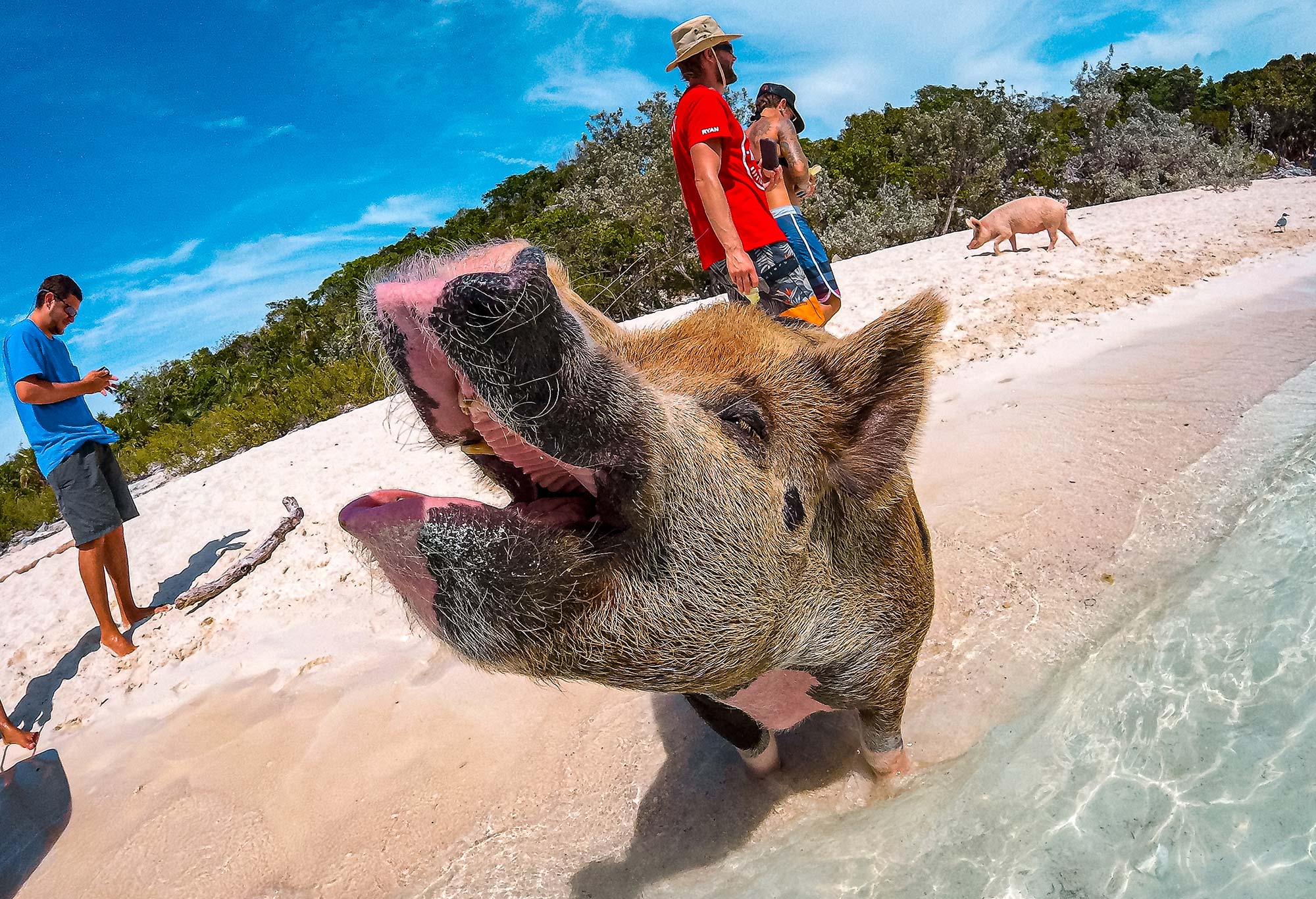
When you arrive at Pig Beach, the larger pigs will likely swim out to your boat before it even reaches the sand. It is vital to remember that these are large, powerful animals. While they are accustomed to humans, they can be unpredictable, especially if they believe you are hiding food.
Guidelines for Safe Interaction
To protect both the animals and the visitors, the following rules are strictly enforced by guides and the Bahamas Ministry of Tourism:
- Feeding in the Water Only: Never feed the pigs on the sand. This prevents them from ingesting excessive amounts of sand, which can lead to sand impaction and death.
- Approved Foods Only: Most tours provide pitted fruits and vegetables (like carrots or apples). Do not feed them processed foods, bread, or citrus.
- Hand Position: When feeding, keep your palms flat. This prevents the pigs from accidentally nipping your fingers.
- Do Not Harass: Never attempt to ride the pigs, pull their tails, or pick up the piglets unless specifically instructed by a licensed guide.
- The "Double-Hand" Signal: If a pig is approaching you and you have no food, show them your empty palms. They are surprisingly intelligent and will usually move on to the next person.
The Impact of Weather
The journey to Big Major Cay involves crossing open water. In 2026, tour operators have become more conservative with cancellations due to wind. If the "Small Craft Advisory" is in effect, trips from Nassau are frequently postponed. The crossing can be extremely bumpy; if you are prone to motion sickness, the flight-based tours or staying locally in the Exumas are highly recommended.
Ethical Considerations and "Copycat" Beaches
As the swimming pigs became a viral sensation, several other islands in the Bahamas began hosting their own pig colonies to meet the demand of tourists who couldn't make the long trip to the Exumas.
- Rose Island (near Nassau): This is a popular alternative for those on a tight schedule or cruise ship passengers. While convenient, it is a commercialized experience where the pigs are kept in a managed facility.
- Meeks Patch (near Eleuthera): Another secondary location.
- Ship Channel Cay: Often used by private tour companies.
If your goal is to see the "authentic" wild swimming pigs in their natural habitat, ensure your tour explicitly states Big Major Cay or Exuma Pigs. The secondary locations offer a similar photo opportunity but lack the historical context and the unique geographical beauty of the Exuma chain.
Essential Packing List for 2026
Preparing for a full day on the water requires specific gear. The sun in the Bahamas is intense, and the reflection off the white sand and turquoise water doubles the UV exposure.
- Reef-Safe Sunscreen: Many areas of the Bahamas now encourage or require reef-safe formulas to protect the local coral ecosystems.
- Dry Bag: Essential for keeping your phone, camera, and towels dry during the boat ride, which can be spray-heavy.
- Rash Guard: Provides better sun protection than sunscreen alone, especially while swimming.
- Waterproof Camera or Housing: You will want photos in the water, not just from the boat.
- Cash: While tours are prepaid, you will need cash (USD or BSD) for tipping your boat captain and for souvenirs at the Staniel Cay Yacht Club.
- Closed-Toe Water Shoes: Helpful for walking on the rugged limestone (ironshore) that makes up parts of the beach.
Frequently Asked Questions
Can you visit the pig beach from a cruise ship?
Yes, but it is challenging if your ship docks in Nassau for only a few hours. A powerboat tour takes 8-9 hours round-trip. Most cruise passengers find it safer to book the "copycat" pig experience at Rose Island, which is only 25 minutes from the Nassau cruise pier. If you insist on the original Big Major Cay, you must ensure your ship is in port for at least 10-12 hours.
Are the pigs dangerous?
The pigs are generally friendly but are large animals driven by food. Bites are rare but usually occur when a visitor "teases" a pig with food or has their fingers curled. As long as you follow the guide's instructions and show empty hands when out of food, the risk is minimal.
Is there an age limit for children?
Most powerboat tours from Nassau have a minimum age (often 5 to 8 years old) because the ride can be very rough on the back and neck. Private charters or flight-based tours are better suited for families with younger children or elderly travelers.
What is the best time of day to visit?
The best time to visit is early morning (between 8:00 AM and 10:00 AM). The pigs are most active and hungry during this time. By mid-afternoon, especially in the heat of the summer, the pigs often retreat into the shade of the trees to nap, making them less likely to swim out to the boats.
Do the pigs have names?
Yes, locals and frequent guides have named many of the permanent residents. You might meet "Big Momma," the matriarch of the group, or various piglets that are born throughout the year.
Practical Recommendation for 2026
If your budget allows, the most rewarding way to see the swimming pigs in 2026 is to book a multi-night stay on Staniel Cay. This removes the stress of a long-distance boat commute from Nassau and allows you to visit the beach at "golden hour" for photography. If you are limited to a single day, choose the flight-based excursion from Nassau to Staniel Cay; the extra cost is justified by the time saved and the spectacular aerial views of the Exuma Cays, which are often cited as the most beautiful part of the entire trip. Always verify that your tour operator is licensed and follows the official "Swimming with Pigs" code of conduct to ensure the continued health of the colony.