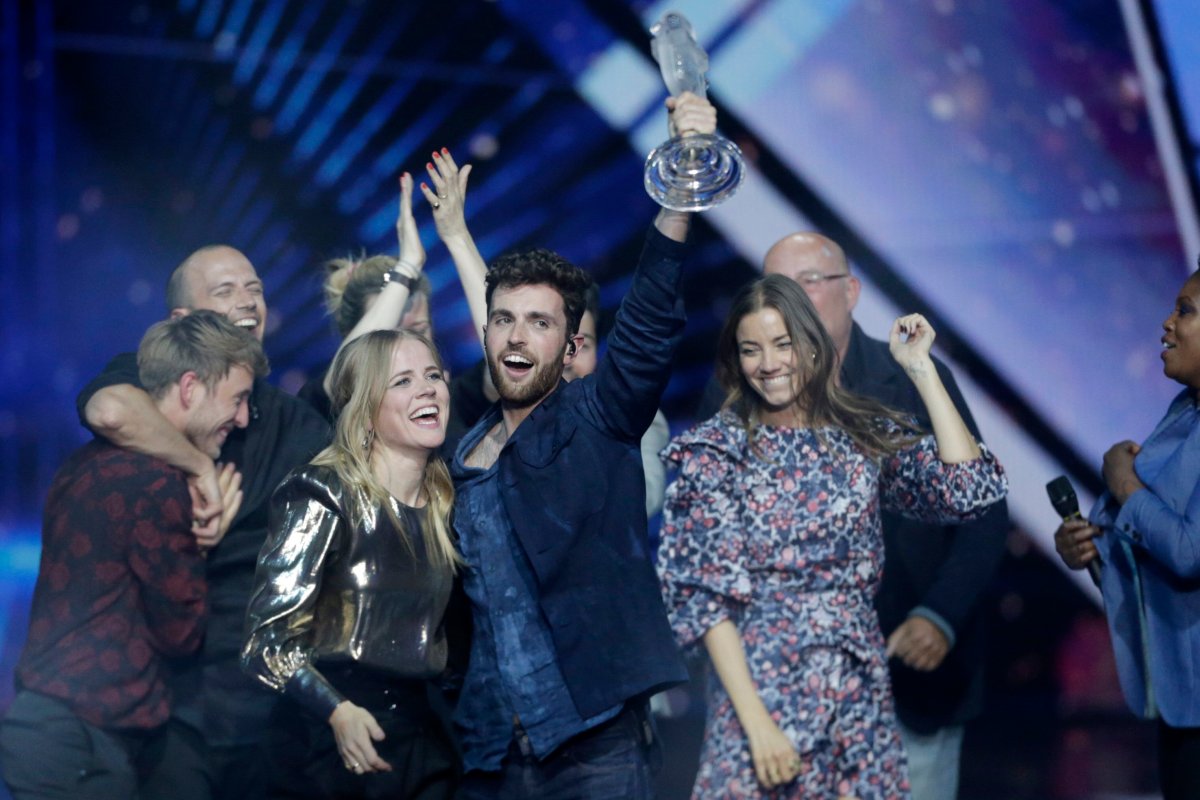
When Duncan Laurence performed "Arcade" at the 2019 Eurovision Song Contest in Tel Aviv, he secured the Netherlands' fifth victory with 498 points. The emotional piano ballad ended a 44-year drought for the country, winning through broad consensus across both professional juries and public televoters before becoming a historic global streaming phenomenon.
The Historical Context: Ending a 44-Year Dutch Drought
Before Duncan Laurence took the stage at Expo Tel Aviv in May 2019, the Netherlands occupied an agonizing position in Eurovision history. Despite being one of the seven founding nations of the contest in 1956, Dutch fortunes had waned severely after the twentieth century. The nation’s previous victory dated back to 1975, when the pop group Teach-In won in Stockholm with the upbeat track "Ding-a-dong."
In the decades that followed, Dutch entries struggled under shifting musical styles, political voting dynamics, and changing contest formats. Between 2005 and 2012, the Netherlands suffered an infamous eight-year non-qualification streak, failing to progress from the semi-finals regardless of the genre or staging attempted.
- 1975: Teach-In wins with "Ding-a-dong"
- Decades of mixed results
- 2005–2012: The 8-year qualification drought
- 2013: Anouk finishes 9th, reversing Dutch fortunes
- 2014: The Common Linnets finish 2nd with "Calm After the Storm"
- 2019: Duncan Laurence wins with "Arcade" (498 points)
The turnaround began in 2013 when Dutch broadcaster AVROTROS abandoned public selection finals and embraced an internal artist-led selection committee. Established rock icon Anouk agreed to represent the country on the condition that she retain artistic control over her song, "Birds." Her ninth-place finish proved that mature, radio-ready compositions could thrive at Eurovision without gimmicks.
The following year, The Common Linnets (featuring Ilse DeLange and Waylon) finished in second place behind Austria’s Conchita Wurst with their country-folk duet "Calm After the Storm." This modern blueprint set the stage for 2019. AVROTROS shifted its priority entirely away from high-energy stage spectacle and toward authentic, singer-songwriter craft.
The Songwriting and Production of "Arcade"
"Arcade" was not engineered specifically for Eurovision. Duncan Laurence (born Duncan de Moor) conceived the foundational melody and core emotional theme while studying at the Rock Academy (Rockacademie) in Tilburg.
The Personal Story Behind the Lyrics
The narrative core of "Arcade" centers on profound grief, unresolved longing, and the pain of love that cannot be sustained. Laurence based the central metaphor on the tragic loss of a loved one who passed away at a young age, alongside his own personal experiences navigating heartbreak and self-acceptance as a young bisexual man in a conservative hometown.
The arcade metaphor captures the futility of emotional attachment where the outcome is rigged from the start:
"Loving you is a losing game"
By framing toxic infatuation and grief as an arcade machine that swallows coins without paying out, Laurence delivered a universal, relatable narrative that transcended linguistic and cultural barriers across Europe and beyond.
Compositional Structure and Production
Laurence co-wrote the finished track with Wouter Hardy and Joel Sjöö, with additional lyrical contributions from Will Knox. Hardy, who also produced the master recording, constructed an arrangement that broke standard Eurovision pop conventions:
- Minimalist Piano Foundation: The song opens with an intimate, unresolved three-chord progression played on an acoustic upright piano, immediately establishing a somber atmosphere.
- Atmospheric Production: The verses rely heavily on subtle sub-bass pulses, ambient synthesizers, and vocal layering rather than aggressive rhythm tracks.
- Dynamic Contrast and Percussion: As the song builds toward the second chorus and bridge, heavy cinematic percussion and reverberant snares enter, creating an expansive, indie-pop wall of sound.
- Vocal Range: Laurence's performance demands subtle falsetto control in the verses followed by sustained chest-voice belts reaching high notes (up to G4 and A4) during the climactic final chorus.
When Ilse DeLange heard Laurence's demo, she immediately championed it to the Dutch selection committee. DeLange recognized that Laurence’s vulnerable performance and contemporary production stood far apart from conventional contest entries.
The Road to Tel Aviv: Selection and Staging Strategy
AVROTROS officially announced Duncan Laurence as the Dutch representative on January 21, 2019, before the public had ever heard the song. At the time of the announcement, Laurence was virtually unknown outside niche Dutch music circles, having previously appeared as a semi-finalist on The Voice of Holland in 2014 under DeLange's mentorship.
The Power of the Song Release
On March 7, 2019, AVROTROS released "Arcade" alongside its music video. The response from fans, bookmakers, and music critics was instantaneous:
- Immediate Betting Lead: Within 48 hours of release, the Netherlands surged to the number one position on international betting aggregates, a spot it held almost uninterrupted until the Grand Final.
- Critical Acclaim: International commentators highlighted the track's resemblance to contemporary charting tracks by artists like Coldplay, Lewis Capaldi, and Sam Smith rather than stereotypical Eurovision camp.
- Organic Momentum: The track accumulated millions of streams across Spotify and YouTube well before the delegation traveled to Israel for rehearsals.
Subtlety on the Eurovision Stage
Staging a quiet piano ballad in a venue holding thousands of screaming fans presents major logistical and artistic challenges. The creative team, led by director Hans Pannecoucke and Ilse DeLange, chose an approach of radical minimalism.
Rather than utilizing background dancers, pyrotechnics, or frantic LED graphics, the staging placed Laurence alone at an electric stage piano customized to resemble a sleek acoustic instrument. The visual palette was limited to cool blue, deep cyan, and smoky shadows, illuminated by subtle spotlighting designed to resemble an aquatic environment or the interior of a dimly lit venue.
This deliberate visual restraint forced viewers across the television broadcast to focus on Laurence’s facial expressions, the acoustic resonance of the piano, and the song’s lyrical vulnerability.
Voting Analysis: How "Arcade" Secured the Victory
The 2019 Eurovision Grand Final, held on May 18, 2019, featured one of the most unpredictable and tightly contested voting sequences under the modern 50/50 split system (where national expert juries provide 50% of the total score and public televoting provides the remaining 50%).
Winning Through Consensus
The defining characteristic of Duncan Laurence's win was universal appeal across both voting blocks. Remarkably, "Arcade" did not finish first in the jury vote, nor did it finish first in the public televote:
- Jury Voting: The professional juries awarded the Netherlands 237 points, placing Laurence in third place behind North Macedonia (Tamara Todevska, 247 points) and Sweden (John Lundvik, 241 points).
- Televoting: The international television audience awarded the Netherlands 261 points, placing Laurence in second place behind Norway (KEiiNO, 291 points).
While regional and genre favorites dominated individual wings of the voting, "Arcade" earned massive, consistent points from nearly every participating country across both categories. This double-podium finish gave the Netherlands an unbeatable cumulative total of 498 points, defeating runner-up Italy (Mahmood with "Soldi," 472 points) and third-place Russia (Sergey Lazarev with "Scream," 370 points).
2019 Eurovision Grand Final: Top 5 Breakdown
The following table illustrates the official distribution of points across the top-performing entries in the 2019 Grand Final, based on confirmed European Broadcasting Union (EBU) contest records:
| Country | Artist | Song | Jury Points | Televote Points | Total Points | Final Placement |
|---|---|---|---|---|---|---|
| Netherlands | Duncan Laurence | "Arcade" | 237 | 261 | 498 | 1st |
| Italy | Mahmood | "Soldi" | 219 | 253 | 472 | 2nd |
| Russia | Sergey Lazarev | "Scream" | 126 | 244 | 370 | 3rd |
| Switzerland | Luca Hänni | "She Got Me" | 152 | 212 | 364 | 4th |
| Sweden | John Lundvik | "Too Late for Love" | 241 | 93 | 334 | 5th |
Detailed Voting Patterns
The Netherlands received points from 37 out of 40 eligible national juries, including maximum 12-point marks from France, Israel, Latvia, Lithuania, Portugal, and Sweden.
On the public side, television viewers in all 40 voting nations awarded points to the Netherlands, making it one of the few entries in modern contest history to receive televoting support from every single eligible country. Two nations—Belgium and Romania—awarded Laurence their top 12-point televote score.
Global Afterlife: The Viral Resurgence and Billboard Success
Historically, winning Eurovision songs enjoyed brief regional chart success across continental Europe before fading from mainstream international radio. "Arcade" entirely shattered this pattern, evolving into a transformative global hit more than a year after its victory.
- May 2019: Duncan Laurence wins Eurovision in Tel Aviv
- Late 2020: "Arcade" goes viral on TikTok (soundtracks user edits & trends)
- Early 2021: Crosses into US mainstream radio and streaming markets
- April 2021: Enters the US Billboard Hot 100 (peaks at #78)
- August 2023: First Eurovision song in history to reach 1 Billion Spotify streams
- 2026: Firmly established as an international pop-ballad standard
The TikTok Catalyst
In late 2020, during the height of the COVID-19 pandemic, social media users on TikTok began pairing the emotional climax of "Arcade"—specifically the bridge leading into the final chorus—with dramatic storytelling videos, anime edits, and personal memoirs. The song resonated strongly with millions of users who had never watched the Eurovision Song Contest.
The track experienced an organic surge in daily streams across North America, Latin America, and Southeast Asia. Recognizing the trend, Laurence and his label released alternative acoustic versions and a collaborative duet featuring American singer-songwriter FLETCHER to support US radio campaigns.
Breaking Records on Global Charts
The sustained momentum propelled "Arcade" into rare commercial territory for a Eurovision winner:
- US Billboard Hot 100: In April 2021, "Arcade" entered the US Billboard Hot 100, eventually peaking at number 78. It was the first Eurovision-winning song to chart in the United States since Brotherhood of Man's "Save Your Kisses for Me" in 1976, and the first contest entry of any kind to appear on the chart since Gina G's "Ooh Aah... Just a Little Bit" in 1996.
- The Billion-Stream Milestone: In August 2023, "Arcade" made history by becoming the first Eurovision song to surpass one billion streams on Spotify. It held the all-time streaming crown for the contest before later competing alongside hits like Måneskin's "Beggin'" (which the Italian band covered following their 2021 win) and Rosa Linn's 2022 entry "Snap."
- Global Certifications: The song achieved multi-platinum sales certifications across dozens of territories, including the United States (RIAA Platinum), the United Kingdom (BPI Platinum), Canada, Australia, and throughout mainland Europe.
Why "Arcade" Won: The Musical Blueprint for Modern Eurovision
The victory of "Arcade" permanently reshaped how European broadcasters and record labels approach the contest. Laurence demonstrated that winning Eurovision does not require over-the-top stage gimmicks, fast-paced choreography, or massive visual effects budgets.
Three Pillars of the Winning Campaign
1. Universal Indie-Pop Sensibility
"Arcade" sounded like a contemporary single by established global chart-toppers rather than a piece of novelty theater engineered strictly for a 3-minute television slot. By targeting contemporary streaming aesthetics, the song established credibility with professional music jurors and young streaming audiences alike.
2. Radical Authenticity and Vulnerability
Eurovision stages can easily dwarf solo performers. Laurence neutralized this risk by anchoring himself behind a piano, forcing broadcast cameras into tight close-ups that highlighted emotional delivery. This created an intimate viewing experience inside living rooms across the continent.
3. Strategic Broadcaster Governance
AVROTROS demonstrated the power of the internal selection model when managed by active musicians rather than corporate committees. By placing artistic guidance into the hands of experienced performers like Ilse DeLange, the broadcaster insulated Laurence from commercial interference, allowing him to present his original vision intact.
Frequently Asked Questions
Did Duncan Laurence win both the jury and the televote at Eurovision 2019?
No. Duncan Laurence won neither the jury vote nor the televote individually. North Macedonia won the jury vote with 247 points, while Norway won the public televote with 291 points. However, Laurence finished third with the juries (237 points) and second with the public (261 points), achieving the highest combined total score of 498 points.
Who wrote and produced "Arcade"?
"Arcade" was written by Duncan Laurence alongside Dutch producer Wouter Hardy and Swedish songwriter Joel Sjöö, with additional lyric support from Will Knox. Wouter Hardy produced and arranged the final track, establishing its minimalist piano foundation and atmospheric percussion.
Why was "Arcade" allowed to compete if it was written years earlier?
Contest rules established by the EBU prohibit songs from being commercially released or publicly performed before September 1 of the preceding contest year. Although Laurence developed the song while a student at the Rock Academy in 2017, it remained unreleased and was never made commercially available or performed in a public forum until its official release on March 7, 2019, making it fully eligible.
How did "Arcade" become popular in the United States?
"Arcade" gained massive popularity in the United States roughly 18 months after winning Eurovision, propelled by a viral trend on TikTok in late 2020. The song's emotional bridge became a ubiquitous soundtrack for short-form user videos, driving hundreds of millions of streams and leading to an entry on the US Billboard Hot 100 in 2021.
When did the Netherlands win Eurovision before Duncan Laurence?
Prior to 2019, the Netherlands last won the Eurovision Song Contest in 1975 with the song "Ding-a-dong," performed by the pop group Teach-In. The 44-year gap between 1975 and 2019 was one of the longest championship droughts in the history of the competition.
Recommended Next Steps for Musicians and Contest Followers
To gain a practical understanding of how contemporary songcraft succeeds in modern international music contests:
- Study the Arrangement: Listen to the original studio master of "Arcade" alongside its live Tel Aviv Grand Final performance. Note how the live mix balances dynamic sub-bass and backing vocal harmonies to make a solo piano performance fill an arena without losing intimacy.
- Review Voting Architecture: Analyze how consensus voting operates under the 50/50 EBU system. An entry with broad appeal across both panels consistently outperforms polarizing songs that score high in only one voting wing.
- Explore the Dutch Repertoire: Examine other internally selected Dutch entries from the modern era—such as Anouk’s "Birds" (2013), The Common Linnets' "Calm After the Storm" (2014), and S10's "De Diepte" (2022)—to see how prioritizing authentic songwriting revived the country’s international competitive standing.