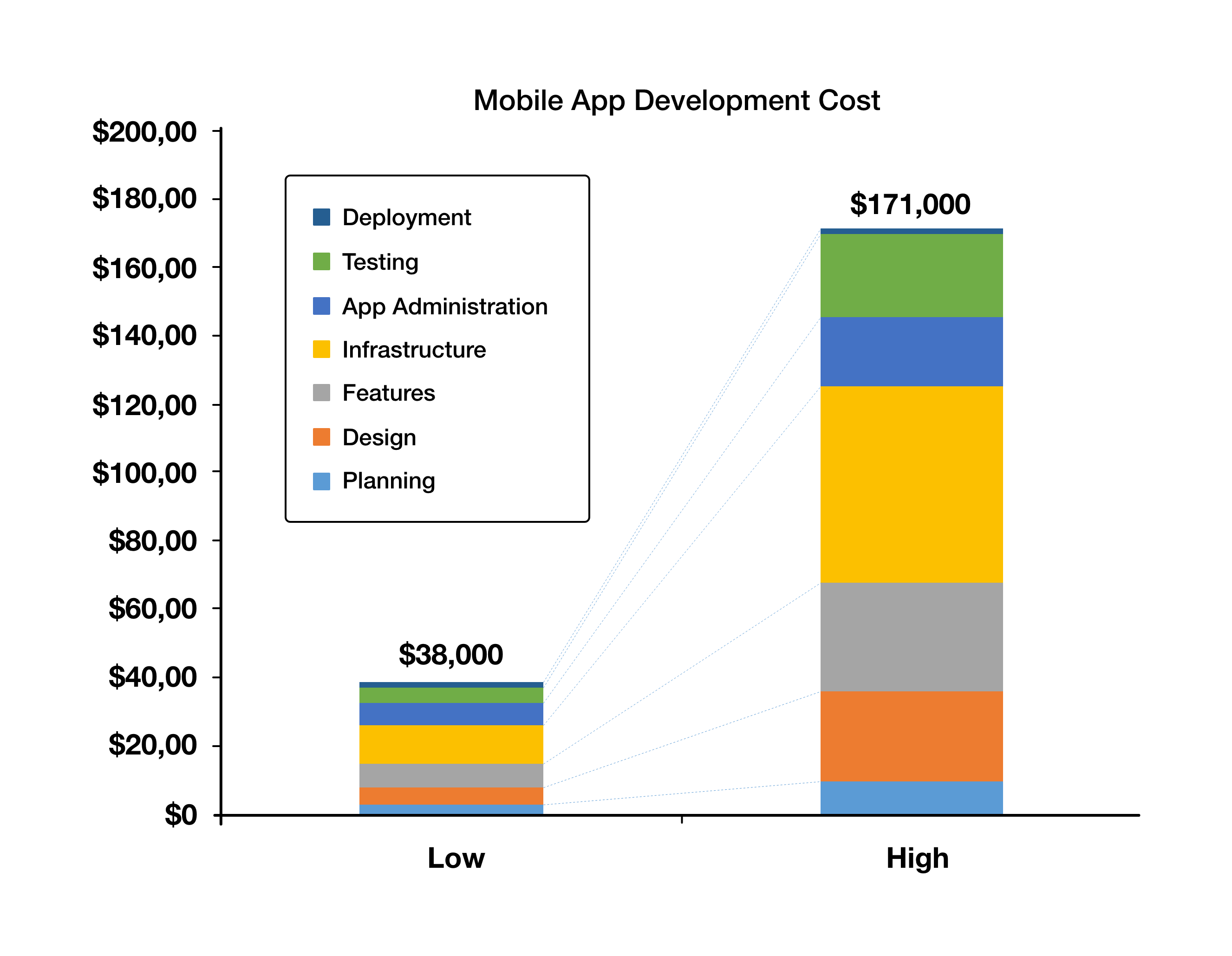
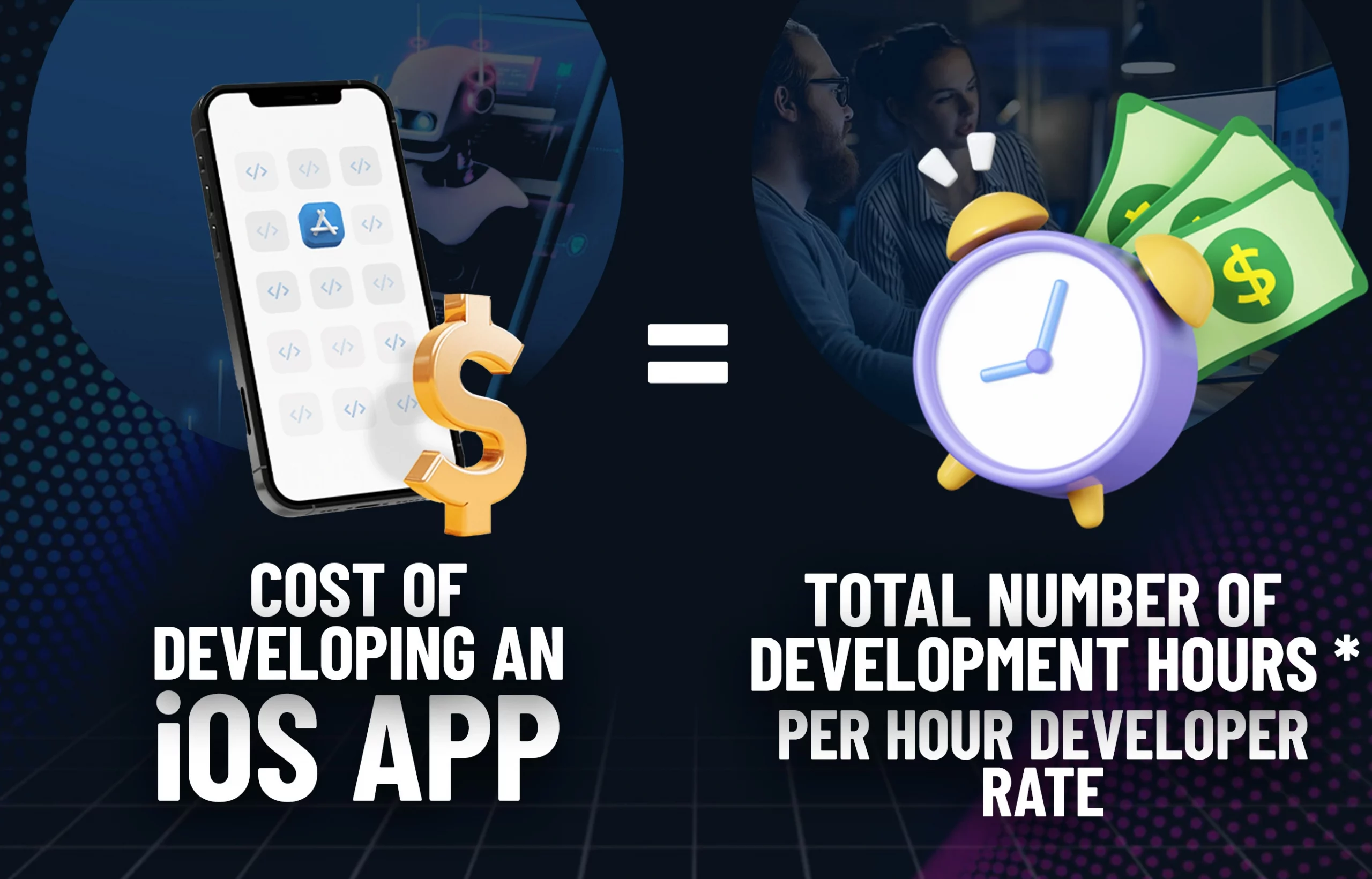
The average cost to hire an app developer ranges from $25 to $150+ per hour, depending on geographic location, expertise, and engagement model. Overall project costs typically range from $15,000 to $45,000 for a basic application, $45,000 to $120,000 for a medium-complexity app, and $120,000 to over $300,000 for enterprise-grade mobile software.
Understanding the direct and indirect variables behind mobile software pricing is essential for founders, product managers, and enterprise decision-makers. Estimating an application budget involves more than taking an hourly rate and multiplying it by estimated design and coding hours. Factors such as backend architecture, target platforms, regulatory compliance, quality assurance, and post-launch maintenance directly shape total expenditure.
Primary Factors That Determine App Developer Costs
Software engineering pricing is governed by economic supply, localized cost of living, domain expertise, and operational overhead. Evaluating these core parameters enables accurate budgeting before writing the first line of code.
Developer Geography and Regional Hourly Rates
Geographic location is the single largest variable impacting hourly software development rates. Developer rates correlate strongly with local economic conditions, tax structures, and business overhead.
- North America (United States, Canada): $100 – $200+ per hour for agencies; $60 – $120 per hour for independent contractors. Premium rates reflect proximity to major tech hubs, high cost of living, and localized legal accountability.
- Western Europe and United Kingdom: $70 – $150 per hour. Highly skilled talent pools operating under stringent data protection standards such as the General Data Protection Regulation (GDPR).
- Eastern Europe (Poland, Ukraine, Romania): $35 – $75 per hour. Highly regarded for strong STEM education systems, robust software architecture skills, and competitive pricing.
- Latin America (Brazil, Mexico, Colombia): $40 – $80 per hour. Increasingly popular for North American businesses due to overlapping time zones and strong nearshore communication channels.
- South and Southeast Asia (India, Vietnam, Philippines): $20 – $50 per hour. Offers large developer availability and the lowest hourly rates, though management overhead and time zone variance must be factored into execution plans.
Seniority Level and Technical Specialization
Engineering skill levels directly affect both developer velocity and code quality:
- Junior Developers (1–2 years experience): Focus on basic user interface (UI) implementation, straightforward bug fixes, and boilerplate code. Lower hourly rate, but requires senior oversight and may result in higher refactoring costs later.
- Mid-Level Developers (3–5 years experience): Capable of managing feature modules independently, designing efficient database schemas, and integrating standard Application Programming Interfaces (APIs).
- Senior Developers & Solutions Architects (6+ years experience): Oversee system architecture, high-concurrency scaling, data encryption, complex state management, and performance optimization. While demanding higher hourly compensation, experienced engineers write cleaner, more maintainable code in significantly fewer billable hours.
Specialized domain knowledge—such as machine learning integration, custom video processing, WebRTC real-time communication, or financial cryptography—commands a 20% to 40% premium over general mobile app development rates.
Engagement Model: Freelancers vs. Agencies vs. In-House Engineers
Choosing the right hiring vehicle dictates operational risk, speed to market, and management responsibility:
Hiring Models Comparison:
Independent Freelancers: Lowest upfront cost | High management effort | Variable availability
Offshore/Nearshore Agencies: Managed teams | Balanced cost | Turnkey execution
Onshore Dedicated Agencies: Premium cost | Low execution risk | Strong strategic guidance
In-House Engineering Team: Highest fixed cost | Maximum control | Long-term commitment
Freelancers: Best for isolated tasks, minor feature additions, or early-stage prototypes. Managing multiple freelancers requires in-house technical management, as individual contractors rarely coordinate project management, UI/UX design, and quality assurance on their own.
Development Agencies: Agencies supply complete, cross-functional teams comprising project managers, UI/UX designers, frontend and backend developers, and QA engineers. Fixed-price or time-and-materials agency contracts reduce delivery risk at a higher billable rate.
In-House Engineers: Hiring full-time employees in North America or Western Europe incurs base salaries ($110,000 – $180,000+ annually per senior engineer), plus payroll taxes, benefits, equipment, and equity incentives. This model is reserved for core product development where long-term intellectual property control is paramount.
App Development Costs by Complexity and Feature Set
Application pricing correlates with project complexity. Complexity is defined by the number of screens, unique user flows, custom backend infrastructure, dynamic data updates, and regulatory compliance standards.
App Complexity Spectrum:
- Simple MVP
- 1 Platform (iOS or Android)
- Standard UI Components
- Basic Authentication
- Estimated: $15k - $45k
- Medium Complexity
- Dual Platform (iOS & Android)
- Custom Backend & APIs
- Payment Processing & Analytics
- Estimated: $45k - $120k
- Enterprise / Complex
- Microservices Architecture
- Real-Time Data & AI Models
- HIPAA / PCI-DSS / SOC 2
- Estimated: $120k - $300k+
Basic Applications and Minimum Viable Products (MVPs)
- Estimated Cost Range: $15,000 – $45,000
- Development Timeline: 2 to 3 months (approx. 400 – 700 total billable hours)
A basic app or MVP tests a core business hypothesis with minimal feature overhead.
- Key Features: Email/password authentication, basic user profiles, push notifications, standard list/detail views, simple search, and pre-built API integrations (e.g., Firebase for database and authentication).
- Limitations: Minimal custom animations, single-platform deployment (or simple cross-platform implementation), and standard layout templates.
Medium-Complexity Applications
- Estimated Cost Range: $45,000 – $120,000
- Development Timeline: 4 to 6 months (approx. 800 – 1,500 total billable hours)
Medium-complexity applications power the majority of consumer and business-to-business (B2B) digital products.
- Key Features: Custom UI design, social login, secure payment gateway processing (Stripe, PayPal, Apple Pay), in-app messaging or basic chat, user role management, custom REST or GraphQL APIs, back-office admin control panels, and multi-language support.
- Infrastructure: Custom backend setup utilizing Node.js, Python, or Go, hosted on cloud environments such as Amazon Web Services (AWS) or Google Cloud Platform (GCP).
Complex, Enterprise-Grade Applications
- Estimated Cost Range: $120,000 – $300,000+
- Development Timeline: 6 to 12+ months (approx. 1,800 to 4,000+ total billable hours)
Enterprise applications are designed for high user concurrency, strict security mandates, and mission-critical reliability.
- Key Features: Real-time data streaming (via WebSockets), offline data synchronization with conflict resolution, artificial intelligence/machine learning model integration, complex data encryption at rest and in transit, custom video/audio processing engines, and multi-tenant microservices backends.
- Regulatory Compliance: Implementation of stringent data protection frameworks such as Health Insurance Portability and Accountability Act (HIPAA) compliance for healthcare applications, PCI-DSS compliance for payment platforms, or SOC 2 Type II compliance for enterprise SaaS tools.
Technology Stack Impact: Native vs. Cross-Platform Development
The architectural decision between native development and cross-platform frameworks directly impacts both upfront construction costs and long-term maintenance budgets.
Native Development (Swift for iOS / Kotlin for Android)
Native development involves building two entirely separate codebases using platform-specific SDKs: Swift/Objective-C within Xcode for Apple iOS, and Kotlin/Java within Android Studio for Google Android.
- Cost Implications: Building separate native codebases effectively doubles the frontend engineering effort. If an application requires 600 hours of mobile frontend work on iOS, building native Android parity requires an additional 500 to 600 hours.
- Advantages: Direct access to native device APIs (ARKit, CoreML, Bluetooth hardware controls, low-level camera functions), superior rendering performance for graphic-intensive tasks, and immediate support for newly released operating system features.
- Best Used For: High-performance games, hardware-connected IoT applications, complex audio/video editing suites, and apps heavily reliant on platform-specific hardware.
Cross-Platform Frameworks (React Native / Flutter)
Cross-platform frameworks allow engineers to write a single unified codebase that compiles to native user interfaces on both iOS and Android.
- Cost Implications: Reduces mobile frontend development time by 30% to 45% compared to developing two distinct native apps. Code sharing between platforms typically reaches 80% to 90%, lowering initial time-to-market and long-term maintenance expenses.
- Framework Options:
- React Native: Maintained by Meta, uses JavaScript/TypeScript, features a vast ecosystem of third-party npm libraries.
- Flutter: Maintained by Google, uses the Dart language, renders UI via its own graphics engine (Impeller/Skia) for precise pixel control across platforms.
- Best Used For: E-commerce applications, enterprise internal tools, content platforms, social network clients, and general utility applications where native hardware performance limits are not challenged.
Detailed Cost Matrix: Pricing, Timelines, and Rate Breakdown
The following reference matrix outlines project scopes, typical timeline ranges, total hour allocations, and estimated budgets based on global developer rate tiers.
| App Category | Core Characteristics | Approx. Total Hours | Nearshore / Mid-Tier Agency Rate ($50–$80/hr) | Onshore / Premium US Agency Rate ($120–$180/hr) | Typical Timeline |
|---|---|---|---|---|---|
| Simple MVP | Single platform or basic cross-platform; standard UI; authentication; simple database read/write. | 350 – 600 hrs | $17,500 – $48,000 | $42,000 – $108,000 | 2 – 3 Months |
| Medium Business App | Dual-platform cross-platform; custom REST APIs; Stripe integration; admin panel; custom UI kit. | 700 – 1,300 hrs | $35,000 – $104,000 | $84,000 – $234,000 | 3 – 5 Months |
| Advanced On-Demand / Marketplace | Real-time GPS tracking; dual user roles (buyer/driver); push notifications; automated dispatch logic. | 1,200 – 2,000 hrs | $60,000 – $160,000 | $144,000 – $360,000 | 5 – 8 Months |
| Enterprise / Regulatory Complex | Microservices architecture; HIPAA/PCI compliance; AI model inference; heavy data encryption; offline sync. | 1,800 – 3,500+ hrs | $90,000 – $280,000+ | $216,000 – $630,000+ | 6 – 12+ Months |
Uncovering Hidden and Ongoing Costs in App Development
Initial development costs account for only a portion of an application's lifecycle expenditure. Software requires continuous maintenance, cloud infrastructure, third-party software licenses, and security management.
Total Cost of Ownership (First 3 Years):
- Initial Build (Design, Frontend, Backend, QA): 50% - 60%
- Ongoing Cloud Infrastructure & Third-Party APIs: 15%
- Annual Maintenance, OS Updates & Security: 20%
- Store Publishing Fees & Administrative Overhead: 5%
Infrastructure, Hosting, and Database Services
Mobile apps rely on cloud backends to handle data processing, user records, and storage. Cloud costs scale directly with active usage and storage volume:
- Database & Computing (AWS, GCP, Azure): Small apps start at $20 – $100 per month. Apps handling 100,000 active users frequently incur cloud hosting expenses ranging from $500 to $3,000+ per month depending on database query complexity and caching layers (e.g., Redis).
- Media Storage and Content Delivery Networks (CDNs): Asset-heavy apps (image sharing, audio, video) require cloud storage services like Amazon S3 and CDN acceleration (Cloudflare, CloudFront), which scale with data transfer volume.
Third-Party APIs and Software Licenses
Modern applications integrate specialized third-party services to accelerate development. These services operate primarily on monthly subscription or pay-per-use models:
- Authentication & User Management: Services like Auth0 or Firebase Authentication (free tier up to thresholds, scaling to hundreds per month).
- Transactional Communications: Twilio for SMS verification ($0.0079 per SMS depending on destination); SendGrid or Postmark for email delivery.
- Payment Processing: Stripe charges standard transaction fees (typically 2.9% + $0.30 per successful card charge), plus additional platform usage fees for connected accounts.
- Analytics and Error Monitoring: Tools such as Mixpanel, Amplitude, Sentry, and Datadog range from free basic tiers to $100 – $1,000+ per month as events scale.
UI/UX Design and Quality Assurance (QA)
A common planning oversight is bundling design and testing into general coding tasks. Production-ready software requires dedicated design and QA specialists:
- UI/UX Design: User research, wireframing, interactive prototyping (in tools like Figma), and design system creation account for 15% to 22% of total project hours.
- Quality Assurance (QA): Manual device testing, cross-device compatibility verification, regression testing, and automated test writing account for 15% to 20% of the overall engineering budget. Skipping formal QA significantly increases post-launch patch expenses and risks negative user reviews.
Annual Maintenance, Updates, and Security Monitoring
Industry standards allocate 15% to 20% of the initial development cost per year for ongoing technical maintenance. If an application costs $100,000 to build, budget $15,000 to $20,000 annually for upkeep.
Annual maintenance tasks include:
- Operating System Updates: Adapting to annual iOS and Android system releases, deprecated APIs, and updated UI guidelines.
- Security Patches: Updating dependency libraries, fixing backend software vulnerabilities, and maintaining network security certificates.
- Third-Party API Adjustments: Updating code when third-party partner APIs release breaking changes.
Developer Account Fees and Store Commission
Publishing mobile software requires continuous compliance with vendor platform ecosystems:
- Apple Developer Program: $99 per year for individual/organization accounts; $299 per year for the Apple Developer Enterprise Program.
- Google Play Console: One-time $25 registration fee.
- App Store Commissions: Apple and Google collect a standard 30% commission on in-app purchases and digital subscriptions. Small businesses earning under $1,000,000 annually qualify for reduced 15% commission tiers via the Apple Small Business Program and Google Play's reduced fee tier.
Strategic Cost-Optimization Frameworks for Business Owners
Optimizing mobile application budgets requires strategic scope control and smart architectural choices rather than negotiating lower hourly rates that may compromise engineering quality.
Prioritizing Features via a Core Value Matrix
Scope creep is the leading cause of budget overruns. Before starting development, categorize planned application capabilities using a prioritized feature matrix:
- Must-Have (Core MVP Scope): Features strictly necessary to solve the user's primary problem. All early engineering hours focus here.
- Should-Have: Valuable features that enhance user experience but are not fatal to launch without (e.g., advanced filtering options, social media sharing).
- Could-Have: Enhancements deferred to post-launch iterations (e.g., custom dark mode themes, AI-driven personal recommendations).
- Won't-Have (Initial Phase): Features deliberately excluded from the initial release to control development complexity.
Utilizing Backend-as-a-Service (BaaS) Solutions
Building a custom server backend from scratch requires writing custom database schemas, server routing, server administration, and security configurations. Early-stage projects can cut backend development costs by 40% to 60% by leveraging managed Backend-as-a-Service platforms:
- Platforms: Google Firebase, Supabase (open-source alternative), or AWS Amplify.
- Benefits: These solutions provide built-in authentication, real-time database management, serverless cloud functions, and file storage APIs out of the box, letting developers focus billable hours on front-end user experience.
Selecting the Right Development Sourcing Model
A hybrid development approach frequently provides the optimal balance of quality, risk mitigation, and expenditure:
Optimized Hybrid Sourcing Model:
- Onshore Product Owner / Technical Lead
- Architecture, Security Audit, Core PM, Code Review
- Direct Supervision
- Nearshore / Offshore Engineering Team
- UI/UX Design, Feature Coding, Manual QA
Using a local product manager or senior architect to oversee nearshore developers helps protect software architecture quality while leveraging competitive international engineering rates.
Frequently Asked Questions
Why do app development estimates vary so dramatically between quotes?
Quotes vary because agencies interpret scopes differently, employ different technology strategies, and maintain varied operational costs. A $20,000 quote from an offshore team usually covers standard template-based UI with basic cloud services, whereas a $120,000 quote from an onshore agency includes comprehensive product discovery, custom architectural design, thorough automated unit testing, dedicated project management, and formal security audits.
How much does it cost to build an app like Uber, Airbnb, or TikTok?
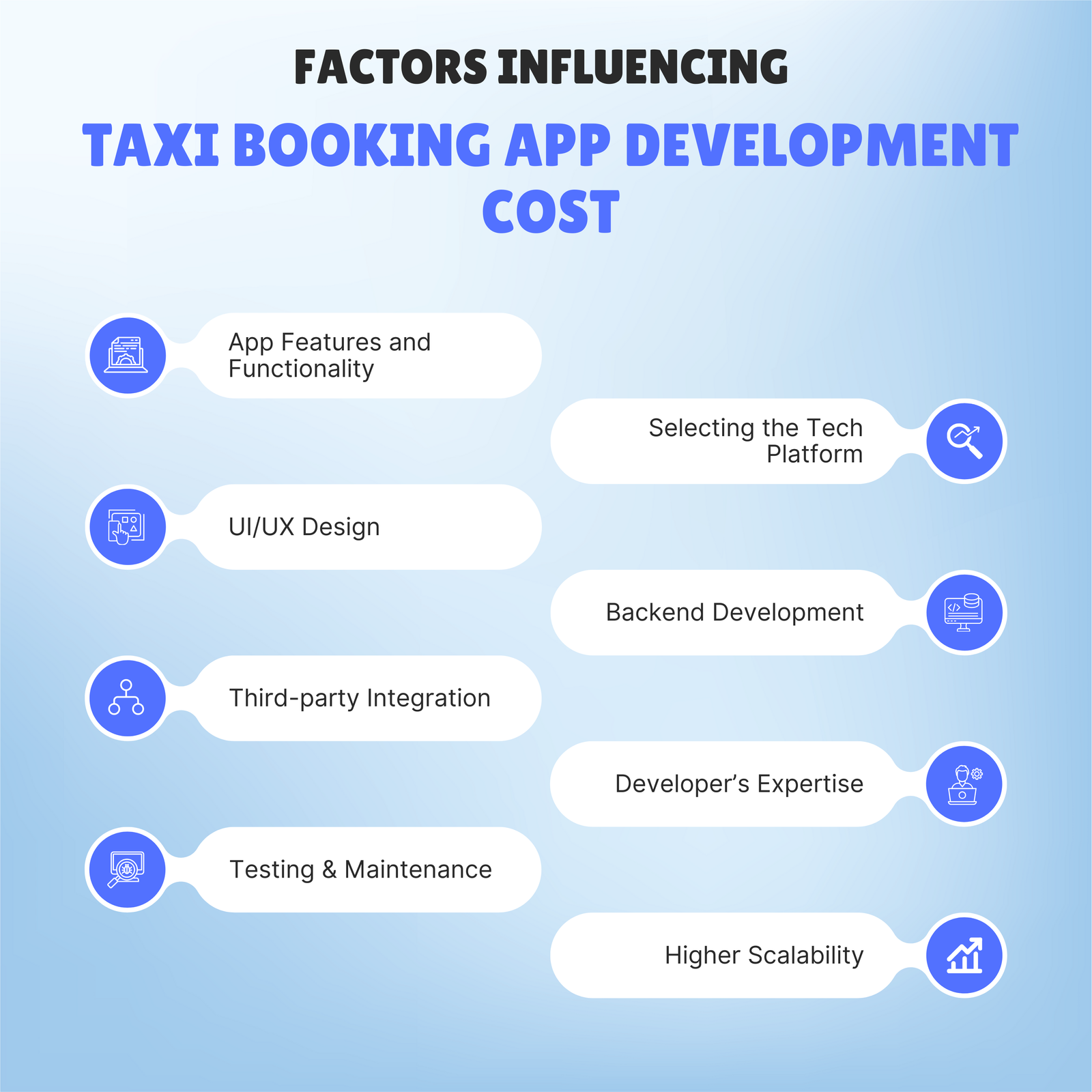
Building a fully operational, scalable clone of platforms like Uber or Airbnb costs between $150,000 and $350,000+ for initial production launch versions. These applications involve two distinct client interfaces (e.g., passenger vs. driver, guest vs. host), an advanced real-time backend engine, precise geolocation handling, payment processing, fraud prevention algorithms, and sophisticated operational management dashboards.
Is cross-platform development always cheaper than native development?
Cross-platform development using React Native or Flutter is generally 30% to 45% cheaper for initial dual-platform launches compared to building separate native iOS and Android apps. However, if your application relies heavily on deep hardware integrations, real-time Bluetooth device communications, advanced graphics processing, or platform-specific OS APIs, native development may be more cost-effective long term to avoid complex custom platform bridge maintenance.
Should I hire a freelancer or a development agency for my application?
Hire an independent freelancer if you already have an in-house technical leader (such as a CTO) who can write specifications, review pull requests, manage databases, and oversee quality assurance. Hire a development agency if you need an end-to-end team capable of handling business analysis, UI/UX design, software architecture, quality testing, and app store deployments under unified project management.
What percentage of my app budget should be allocated to post-launch costs?
Plan to reserve 20% to 30% of your total initial budget for year-one post-launch expenses. This accounts for ongoing infrastructure fees, operational monitoring tools, third-party API usage fees, app store developer subscriptions, critical bug fixes, and minor user experience improvements based on real-world user feedback.
Managing Your App Development Budget Efficiently
Managing application development costs effectively requires treating software development as an iterative product development process rather than a static procurement contract.
To maximize capital efficiency:
- Define Detailed Specifications: Write a clear Product Requirement Document (PRD) detailing every screen workflow, user role, business logic rule, and API integration point before soliciting developer proposals.
- Design Wireframes First: Complete interactive wireframes and UI prototypes in Figma prior to frontend implementation. Altering design layouts in prototype phase costs a fraction of refactoring functional code.
- Start with a Single Cross-Platform MVP: Launch your primary core feature set on React Native or Flutter to validate user retention metrics quickly across both Apple App Store and Google Play platforms.
- Enforce Milestone-Based Payments: Structure contracts around verifiable technical deliverables (e.g., completion of core API endpoints, passing user authentication flows, staging app build reviews) rather than simple calendar dates.
For official technical specifications on mobile platform standards, refer to the Apple Developer Documentation and the Android Developer Guides.