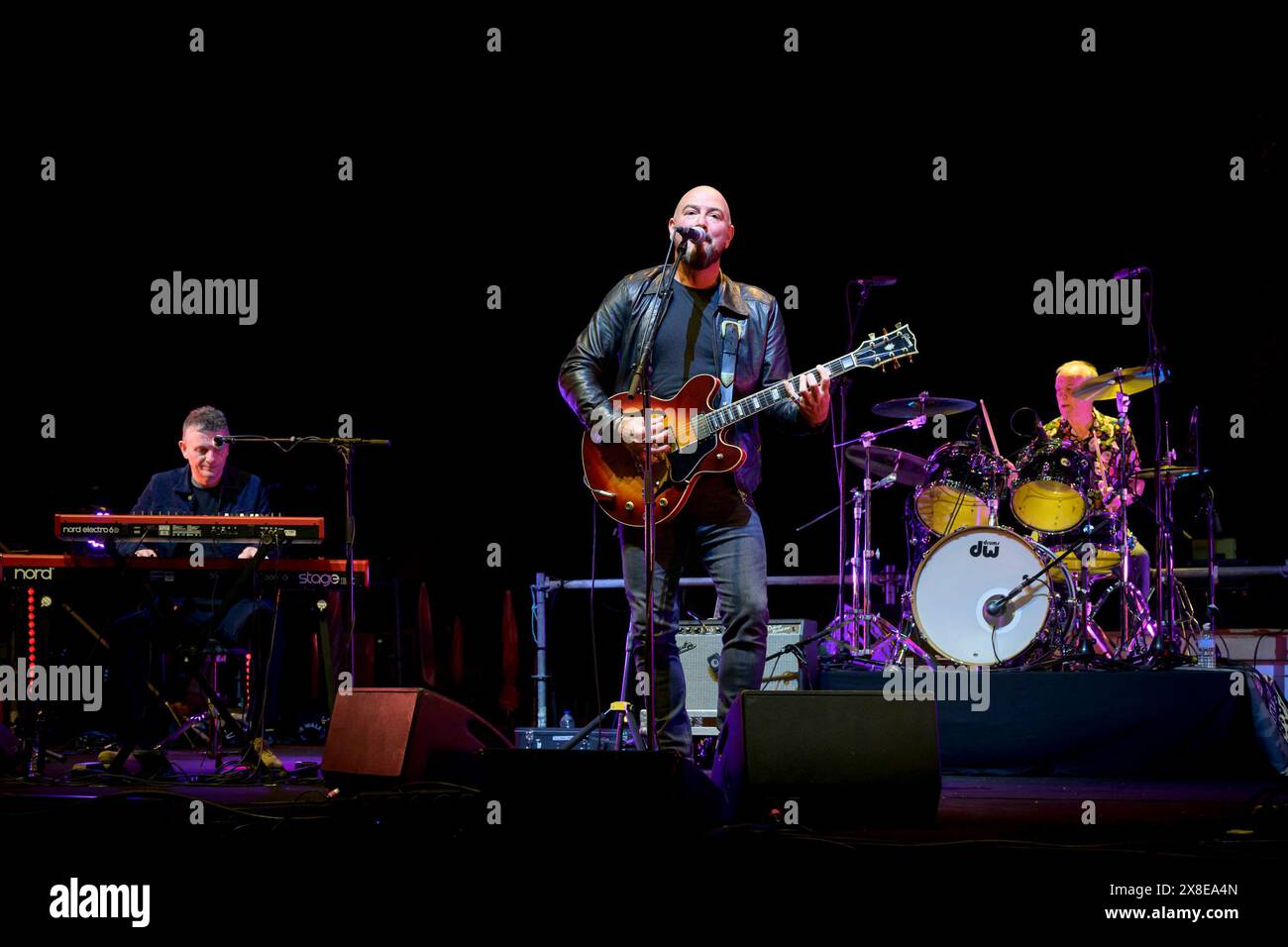
The primary guitarist of the original lineup of The Animals was Hilton Valentine, whose clean, arpeggiated style defined the band’s early British Invasion sound. In later iterations, specifically Eric Burdon & The Animals, the role was held by Vic Briggs, John Weider, and notably, future Police guitarist Andy Summers, shifting the band toward psychedelic and progressive rock styles.
The Hilton Valentine Era: Defining the British R&B Sound (1963–1966)
Hilton Valentine was the foundational architect of the guitar sound that propelled The Animals to international stardom. Born in North Shields, England, Valentine’s background in skiffle and rock and roll provided the backbone for the band’s gritty, blues-inflected repertoire. While many of his contemporaries in the 1960s were focusing on heavy distortion or blues-scale soloing, Valentine’s contribution was characterized by clarity, precision, and a unique approach to chord voicing.
Valentine’s most significant contribution to rock history is the opening arpeggio of "The House of the Rising Sun" (1964). This single recording changed the trajectory of the electric guitar, moving it away from the percussive strumming of folk music toward a more melodic, structured role. His ability to blend the raw energy of American R&B with a disciplined, almost classical approach to fingerpicking (often performed with a plectrum) created a somber, haunting atmosphere that became the band's trademark.
During this period, the guitar was not merely a lead instrument but a textural one. Valentine worked in close coordination with Alan Price’s Vox Continental organ. The interplay between the biting, treble-heavy guitar and the swirling organ redefined the "British Sound," making it darker and more brooding than the pop-centric output of The Beatles or The Hollies.
Deconstructing the "House of the Rising Sun" Technique
To understand the "Animals guitarist" profile, one must analyze the technical execution of their most famous track. As of 2026, this song remains a staple for intermediate guitar students because of its reliance on the A-minor chord progression and its specific picking pattern.
The "House of the Rising Sun" arpeggio is played in 6/8 time. Valentine used a 1962 Gretsch Tennessean, which provided a thinner, more "twangy" sound compared to the Gibson Les Pauls used by later blues-rockers. The technique involves a "constant motion" picking style where each note of the chord is articulated individually.
- The Progression: Am, C, D, F, Am, E, Am, E.
- The Picking Pattern: Instead of a simple up-and-down motion, Valentine used a sweeping motion that allowed the notes to ring into one another, creating a "wall of sound" effect even without high gain or distortion.
- The Intensity: Throughout the song, Valentine modulates the dynamic pressure of his picking. In the earlier verses, the guitar is delicate; as Eric Burdon’s vocals increase in intensity, Valentine’s right-hand technique becomes more aggressive, driving the bridge and final verses toward their crescendo.
Gear Spotlight: The Gretsch Tennessean and Vox Amplification
The specific tonal quality of the early Animals records was a result of a very deliberate gear selection. In the early 1960s, gear options were limited in the UK, leading many guitarists to adopt "The British Stack" of Vox or Selmer amplifiers.
The Gretsch 6119 Tennessean
Valentine’s primary instrument was the Gretsch 6119 Tennessean. This hollow-body guitar featured "HiLo'Tron" single-coil pickups. Unlike the humbuckers found on Gibsons, these pickups were known for a low output but high clarity. This allowed Valentine to play through high-wattage amplifiers without the signal breaking up into muddy distortion, which was essential for the clean arpeggios that defined the band's early hits like "Don't Let Me Be Misunderstood" and "We've Gotta Get Out of This Place."
Vox AC30 and Selmer Zodiac
The "Animals sound" was further shaped by the Vox AC30. This amplifier provided a distinct "chime" and "top-end boost." On tour, the band often used Selmer amplifiers, which were popular among British R&B groups for their reliability and slightly darker mid-range response. The combination of a hollow-body Gretsch and a Class-A tube amp created a percussive attack that cut through the mix of loud drums and heavy organ.
The Transition: Eric Burdon & The Animals (1966–1969)
By 1966, the original lineup of The Animals had fractured. Lead singer Eric Burdon moved to California and formed a new group, often referred to as Eric Burdon & The Animals. This transition marked a radical shift in the band's guitar philosophy, moving away from Valentine’s structured R&B and into the burgeoning world of psychedelia.
Vic Briggs
Vic Briggs took over guitar duties in 1966. Briggs was a technically sophisticated player with a background in jazz and session work. His influence moved the band toward longer, more experimental tracks. Under Briggs, the guitar became a vehicle for feedback, wah-wah pedals, and eastern-influenced scales, as heard on tracks like "When I Was Young" and "San Franciscan Nights."
John Weider
John Weider replaced Briggs in 1968. Weider was a multi-instrumentalist who played both guitar and violin. His contribution brought a folk-rock and early progressive rock flavor to the band. His ability to switch between soaring lead guitar lines and melodic violin arrangements allowed the band to compete with the likes of The Jimi Hendrix Experience and Cream in terms of musical versatility.
The Brief and Notable Tenure of Andy Summers
One of the most interesting footnotes in the history of The Animals guitarists is the brief membership of Andy Summers in 1968. Over a decade before he would find global fame with The Police, Summers joined Eric Burdon & The Animals during their final psychedelic phase.
Summers appeared on the album Love Is (1968). His playing on this record shows a transition from the blues-rock of the era to a more sophisticated, atmospheric style. While his time with the band was short, his presence solidified The Animals' reputation as a group that attracted top-tier technical talent. His work on the 19-minute cover of "River Deep, Mountain High" showcased an early glimpse of the rhythmic precision and ethereal tones that would later define his work in the 1980s.
Comparison of The Animals Guitarists (1963–1969)
| Guitarist | Era | Notable Tracks | Primary Style | Key Gear |
|---|---|---|---|---|
| Hilton Valentine | 1963–1966 | "House of the Rising Sun," "Bring It On Home To Me" | British R&B, Arpeggiated clean tones | Gretsch Tennessean, Vox AC30 |
| Vic Briggs | 1966–1968 | "When I Was Young," "San Franciscan Nights" | Psychedelic Rock, Jazz-fusion | Fender Stratocaster, Marshall Stacks |
| John Weider | 1968 | "Sky Pilot," "Monterey" | Folk-rock, Progressive | Gibson SG, Violin |
| Andy Summers | 1968–1969 | "River Deep, Mountain High," "Coloured Rain" | Experimental, Early New Wave roots | Fender Telecaster |
The Reunion Eras and Legacy in 2026
The original lineup, including Hilton Valentine, reunited several times, most notably in 1975 and 1983. These reunions were significant because they stripped away the psychedelic experimentation of the late 60s and returned to the core R&B sound.
In 2026, Hilton Valentine’s legacy is preserved through the "Hilton Valentine Arpeggio Technique," a term often used in guitar pedagogy to describe the specific way he played "House of the Rising Sun." Although Valentine passed away in 2021, his influence remains a cornerstone of rock guitar education. Modern guitarists often cite his work as the bridge between the simple chordal work of the 1950s and the sophisticated lead playing of the late 1960s.
The later guitarists of the band also hold a significant place in music history. Vic Briggs’ work is studied for its early adoption of world music influences in rock, while Andy Summers’ tenure serves as a critical link in the evolution of his own legendary career.
Technical Analysis: Why Valentine's Style Persists
The longevity of the original Animals guitar sound lies in its "economical" nature. Valentine did not overplay. In an era where many guitarists were beginning to chase speed, Valentine focused on note duration and the space between notes.
- Sustained Chords: By using a hollow-body guitar, Valentine could achieve a natural resonance that solid-body guitars lacked.
- String Tension: He famously used relatively heavy gauge strings for the time, which contributed to the "snapping" sound of his blues licks.
- The "English" Vibrato: Unlike the wide, aggressive vibrato of American bluesmen like B.B. King, Valentine used a tighter, more subtle finger vibrato that suited the melancholic tone of The Animals' minor-key songs.
Frequently Asked Questions
Who played the guitar solo in "The House of the Rising Sun"?
There is actually no traditional guitar solo in "The House of the Rising Sun." The instrumental break is dominated by Alan Price’s Vox Continental organ solo. Hilton Valentine provides the driving arpeggio rhythm throughout the entire track, which acts as the song's melodic hook.
What kind of guitar did Hilton Valentine use?
Hilton Valentine is most famously associated with the 1962 Gretsch 6119 Tennessean. He also occasionally used a Rickenbacker 330 and a Fender Telecaster during various stages of his career, but the Gretsch is the instrument responsible for the band's most famous recordings.
Did Andy Summers play on any Animals hits?
Andy Summers played on the album Love Is, which included the hit cover of "River Deep, Mountain High." However, he was not part of the band during their "Golden Era" of mid-60s hits like "Don't Let Me Be Misunderstood" or "We've Gotta Get Out of This Place."
Why did Hilton Valentine leave The Animals?
Valentine left the band in 1966 when the original lineup disbanded due to internal tensions and exhaustion from constant touring. While Eric Burdon continued the name with a new "psychedelic" lineup, Valentine moved into solo projects and later pursued a more folk-oriented musical path before the reunions.
Is The Animals' guitar style considered "Blues Rock"?
The early work of Hilton Valentine is generally classified as British R&B or Merseybeat-adjacent. It was more disciplined and pop-structured than the heavy "Blues Rock" that emerged later in the decade with bands like Led Zeppelin or Cream.
Recommended Action for Aspiring Guitarists
If you are looking to replicate the classic Animals sound in 2026, focus on mastering the 6/8 arpeggio pattern using a clean channel on a tube amplifier. Avoid using high-gain distortion; instead, use a slight "edge of breakup" setting that allows your picking dynamics to control the grit of the tone. Studying Hilton Valentine's right-hand consistency is essential for any guitarist looking to understand the foundations of British Invasion rock. To further explore this style, listen to the 1964 self-titled debut album The Animals, paying close attention to the track "I'm Crying," which showcases the perfect balance between Valentine's guitar and the band's signature organ sound.