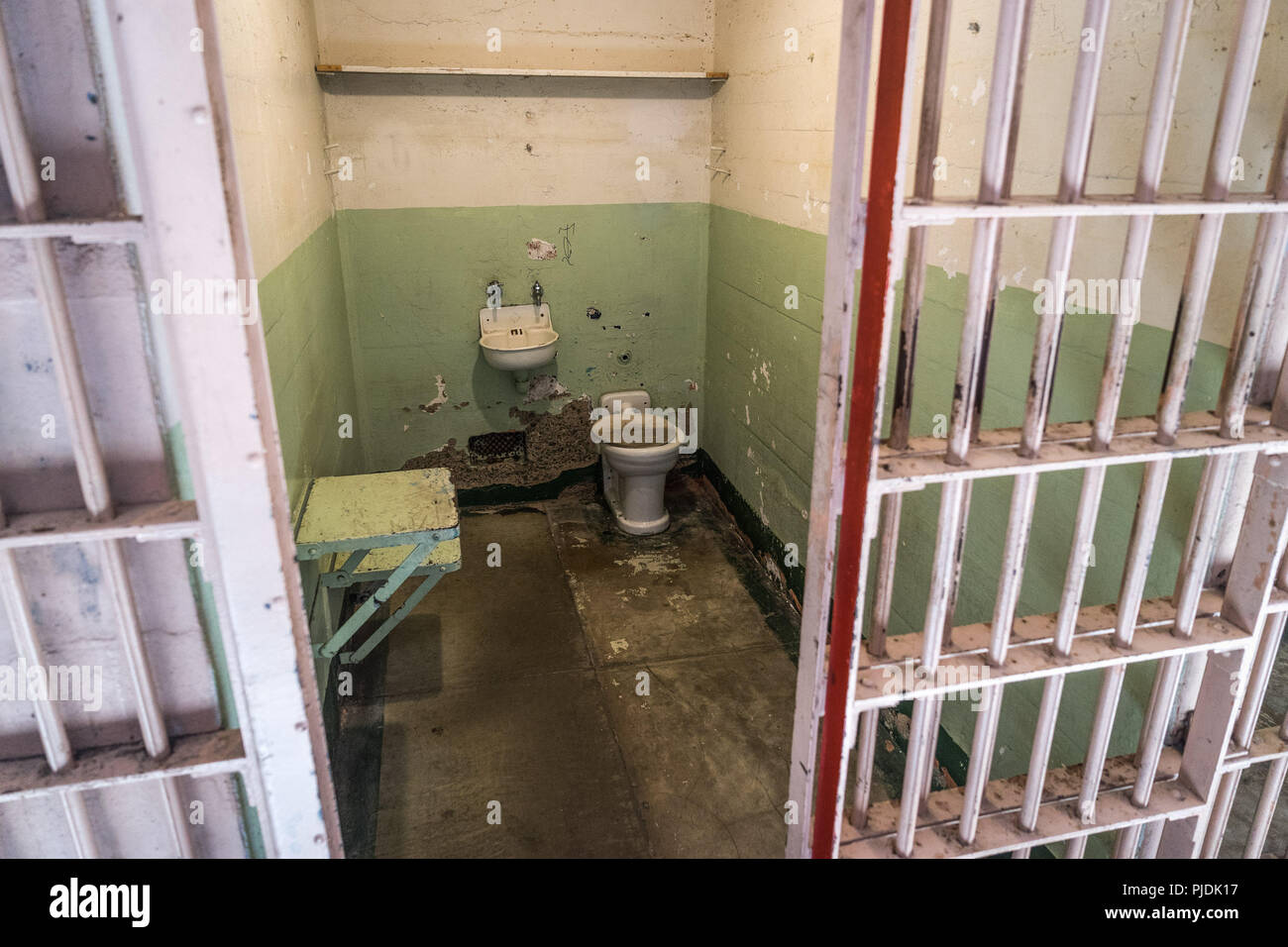
The history of Alcatraz Island spans over 150 years of American evolution, shifting from a strategic military fortification and lighthouse station to the nation’s most notorious maximum-security federal prison. Today, in 2026, it stands as a preserved National Historic Landmark, symbolizing the ultimate limit of the American penal system and the complex struggle for civil rights.
The Origins of "The Rock": Pre-Prison History
Long before it became a household name for incarceration, Alcatraz Island—a 22-acre sandstone outcrop in the chilling waters of the San Francisco Bay—served vastly different purposes. The island was originally named "La Isla de los Alcatraces" (Island of the Pelicans) by Spanish explorer Juan Manuel de Ayala in 1775. Its jagged cliffs and lack of natural resources made it inhospitable for permanent settlement, yet its location made it a geographic goldmine for maritime defense.
Following the Mexican-American War and the acquisition of California, the United States recognized the island's value. During the 1850s, the U.S. Army constructed a massive stone citadel and installed over 100 cannons, making Alcatraz the most heavily fortified military site on the West Coast. In 1854, it also became home to the first functional lighthouse on the Pacific Coast, guiding ships through the treacherous fog that frequently blankets the bay.
The transition toward a correctional facility began during the American Civil War. The Army used the island to hold Confederate sympathizers and privateers. By the late 19th century, the "fortress" aspect faded as the "prison" aspect grew. In 1907, the island was officially designated as the Western United States Military Prison. The modern reinforced concrete cellhouse—which still stands today—was completed in 1912 by the inmates themselves, signaling the island's permanent transformation into a place of confinement.
The Federal Bureau of Prisons Era (1934–1963)
The most iconic chapter of Alcatraz prison history began in 1934, during the height of the Great Depression and the "War on Crime." The U.S. Department of Justice acquired the island from the Army to create a "super-prison" designed to break the spirits of the era's most defiant criminals and organized crime bosses.
The Philosophy of Incarceration
Alcatraz was not meant to rehabilitate. It was designed to isolate. Under the leadership of the first warden, James A. Johnston, the regime was built on the "Silent Rule," where inmates were forbidden from speaking to one another for long periods. The prison operated on a system of four basic rights: food, clothing, shelter, and medical care. Anything beyond that—including visits, library access, or work—was a privilege that had to be earned through absolute obedience.
The Federal Bureau of Prisons (BOP) engineered the facility to be technologically inescapable. They installed tool-proof steel bars, strategically placed gun galleries, and remote-controlled tear gas canisters in the dining hall. The freezing, turbulent currents of the San Francisco Bay acted as a natural moat, reinforced by the psychological barrier of seeing the lights of San Francisco just 1.25 miles away.
Life on The Rock
The cellblocks were divided into A, B, C, and D blocks.
- B and C Blocks: Where the majority of the general population resided in 5x9-foot cells.
- D Block: Known as the "Treatment Unit" or "The Hole." This was reserved for the most disruptive inmates. It contained "dark cells" where prisoners were kept in total sensory deprivation as punishment.
- The Yard: A concrete recreational area where inmates could exercise under the watchful eyes of armed guards in elevated towers.
Infamous Inmates: The Faces of Alcatraz
The legend of Alcatraz is inseparable from the high-profile criminals who walked its tiers. The prison was specifically reserved for those who were too dangerous or escape-prone for other federal institutions like Leavenworth or Atlanta.
Al "Scarface" Capone
Perhaps the most famous resident, Capone arrived in 1934. Having previously manipulated the system at other prisons through bribes and influence, he found Alcatraz's rigid structure impossible to bypass. His health declined significantly on the island due to late-stage syphilis, and he spent much of his time playing the banjo in the prison band before being transferred to a hospital facility.
Robert Stroud: The "Birdman of Alcatraz"
Contrary to the popular 1962 film, Stroud did not actually keep birds on Alcatraz. His ornithological studies occurred while he was at Leavenworth. When he was transferred to Alcatraz in 1942, he was a highly dangerous, predatory inmate who spent 17 years in D Block. His "Birdman" moniker followed him, but on The Rock, he was known primarily as a brilliant but sociopathic recluse.
George "Machine Gun" Kelly
A notorious Prohibition-era kidnapper and bank robber, Kelly was a model inmate at Alcatraz. Unlike his public persona as a ruthless gangster, Kelly was known by guards as "Pop" Kelly. He worked in the laundry and stayed out of trouble until his transfer back to Leavenworth in 1951.
Daring Escapes: Testing the Inescapable
In its 29 years as a federal penitentiary, Alcatraz officially recorded 14 escape attempts involving 36 men. While the Bureau of Prisons maintains that no inmate successfully escaped and survived, several instances remain shrouded in mystery and debate.
| Year | Attempt Name | Participants | Outcome |
|---|---|---|---|
| 1937 | The Cole and Roe Escape | Theodore Cole & Ralph Roe | Disappeared into the bay; presumed drowned. |
| 1946 | The Battle of Alcatraz | Bernard Coy & 5 others | Failed; 3 inmates and 2 officers died during a 48-hour siege. |
| 1962 | The June Escape | Frank Morris & Anglin brothers | Disappeared; case remains an open mystery in 2026. |
| 1962 | The Scott and Parker Attempt | John Paul Scott | Scott reached the mainland but was found exhausted and recaptured. |
The 1962 "Great Escape"
The most famous attempt involved Frank Morris and brothers John and Clarence Anglin. Using sharpened spoons to dig through the salt-damaged concrete around their air vents, they navigated the plumbing corridors to the roof. They used dummy heads made of plaster and human hair to deceive the night guards. They launched a raft made of reinforced raincoats into the bay. While the FBI officially closed the case in 1979, modern forensic analysis and potential sightings have kept the theory of their survival alive well into the 21st century.
The Battle of Alcatraz (1946)
This was the most violent event in the island's history. Six inmates overpowered guards, seized the gun gallery keys, and attempted to flee. When the plan failed because they couldn't find the key to the yard door, a bloody standoff ensued. The U.S. Marines were eventually called in to drop grenades on the cellblock. The event resulted in the deaths of two correctional officers and three inmates, with two others later executed at San Quentin for their roles in the uprising.
The Closure and the Indian Occupation
By the early 1960s, Alcatraz was becoming an operational nightmare. The salt air had severely corroded the reinforced concrete, making the facility structurally unsound. Furthermore, it was the most expensive prison in the U.S. to operate; every drop of fresh water and every pound of food had to be ferried to the island. On March 21, 1963, Attorney General Robert F. Kennedy ordered its closure.
The 1969 Occupation
Following the prison's closure, the island became the site of a landmark event in civil rights history. In November 1969, a group known as "Indians of All Tribes" occupied the island, citing the Treaty of Fort Laramie, which stated that retired federal land should be returned to Native Americans. The occupation lasted 19 months and brought international attention to the plight of Indigenous peoples in America. Though the occupiers were eventually removed in 1971, the movement sparked a shift in federal policy toward Indian self-determination.
Preserving History: Alcatraz Today (2026)
In 2026, Alcatraz Island is managed by the National Park Service (NPS) as part of the Golden Gate National Recreation Area. It is one of the most popular tourist destinations in the United States, requiring visitors to book ferry tickets weeks in advance.
The site serves as a museum of social history. The "Doing Time" audio tour, narrated by former inmates and guards, provides a visceral look at the daily reality of life in the cells. Ongoing preservation efforts focus on the "Cellhouse," the "Warden’s House" ruins, and the unique ecosystem of the island, which has become a vital nesting ground for Western Gulls and Black-crowned Night Herons.
Managing Your Visit in 2026
If you are planning to explore Alcatraz prison history firsthand, consider the following technical and logistical requirements:
- Booking: Use the official Alcatraz City Cruises portal, as they are the only authorized concessionaire for transport.
- Accessibility: The climb from the dock to the Cellhouse is equivalent to a 13-story building. An electric shuttle (S.E.A.T. tram) is available for those with mobility issues.
- Weather: The island is significantly colder and windier than the mainland. Layered clothing is mandatory for comfort.
- Duration: Allow at least 2.5 to 3 hours for a comprehensive tour.
Frequently Asked Questions
Did anyone actually survive an escape from Alcatraz?
Officially, no. The FBI and Bureau of Prisons maintain that all missing escapees drowned in the San Francisco Bay. However, the 1962 Morris/Anglin case remains a subject of intense speculation. In recent years, facial recognition technology applied to old photographs from Brazil and letters sent to police departments have suggested the Anglin brothers might have survived, though no conclusive evidence has been verified by the U.S. Marshals.
Why was Alcatraz called "The Rock"?
The nickname "The Rock" refers to the island's geological composition—a barren, 22-acre outcrop of sandstone and shale. The name became a metaphor for the prison’s hardness, both in its physical structure and the psychological weight of the sentences served there.
Are there sharks in the water around Alcatraz?
While San Francisco Bay is home to several species of sharks, including Leopard Sharks and occasional Great Whites, they are not the "man-eaters" often depicted in prison lore. The real danger for escapees was not wildlife, but the water temperature (averaging 50–55°F) and the powerful, riptide-like currents that could sweep a swimmer out to the Pacific Ocean in minutes.
Can you stay overnight on Alcatraz?
Generally, no. The island is closed to the public at night, except for specifically authorized NPS programs or occasional "Night Tours" which allow visitors to see the hospital and other restricted areas under moonlight. There is no commercial lodging on the island.
Is the "Birdman" still alive?
No. Robert Stroud died of natural causes at the Medical Center for Federal Prisoners in Springfield, Missouri, on November 21, 1963, just months after Alcatraz closed.
Practical Recommendation for Historians
To truly understand the depth of Alcatraz prison history, one must look beyond the "gangster" Hollywood narrative. The National Park Service archives and the Federal Bureau of Prisons Historical records provide the most accurate accounts of the administrative struggles and the civil rights impacts of the island. When visiting, prioritize the "Behind the Scenes" tours if available, as they often include the older military-era fortifications beneath the main cellblock, offering a view of the island’s layered history.