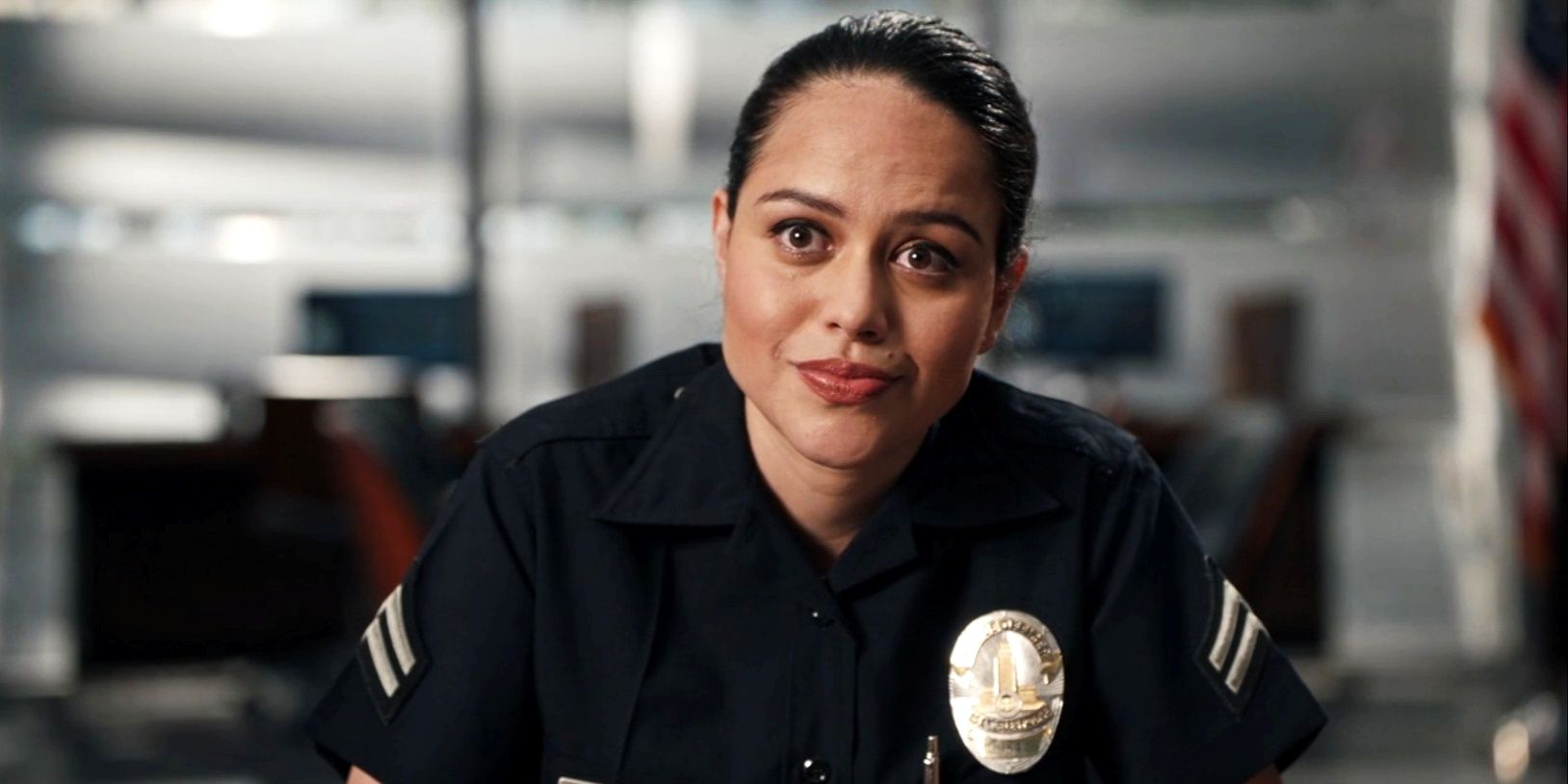
FBI Special Agent Hope Danvers, portrayed by Jennifer Griffin, is a specialized federal liaison appearing in the first season of The Rookie. She features prominently in the high-stakes episodes "Manhunt" and "Greenlight," where she facilitates inter-agency cooperation between the FBI and the LAPD Mid-Wilshire division during critical criminal investigations.
The early seasons of The Rookie were defined by their grounded approach to law enforcement, focusing heavily on the learning curve of John Nolan (Nathan Fillion) and his fellow rookies. However, to raise the stakes beyond standard patrol duties, the writers frequently introduced external agencies. Agent Danvers served as the primary face of federal authority during a pivotal two-episode arc in Season 1. Her presence signaled a shift in the series, moving from localized neighborhood policing to complex, multi-jurisdictional crises that required the rookies to operate under intense federal scrutiny.
Disambiguation: FBI Agent Danvers vs. Other Media Figures
In the landscape of television procedurals and genre fiction, the name "Danvers" often triggers an immediate association with Carol Danvers (Captain Marvel) or Kara Danvers (Supergirl). However, within the context of The Rookie, Agent Danvers is a strictly realistic portrayal of an FBI Special Agent. There are no supernatural elements involved; her character is rooted in the procedural realism that defined the 2018–2019 television season.
In the 2026 retrospective of the series, fans often look back at Agent Danvers as a precursor to the show’s eventual expansion into the "federal" side of the universe. While she was not a series regular, her professional demeanor and the specific authority she wielded established the "rules of engagement" for how the LAPD would interact with the FBI for years to come. Resolving this ambiguity is essential for viewers revisiting the early seasons, as she represents a specific type of guest-star role designed to add gravitas and procedural accuracy to the show’s world-building.
Analysis of Season 1, Episode 15: "Manhunt"
The introduction of Agent Danvers occurs in Season 1, Episode 15, titled "Manhunt." This episode is widely regarded as one of the most action-packed installments of the debut season, centered on a massive prison bus crash that releases several dangerous fugitives into the streets of Los Angeles. Because the transport involved federal prisoners, the FBI is immediately granted jurisdiction, bringing Agent Danvers into the Mid-Wilshire station.
The Mechanics of the Task Force
Upon her arrival, Danvers does not simply take over; she integrates into a Joint Task Force. This is a critical distinction in the "Why" and "How" of the episode’s narrative. The show uses Danvers to explain the logistics of such an operation: the FBI provides the intelligence, satellite tracking, and federal warrants, while the LAPD provides the "boots on the ground" and local knowledge of the terrain.
Danvers’ interaction with Sergeant Wade Grey (Richard T. Jones) is particularly telling. She treats the Mid-Wilshire leadership with professional respect but maintains a clear hierarchy. For the rookies—Nolan, Chen, and West—the presence of an FBI agent like Danvers changes the psychological weight of their mission. They are no longer just looking for a shoplifter; they are part of a federal manhunt where every decision is logged by an agency that operates outside their usual chain of command.
Tactical Contributions
During "Manhunt," Danvers is depicted primarily in the command center (the "War Room"). Her role is to filter the massive influx of data coming from federal databases. She provides the dossiers on the escapees, identifying which ones are "low-risk" and which ones are "high-value targets." This allows the LAPD officers to prioritize their resources. Her character effectively serves as the "voice of authority" that keeps the fast-paced episode grounded in reality, ensuring that the search for the fugitives follows legal and tactical protocols.
Analysis of Season 1, Episode 16: "Greenlight"
While "Manhunt" established her as a capable ally, Episode 16, "Greenlight," utilized Agent Danvers in a much more personal and dire capacity. This episode is a landmark in The Rookie history, known for the tragic death of Captain Zoe Andersen. The plot revolves around a "greenlight" (an authorized hit) put out by a white supremacist gang, the Southern Front, against Officer John Nolan after he offends one of their members during a routine stop.
Federal Intelligence and Gang Activity
The role of Agent Danvers in "Greenlight" is to bridge the gap between street-level crime and organized domestic terrorism. Because the Southern Front is a known extremist group monitored by the federal government, Danvers provides the LAPD with deep-cover intelligence that they would not otherwise possess. She is the one who confirms the validity of the threat against Nolan, informing the department that the "greenlight" is not just a rumor but a directive from high-ranking gang leaders currently in federal custody.
This intelligence is what elevates the episode’s tension. Danvers explains the "Southern Front" hierarchy, describing how they operate inside and outside the prison system. Her technical knowledge regarding the gang’s communication methods—using "kites" (hidden messages) to pass orders—provides the tactical justification for the LAPD to go into "war footing."
The Emotional Weight of Federal Protocol
A significant moment for Danvers in this episode occurs when she has to navigate the fallout of the escalating violence. As an FBI agent, her priority is often the broader investigation into the gang’s structure, while the LAPD’s priority is protecting their own. This creates a subtle but effective professional friction. Danvers represents the cold reality of federal law enforcement: sometimes a single officer's safety is secondary to a multi-year investigation into a terrorist cell. Although she remains supportive of the LAPD, her presence reminds the audience that the federal government views these events through a different lens than the local precinct.
The FBI-LAPD Dynamic: Jurisdictional Realities
The inclusion of Agent Danvers allowed the writers of The Rookie to explore the often-misunderstood relationship between local and federal police. In many television dramas, the FBI is portrayed as an antagonist that "takes over" a case and pushes local cops aside. The Rookie took a more nuanced approach through Danvers.
Shared Jurisdiction in California
Under United States law, certain crimes trigger automatic federal involvement. In the early episodes featuring Danvers, the show highlights these triggers:
- Interstate Fugitives: When prisoners escape during transport involving federal assets, the FBI has primary jurisdiction.
- Domestic Terrorism: Groups like the Southern Front fall under the FBI’s purview due to their status as organized extremist organizations.
- Civil Rights Violations: The FBI often monitors cases where local law enforcement officers are targeted based on their official duties.
Danvers’ character is written to respect these boundaries while emphasizing the "Federal Oversight" component. She doesn't replace Sergeant Grey; she supplements him. This collaboration is a hallmark of the early seasons, showing that the rookies are part of a much larger ecosystem of justice.
Jennifer Griffin’s Portrayal and Character Archetype
The effectiveness of Agent Danvers as a character is largely due to Jennifer Griffin’s performance. She avoids the "tough-as-nails" cliché often associated with female federal agents on screen. Instead, Griffin portrays Danvers with a measured, bureaucratic calmness. She is a "no-nonsense" professional who values efficiency over ego.
This portrayal was essential for the chemistry of the Mid-Wilshire station. Because the regular cast is so full of personality—from Nolan’s optimism to Lopez’s grit—Danvers needed to be the "straight man." She provides the factual baseline that allows the other characters' emotions to shine. When she delivers news about a threat, she does so without melodrama, which paradoxically makes the threat feel more real to the viewers. In the context of 2026, where TV characters often lean into extreme traits to trend on social media, Griffin’s grounded performance stands out as a masterclass in supporting-role stability.
Impact on the Series' Long-Term Evolution
Although Agent Danvers only appeared in a limited capacity, her character arc was the first "proof of concept" for federal integration in The Rookie. This eventually led to the development of larger crossovers and the spin-off series The Rookie: Feds.
Comparison of Federal Roles in The Rookie Universe
The way federal agents were handled in Season 1 (via Agent Danvers) differs significantly from the later seasons. In 2026, we can see a clear evolution in how the show handles these entities.
| Feature | Agent Danvers (Season 1) | Agent Simone Clark (Spin-off Era) |
|---|---|---|
| Tone | Realistic, procedural, reserved | High-energy, character-driven, bold |
| Role | Support and Intelligence | Lead Protagonist |
| Jurisdiction | Reactive (Manhunts/Gangs) | Proactive (National Security) |
| LAPD Interaction | Formal and structured | Personal and fluid |
| Narrative Focus | The Case | The Individual |
Agent Danvers represented the "Old Guard" of procedural guest stars—characters who exist to serve the plot and provide technical depth. Simone Clark, appearing much later, represented the "New Guard"—characters who are the plot themselves. For fans who prefer the gritty, realistic stakes of the early seasons, Danvers remains the gold standard for how the FBI should be depicted in a local police drama.
Technical Terms and Procedural Context
To understand the depth of Agent Danvers’ role, one must understand the terminology used during her episodes. Her dialogue is peppered with specific law enforcement jargon that adds to the show’s authenticity:
- VICAP (Violent Criminal Apprehension Program): Danvers references federal databases like VICAP to track the behavioral patterns of the escapees in "Manhunt."
- Kites: As mentioned in "Greenlight," these are smuggled notes used by inmates to bypass official monitoring. Danvers’ knowledge of this terminology proves her expertise in prison-gang culture.
- Task Force Officer (TFO): While not explicitly labeled, the arrangement in Season 1 mimics a TFO structure where local officers work under federal direction for a specific duration.
- Greenlight: A specific term used within gang culture to denote that an individual is "fair game" for assassination. Danvers provides the legal and tactical context for how federal agencies track these orders.
Common Mistakes in Retrospectives
When discussing Agent Danvers in the early episodes, viewers often make a few common errors:
- Confusing her with Internal Affairs: Because she is an outsider who asks tough questions, some viewers misremember her as being part of the LAPD's Internal Affairs division. She is strictly FBI.
- Overestimating her episode count: Because of her impact on the "Greenlight" plot, many fans believe she appeared in five or six episodes. In reality, her primary contribution is limited to the Season 1 "Manhunt" and "Greenlight" arc.
- Assuming she was a villain: In some procedurals, the FBI agent is an obstacle. Danvers was consistently an ally to Mid-Wilshire, even if her priorities were broader than the rookies' immediate safety.
Summary of Agent Danvers’ Significance
Agent Danvers served as the first bridge between the localized world of John Nolan and the expansive world of federal law enforcement. Her presence in "Manhunt" and "Greenlight" provided the technical intelligence and jurisdictional authority required to make those high-stakes episodes feel authentic. By providing a realistic, professional, and composed foil to the LAPD’s more emotional response to crises, she helped solidify The Rookie's reputation as a serious procedural during its debut year.
For fans rewatching the series in 2026, pay close attention to the scenes in the Mid-Wilshire command center. The way Danvers handles information and interacts with Sergeant Grey is a perfect example of the "cooperative federalism" that exists in modern American policing. She remains a highlight of the guest-star roster, proving that a character doesn't need a multi-season arc to leave a lasting impression on a show’s lore.
Frequently Asked Questions
Which specific episodes of The Rookie feature Agent Danvers?
Agent Danvers primarily appears in Season 1, Episode 15 ("Manhunt") and Season 1, Episode 16 ("Greenlight"). These episodes form a loose narrative block where the LAPD deals with federal-level threats, including escaped convicts and a white supremacist gang's hit order.
Who is the actress that played Agent Danvers?
The character was played by Jennifer Griffin. Griffin is known for her ability to play authoritative, professional characters, which she utilized to bring a sense of realism and "no-nonsense" federal oversight to the Mid-Wilshire precinct.
Why did the FBI get involved in the "Greenlight" episode?
The FBI involved itself because the threat against Officer Nolan came from the Southern Front, a white supremacist organization that falls under the category of domestic terrorism. The FBI monitors these groups' communications (kites) and leadership, making them the primary source of intelligence for the LAPD.
Is Agent Danvers related to the characters in The Rookie: Feds?
No, there is no established familial or direct professional connection between Agent Danvers and the characters in the spin-off, such as Simone Clark. However, her role as an FBI liaison set the thematic groundwork for how the two agencies would eventually collaborate in the spin-off series.
Does Agent Danvers return in later seasons?
As of the 2026 series status, Agent Danvers remains a character specific to the Season 1 era. While the show has introduced many other FBI agents since then, her specific role as the "early season" liaison remains unique to the initial world-building phase of the show.
What was the result of the "Greenlight" on Officer Nolan?
The "greenlight" led to an intense period of danger for Nolan, culminating in a confrontation that tragically resulted in the death of Captain Zoe Andersen. Agent Danvers’ role was to provide the intelligence that helped the LAPD eventually dismantle the local chapter of the gang responsible for the hit.
Practical Recommendation for Viewers
If you are analyzing the evolution of The Rookie, watch Season 1, Episodes 15 and 16 back-to-back. Pay specific attention to how Agent Danvers provides the "why" behind the police tactics. Her presence explains why the LAPD can’t just "solve" the problem with a standard arrest and why they need federal databases to track organized gang threats. This provides a much deeper understanding of the show's early commitment to procedural accuracy.