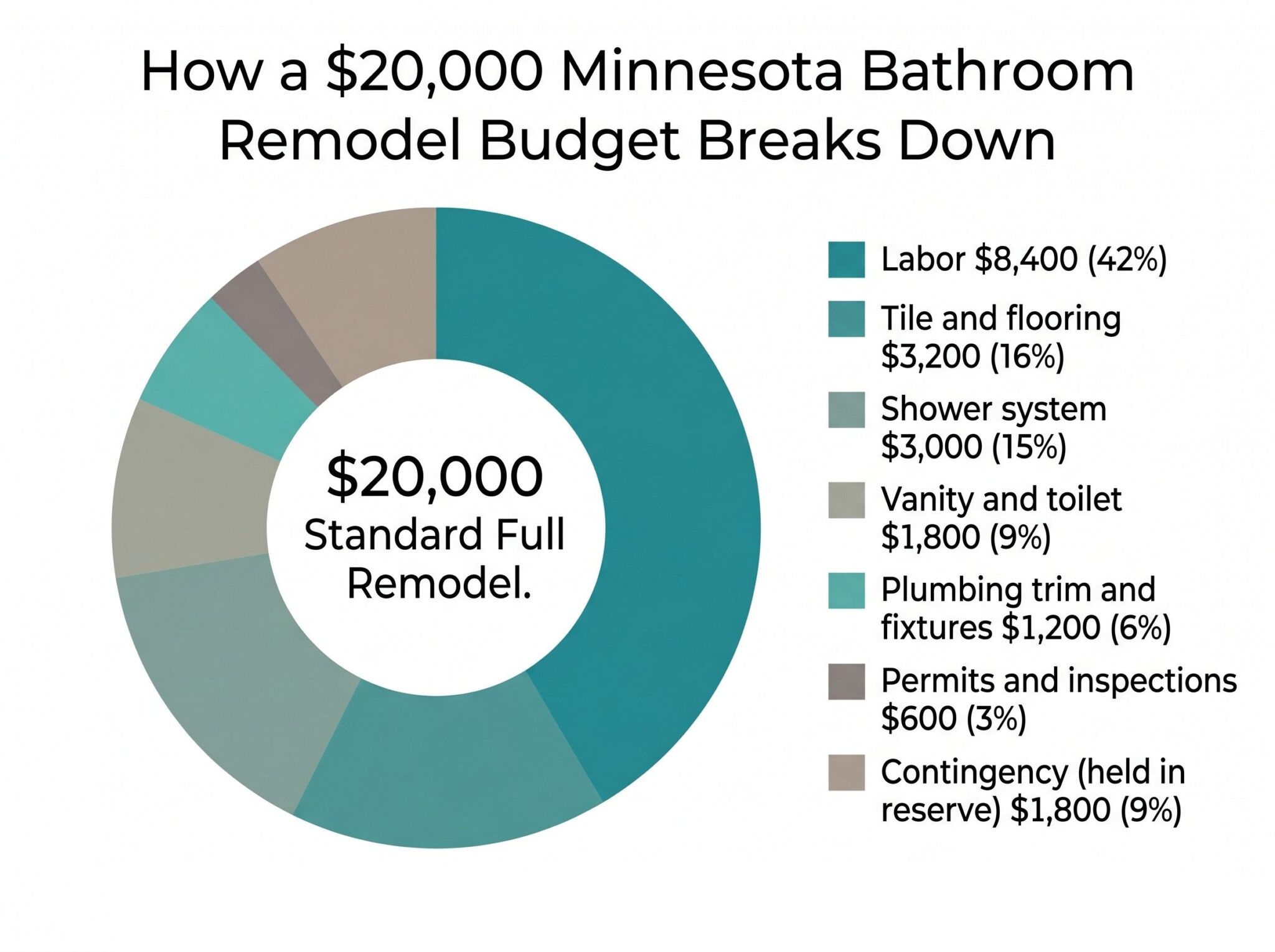
An affordable bathroom remodel typically costs between $3,000 and $10,000 for a standard small-to-medium space (35 to 60 square feet), averaging approximately $70 to $150 per square foot. Total expenses depend heavily on local labor rates, material selections, structural layout changes, and whether you retain existing plumbing lines or relocate fixtures.
Average Cost of an Affordable Bathroom Remodel by Size
The overall size of your space dictates material quantities and the length of time contractors spend on-site. When searching for local estimates, contractors evaluate square footage alongside the complexity of the fixtures being installed.
| Bathroom Type | Cost Range |
|---|---|
| Half-Bath / Powder Room (15–30 sq ft) | $1,500 – $4,500 |
| Small Full Bathroom (35–50 sq ft) | $3,000 – $7,500 |
| Standard Full Bathroom (50–75 sq ft) | $6,000 – $11,000 |
| Large / Primary Bathroom (75–100+ sq ft) | $9,000 – $15,000+ |
Half-Bath or Powder Room (15–30 sq. ft.)
A powder room focus is primarily cosmetic, as it lacks a tub or shower. Expect to pay between $1,500 and $4,500. Because the footprint is small, upgraded materials like quartz vanity tops or decorative tile backsplashes add minimal overall cost while providing a polished look.
Small Full Bathroom (35–50 sq. ft.)
Common in starter homes, apartments, and guest suites, a small full bathroom typically contains a toilet, a single sink vanity, and an alcove tub or stall shower. An affordable renovation for this size ranges from $3,000 to $7,500. Keeping the existing layout is key to remaining under the $5,000 mark.
Standard Full Bathroom (50–75 sq. ft.)
Standard hall or family bathrooms require more surface area covering—such as floor tile, wall paint, and moisture-resistant drywall—and often feature larger vanities. A budget-conscious remodel for a standard bathroom ranges from $6,000 to $11,000.
Itemized Cost Breakdown: Materials, Fixtures, and Labor
To understand where your money goes, it helps to divide expenses into specific categories. On average, labor accounts for 45% to 60% of total project costs, while materials and fixtures account for 40% to 55%.
| Expense Category | Low-End Budget Range | Mid-Range Budget Range | Typical % of Total Budget |
|---|---|---|---|
| Demolition & Waste Disposal | $300 – $700 | $700 – $1,200 | 5% – 8% |
| Plumbing & Fixtures | $600 – $1,500 | $1,500 – $3,200 | 20% – 25% |
| Vanity, Countertop & Sink | $250 – $700 | $700 – $1,600 | 10% – 15% |
| Flooring (Materials & Installation) | $200 – $600 | $600 – $1,400 | 8% – 12% |
| Wall Finishes & Tile Surround | $400 – $1,000 | $1,000 – $2,500 | 12% – 18% |
| Lighting, Electrical & Ventilation | $150 – $400 | $400 – $900 | 5% – 8% |
| Labor (General Contractor / Trades) | $1,200 – $3,500 | $3,500 – $6,500 | 45% – 55% |
| Permits & Fees | $100 – $300 | $300 – $600 | 2% – 4% |
Demolition and Site Preparation
Demolition involves removing old fixtures, pulling up flooring, tearing down water-damaged drywall, and hauling away construction debris. Hiring a crew for basic demolition costs $300 to $1,200. Costs increase if contractors encounter hidden moisture damage or mold behind tile backings.
Plumbing Fixtures and Hardware
- Toilets: Standard gravity-flush toilets cost between $120 and $300, while dual-flush or chair-height models range from $250 to $500.
- Showers and Tubs: A standard acrylic or fiberglass tub insert costs $300 to $800. Converting a tub to a walk-in shower using prefabricated wall panels costs $800 to $2,000 for materials.
- Faucets and Trim Kits: Basic chrome or brushed nickel faucets range from $50 to $180. Matching shower valves and trim kits add $100 to $300.
Vanity, Countertop, and Sink
Stock vanities from home improvement stores that include an integrated sink porcelain top cost between $250 and $700. If you select separate components—such as a solid wood cabinet, a granite or quartz top, and an undermount sink—materials will range from $700 to $1,600.
Flooring Materials
- Luxury Vinyl Plank (LVP) / Sheet Vinyl: Highly water-resistant and economical, LVP costs $2 to $5 per square foot for materials, with total installed costs ranging from $300 to $800.
- Ceramic Tile: Standard ceramic tile costs $1.50 to $4 per square foot for materials. Installation adds $5 to $10 per square foot in labor due to subfloor preparation, underlayment, cutting, and grouting.
- Porcelain Tile: Densest and most durable, porcelain tile ranges from $3 to $8 per square foot for materials, pushing total installed costs to $600–$1,400 for small to medium bathrooms.
Shower Walls and Tile Surrounds
Enclosing a shower or bathtub area requires waterproofing. Acrylic wall surrounds are the most affordable option at $400 to $1,000 installed. Custom tiled shower walls require cement backer board, waterproofing membranes (such as liquid-applied membranes or sheet systems), tile, and grout, raising the cost to $1,200–$2,800.
Lighting and Ventilation
Upgrading lighting fixtures, adding a dedicated GFCI outlet, and replacing an outdated exhaust fan cost between $150 and $900. Ventilation is critical: standard code requires a fan capable of exhausting at least 50 cubic feet per minute (CFM) for a standard bathroom to prevent mold growth.
Understanding Local ("Near Me") Cost Factors
The phrase "near me" highlights significant regional price variances across the United States. Labor rates, municipal code requirements, and material availability drive local project totals.
| Region / Metro Type | Tradesperson Hourly Rate | Permit Cost |
|---|---|---|
| Major Metro (NY/CA/WA) | $85 – $150 / hour | $400 – $1,000+ |
| Mid-Sized Suburban | $55 – $90 / hour | $200 – $500 |
| Rural / Low Cost Area | $40 – $65 / hour | $75 – $250 |
Licensed Labor Rates
Subcontractor hourly rates vary based on cost of living and local licensing requirements:
- Plumbers: $75 to $150 per hour nationwide. In major metro areas, rates often exceed $130 per hour.
- Electricians: $70 to $130 per hour.
- Tile Setters & General Handymen: $45 to $85 per hour.
Local Building Permits and Codes
Permit costs are established at the city or county level. A minor cosmetic update (replacing a vanity and toilet in the same location) may not require a permit in many jurisdictions. However, replacing shower valves behind walls, altering electrical wiring, or moving plumbing lines typically requires permits costing $100 to $600. According to guidelines from the International Code Council (ICC), work involving structural changes or trade systems must meet current building codes to ensure safety and compliance during future property sales.
Logistics and Material Transport
In dense urban environments, contractors face parking fees, staging constraints, and trash disposal surcharges (such as renting dumpsters or paying landfill tipping fees), which can add $200 to $600 to the contract price.
Strategic Ways to Reduce Bathroom Remodeling Expenses
Keeping your renovation affordable requires smart planning and making strategic compromises on scope rather than quality.
- Budget-Saving Strategies
- Preserve Footprint
- Keep plumbing in place
- Avoid moving drain lines
- Keep electrical locations
- Alternative Materials
- Acrylic surround vs. tile
- LVP flooring vs. porcelain
- Prefabricated vanity units
- Preserve Footprint
1. Maintain the Existing Layout
Moving a toilet, shower, or sink requires opening floors and walls to re-route supply lines and vent stacks. Moving a toilet just a few feet can add $1,000 to $2,500 in plumbing labor alone. Preserving the existing footprint keeps plumbing costs low.
2. Choose Prefabricated Over Custom
Custom-built tile showers and custom cabinetry drive up labor costs. Opt for pre-glued or snap-together acrylic tub surrounds and all-in-one vanity combos (which include the cabinet, countertop, and pre-drilled sink basin). Prefabricated units reduce installation time from several days down to a few hours.
3. Refinish Rather Than Replace
If your existing cast-iron bathtub or porcelain sink is structurally sound but discolored or scratched, consider professional refinishing (glazing). Tub reglazing costs $350 to $600, compared to $1,200 to $2,500 for removing, disposing of, and installing a new tub along with surrounding wall patches.
4. Handle Demo and Paint as DIY Projects
Homeowners can save $400 to $1,000 by managing low-risk tasks themselves:
- Demolition: Remove the old vanity, medicine cabinet, baseboards, and toilet yourself. Shut off the main water valve first and drain all lines completely.
- Painting: Painting a small bathroom requires minimal supplies (one gallon of high-moisture, anti-microbial paint costs $50 to $80). Doing this yourself saves $300 to $600 in painter labor.
5. Upgrade Accessories for High Visual Impact
If a full tear-out is beyond your current budget, a "mini-refresh" can dramatically alter the space for under $1,500:
- Swap out old bronze or chrome hardware for modern matte black or brushed brass hardware.
- Install a new framed mirror instead of a plain builder-grade glass sheet.
- Replace outdated light bars with modern LED vanity lights.
Hidden Costs That Can Expand Your Budget
Unforeseen issues during demolition can strain a tight budget. Setting aside a 15% to 20% contingency fund ensures you are covered if unexpected repairs arise.
| Common Hidden Expense | Cost Range |
|---|---|
| Subfloor Substrate Repair (Rot/Mold) | $300 – $1,000 |
| Outdated Galvanized/Cast Iron Pipes | $600 – $2,000 |
| Non-Compliant Electrical Wiring (GFCI) | $200 – $500 |
| Shower Pan Leak Repair & Waterproofing | $500 – $1,200 |
Subfloor Moisture Damage
Leaking toilets, deteriorated tub caulk, or historic shower overflow often rot the plywood subfloor beneath vinyl or tile. Replacing damaged subflooring costs $300 to $1,000, depending on how far water damage extends into surrounding floor joists.
Plumbing Code Updates and Galvanized Pipe Replacement
Homes built before the 1980s may still contain galvanized steel water pipes or cast-iron drain lines. When contractors open walls, code often mandates replacing obsolete pipe segments with modern PEX water lines or PVC drainage, adding $600 to $2,000 to the scope of work.
Electrical Code Upgrades
Modern building codes mandate that all bathroom outlets be protected by Ground Fault Circuit Interrupters (GFCIs) and that dedicated 20-amp circuits feed heavy-draw appliances like heat lamps or high-CFM exhaust fans. Upgrading an outdated panel or running new wire back to the service box costs $200 to $800.
How to Obtain and Compare Local Estimates
Securing competitive, accurate quotes from local contractors requires clear communication and systematic vetting.
- Contractor Vetting Checklist
- Request itemized quotes breaking down labor vs. materials
- Verify active state/local trade license & general liability
- Confirm workers' compensation insurance coverage
- Check references and local project portfolio
- Agree on a fixed-price contract with clear payment milestones
Step 1: Collect Itemized Bids
Request quotes from at least three licensed local general contractors or specialized bathroom remodelers. Ensure each contractor receives identical project requirements so you can compare bids accurately. Ask for an itemized estimate separating material allowances from labor costs.
Step 2: Verify License and Insurance
Verify that any working contractor holds active licensing through your state contractor board or local municipal licensing office. Confirm they carry both general liability insurance (protecting your property against damage) and workers' compensation insurance (protecting you from liability if a worker is injured on site).
Step 3: Establish a Payment Schedule
Never pay full costs upfront. A standard, fair payment schedule for a small to medium bathroom remodel follows this framework:
- Deposit (10% to 30%): Paid upon signing the contract to secure dates and cover initial specialty material orders.
- Mid-Project Milestone (30% to 40%): Paid once rough plumbing/electrical inspections pass and rough wall work is closed up.
- Final Balance (30% to 40%): Paid only after full project completion, final walkthrough, and signing off on the punch list.
Frequently Asked Questions
What is the cheapest way to remodel a bathroom?
The cheapest way to remodel a bathroom is to keep your existing floor plan, retain existing plumbing locations, refinish your bathtub rather than replacing it, and use prefabricated materials like an all-in-one vanity and luxury vinyl plank (LVP) flooring. Performing low-risk work yourself—such as painting, fixture installation, and demolition—saves up to 50% in total labor costs.
How much labor cost should I expect for a small bathroom remodel?
Labor costs for a small bathroom remodel range from $1,500 to $4,500, depending on local trade rates and project complexity. Labor typically accounts for 45% to 60% of the overall quote. Urban areas with strict licensing and high living costs sit at the upper end of this spectrum.
Can I remodel a bathroom for $5,000?
Yes, you can remodel a small full bathroom or powder room for under $5,000 if you preserve the existing layout, select budget-friendly stock materials, and take on some of the painting or demolition work yourself. At this budget, focus on updating the vanity, toilet, floor, lighting, and wall paint while refinishing or re-caulking the existing shower/tub unit.
How long does a budget bathroom remodel take to complete?
A standard budget bathroom remodel takes 1 to 2 weeks of active construction time once materials arrive on site. Cosmetic updates (replacing vanity, flooring, light fixtures, and toilet without tiling walls) can take as few as 3 to 5 days. Projects requiring tile setting or drywall repairs take longer due to curing times between steps.
Do I need a permit to remodel my bathroom locally?
Permit requirements are set by local municipal building departments. Cosmetic upgrades—such as painting, replacing a light fixture, or swapping a vanity in the exact same location—usually do not require permits. However, replacing shower valves, moving plumbing lines, or adding new electrical outlets typically requires building, plumbing, or electrical permits.
Next Steps for Your Bathroom Remodel
To move forward with your affordable bathroom project, take these steps:
- Define Your Scope: List mandatory replacements versus optional aesthetic upgrades.
- Set Your Budget: Determine your total available capital and reserve 15% for unforeseen structural, mold, or plumbing repairs.
- Establish Dimensions: Measure your space, taking note of current drain line locations, wall lengths, and door clearances.
- Source Local Estimates: Request detailed, itemized bids from three qualified, insured local contractors to establish baseline labor costs for your area.