Acculevel provides specialized residential foundation repair and basement waterproofing services focused on stabilizing structural integrity and managing moisture infiltration. The company’s solutions typically involve engineered stabilization systems, such as wall anchors and piers, alongside interior drainage and vapor barriers, designed to mitigate soil pressure and water damage in basements and crawl spaces.
The Role of Professional Foundation Assessment
Foundation issues often manifest as subtle signs long before they become catastrophic failures. Homeowners may notice cracks in drywall, doors that no longer latch correctly, or visible bowing in basement walls. Acculevel’s approach to these problems is rooted in systematic assessment. When a foundation begins to move, it is almost always the result of hydrostatic pressure—the force exerted by water-saturated soil against the foundation walls—or the settling of soil beneath the footings.
Professional assessment is the necessary first step in any remediation project. This involves measuring the degree of wall deflection or the severity of differential settlement using precision instrumentation. By identifying the root cause, a contractor can determine whether the solution requires localized wall stabilization, full foundation piering, or comprehensive exterior site drainage to divert water away from the structure. Relying on an expert assessment prevents homeowners from applying cosmetic fixes, like hydraulic cement patching, to structural problems that require mechanical reinforcement.
Core Foundation Repair Techniques
Foundation repair is a branch of civil engineering that addresses the movement of a building's base. The goal is to return the structure to a stable, neutral state.
Wall Stabilization
When basement walls bow or crack, they are typically succumbing to lateral earth pressure. Standard repair methods used by industry professionals include:
- Carbon Fiber Straps: These high-tensile-strength strips are epoxied directly to the interior of a bowing wall. They prevent further movement by anchoring the wall to the floor joists or the sill plate, acting as a tension-resistant reinforcement.
- Wall Anchors: This system involves placing steel plates on the interior basement wall and driving an anchor rod through the wall into the stable, undisturbed soil outside. By tightening the rod, the wall is anchored in place, and in some cases, it can be slowly straightened over time.
- I-Beam Reinforcement: Steel beams are positioned vertically against the basement wall, anchored into the floor and the ceiling joists. This provides immediate, heavy-duty structural support for walls that have experienced significant bowing or inward shifting.
Structural Piering
If a foundation is sinking vertically, surface-level repairs are insufficient. Structural piering transfers the weight of the building from unstable or settling soil onto deep, load-bearing strata (such as bedrock or dense clay).
- Helical Piers: These function similarly to a giant corkscrew. They are twisted deep into the ground until they hit load-bearing soil, providing a stable platform for the foundation footings.
- Push Piers: Used for heavier loads, these are driven hydraulically into the ground until they reach a solid substrate. The foundation is then lifted and stabilized on these steel columns.
Basement Waterproofing Strategies
Waterproofing is a multifaceted discipline that combines water diversion, collection, and mechanical removal. A dry basement requires stopping water before it can accumulate and then effectively removing any moisture that does breach the perimeter.
Managing External Water
The most effective way to keep a basement dry is to prevent water from reaching the foundation. This begins with site grading—ensuring the ground slopes away from the home. Gutter systems must be free of debris and fitted with extensions that discharge water at least several feet away from the foundation walls.
Interior Drainage Systems
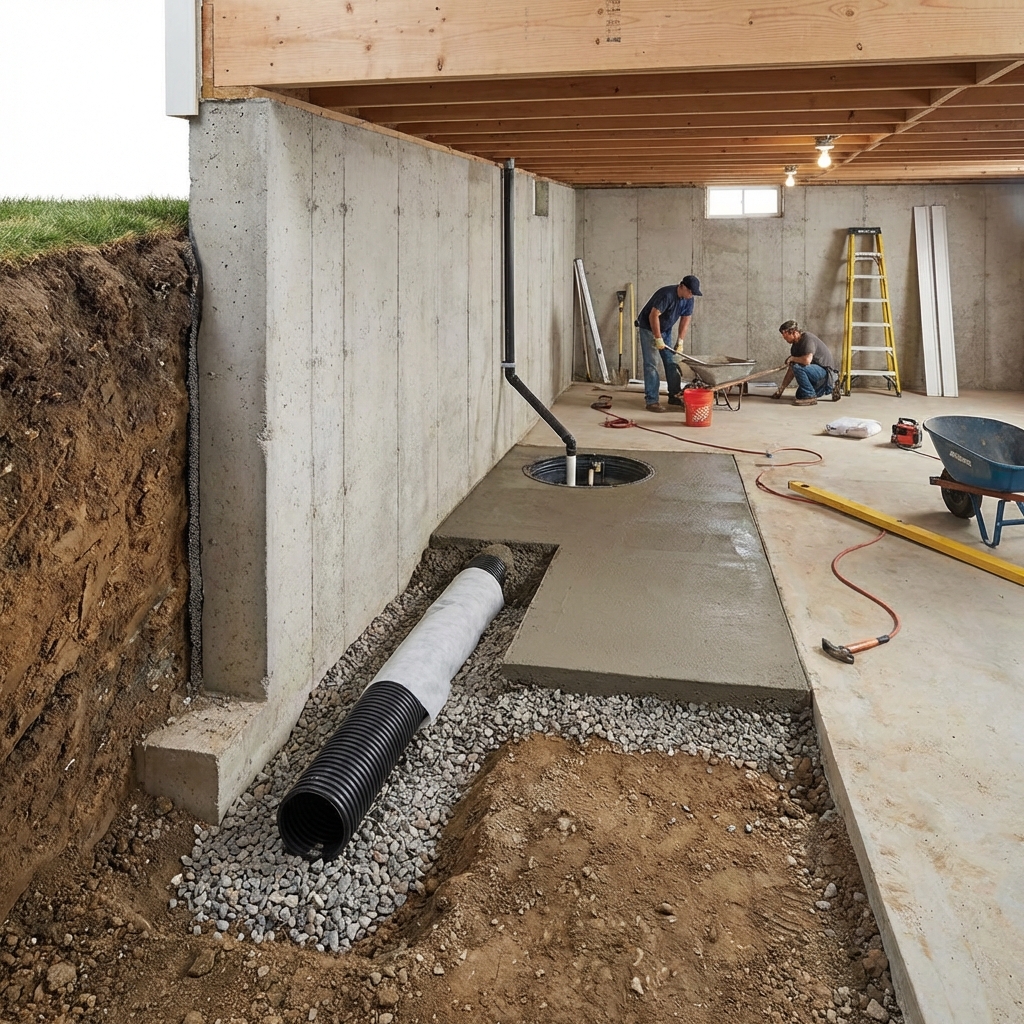
When exterior management is insufficient, interior systems are employed. An interior drain tile system—often called a "French drain"—is installed beneath the concrete floor along the perimeter of the basement. This pipe collects water that enters through the walls or footings and channels it to a sump pump basin.
The Sump Pump Component
The sump pump is the heart of a basement waterproofing system. It is a submersible pump housed in a pit that collects the water gathered by the drainage system. In modern waterproofing, these pumps must be powerful enough to handle high volumes of water, and they should always be paired with a battery backup system. Because power outages often occur during the very storms that cause basement flooding, a secondary, battery-operated pump is essential to ensure continuous operation.
Comparing Remediation Methodologies
| Method | Best Used For | Primary Advantage |
|---|---|---|
| Carbon Fiber | Minor wall bowing | Low profile, non-intrusive |
| Wall Anchors | Significant wall bowing | Allows for potential straightening |
| Steel I-Beams | Severe structural damage | Maximum strength and stability |
| Helical Piers | Vertical foundation settling | Permanent structural support |
| Drain Tile | Chronic moisture/leaks | Effective at redirecting water |
Prerequisites and Maintenance Requirements
Homeowners should view foundation repair as a long-term investment that requires periodic oversight. Once a system like a basement drain tile or a sump pump is installed, it is not a "set and forget" solution.
- Sump Pump Testing: Test the primary pump quarterly by pouring a bucket of water into the pit to ensure the float switch activates the motor.
- Drainage Clearing: Ensure that exterior downspouts are not blocked and that discharge pipes are not crushed or obstructed by landscaping debris.
- Visual Inspection: Regularly check basement walls for new cracks or signs of efflorescence (a white, powdery mineral deposit). Efflorescence indicates that water is passing through the masonry, leaving minerals behind as it evaporates.
- Grading Maintenance: Periodically check the soil around the house. If the earth has settled against the foundation, add topsoil to restore the proper slope.
Common Misconceptions Regarding Repairs
A frequent error among homeowners is the assumption that structural repair and waterproofing are the same service. While they are often performed in tandem, they serve different functions. Waterproofing handles water; foundation repair handles structural movement. Treating a bowing wall with waterproofing will not stop the wall from bowing further. Conversely, stabilizing a wall with steel beams will not stop a floor from leaking if there is no drainage system in place.
Another misconception is that all foundation cracks require structural intervention. Hairline cracks in concrete are common and often result from the curing process. However, cracks that are "stair-stepped" or wider than an eighth of an inch, or cracks that exhibit "shearing" (where one side of the crack is offset from the other), typically signal a structural shift that warrants a professional inspection.
Frequently Asked Questions
How do I know if my foundation needs professional repair or if it's just normal settling? Normal settling typically results in hairline cracks that remain stable over time. Professional repair is generally required if cracks are actively widening, if windows and doors become difficult to open, or if you can observe a horizontal crack or bowing in your basement walls. Any crack wider than a credit card should be professionally assessed.
Is basement waterproofing a permanent solution? Waterproofing is a permanent method of managing water, provided the system is maintained. While the physical components like the drainage tile and sump pump can last for decades, they require regular mechanical checks to ensure they continue to operate as intended.
Can I perform foundation repairs myself? Foundation repair involves structural load-bearing components of your home. Improperly installed piers or wall stabilization systems can lead to further structural damage or safety risks. These tasks should be performed by licensed professionals who have access to engineered solutions and appropriate building permits.
What is the best way to determine if I have hydrostatic pressure? Hydrostatic pressure is often indicated by water seeping up through the floor-wall joint in the basement or water coming through cracks during heavy rain. If you notice these symptoms, you likely have excessive water pressure against your foundation.
Does a sump pump cover me during a power outage? A standard electric sump pump will fail during a power outage. To ensure protection, you must have a battery backup system or a secondary water-powered backup pump installed alongside your primary system.
Recommended Next Steps
If you suspect foundation issues or persistent basement moisture, begin by documenting the specific areas of concern. Take clear photographs of cracks or moisture spots and keep a log of when these issues seem to worsen—such as during specific weather events or seasons. Once you have a record of these observations, reach out to a reputable foundation repair and waterproofing company to schedule a site visit. An expert technician will perform a diagnostic evaluation to provide a clear, evidence-based plan for stabilizing your home and securing your basement against water infiltration.