Academic goals are specific, measurable targets related to educational achievement, skill acquisition, and intellectual development that guide students through structured learning environments. Understanding their true meaning requires looking beyond simple grade point averages to examine how these targets shape cognitive growth, foster professional readiness, and establish lifelong learning habits.
Introduction to Academic Goals and Educational Intent
The concept of an academic goal extends far beyond the desire to pass an exam or secure a high grade point average. At its core, an academic goal represents a deliberate commitment to intellectual growth, skill mastery, and educational advancement. Whether pursued in primary school, undergraduate studies, or advanced postgraduate research, these objectives serve as the architectural blueprint for a student's learning journey.
Many learners struggle because they conflate vague desires—such as "doing better in school"—with concrete academic objectives. True academic goals require clarity, intent, and a strategic methodology. By dissecting the underlying mechanics of these goals, students can transform passive participation into active educational engagement. This exploration covers the fundamental definitions, psychological frameworks, practical taxonomies, and strategic implementation methods necessary to turn educational aspirations into verifiable achievements.
Defining Academic Goals: What Are They Really?
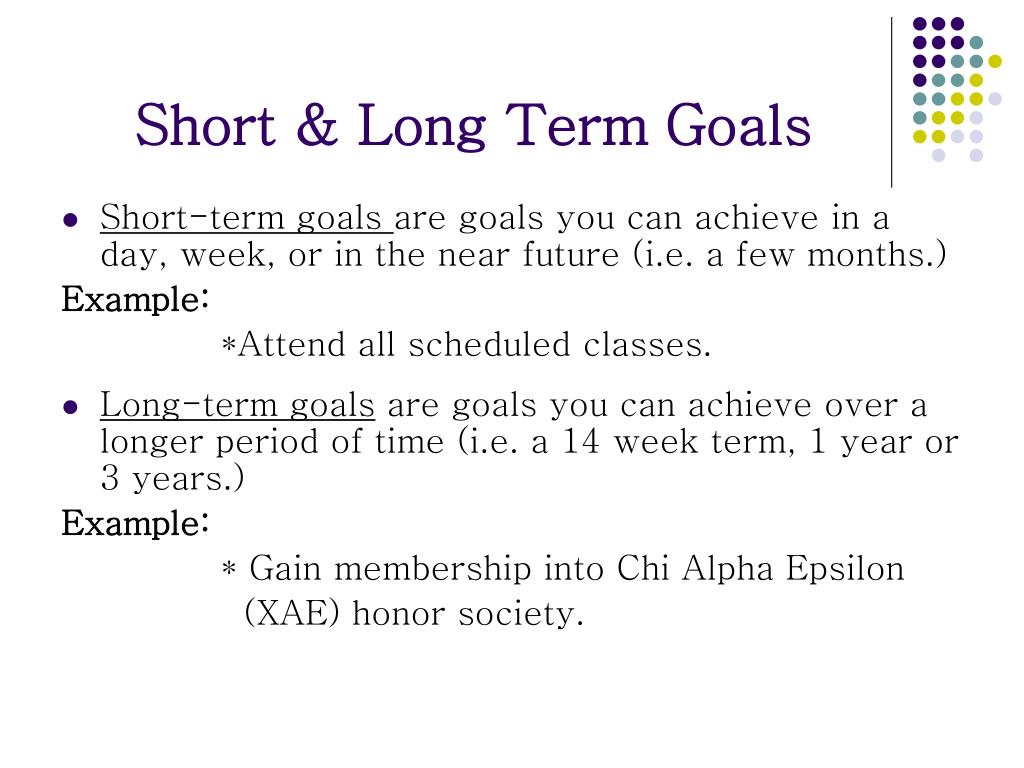
An academic goal is an explicit target that directs a student's efforts toward specific educational outcomes. These objectives can range from short-term targets, such as mastering a single difficult calculus formula by the end of the week, to long-term milestones, such as earning a doctoral degree in molecular biology.
To understand academic goals fully, it is helpful to categorize them by their scope and purpose. They are not monolithic; rather, they exist within a hierarchy of educational milestones:
- Micro-Level Goals: Daily or weekly tasks, such as completing assigned reading, drafting an outline for a history essay, or solving ten practice physics problems.
- Meso-Level Goals: Course-specific or semester-long achievements, such as earning an A in organic chemistry, maintaining perfect attendance, or improving public speaking skills through class presentations.
- Macro-Level Goals: Institutional or multi-year milestones, such as graduating with honors, transferring to a competitive university, or completing a professional certification program.
These tiers interact continuously. Macro-level goals provide the overarching vision, while micro-level and meso-level goals supply the daily operational steps required to reach that vision.
The Psychology Behind Educational Motivation
Setting academic goals is fundamentally an exercise in human psychology. Educational psychologists generally divide motivation into two primary categories: intrinsic and extrinsic. Understanding how these motivational forces influence academic goal-setting is vital for long-term success.
Intrinsic vs. Extrinsic Motivation
Intrinsic motivation stems from an internal desire to learn, explore, and master a subject for its own sake. A student driven by intrinsic motivation might set a goal to read historical literature simply because they find the narrative structure and cultural context fascinating. This form of motivation is closely linked to deep cognitive engagement, critical thinking, and long-term retention of information.
Extrinsic motivation, conversely, relies on external rewards or the avoidance of negative consequences. Examples include studying to secure a scholarship, passing a licensing exam to keep a job, or achieving a high grade to satisfy parental expectations. While extrinsic motivation can be powerful for initiating tasks, studies show that over-reliance on external rewards can sometimes diminish a student's natural curiosity.
Goal Orientation Theory
In educational psychology, Goal Orientation Theory divides student motivation into mastery goals and performance goals:
- Mastery Goals: Focus on gaining competence, understanding material deeply, and improving personal skill sets over time. Students with mastery goals view mistakes as natural learning opportunities.
- Performance Goals: Focus on demonstrating competence relative to others, such as ranking at the top of the class or scoring higher than peers. While performance goals can drive intense effort, they often lead to anxiety and avoidance behaviors when faced with difficult challenges.
Balancing these orientations ensures that academic goals foster both resilience and high performance.
The SMART Framework Applied to Education
Vague aspirations rarely yield positive results. To make academic goals actionable, successful learners and educators rely on established structuring frameworks. The most widely recognized and effective methodology is the SMART criteria: Specific, Measurable, Achievable, Relevant, and Time-Bound.
| SMART Component | Application to Academic Goals | Example |
|---|---|---|
| Specific | Defining the exact subject, skill, or task without ambiguity. | "I want to improve my essay-writing structure." |
| Measurable | Establishing quantitative metrics to track progress. | "I will include a clear thesis and three supporting paragraphs in every essay." |
| Achievable | Ensuring resources, time, and current skill levels support the goal. | "I will practice outlining essays twice a week using available writing center resources." |
| Relevant | Aligning the goal with broader educational or career aspirations. | "Better essay structure is essential for my research paper in British Literature." |
| Time-Bound | Setting strict deadlines to create urgency and accountability. | "I will complete three practice outlines by Friday evening." |
Applying this matrix prevents common pitfalls such as overambitious planning or procrastination, grounding daily study habits in realistic parameters.
Short-Term vs. Long-Term Educational Objectives
Balancing short-term actions with long-term vision is one of the most critical challenges in academic planning. Focusing exclusively on long-term goals can lead to burnout or a feeling of detachment from daily work, while focusing only on short-term tasks can cause students to lose sight of their ultimate educational destination.
Short-Term Objectives as Building Blocks
Short-term academic goals typically span from a single day to an instructional term. They provide immediate feedback and reinforcement. When a student successfully achieves a weekly vocabulary target or completes a chapter review, the brain releases dopamine, reinforcing the study behavior and building momentum.
Long-Term Objectives as Strategic Direction
Long-term goals span years or entire educational programs. They require sustained effort, strategic planning, and adaptability. For instance, a student aiming to enter medical school must coordinate prerequisite coursework, standardized testing (such as the MCAT), GPA maintenance, and clinical volunteering over a four-year undergraduate timeline.
The table below illustrates how short-term and long-term goals complement one another across different educational stages:
| Educational Stage | Long-Term Objective | Supporting Short-Term Goals |
|---|---|---|
| High School | Graduate with an Advanced Diploma | Complete weekly algebra homework; study vocabulary for Friday's quiz. |
| Undergraduate | Earn a Bachelor of Science in Nursing | Pass clinical rotations this semester; review pharmacology notes for 30 minutes daily. |
| Postgraduate | Complete a Master’s Thesis | Draft chapter one by the end of the month; read three peer-reviewed journals weekly. |
Common Obstacles and Troubleshooting Strategies
Even the most carefully constructed academic goals encounter obstacles. Recognizing these hurdles early allows students to implement targeted troubleshooting strategies before minor setbacks derail their entire educational trajectory.
Procrastination and Task Aversion
Procrastination is rarely just an issue of poor time management; it is frequently an emotional regulation problem linked to anxiety about difficult or unfamiliar material.
- Troubleshooting Strategy: Use the "Five-Minute Rule." Commit to working on the intimidating task for just five minutes. Often, overcoming the initial friction of starting dissolves the psychological barrier preventing progress.
Perfectionism and Unrealistic Expectations
Setting unattainable standards—such as demanding a 100% score on every single assignment across a demanding course load—frequently leads to paralysis, chronic stress, and eventual academic burnout.
- Troubleshooting Strategy: Shift from perfectionism to progress-tracking. Adopt a growth mindset that evaluates success based on continuous improvement rather than flawless execution.
Changing Circumstances and Shifting Priorities
Life events, health issues, or unexpected academic difficulties can render original goals obsolete or temporarily impossible to achieve.
- Troubleshooting Strategy: Practice iterative goal adjustment. Regularly review academic goals—ideally at the end of every month or grading period—and recalibrate timelines and scope based on current realities without viewing modification as failure.
Practical Action Plan for Setting and Tracking Academic Goals
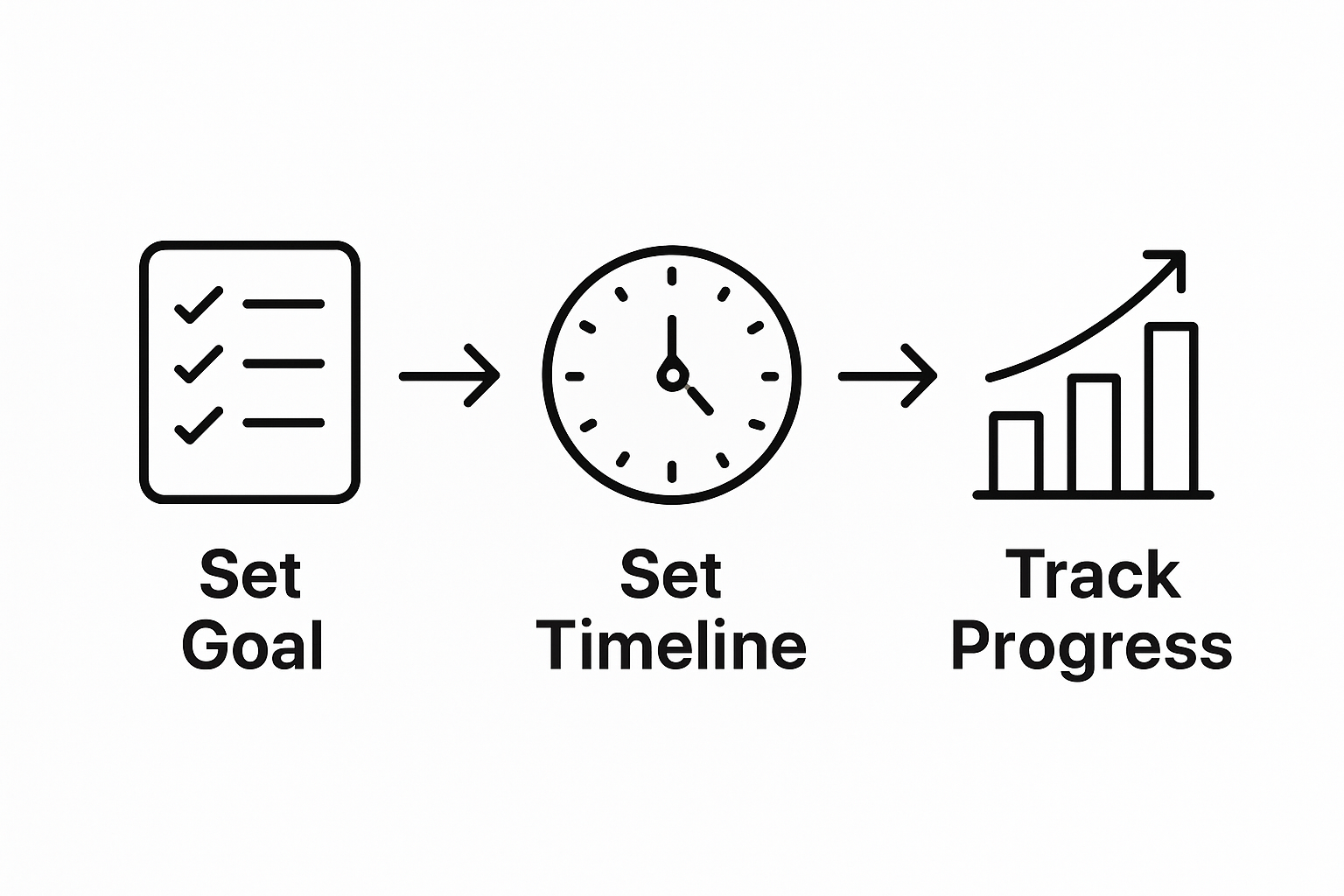
Transitioning from theoretical understanding to practical execution requires a repeatable, structured workflow. Students can follow this four-step action plan to establish and maintain effective academic goals:
- Audit Current Performance: Review past report cards, instructor feedback, and current study habits to identify clear areas for improvement. Do not guess where you need help; rely on objective performance data.
- Draft SMART Goals: Write down no more than three primary academic goals for the current term. Keeping the number small prevents cognitive overload and maintains focus.
- Break Down into Action Steps: Translate each goal into weekly tasks and daily study blocks. Schedule these blocks directly into a calendar or planner.
- Review and Reflect: Set aside fifteen minutes every Sunday to evaluate what was accomplished, identify roadblocks, and adjust the upcoming week's schedule accordingly.
For further reading on evidence-based learning strategies and cognitive development, consult resources provided by the U.S. Department of Education or academic guidance literature from institutions like the American Psychological Association.
Frequently Asked Questions
What is the primary difference between a grade goal and an academic goal?
A grade goal focuses strictly on an outcome (e.g., getting an A in a class), whereas an academic goal encompasses the underlying processes, skills, and knowledge acquisition required to achieve that grade (e.g., mastering complex problem-solving techniques or improving reading comprehension). Focusing solely on grades can lead to superficial memorization, while academic goals promote deep, lasting learning.
How many academic goals should a student set at one time?
It is generally recommended to focus on no more than two or three primary academic goals simultaneously. Attempting to pursue too many major changes at once dilutes focus, increases cognitive fatigue, and raises the likelihood of abandoning the goals entirely.
What should I do if I fall behind on my academic goals?
Falling behind is a normal part of the learning process, not a permanent failure. When this happens, conduct a brief audit to identify why the delay occurred—whether due to poor estimation of time, unexpected personal commitments, or difficult material. Adjust your timeline, break the remaining tasks into smaller increments, and consult instructors or academic advisors for support if needed.
Are academic goals only useful for traditional students?
No. Academic goals are equally valuable for adult learners, professionals pursuing continuing education, individuals studying for trade certifications, and self-directed learners acquiring new technical skills outside of formal institutional settings.
How often should academic goals be reviewed?
Academic goals should be reviewed weekly for progress on micro-tasks and monthly for meso-level adjustments. Major macro-level goals should be evaluated at the end of each semester or academic year to ensure they still align with your overarching career and personal development plans.
Conclusion
Academic goals are essential navigational tools that transform abstract educational ambitions into concrete realities. By understanding the psychology of motivation, applying rigorous structuring frameworks like SMART, balancing short-term actions with long-term visions, and proactively troubleshooting common obstacles, learners can take complete control of their educational journey. Establishing clear academic goals does more than improve grades—it builds the discipline, resilience, and intellectual curiosity required for lifelong success.