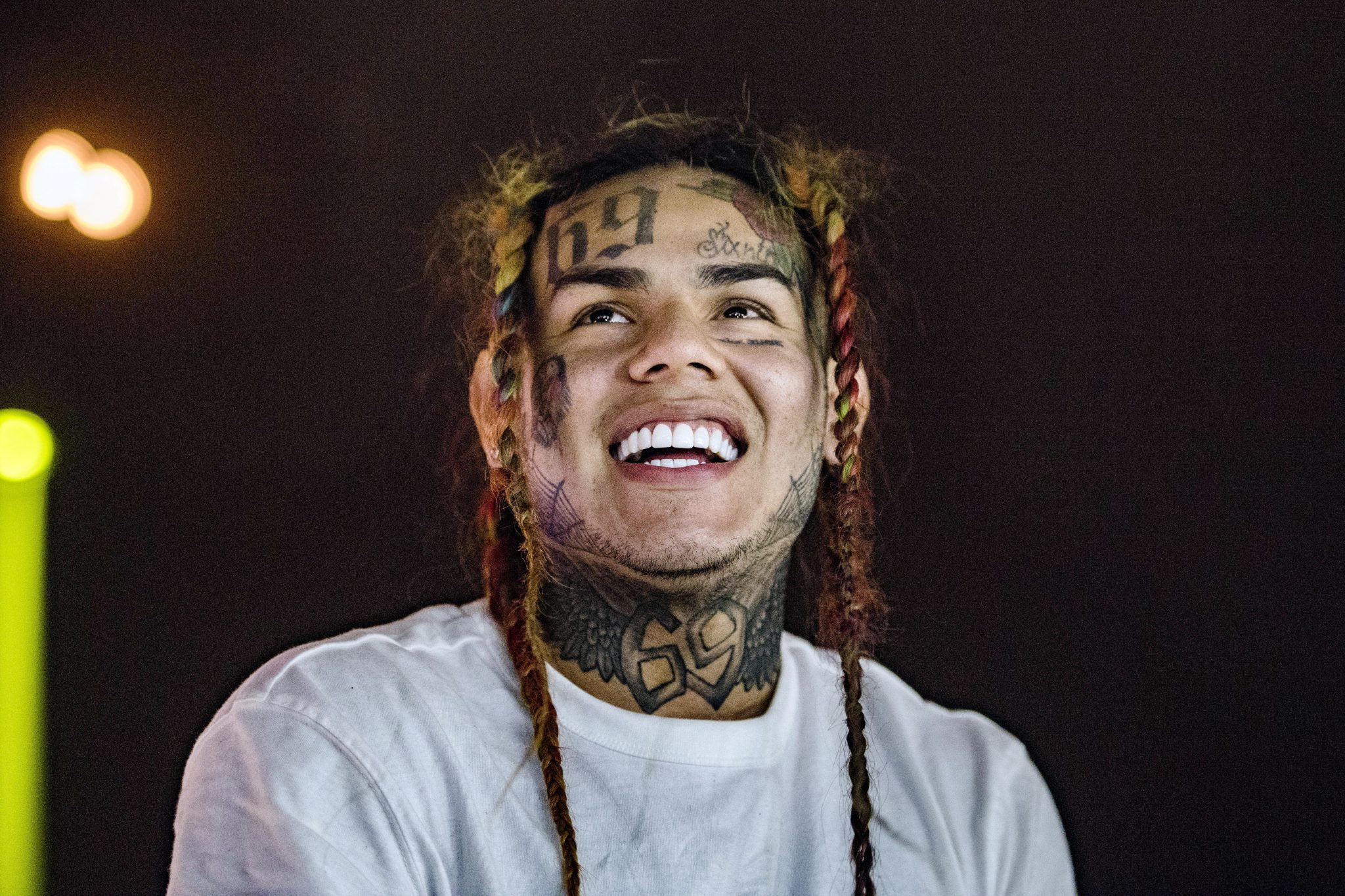
Rapper 6ix9ine, born Daniel Hernandez, is of mixed Mexican and Puerto Rican descent. His mother, Natividad Perez-Hernandez, immigrated to the United States from Atlixco, Puebla, Mexico, while his biological father, Daniel Hernandez Sr., is of Puerto Rican origin. This dual heritage remains a central pillar of his artistic and personal identity.
The identity of the artist known as 6ix9ine (or 69) has always been a focal point of his public persona. Emerging from the vibrant, multicultural streets of Brooklyn, his background is not just a footnote in a biography but a functional part of his brand, his music, and his navigation of the hip-hop industry. As we look at his career trajectory through 2026, it is clear that his ethnic roots have played a pivotal role in his ability to cross over into international markets, particularly within Latin America.
The Early Life and Family Background of Daniel Hernandez
Daniel Hernandez was born on May 8, 1996, in Bushwick, Brooklyn. To understand the rapper’s ethnicity, one must first understand the demographic landscape of Bushwick during the late 1990s and early 2000s. The neighborhood was a melting pot of Caribbean and Latin American cultures, specifically dominated by Puerto Rican and Dominican communities, with a growing Mexican population.
Maternal Roots: The Mexican Influence
The most stable and influential figure in Daniel’s life has been his mother, Natividad Perez-Hernandez. Natividad arrived in the United States from Atlixco, a city in the Mexican state of Puebla known for its vibrant floral industry and proximity to the Popocatépetl volcano. Her journey as an immigrant is a narrative Daniel has frequently referenced in interviews to highlight his work ethic and his "underdog" mentality.
Growing up in a household where Spanish was the primary language, Daniel was immersed in Mexican traditions. This influence became more pronounced later in his career when he began releasing music specifically targeting the Latin market. His connection to Mexico is not merely ancestral; he has made high-profile visits to his mother’s hometown, often documented on social media, where he has engaged in high-visibility philanthropy, handing out cash to residents of the local community.
Paternal Roots: The Puerto Rican Connection
Daniel’s biological father, Daniel Hernandez Sr., is Puerto Rican. However, the relationship between the two was virtually non-existent for most of the rapper’s formative years. Hernandez Sr. was reportedly estranged from the family due to issues with substance abuse and incarceration.
Despite the absence of his biological father, the Puerto Rican influence remained present through his environment in Bushwick and his stepfather. Tragically, his stepfather—who was the primary father figure in his life—was murdered just steps away from the family home when Daniel was 13 years old. This event is often cited as the catalyst for Daniel’s behavioral shift, leading to his eventual expulsion from school and entry into the workforce to support his mother.
Navigating Identity in New York Hip-Hop
In the New York rap scene, ethnicity often dictates the "lane" an artist occupies. For 6ix9ine, his identity as a Latino rapper in a genre historically dominated by African American artists created both opportunities and friction.
The "Afro-Latino" Context and Controversies
While Daniel is of Mexican and Puerto Rican descent, he grew up in a neighborhood where the lines between Black and Brown cultures were often blurred. This upbringing led to one of the most significant controversies regarding his identity: his frequent use of the N-word in his lyrics and public speech.
His defense of this usage was rooted in his environment, claiming that in the streets of Brooklyn, the term was used as a colloquialism among all marginalized groups, regardless of specific racial background. However, this sparked intense debate among fans and critics alike, with many questioning whether his Latino ethnicity granted him the cultural "clearance" to use such language. This tension highlighted the complexities of urban identity in the 21st century.
Visual Identity vs. Ethnic Heritage
Visually, 6ix9ine’s "rainbow" aesthetic—characterized by multi-colored hair and facial tattoos—seemed to intentionally obscure a traditional ethnic look. By leaning into a hyper-stylized, almost cartoonish persona, he initially distanced himself from the typical "Latino rapper" tropes of the early 2000s. However, as his career matured, he began to integrate his heritage more directly into his visual presentation, often sporting Mexican or Puerto Rican flags in his music videos and on his clothing.
The Latin Music Pivot: A Strategic Embrace of Heritage
By 2018, it became clear that 6ix9ine’s ethnicity was a major asset for international expansion. He began collaborating with heavyweights in the Reggaeton and Latin Trap genres, which allowed him to tap into a massive global audience.
Breakthrough Latin Collaborations
One of the defining moments of his career was the release of "BEBE" featuring Anuel AA. The track was entirely in Spanish and showcased a different side of Hernandez. It was not just a commercial success; it was a cultural statement. By successfully performing in Spanish, he solidified his status as a "Latino artist" rather than just a "rapper from Brooklyn who happens to be Latino."
| Track Title | Featured Artist | Primary Language | Cultural Focus |
|---|---|---|---|
| "BEBE" | Anuel AA | Spanish | Latin Trap / Reggaeton |
| "MALA" | Anuel AA | Spanish | Romantic Urban |
| "YAYA" | Solo | Spanish | Caribbean / Tropical |
| "LEYENDA VIVA" | Lenier | Spanish | Regional Mexican / Folk |
"Leyenda Viva" and the Regional Mexican Exploration
In recent years, leading up to 2026, Hernandez has delved deeper into Regional Mexican music. This genre, which includes styles like Corridos and Ranchera, has seen a massive global resurgence. By collaborating with artists like Lenier and filming videos in the Mexican countryside, 6ix9ine has effectively "returned home" to his mother’s roots. These projects often focus on themes of struggle, family, and resilience—values deeply embedded in Mexican culture.
Cultural Reception and Community Perception
The reception of 6ix9ine within the Mexican and Puerto Rican communities is polarized. To some, he is a success story—a kid from a poor immigrant household who became one of the most-watched individuals on the planet. To others, his legal troubles and "snitching" controversy (related to his 2019 testimony against members of the Nine Trey Gangsta Bloods) made him a persona non grata.
The Mexican Community’s Perspective
In Mexico, particularly in Puebla, he is often viewed with a degree of pride or at least curiosity. His willingness to return to his mother’s village and distribute wealth has earned him a "Robin Hood" reputation among some locals. However, traditionalists often criticize his flamboyant style and legal history, viewing it as a poor representation of Mexican values.
The Puerto Rican Community’s Perspective
In the Puerto Rican diaspora of New York, the sentiment is equally mixed. Puerto Rican culture has a long-standing "code of silence" in certain urban sectors, and 6ix9ine’s cooperation with federal authorities created a significant rift. Despite this, his music remains a staple in clubs and parades, proving that his cultural output often outlasts his personal controversies.
The Socio-Economic Impact of His Background
Daniel Hernandez's ethnicity is inextricably linked to his economic narrative. His story is the quintessential "Second Generation" immigrant story, albeit an extreme version. His mother worked as a house cleaner and in factories to provide for him. This background of poverty is a common thread that connects him to millions of Latino fans who see their own family struggles reflected in his early life.
Philanthropy as a Cultural Link
His philanthropic efforts are almost always directed toward Latino communities. Whether it is giving away thousands of dollars in the streets of Mexico or supporting local initiatives in Hispanic neighborhoods in New York, he uses his wealth to reinforce his ethnic ties. This is a calculated but effective way of maintaining "street cred" and cultural relevance when the mainstream industry may be hesitant to embrace him.
Summary of Ethnic Identity and Career Impact
As of 2026, 6ix9ine’s career has proven that ethnicity is a fluid and powerful tool in the digital age. He has navigated three distinct markets:
- The American Hip-Hop Market: Where he leveraged his Brooklyn upbringing.
- The Global Latin Market: Where he used his bilingualism and Puerto Rican/Mexican roots to dominate charts in Spain, Mexico, and South America.
- The Regional Mexican Market: Where he honored his mother’s specific heritage to find a new, loyal fan base during times of domestic controversy.
FAQ: Understanding 6ix9ine's Background
Is 6ix9ine fluent in Spanish? Yes, 6ix9ine is fluent in Spanish. While some native speakers have occasionally critiqued his "New York accent" or slang usage, he has recorded multiple full-length tracks and conducted numerous interviews entirely in Spanish. His ability to switch between English and Spanish has been a cornerstone of his international success.
What is the significance of the 69 name? While often associated with sexual connotations, Daniel Hernandez has explained that the "69" represents the concept of perspective. He argues that if you look at the number 6 from one side it is a 6, but from the other, it is a 9. He uses this as a metaphor for his life and how people perceive his actions and identity differently depending on their "side."
Does he have citizenship in Mexico or Puerto Rico? Daniel Hernandez was born in the United States, making him a U.S. citizen. While he is of Mexican and Puerto Rican descent, there is no public record of him holding dual citizenship, though he is eligible to apply for Mexican citizenship through his mother.
Who raised 6ix9ine? He was primarily raised by his mother, Natividad Perez-Hernandez, and his stepfather. After his stepfather was murdered, Daniel took on a more significant role in helping his mother financially, often working multiple jobs at grocery stores and delis before his rap career took off.
How has his ethnicity influenced his tattoos? Many of his tattoos are stylistic rather than ethnic, but his overall "colorful" aesthetic is sometimes compared to the vibrant colors found in Mexican folk art and "Alebrijes." Additionally, he has featured various cultural symbols in his music videos that align with his Latino heritage.
Practical Recommendation for Researchers
For those studying the intersection of celebrity and ethnicity, 6ix9ine serves as a primary case study in cultural code-switching. To truly understand his impact, one should look beyond the headlines and analyze his discography chronologically.
The shift from the aggressive "SoundCloud Rap" of 2017 to the melodic "Latin Urban" music of 2023-2026 reveals a strategic deepening of his ethnic identity. If you are analyzing his career for academic or journalistic purposes, it is recommended to view his Spanish-language interviews alongside his English ones to see how his persona adapts to different cultural expectations. His story remains a testament to the power of heritage in an increasingly globalized and digital entertainment landscape.