A 60 billion dollar startup valuation represents a rare "super-decacorn" status, placing a private company among the global elite. This valuation indicates that investors believe the firm has a clear path to dominating a massive market, generating multi-billion dollar annual revenues, and eventually achieving a high-impact public listing or acquisition.
The landscape of venture capital and private equity has shifted significantly by 2026. While the "move fast and break things" era defined the early 2010s, a 60 billion dollar valuation in the current market is scrutinized through the lens of sustainable unit economics, artificial intelligence integration, and defensible "moats." Reaching this threshold is no longer just about user growth; it is about proving a fundamental shift in how an industry operates.
Defining the 60 Billion Dollar Threshold in 2026
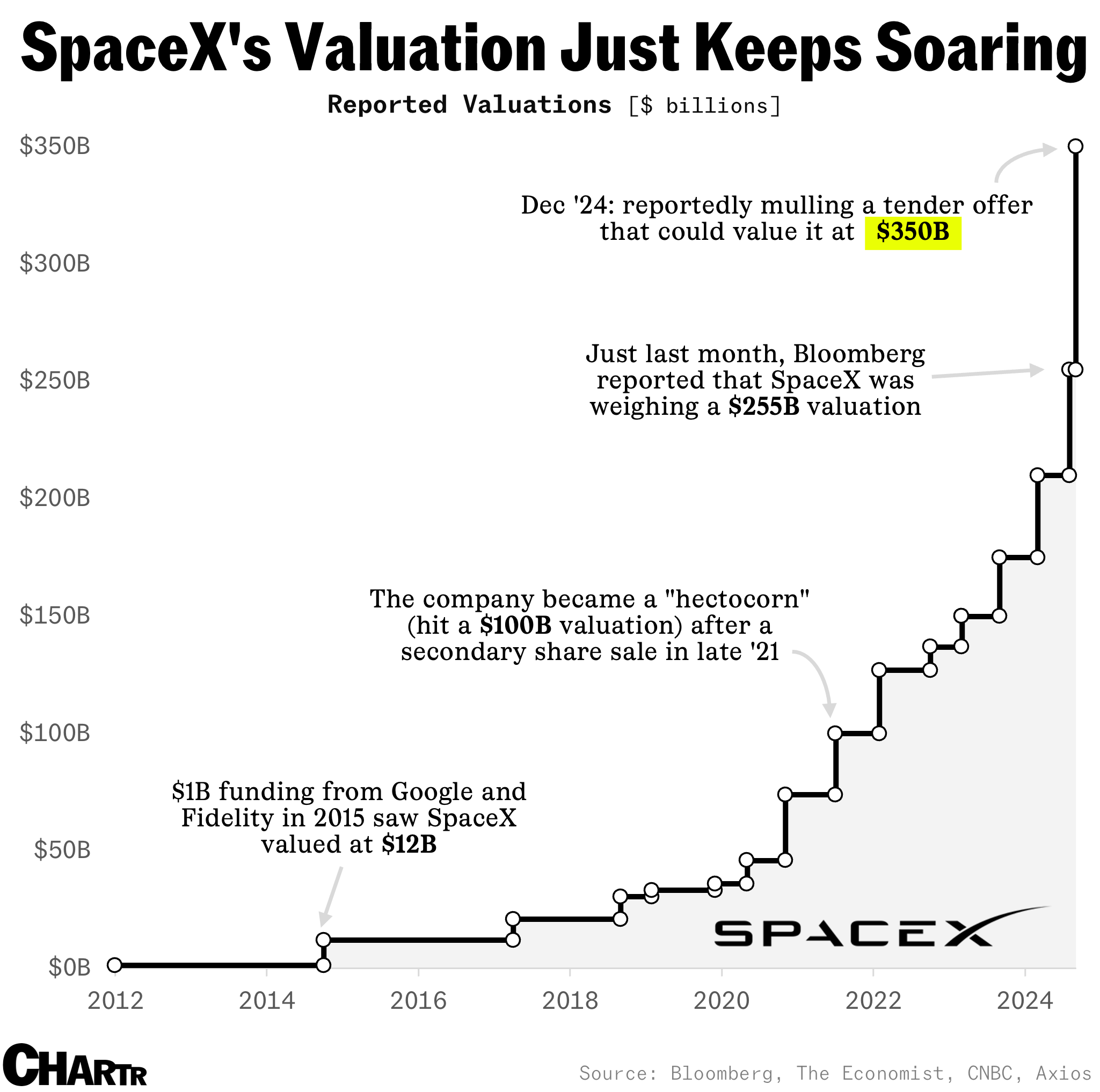
To understand the weight of a $60 billion valuation, one must look at the hierarchy of the startup ecosystem. The term "Unicorn" was coined for startups valued at $1 billion. As the market matured, "Decacorns" ($10 billion) became the new benchmark for success. A $60 billion valuation sits in a rarefied atmosphere, often referred to as a "super-decacorn" or a "hectocorn-in-waiting" (aiming for the $100 billion mark).
At this level, the company is often larger than a significant portion of the S&P 500. In 2026, a $60 billion valuation suggests that the startup is not merely a "disruptor" but a structural pillar of its industry. Whether the sector is generative AI, aerospace, fintech, or biotechnology, a company at this valuation is expected to possess a sophisticated corporate governance structure, a global footprint, and a diversified product roadmap.
The Evolution of the Late-Stage Market
In previous years, companies would rush to an Initial Public Offering (IPO) much earlier. However, the availability of late-stage private capital from sovereign wealth funds, massive pension funds, and dedicated "crossover" investors has allowed companies to remain private longer. A $60 billion valuation serves as a signal to the public markets that the company is "IPO-ready," even if it chooses to stay private to avoid the quarterly scrutiny of public earnings reports.
Key Drivers of High-Stakes Valuations
Achieving a $60 billion valuation requires a "perfect storm" of internal performance and external market conditions. Investors do not arrive at this number through guesswork; they utilize rigorous financial modeling and benchmarking.
Exponential Revenue Growth and Scalability
For a software or AI-driven company, a $60 billion valuation typically requires an Annual Recurring Revenue (ARR) in the range of $3 billion to $6 billion, depending on the prevailing revenue multiples of the time. If the company is growing at 50% to 100% year-over-year, investors are willing to pay a premium for future earnings.
The scalability factor is crucial. Investors look for companies where the marginal cost of adding a new customer is near zero. In 2026, this is increasingly driven by AI agents and automated infrastructure that allow a company to scale its operations without a linear increase in headcount.
Total Addressable Market (TAM) Dominance
A company cannot be valued at $60 billion if its target market is only $100 billion. To justify such a price tag, the startup must be operating in a "winner-take-most" market with a TAM in the trillions. Examples include the global financial system, the energy transition market, or the foundational layer of artificial intelligence infrastructure. Investors must be convinced that the company can capture at least 5% to 10% of this massive market over the next decade.
Data Monopolies and Network Effects
In the modern economy, data is the primary asset. A $60 billion startup often sits on a proprietary dataset that grows more valuable as more people use the service. This creates a "network effect"—where the service becomes better for everyone as the user base expands. This moat makes it prohibitively expensive for competitors to enter the space, justifying a higher valuation multiple.
Common Valuation Methodologies for Late-Stage Startups
When a startup reaches the multi-billion dollar level, the "art" of valuation gives way to the "science" of finance. Analysts use several core methods to triangulate a $60 billion figure.
Comparable Company Analysis (CCA)
This method involves looking at publicly traded companies in the same sector. If a public competitor like Salesforce or Nvidia trades at 15 times its revenue, a private startup with faster growth might be valued at 20 or 25 times revenue. Analysts adjust these multiples based on growth rates, profit margins, and risk profiles.
Discounted Cash Flow (DCF)
The DCF model calculates the present value of all future cash flows the company is expected to generate. For a $60 billion startup, analysts project 10 to 15 years into the future, estimating when the company will become "cash flow positive" and how much profit it will ultimately distribute. Because of the "time value of money," future profits are "discounted" back to today’s value using a specific discount rate (often the Weighted Average Cost of Capital, or WACC).
Precedent Transactions
This involves looking at what other companies in the space were sold for or valued at during their last funding rounds. If a direct competitor was acquired for $40 billion while having inferior technology, a $60 billion valuation for the market leader becomes a logical conclusion.
| Valuation Tier | Range | Typical Revenue (Annual) | Primary Investors | Exit Strategy |
|---|---|---|---|---|
| Unicorn | $1B - $10B | $100M - $500M | Venture Capital, Growth Equity | Acquisition or Mid-cap IPO |
| Decacorn | $10B - $50B | $500M - $2B | Private Equity, Hedge Funds | Large-cap IPO, Strategic Merger |
| Super-Decacorn | $50B - $100B | $3B - $8B | Sovereign Wealth, Pension Funds | Blockbuster IPO, "Permanent" Private |
| Hectocorn | $100B+ | $10B+ | Global Institutional Investors | Public Market Dominance |
The Risks of a 60 Billion Dollar Valuation
While a high valuation is a badge of honor, it also creates significant "liquidation preference" and "exit pressure."
The "Paper Wealth" Trap
A $60 billion valuation is often "on paper." It is based on the price paid for the most recent share of stock. However, if the market turns or the company misses its growth targets, that valuation can evaporate. For employees with stock options, a high valuation can be a double-edged sword; if the company eventually goes public at $40 billion, those who joined at the $60 billion mark may find their options "underwater."
Liquidity Challenges
At $60 billion, there are very few companies in the world capable of acquiring the startup. An acquisition would likely face intense antitrust scrutiny from organizations like the Federal Trade Commission (FTC) or the European Commission. This leaves the IPO as the most viable exit strategy. However, the public markets are often less forgiving than private investors, demanding consistent profitability over "growth at all costs."
The Burden of Expectations
Reaching this level means the company can no longer hide behind the "startup" label to excuse losses. By 2026, investors expect a $60 billion company to have a clear path to GAAP (Generally Accepted Accounting Principles) profitability. Failure to meet these milestones can lead to a "down round," where the company is forced to raise money at a lower valuation, severely diluting existing shareholders and damaging morale.
Navigating the Secondary Markets
For many employees and early investors in a $60 billion startup, waiting for an IPO is not always feasible. This has led to the rise of robust secondary markets. Platforms like Forge Global or Hiive allow stakeholders to sell their private shares to institutional buyers.
In 2026, these secondary markets have become highly sophisticated, providing "price discovery" between official funding rounds. If a company was valued at $60 billion in a Series G round, but its shares are trading at a 20% discount on the secondary market, it provides a sobering reality check for the board of directors regarding the company's true market value.
Implementation: Steps for Companies Approaching This Scale
If a company is tracking toward a $60 billion valuation, the operational requirements shift from product development to institutional-grade management.
- Audit and Compliance: The company must move from simple accounting to rigorous, PCAOB-compliant audits. This is a prerequisite for any eventual IPO.
- Board Reconfiguration: The board should transition from being dominated by early-stage VCs to including independent directors with experience in public markets and specific industry expertise.
- Investor Relations: Even while private, the company should begin acting like a public entity, holding quarterly calls and providing transparent financial reporting to its major shareholders.
- Secondary Liquidity Programs: To retain top talent, the company should implement structured secondary programs, allowing long-term employees to sell a small percentage of their holdings without waiting for an exit event.
Frequently Asked Questions
What happens if a $60 billion startup fails to go public?
If a startup at this valuation cannot IPO or find a buyer, it may become a "zombie unicorn." This occurs when the company is self-sustaining but provides no liquidity for its investors. Eventually, these companies may seek a "private IPO" where they are bought out by a private equity firm at a lower valuation, or they may undergo a recapitalization to reset the cap table.
How does inflation affect startup valuations in 2026?
Inflation impacts the "discount rate" used in valuation models. When inflation is high, central banks usually maintain higher interest rates. This makes future cash flows less valuable in today's dollars, generally putting downward pressure on high-growth startup valuations. A $60 billion valuation in a high-interest environment is significantly more impressive than one achieved during a period of "easy money."
Can a $60 billion valuation be a "bubble"?
Yes. A valuation is a bubble if it is driven by "FOMO" (fear of missing out) rather than underlying fundamentals. If a company is valued at $60 billion but only generates $100 million in revenue with no clear path to scaling, it is likely overvalued. Market corrections, such as those seen in the tech sector in late 2022 and 2023, serve to wash out these speculative valuations.
Who are the typical investors in a $60 billion round?
Investors at this stage are usually "late-stage" specialists. This includes sovereign wealth funds (like Saudi Arabia's PIF or Singapore's Temasek), large mutual funds (like Fidelity or T. Rowe Price), and massive venture firms like SoftBank or Sequoia Capital. These entities have the "dry powder" necessary to write checks for hundreds of millions or even billions of dollars.
Is $60 billion the maximum valuation for a private company?
No. Several companies have exceeded this mark. For instance, ByteDance (the parent company of TikTok) and SpaceX have reached valuations well north of $100 billion. The $60 billion mark is simply a critical psychological and financial milestone that separates the "successful startups" from the "global giants."
Practical Recommendation: The Path Forward
For founders and executives steering a company toward a $60 billion valuation, the focus must shift from growth at all costs to sustainable leadership. In 2026, the market rewards companies that can demonstrate "efficient growth"—the ability to expand revenue while maintaining or improving margins.
Investors should approach a $60 billion valuation with a "trust but verify" mindset. It is essential to look beyond the headline number and examine the "liquidation preferences" attached to the shares. Often, late-stage investors receive "senior" status, meaning they get their money back first in a sale, which can leave early investors and employees with less than expected if the company sells for anything less than its peak valuation.