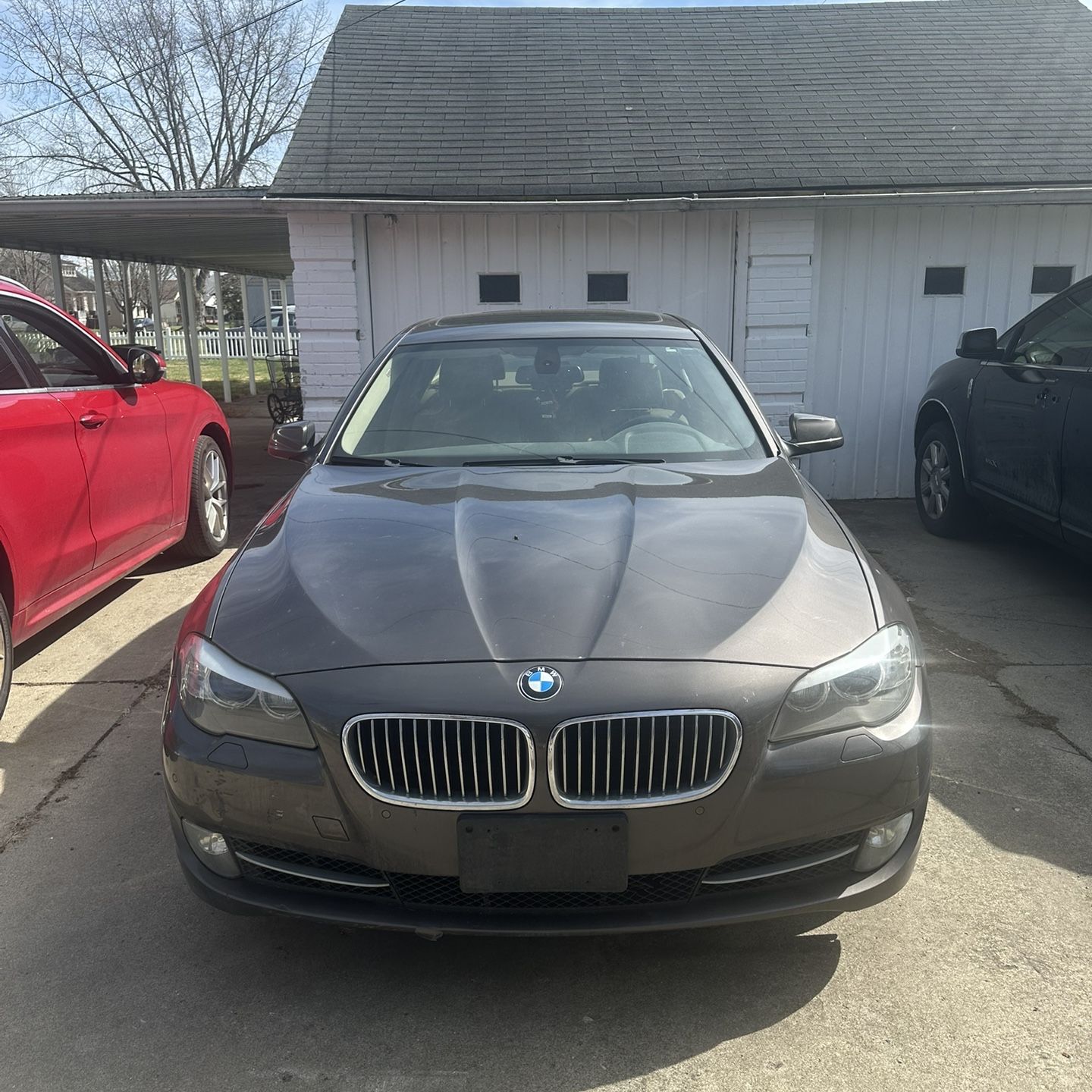
The 2011 BMW 535i can achieve a 0-60 mph time of 5.4 seconds when equipped with the eight-speed Sport Automatic transmission and tested under optimal conditions. While BMW’s official conservative estimate was 5.7 to 5.9 seconds, independent real-world testing frequently proved the F10 chassis was faster than advertised.
Understanding the 5.4 Second Benchmark
In the world of automotive performance, the "0-60" metric is often the primary yardstick by which a sport sedan's athleticism is measured. For the 2011 BMW 535i, the 5.4-second figure represents the upper echelon of its stock performance capabilities. This specific time was most famously recorded by major automotive publications during the car's launch phase, surprising many who expected a more sedate experience from the then-new F10 generation.
The discrepancy between BMW’s official figures and real-world results is a long-standing tradition for the Munich-based automaker. BMW typically provides performance data based on "worst-case" scenarios—full fuel tanks, average temperatures, and standard tires. In contrast, professional testers often achieve 5.4 seconds by utilizing a "one-foot rollout," a standard drag-strip practice that excludes the first few inches of movement from the timer, effectively shaving 0.2 to 0.3 seconds off the standing start time.
As we look at this vehicle from the perspective of 2026, the 5.4-second sprint remains a respectable figure. While modern electric vehicles and high-output hybrids have pushed the boundaries of acceleration, a mid-five-second 0-60 time ensures the 535i remains more than capable of handling highway merges and spirited driving with confidence.
The Heart of the Machine: The N55 Engine
The primary catalyst for the 535i’s 5.4-second performance is the N55 engine. Introduced for the 2011 model year in the 5 Series, the N55 replaced the twin-turbocharged N54. While some enthusiasts initially lamented the loss of one turbocharger, the N55 brought a "TwinPower" twin-scroll turbocharger that significantly improved throttle response and efficiency.
Technical Specifications of the N55 (2011 Model)
- Engine Type: 3.0-Liter Inline-6
- Aspiration: Twin-scroll Turbocharged
- Horsepower: 300 hp @ 5,800 rpm
- Torque: 300 lb-ft @ 1,200–5,000 rpm
- Valvetrain: Valvetronic variable valve lift and Double-VANOS variable camshaft timing
The genius of the N55 lies in its torque curve. Because the full 300 lb-ft of torque is available at just 1,200 rpm, the 535i experiences very little "turbo lag." This immediate low-end grunt is what allows the heavy F10 chassis (which tips the scales at roughly 4,070 lbs) to get off the line so effectively. Without this broad torque plateau, achieving a sub-5.5-second time would have been impossible for a car of this weight.
The Transmission Factor: ZF 8-Speed vs. Manual
In 2011, the choice of transmission played a critical role in whether a driver could actually hit that 5.4-second mark. The 535i was offered with both a 6-speed manual and the then-revolutionary ZF 8-speed automatic.
While purists often prefer the manual, the ZF 8HP automatic is objectively the faster option. Its closely spaced gear ratios allow the engine to stay within its power band more effectively than the 6-speed manual. Furthermore, the automatic's ability to shift in roughly 200 milliseconds is faster than even the most skilled human driver.
The "Sport Automatic" variant of this transmission included steering-wheel-mounted paddle shifters and more aggressive software mapping. When the driving mode was set to "Sport+," the transmission would hold gears longer and execute crisper shifts, which was essential for clocking the 5.4-second 0-60 time. In contrast, the manual transmission models typically lagged behind, usually clocking in the 5.6 to 5.8-second range due to the inevitable interruption of power during clutch engagement.
Real-World Variables Affecting Acceleration
It is important to understand that a 5.4-second time is not guaranteed every time you mash the pedal. Several external and mechanical factors can influence the result.
1. Traction and Tires
The 2011 535i came standard with run-flat tires, which were often criticized for their lack of ultimate grip compared to dedicated high-performance summer tires. If the vehicle is equipped with aged or budget-tier tires, the rear wheels (on RWD models) will struggle to find purchase, leading to traction control intervention that kills the 0-60 attempt. Switching to a modern performance tire like the Michelin Pilot Sport series can drastically improve the consistency of these launches.
2. Density Altitude (Weather)
Turbocharged engines like the N55 are sensitive to air density. In hot, humid conditions or at high altitudes, the air is less dense, meaning the turbo must work harder to produce the same amount of oxygen for combustion. A 535i that runs a 5.4-second 0-60 on a 50-degree morning in New Jersey might struggle to break 6.0 seconds on a 95-degree afternoon in Denver.
3. Fuel Quality
The N55 utilizes high-compression and direct injection. To reach its rated 300 horsepower, it requires premium unleaded fuel (91 or 93 octane). Using lower-grade fuel causes the engine's knock sensors to retard ignition timing to prevent damage, resulting in a noticeable loss of power and slower acceleration times.
Comparing the 2011 535i to Its Peers
To appreciate the 5.4-second performance, we must look at how it compared to its stablemates and competitors in the 2011 luxury sedan market.
| Model | Engine | Horsepower | 0-60 MPH (Tested) |
|---|---|---|---|
| 2011 BMW 528i | 3.0L I6 (NA) | 240 hp | 6.6 Seconds |
| 2011 BMW 535i | 3.0L I6 (Turbo) | 300 hp | 5.4 Seconds |
| 2011 BMW 550i | 4.4L V8 (Twin Turbo) | 400 hp | 4.8 Seconds |
| 2011 Mercedes E350 | 3.5L V6 | 268 hp | 6.5 Seconds |
| 2011 Audi A6 3.0T | 3.0L V6 (Supercharged) | 300 hp | 5.5 Seconds |
The 535i occupied the "sweet spot" of the F10 lineup. While the 528i felt somewhat underpowered for the heavy chassis and the 550i suffered from significant maintenance concerns (specifically with the early N63 V8 engines), the 535i provided near-V8 levels of acceleration with better reliability and fuel economy.
Weight and Aerodynamics of the F10 Chassis
The 2011 model marked the debut of the F10 chassis, which was a significant departure from the previous E60 generation. The F10 shared much of its architecture with the larger 7 Series (F01), which meant it was heavier but also more rigid and aerodynamic.
BMW engineers utilized aluminum for the doors, hood, and front fenders to offset the weight of the new safety technology and luxury features. The car’s drag coefficient (Cd) was a sleek 0.28 to 0.30 depending on the wheel package. This aerodynamic efficiency is less relevant during the initial 0-30 mph launch but becomes crucial as the car nears 60 mph, where air resistance begins to play a larger role in the rate of acceleration.
Enhancing Performance: Beyond the 5.4 Second Mark
For owners in 2026 looking to improve upon the 5.4-second baseline, the N55 engine offers a robust platform for modification. Because the engine is turbocharged, significant gains can be made through software alone.
- Stage 1 ECU Tune: Simple software "flashes" from reputable tuners can increase boost pressure and optimize fuel maps. A Stage 1 tune can typically push the 535i from 300 hp to approximately 340-350 hp, often dropping the 0-60 time into the high 4-second range.
- Intercooler Upgrades: The stock intercooler is prone to "heat soak" after a few hard pulls. Upgrading to a larger front-mount intercooler helps maintain consistent air intake temperatures, ensuring the car doesn't get slower as it warms up.
- Charge Pipe Replacement: The factory plastic charge pipe is a known weak point on the 2011 N55 engine. It is prone to cracking even under stock boost levels. Replacing this with an aluminum version is a prerequisite for any performance driving or tuning.
Maintenance Considerations for Performance Longevity
To maintain the 5.4-second capability of a 2011 BMW 535i in 2026, several critical maintenance areas must be addressed. Performance degrades quickly when the engine is struggling with underlying mechanical issues.
- Carbon Buildup: As a direct-injection engine, the N55 is susceptible to carbon deposits on the intake valves. This buildup restricts airflow and can lead to stutters and power loss. Walnut blasting the intake valves every 60,000 to 80,000 miles is necessary to restore factory performance.
- VANOS Solenoids: The variable valve timing system relies on these solenoids. When they become clogged or fail, the engine loses its broad torque curve, making the car feel sluggish off the line.
- High-Pressure Fuel Pump (HPFP): Early N55 engines occasionally faced fuel pump issues. If the engine isn't receiving the required fuel pressure under load, it will enter "Limp Mode," and acceleration will be severely limited.
Frequently Asked Questions
Is the 2011 BMW 535i xDrive faster than the RWD version?
In many cases, yes. While the xDrive (all-wheel-drive) system adds roughly 150-200 lbs to the car, the superior traction allows for a more aggressive launch without wheel spin. In wet or less-than-perfect conditions, the xDrive model will consistently beat the RWD model to 60 mph, though the RWD model may have a slight advantage at higher speeds due to lower drivetrain loss.
Did the 2011 535i have a launch control feature?
Officially, launch control was not a standard, advertised feature on the 2011 F10 535i in the same way it was on the M5. However, drivers could achieve a "brake-boosted" launch by holding the brake with the left foot, building slight rpm with the right foot in Sport+ mode, and then releasing the brake. This technique is what testers used to achieve the 5.4-second time.
How does the 2011 535i 0-60 compare to a modern 2026 5 Series?
By 2026, the 5 Series has integrated significant electrification. A base model 2026 5 Series or i5 likely matches or exceeds the 5.4-second time of the 2011 535i while offering much higher efficiency. However, the mechanical feel and the specific power delivery of the N55 inline-6 remain a draw for enthusiasts who prefer a traditional internal combustion experience.
Does the mileage of the car affect its 0-60 time?
Mileage itself is less important than maintenance. A well-maintained 150,000-mile 535i with clean intake valves, fresh spark plugs, and a healthy turbo will still hit its performance targets. Conversely, a neglected 60,000-mile car with boost leaks and old fluids will likely be significantly slower.
Practical Recommendation
If you are looking to purchase or verify the performance of a 2011 BMW 535i, focus on the transmission and tires. To achieve or replicate the 5.4-second 0-60 mph time, ensure the vehicle has the 8-speed Sport Automatic transmission and is fitted with high-quality summer performance tires.
Before attempting performance testing, verify that the charge pipe has been upgraded to an aluminum version and that the spark plugs and ignition coils have been replaced within the last 30,000 miles. These steps ensure that the engine can safely handle the boost pressures required to move two tons of German engineering to 60 mph in under five and a half seconds.