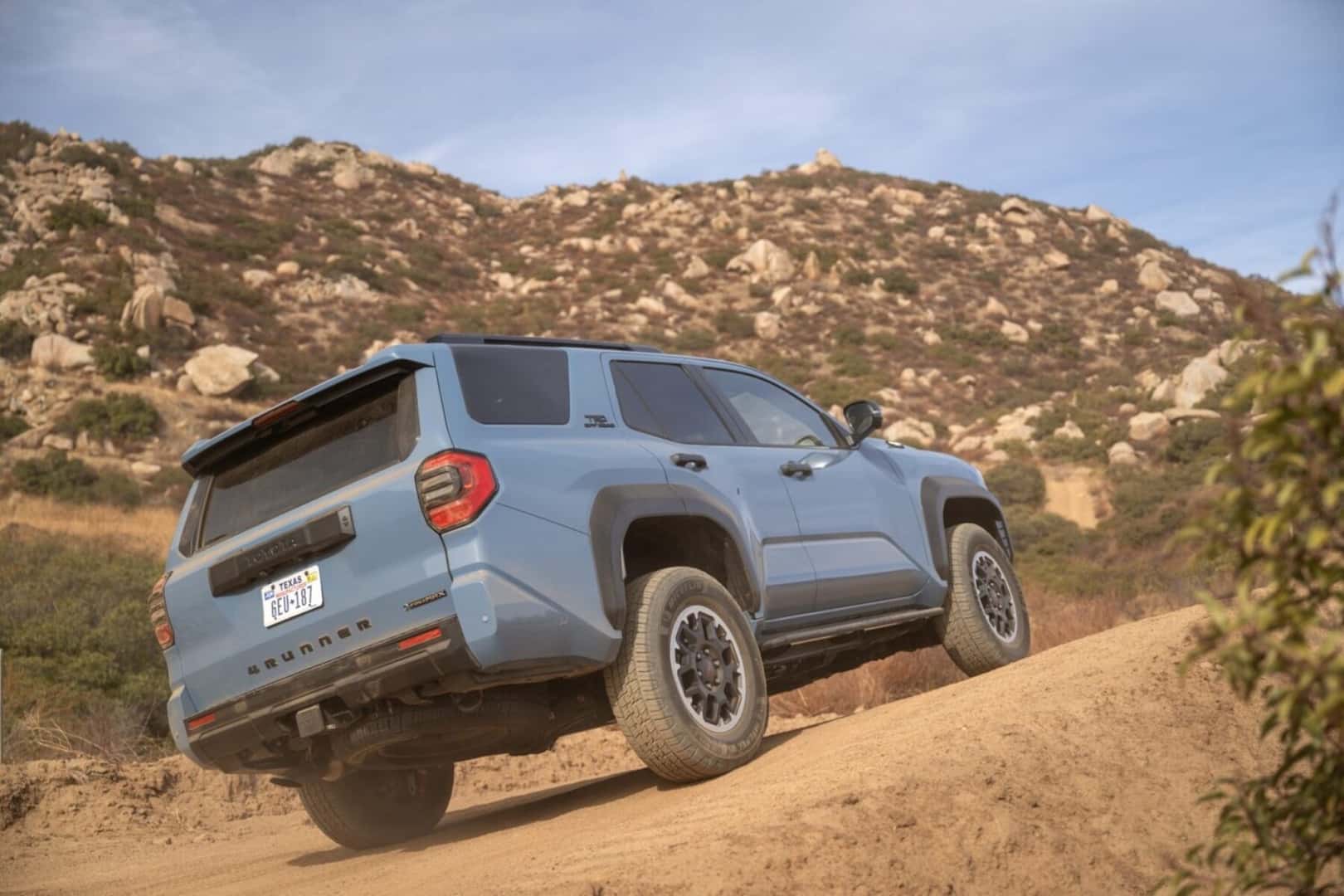
Choosing between the 2026 Toyota 4Runner and the Subaru Outback depends on whether you prioritize rugged, body-on-frame durability or car-like efficiency and comfort. The 4Runner is a dedicated off-road SUV built for rock crawling and heavy towing, while the Outback is a versatile crossover designed for inclement weather and light trail use.
Understanding the Core Philosophies: Body-on-Frame vs. Unibody
To understand the difference between the 4Runner and the Outback, one must first look at their structural foundations. These two vehicles represent the two primary ways to build a utility vehicle, and their designs dictate almost every aspect of their performance, from fuel economy to off-road articulation.
The Toyota 4Runner remains a traditional SUV. As of 2026, it utilizes the TNGA-F global truck platform, which it shares with the Toyota Tacoma and Land Cruiser. This "body-on-frame" construction means the vehicle's body sits on top of a rigid steel ladder frame. This design is exceptionally durable and allows for significant suspension travel and high towing capacities. However, it also makes the vehicle heavier and results in a higher center of gravity, which can lead to a more "truck-like" ride on paved roads.
In contrast, the Subaru Outback is a unibody vehicle. It is essentially a wagon with a raised suspension, built on the Subaru Global Platform. Because the frame and the body are a single integrated unit, the Outback is lighter, more rigid, and offers superior handling characteristics on asphalt. It feels more like a car than a truck, providing a smoother ride and better cornering. The trade-off is that it lacks the sheer structural toughness required for high-impact rock crawling or heavy-duty winching.
Powertrains and Performance: Turbocharged Efficiency
By 2026, both manufacturers have moved away from large-displacement naturally aspirated engines in favor of turbocharged four-cylinder powerplants and hybrid systems.
Toyota 4Runner Powerplants
The 4Runner offers two primary powertrain options. The base engine is the i-FORCE 2.4-liter turbocharged four-cylinder, producing 278 horsepower and 317 lb-ft of torque. For those seeking more power, the i-FORCE MAX hybrid pairs the same 2.4-liter engine with an electric motor to produce a combined 326 horsepower and a massive 465 lb-ft of torque. This torque is crucial for off-roading, providing low-end grunt to clear obstacles without needing to high-rev the engine.
Subaru Outback Powerplants
The Subaru Outback typically offers two engine choices. The base 2.5-liter Boxer engine produces 182 horsepower, which is adequate for commuting but can feel sluggish when the vehicle is fully loaded with gear. The preferred choice for enthusiasts is the 2.4-liter turbocharged Boxer, which delivers 260 horsepower and 277 lb-ft of torque. While the Outback's numbers are lower than the 4Runner’s, the Subaru is significantly lighter, meaning its power-to-weight ratio remains competitive for highway passing and daily driving.
Off-Road Capability: Technical Specs and Trail Performance
If your primary goal is to leave the pavement behind, the 4Runner and Outback offer very different levels of capability.
The 4Runner is a "mountain goat." It features a part-time or full-time 4WD system with a dedicated two-speed transfer case (High and Low range). Low-range gearing is essential for steep descents and technical rock crawling. Higher trims like the TRD Pro and the Trailhunter include a locking rear differential, which forces both rear wheels to turn at the same speed, ensuring traction even if one wheel is off the ground. With approach angles exceeding 32 degrees, the 4Runner can climb over obstacles that would snag the bumper of almost any other vehicle.
The Outback, particularly in its Wilderness trim, is surprisingly capable for a crossover. It features Subaru’s Symmetrical All-Wheel Drive and an enhanced X-MODE system, which manages engine output and braking to maintain traction on slippery surfaces. The Outback Wilderness offers up to 9.5 inches of ground clearance, which is actually more than some stock 4Runners. However, the Outback lacks a low-range transfer case and has much longer front and rear overhangs. This means that while it excels on snowy roads, sandy beaches, and gravel fire roads, it is not designed for technical "Jeep-style" trails or boulders.
Interior Utility and Technology
Both vehicles are designed for active lifestyles, but they approach interior space differently.
The Toyota 4Runner interior is rugged and functional. In the 2026 model, you’ll find a mix of durable plastics and optional SofTex synthetic leather. The dashboard features a large touchscreen (up to 14 inches) with Toyota’s latest Audio Multimedia system. One of the 4Runner’s "killer features" remains its power-retractable rear window, which allows for excellent ventilation and easy access to gear in the cargo area without opening the liftgate. The 4Runner also offers an optional (though cramped) third row, making it a potential 7-passenger vehicle.
The Subaru Outback interior feels more refined and "premium-adjacent." It focuses on passenger comfort with a lower step-in height, making it easier for children and dogs to enter. The central hub is the 11.6-inch Starlink vertical touchscreen, which controls most climate and audio functions. Subaru’s interior is often praised for its ergonomics and visibility; the large glass area provides fewer blind spots than the chunkier 4Runner. The Outback is strictly a two-row, five-passenger vehicle, but it offers a longer cargo floor that is often more practical for sleeping inside the vehicle during "car camping" trips.
Comparison of Key Specifications
| Feature | 2026 Toyota 4Runner (i-FORCE) | 2026 Subaru Outback (XT/Wilderness) |
|---|---|---|
| Chassis Type | Body-on-Frame (Truck-based) | Unibody (Car-based) |
| Engine | 2.4L Turbo I4 / Hybrid | 2.5L NA / 2.4L Turbo Boxer |
| Horsepower | 278 - 326 hp | 182 - 260 hp |
| Torque | 317 - 465 lb-ft | 176 - 277 lb-ft |
| Transmission | 8-speed Automatic | CVT (Lineartronic) |
| Drive System | Part-time or Full-time 4WD w/ Low Range | Symmetrical AWD |
| Ground Clearance | 9.2 inches | 8.7 to 9.5 inches |
| Max Towing | 6,000 lbs | 2,700 - 3,500 lbs |
| Fuel Economy (Est.) | 20-24 MPG Combined | 24-28 MPG Combined |
Towing and Payload Considerations
For users who need to pull a trailer, the 4Runner is the clear winner. With a 6,000-pound maximum towing capacity on the 2026 model, the 4Runner can comfortably handle mid-sized travel trailers, boat trailers, and utility trailers loaded with ATVs. Its heavy frame provides stability under load, and the available integrated trailer brake controller makes towing safer.
The Outback is much more limited in this regard. The base engine is rated for 2,700 pounds, while the Turbo/Wilderness models can tow up to 3,500 pounds. This is enough for a small teardrop camper or a lightweight utility trailer, but it struggles with larger loads. Furthermore, because the Outback uses a Continuously Variable Transmission (CVT), frequent heavy towing can lead to increased wear and tear compared to the 4Runner’s traditional 8-speed planetary automatic.
Safety and Driver Assistance
Subaru has long been a leader in safety, and the 2026 Outback continues this trend with the EyeSight Driver Assist Technology. This system includes pre-collision braking, lane-keep assist, and advanced adaptive cruise control with lane centering. Subaru's system is known for its smooth interventions and high reliability in various weather conditions.
Toyota has closed the gap significantly with Toyota Safety Sense (TSS) 3.0, which is standard on all 4Runner trims. It offers similar features, including Proactive Driving Assist and a Pre-Collision System with Pedestrian Detection. While both vehicles are exceptionally safe, the Outback's lower center of gravity makes it inherently more stable in emergency maneuvers (like swerving to avoid an animal), whereas the 4Runner’s taller profile makes it more susceptible to body roll.
Fuel Economy and Long-Term Ownership Costs
The 2026 Subaru Outback is the more economical choice for daily commuting. Even with its turbocharged engine, the Outback generally achieves a combined fuel economy in the mid-to-high 20s. Over five years of ownership, the savings on fuel compared to the 4Runner can amount to several thousand dollars.
The 4Runner, despite its modern turbocharged engine and hybrid options, remains a heavy, aerodynamically "boxy" vehicle. While the i-FORCE MAX hybrid improves efficiency, it is primarily designed for power rather than fuel sipping. Expect combined MPG in the low 20s.
However, the Toyota 4Runner holds a significant advantage in resale value. The 4Runner has historically been one of the slowest-depreciating vehicles on the market. Enthusiasts often pay a premium for used 4Runners because of their reputation for lasting 300,000 miles or more with basic maintenance. While Subarus also hold their value well, they generally do not reach the "cult status" pricing of a used 4Runner.
Frequently Asked Questions
Is the 4Runner or Outback better for snow?
For most drivers, the Subaru Outback is better for snow. Its Symmetrical AWD system is always active and can shift power instantly between wheels. Its lower center of gravity also makes it more predictable on icy roads. The 4Runner is better only in deep, unplowed snow (over 12 inches) where its higher clearance and 4WD Low range prevent it from getting stuck.
Can the Subaru Outback go off-road?
Yes, the Outback is highly capable on dirt roads, mud, and sand. The Wilderness trim specifically adds underbody skid plates and improved gearing for off-road use. However, it should not be used for rock crawling or trails with large vertical obstacles, as it lacks the necessary suspension articulation and protective frame.
Is the 4Runner reliable enough for a daily driver?
The 2026 4Runner is a very reliable daily driver, but it is less comfortable than the Outback. The ride is stiffer, it uses more fuel, and it is harder to park in tight urban spaces. If your daily commute involves long stretches of highway, the Outback's superior NVH (Noise, Vibration, and Harshness) insulation and smoother ride make it the better choice.
Does the 2026 4Runner have a third row?
Yes, the 4Runner offers an optional third row on certain trims. However, it is very tight and primarily intended for children. If you frequently need to carry more than five people, a larger SUV like the Toyota Sequoia or a minivan might be more appropriate.
Which vehicle is better for car camping?
The Subaru Outback is often preferred for sleeping inside the vehicle because the rear seats fold nearly flat, and the roofline is long enough for most adults to stretch out. The 4Runner is better for overlanding, where you might mount a heavy rooftop tent or carry heavy cooking and recovery gear on a roof rack, thanks to its higher roof load capacity.
Final Recommendation: Which Should You Buy?
The choice between these two icons of the outdoor world comes down to your "edge cases"—the most extreme things you plan to do with the vehicle.
Choose the 2026 Toyota 4Runner if:
- You plan on technical off-roading, rock crawling, or frequenting OHV (Off-Highway Vehicle) parks.
- You need to tow a trailer weighing more than 3,000 pounds.
- You want the highest possible resale value and plan to keep the vehicle for a decade or more.
- You prefer the "commanding" view of the road and the rugged feel of a truck.
Choose the 2026 Subaru Outback if:
- Most of your driving is on paved roads, but you need a vehicle that can handle snow and gravel trails.
- Fuel economy and ride comfort are high priorities for your daily commute.
- You frequently carry gear on the roof (the Outback's lower height makes loading bikes or kayaks much easier).
- You want a sophisticated suite of safety features in a package that is easy to drive and park.