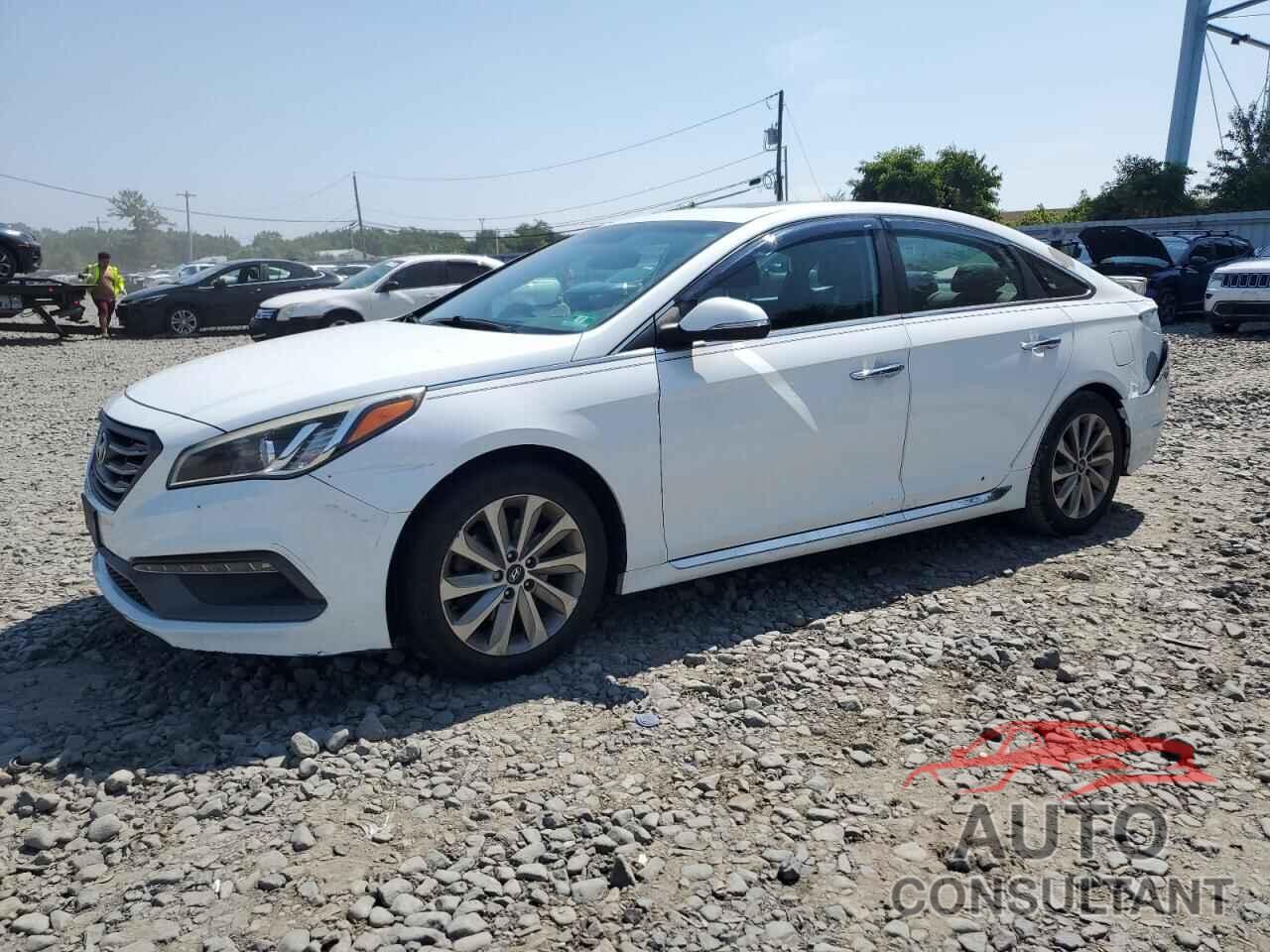
The 2016 Hyundai Sonata offers a diverse range of fuel economy figures depending on the powertrain, with the base 2.4L engine achieving an EPA-estimated 25 city / 38 highway mpg. The 1.6L Eco trim improves this to 28 city / 38 highway, while the Hybrid and Plug-in Hybrid models lead the lineup, offering up to 44 mpg highway and 99 MPGe, respectively.
Understanding the 2016 Hyundai Sonata’s Efficiency Landscape
When the seventh-generation (LF) Hyundai Sonata entered its second production year in 2016, it was designed to compete in a fiercely contested midsize sedan market. To appeal to a wide range of buyers, Hyundai engineered five distinct powertrain configurations, each balancing performance, cost, and fuel efficiency differently. Now, in 2026, these vehicles are decade-old staples of the used car market, and understanding "what the numbers reveal" requires looking at both the original EPA ratings and how these mechanical systems age.
The 2016 Sonata was a departure from the "Fluidic Sculpture" design of the previous generation, opting for a more conservative, aerodynamic profile. This shift wasn't just aesthetic; the 2016 model boasted a drag coefficient of just 0.27 (0.24 for the Hybrid), which significantly aided its highway fuel economy. However, the real story of its gas mileage lies under the hood, where Gasoline Direct Injection (GDI) technology and turbocharging play primary roles.
The Standard Workhorse: The 2.4L Theta II Engine
The most common engine found in the 2016 Sonata is the naturally aspirated 2.4-liter GDI four-cylinder. Found in the SE, Sport, and Limited trims, this engine was designed to be the "all-rounder."
EPA Ratings and Real-World Expectation
For the SE trim, which utilizes smaller 16-inch wheels and lower-resistance tires, the EPA rated the vehicle at 25 mpg city, 38 mpg highway, and 30 mpg combined. In the Sport and Limited trims, which often feature larger 17-inch or 18-inch wheels, the highway rating drops slightly to 36 mpg, resulting in a 29 mpg combined rating.
The use of GDI technology allows for higher compression ratios and more precise fuel metering, which is why a relatively large four-cylinder can still touch near 40 mpg on the highway. However, in 2026, many 2.4L engines may experience a slight decline in efficiency due to carbon buildup on the intake valves—a common side effect of direct injection where fuel does not "wash" the valves.
The Efficiency Specialist: The 1.6L Eco Trim
For buyers specifically searching for the best non-hybrid gas mileage, the 2016 Sonata Eco remains the standout choice. This trim utilizes a 1.6-liter turbocharged Gamma four-cylinder engine paired with a seven-speed dual-clutch transmission (DCT).
Why the Eco Numbers Are Higher
The Eco trim delivers 28 mpg city and 38 mpg highway (32 mpg combined). While the highway number matches the base SE, the city mileage is significantly better. This is largely due to the efficiency of the DCT, which lacks the torque converter "slush" of a traditional automatic, providing a more direct mechanical link and less energy loss.
The 1.6L turbo also provides more peak torque (195 lb-ft) than the 2.4L engine, and it arrives much earlier in the RPM range (1,500 RPM). This allows the transmission to shift into higher gears sooner, keeping the engine in its most efficient operating window during city driving.
The Performance Trade-off: The 2.0L Turbo
At the top of the internal combustion range is the 2.0-liter turbocharged Theta II engine, found in the Sport 2.0T and Limited 2.0T. This engine prioritizes power (245 hp) over parsimony.
Examining the Performance Penalty
The 2.0T models are rated at 21 mpg city and 31 mpg highway (Sport) or 32 mpg highway (Limited). The combined rating sits at 25-26 mpg. For drivers who frequently use the turbocharger’s boost for rapid acceleration, real-world numbers can easily dip into the high teens in urban environments. The 2.0T requires more fuel to maintain the correct air-fuel ratio under boost, making it the least efficient member of the 2016 Sonata family.
Electrified Efficiency: Hybrid and Plug-in Hybrid (PHEV)
The 2016 model year was significant because it introduced the redesigned Sonata Hybrid and the first-ever Sonata Plug-in Hybrid. Both utilize a 2.0-liter "Nu" GDI four-cylinder engine specifically tuned for the Atkinson cycle, which maximizes efficiency at the expense of raw power.
The Hybrid Numbers
The standard Hybrid SE, with its smaller wheels, achieves an EPA-rated 40 city / 44 highway / 42 combined mpg. The higher Hybrid Limited trim, due to increased weight and different tires, drops to 39 city / 43 highway / 41 combined. These numbers were highly competitive in 2016, challenging the Toyota Camry Hybrid of the era.
The Plug-in Hybrid (PHEV) Advantage
The PHEV is the "wildcard" of the lineup. It features a larger 9.8 kWh lithium-ion polymer battery pack, allowing for an EPA-rated 27 miles of all-electric range.
- Electric Mode: 99 MPGe (Miles Per Gallon equivalent).
- Hybrid Mode: 40 mpg combined once the battery is depleted.
For drivers with a commute under 25 miles who can charge at home, the 2016 Sonata PHEV effectively uses no gasoline for daily errands, though its efficiency in hybrid mode remains slightly lower than the standard hybrid due to the extra weight of the larger battery.
2016 Hyundai Sonata Gas Mileage Comparison Table
| Engine / Trim | City MPG | Highway MPG | Combined MPG | Fuel Tank Capacity |
|---|---|---|---|---|
| 2.4L GDI (SE Trim) | 25 | 38 | 30 | 18.5 Gal |
| 2.4L GDI (Sport/Ltd) | 25 | 36 | 29 | 18.5 Gal |
| 1.6L Turbo (Eco) | 28 | 38 | 32 | 18.5 Gal |
| 2.0L Turbo (2.0T) | 21 | 31/32 | 25/26 | 18.5 Gal |
| 2.0L Hybrid (SE) | 40 | 44 | 42 | 15.9 Gal |
| 2.0L Hybrid (Limited) | 39 | 43 | 41 | 15.9 Gal |
| 2.0L PHEV (Plug-in) | 40 (Hybrid) | 40 (Hybrid) | 99 MPGe | 14.5 Gal |
Source: EPA Fuel Economy Guide 2016
Factors That Influence These Numbers in 2026
As these vehicles reach the ten-year mark, several mechanical and environmental factors can cause real-world gas mileage to deviate from the original EPA "window sticker" numbers.
1. Carbon Buildup on GDI Engines
The 2.4L, 1.6T, and 2.0T engines all use Gasoline Direct Injection. Unlike older port-injected engines, GDI sprays fuel directly into the combustion chamber. Over time, carbon deposits accumulate on the intake valves because there is no fuel flowing over them to clean them. This can restrict airflow and cause incomplete combustion, leading to a noticeable drop in MPG. Professional walnut blasting or specialized GDI intake cleaners are often required to restore efficiency.
2. Transmission Health and Software
The 1.6L Eco uses a dry-clutch DCT. If the clutches are worn or if the transmission control module (TCM) hasn't been updated with the latest Hyundai service bulletins, the car may suffer from "clutch slip" or inefficient shifting patterns, both of which hurt fuel economy. Similarly, the 6-speed automatic in the other models requires fluid changes to maintain the hydraulic efficiency necessary for optimal fuel economy.
3. Hybrid Battery Degradation
For the 2016 Hybrids and PHEVs, the lithium-ion polymer batteries are now a decade old. While Hyundai offered an aggressive lifetime battery warranty for the original owner (and 10 years/100,000 miles for subsequent owners), the battery's ability to hold a charge and assist the engine may have diminished. Reduced battery capacity forces the gasoline engine to run more frequently, lowering the overall MPG.
4. Tire Choice and Pressure
The 2016 Sonata was originally fitted with low-rolling-resistance (LRR) tires. In 2026, many of these cars have been fitted with various aftermarket tires. Switching from an LRR tire to a high-performance or all-season tire with a "stickier" compound can reduce gas mileage by 1–3 mpg. Furthermore, the Sonata’s Tire Pressure Monitoring System (TPMS) is critical; even a 5 PSI drop across all four tires can significantly increase rolling resistance.
Technical Maintenance to Restore Lost MPG
If a 2016 Sonata is underperforming relative to the numbers revealed above, owners should focus on three specific areas:
- The Ignition System: Replacing spark plugs every 45,000 miles for turbo models and 100,000 miles for the 2.4L is vital. Fouled plugs lead to misfires and wasted fuel.
- The Oxygen (O2) Sensors: These sensors monitor the exhaust and tell the ECU how much fuel to spray. An aging sensor might not trigger a Check Engine Light but can cause the engine to run "rich," wasting gas.
- The Air Intake: A clogged engine air filter is the simplest and cheapest fix for poor mileage. Additionally, ensuring the Mass Air Flow (MAF) or MAP sensor is clean helps the engine calculate the perfect air-fuel ratio.
Comparison with Competitors
To truly understand what the 2016 Sonata numbers reveal, we must look at how it stacked up against its contemporaries.
- 2016 Toyota Camry: The 2.5L Camry was rated at 25 city / 35 highway. The Sonata’s 38 mpg highway rating gave it a slight edge on long-distance cruises.
- 2016 Honda Accord: The Accord with a CVT was rated at 27 city / 37 highway. The Accord generally offered better city mileage than the 2.4L Sonata but trailed the Sonata Eco.
- 2016 Mazda6: Known for its "Skyactiv" technology, the Mazda6 hit 40 mpg highway with its i-ELOOP system, making it one of the few non-hybrids to beat the Sonata's highway figures.
The Sonata’s primary advantage was its 18.5-gallon fuel tank, which was larger than many in its class. This gave the 2.4L SE a theoretical highway cruising range of over 700 miles, a figure that remains impressive even by 2026 standards.
Frequently Asked Questions
Does using Premium gas improve the 2016 Sonata's gas mileage?
No. All engines in the 2016 Sonata lineup, including the 1.6L and 2.0L turbos, are engineered to run on 87-octane regular unleaded gasoline. Using premium fuel (91+ octane) will not provide a measurable increase in fuel economy or horsepower, as the engine's ECU is tuned for regular fuel. The only exception is if the engine is experiencing "knocking," but that indicates a mechanical issue rather than a need for better fuel.
Why is my 2016 Sonata's gas mileage lower in the winter?
Winter fuel blends typically have lower energy density than summer blends. Additionally, GDI engines take longer to reach optimal operating temperature in cold weather, during which time they run a "rich" fuel mixture. If you have a Hybrid or PHEV, the gasoline engine must also run more frequently to generate heat for the cabin, significantly lowering city MPG in the winter.
Does "Eco Mode" actually save gas?
In the 2016 Sonata, Eco Mode adjusts the transmission shift points and dulls the throttle response. It encourages the transmission to upshift earlier and stay in higher gears longer. While it can improve gas mileage by 1–2 mpg for drivers with a "heavy foot," it does not change the engine's mechanical efficiency. If you already drive smoothly, the gains from Eco Mode will be minimal.
How much does the 20.L Turbo's gas mileage drop with aggressive driving?
While the EPA rating is 21/31, heavy-footed driving in the 2.0T can result in city mileage as low as 17 or 18 mpg. Turbochargers work by forcing more air into the engine, which requires a proportional increase in fuel. Frequent "boost" usage effectively turns the 2.0L engine into a much larger, thirstier engine momentarily.
Final Recommendation
The "numbers" for the 2016 Hyundai Sonata reveal a vehicle that was ahead of its time in terms of highway efficiency, particularly in the SE and Eco trims. If your priority is maximum fuel savings without the complexity of a hybrid, the 1.6L Eco trim is the objective winner, offering the best balance of city and highway performance. However, for those buying a 2016 Sonata today in 2026, the most critical factor is not the original EPA rating, but the maintenance history. To achieve these numbers, ensure the GDI system is clean, the transmission software is current, and the tires are properly inflated.