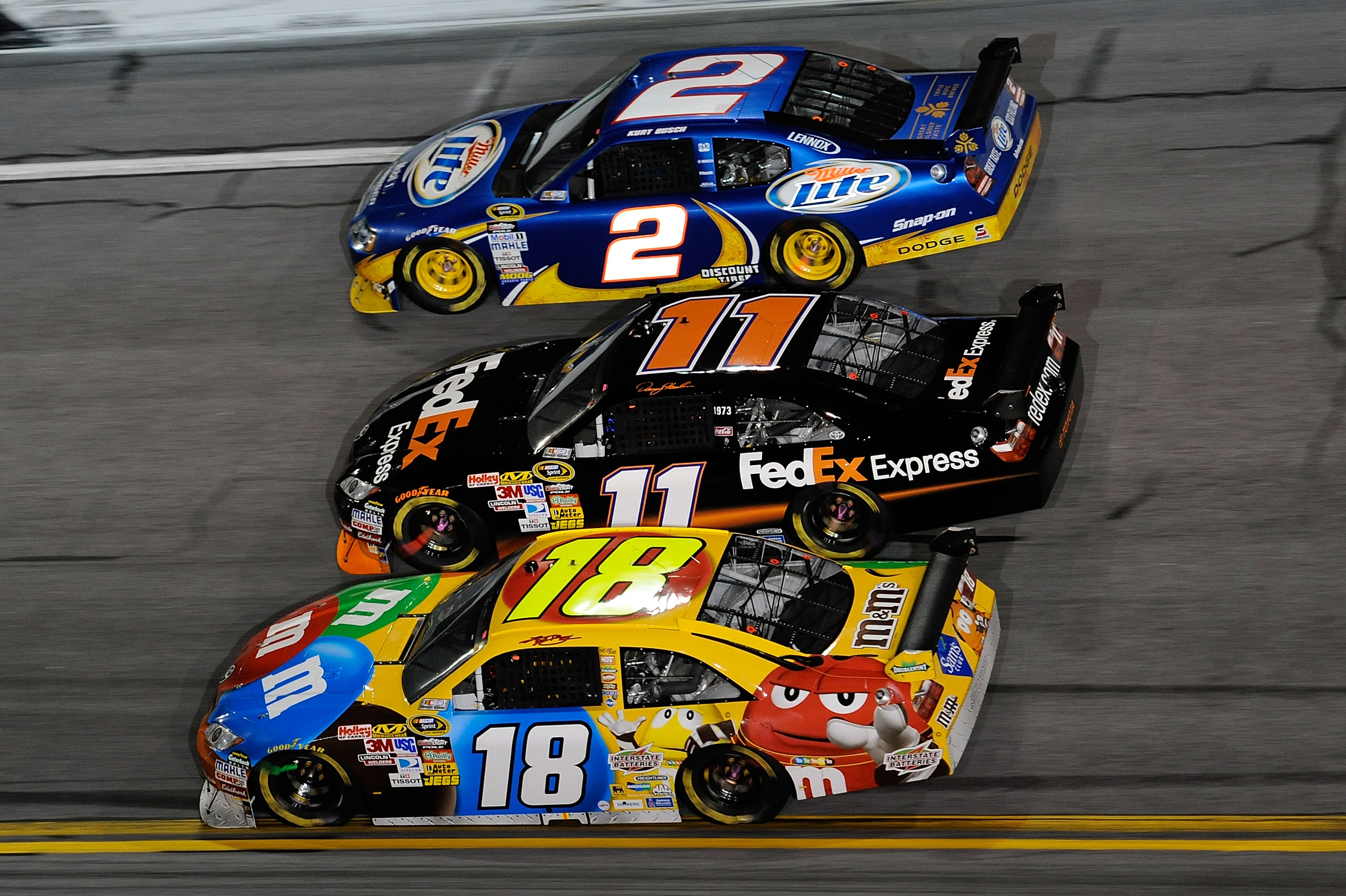
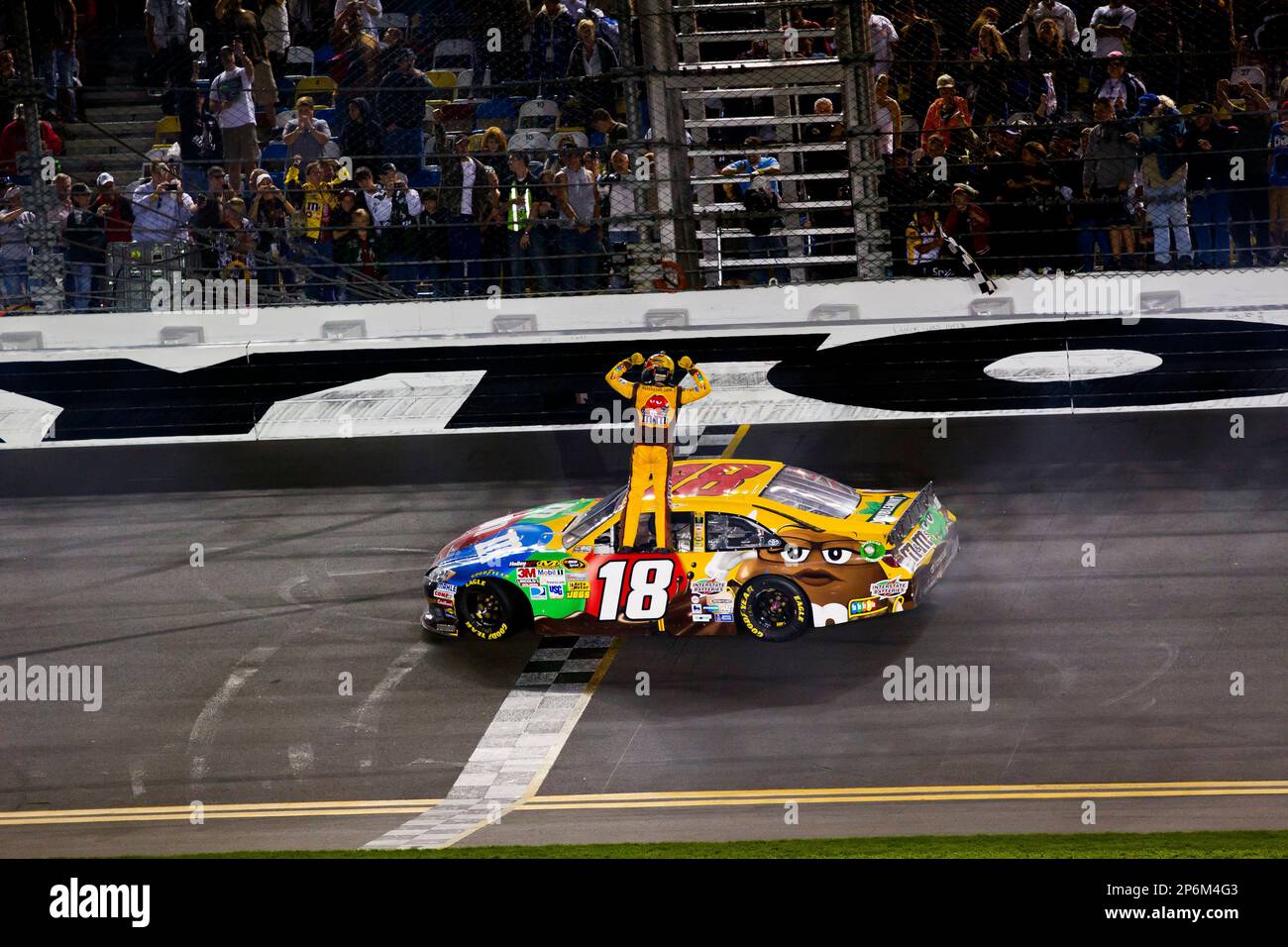
The 2012 Budweiser Shootout was a non-points NASCAR Sprint Cup Series exhibition race held on February 18, 2012, at Daytona International Speedway. Kyle Busch won the event in a dramatic photo finish, defeating Tony Stewart by 0.013 seconds after surviving multiple near-wrecks and a chaotic multi-car accident that saw Jeff Gordon flip.
The Historical Context of the 2012 Budweiser Shootout
As we evaluate this race from the perspective of 2026, the 2012 Budweiser Shootout stands as a pivotal moment in the transition of NASCAR’s "Generation 5" (Car of Tomorrow) era. It served as the unofficial opening of the 2012 season and the first competitive look at the new technical regulations designed to alter the racing product at superspeedways.
In 2011, the story of Daytona and Talladega was "tandem drafting," where two cars would lock bumpers to achieve speeds significantly higher than a large pack. While technically impressive, fans and officials were divided on the aesthetic of two-car clusters. Heading into the 2012 Budweiser Shootout, NASCAR implemented several aerodynamic and cooling system changes to discourage constant nose-to-tail contact and return to traditional "pack racing."
This race was also the first competitive outing for Electronic Fuel Injection (EFI) in the Cup Series, replacing the carburetors that had been a staple of the sport for decades. The 2012 Shootout was the ultimate "test lab" for how these new systems would handle the high-drafting turbulence of Daytona.
Eligibility Criteria and Field Composition
The 2012 edition of the Shootout utilized specific entry requirements that focused on past performance and manufacturer consistency. Unlike the modern "Clash" formats seen in 2026, which often utilize heat races and smaller tracks, the 2012 event was an elite invitational held on the 2.5-mile high banks.
To qualify for the 25-car field, a driver had to meet at least one of the following criteria:
- Previous Shootout Winners: Any driver who had previously won the event.
- Past Cup Series Champions: Any active driver who had won a series title.
- Daytona 500 Winners: Previous winners of the "Great American Race."
- Daytona Pole Winners: Drivers who had won a pole for the Daytona 500 or the summer 400-mile race.
These criteria ensured a field of veterans and superspeedway specialists. Twenty-five drivers were eligible, and all twenty-five entered the event, creating a highly competitive atmosphere where drivers had little to lose and no points to gain.
Technical Specifications: The Shift to EFI and Cooling Restrictions
The 2012 Budweiser Shootout was a technical milestone. The introduction of the McLaren-Bosch EFI system changed how engines responded to throttle inputs and how teams monitored data. For the first time, engineers could see digital readouts of engine health in real-time, though the drivers still relied on traditional gauges.
The Cooling System "Pop-Off" Valve
To break up the tandem drafting, NASCAR reduced the size of the radiator and moved the air intake. More importantly, they introduced a stricter pressure relief valve (the "pop-off" valve) on the cooling system.
- Mechanism: If a car followed another too closely for too long, the water temperature would spike.
- Result: The valve would release pressure, causing the car to lose water and eventually overheat.
- Strategic Impact: This forced drivers to "swap" positions frequently or pull out of line to get fresh air, preventing the 2011-style sustained tandems.
Race Format and Segment Breakdown
The race was scheduled for 75 laps, divided into two distinct segments:
- Segment 1 (25 Laps): A high-speed sprint to establish the drafting order and test the cooling limits.
- The 10-Minute Intermission: Teams were allowed to perform basic maintenance, change tires, and add fuel, but were limited in the chassis adjustments they could make.
- Segment 2 (50 Laps): The final dash to the checkered flag, which ultimately featured the most aggressive driving of the night.
Lap-by-Lap Highlights: Drama on the High Banks
The 2012 Budweiser Shootout is remembered primarily for two things: Kyle Busch’s "miracle" saves and the massive accident that ended Jeff Gordon’s night.
Kyle Busch’s Near-Disasters
Early in the second segment, Kyle Busch was involved in two separate incidents that should have ended his race. In the first, he was nudged sideways while in the middle of a dense pack. Through a combination of steering input and throttle control, he managed to keep the #18 Toyota from spinning into the wall or the interior grass. Only laps later, he was again pushed into a slide, nearly replicating the first save. These moments have since become staples of NASCAR highlight reels, demonstrating the extreme car control required during the COT era.
The "Big One" and Jeff Gordon's Flip
With only a handful of laps remaining, the tension of the pack racing reached a breaking point. A multi-car chain reaction began when Jeff Gordon’s #24 Chevrolet was clipped, sending him into a spin. The resulting pileup involved several heavy hitters, including Jimmie Johnson, Kurt Busch, and Matt Kenseth.
The most terrifying moment occurred when Gordon’s car caught air, flipped onto its roof, and slid down the backstretch. It was a rare instance of a car flipping at Daytona during this era without the assistance of a grass transition. Gordon was uninjured, but the red flag was displayed to clear the debris, setting up a green-white-checkered-style finish.
The Final Lap: The Slingshot Return
As the field reset for the final sprint, Tony Stewart emerged as the car to beat. Stewart, a master of Daytona drafting, appeared to have the race won as he led the field through Turn 4 on the final lap.
However, the 2012 rules package allowed for a "slingshot" effect if a trailing car timed its move perfectly. Kyle Busch, with a massive push from Tony Stewart’s own teammate (in an ironic twist of drafting physics), gained a significant run. As they crossed the finish line, Busch pulled alongside Stewart, winning by a mere 0.013 seconds. This remains one of the closest finishes in the history of the Daytona exhibition race.
| Driver | Car # | Team | Manufacturer | Laps Led | Status |
|---|---|---|---|---|---|
| Kyle Busch | 18 | Joe Gibbs Racing | Toyota | 3 | Running |
| Tony Stewart | 14 | Stewart-Haas Racing | Chevrolet | 0 | Running |
| Marcos Ambrose | 9 | Richard Petty Motorsports | Ford | 0 | Running |
| Brad Keselowski | 2 | Penske Racing | Dodge | 0 | Running |
| Denny Hamlin | 11 | Joe Gibbs Racing | Toyota | 0 | Running |
| Greg Biffle | 16 | Roush Fenway Racing | Ford | 36 | Running |
| Ryan Newman | 39 | Stewart-Haas Racing | Chevrolet | 0 | Running |
| Clint Bowyer | 15 | Michael Waltrip Racing | Toyota | 0 | Running |
| Carl Edwards | 99 | Roush Fenway Racing | Ford | 0 | Running |
| Juan Pablo Montoya | 42 | Earnhardt Ganassi Racing | Chevrolet | 0 | Running |
Analyzing the Impact of the 2012 Package
The 2012 Budweiser Shootout was a successful "proof of concept" for NASCAR’s desire to move away from the tandem. While tandems still occurred in short bursts (especially during the final lap charge), the "overheating" rules successfully forced cars back into a larger pack for the majority of the 75 laps.
However, the race also highlighted the dangers of the "pack." With cars closer together and drivers more frustrated by the inability to lock bumpers, the margin for error was non-existent. This led to the high attrition rate seen in the race, where only a fraction of the starting field finished without significant body damage.
The Role of Dodge
From the 2026 perspective, the 2012 Shootout is also notable for featuring Dodge in a prominent role. Brad Keselowski’s 4th-place finish in the #2 Miller Lite Dodge was a precursor to his eventual 2012 Championship run. It would be the final year of Dodge’s participation in the Cup Series, making this one of the last "Shootouts" where the Charger was a factor.
Historical Significance of the 2012 Budweiser Shootout
This race marked the end of the "Budweiser Shootout" branding. In 2013, the event transitioned to the "Sprint Unlimited," beginning a decade of name changes including the "Advance Auto Parts Clash" and eventually the "Busch Light Clash."
The victory was Kyle Busch’s first and only win in the Shootout format at Daytona. It solidified his reputation as one of the most talented "plate" racers of his generation, capable of winning even when his car was damaged or had been sideways multiple times during the event.
Furthermore, the 2012 event proved that the Electronic Fuel Injection transition was a success. Despite the high speeds and intense heat of Daytona, there were no major EFI-related failures during the race, giving the garage confidence heading into the Daytona 500.
Frequently Asked Questions
Who won the 2012 Budweiser Shootout?
Kyle Busch won the race driving the #18 M&M's Toyota for Joe Gibbs Racing. He beat Tony Stewart by 0.013 seconds in a photo finish, marking one of the closest margins in the event's history.
How many cars were involved in Jeff Gordon’s wreck?
The accident, which occurred on lap 73, involved roughly 10 cars. Significant damage was sustained by Jeff Gordon, Jimmie Johnson, Kurt Busch, Jamie McMurray, and others. Gordon’s car flipped onto its roof, but he was able to climb out under his own power.
What was the main technical change for the 2012 race?
The most significant change was the move from carburetors to Electronic Fuel Injection (EFI). Additionally, NASCAR introduced smaller radiators and a high-pressure cooling bypass valve to prevent cars from staying in a two-car tandem draft for extended periods.
Why was this the last "Budweiser Shootout"?
Budweiser decided to shift its sponsorship focus within NASCAR following the 2012 season. Starting in 2013, the race was sponsored by Sprint (the series title sponsor at the time) and renamed the Sprint Unlimited.
Did the 2012 Shootout influence the Daytona 500 rules?
Yes. Observations from the Shootout regarding engine temperatures and drafting stability led NASCAR to make minor adjustments to the spoiler height and the cooling system vent sizes prior to the Daytona 500 to ensure the engines could survive a full 500-mile race in a pack.
Final Recommendation for Fans and Historians
For those looking to relive the 2012 Budweiser Shootout in 2026, the race remains a masterclass in car control and superspeedway strategy. It is highly recommended to watch the final 10 laps specifically to observe the "slingshot" maneuvering. This race serves as a perfect time capsule of the transition between the mechanical simplicity of the 2000s and the high-tech, data-driven era of modern NASCAR. Historians should note the 2012 season as a whole for its championship battle, but the Shootout remains its most chaotic and visually stunning highlight.