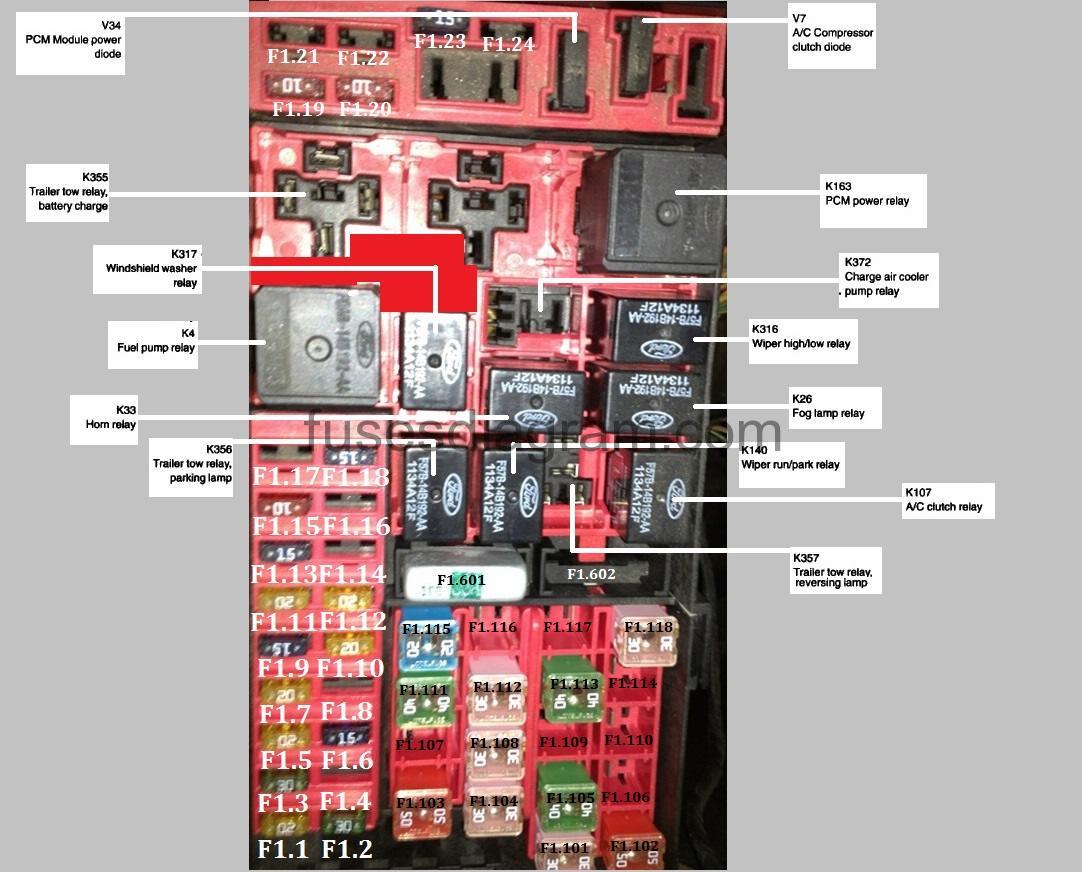
The 2003 Ford F-150 fuel pump relay is integrated directly into the Central Junction Box (CJB), commonly known as the interior fuse panel, located beneath the driver's side dashboard. Because this specific relay is soldered onto the internal circuit board of the fuse panel rather than plugged into a standard removable socket, diagnosing fuel delivery problems on this generation of trucks requires specialized knowledge of power distribution, part numbers, and replacement workarounds.
Understanding the 2003 Ford F-150 Fuel Delivery Architecture
Diagnosing a fuel delivery issue on a tenth-generation Ford F-150 (covering model years 1997 through 2003, with some transitional overlap into early 2004 heritage models) requires understanding how power moves from the battery to the fuel tank. When you turn the ignition key to the "ON" position, the powertrain control module (PCM) commands the fuel pump relay to close. This action sends 12 volts of electrical current through the inertia switch—a safety device designed to cut power in the event of a collision—and down to the electric fuel pump mounted inside the gas tank.
In many older vehicles and modern trucks, the fuel pump relay is a standard, cube-shaped, plug-in mechanical relay housed in an underhood power distribution center. You can pull it out with your fingers or pliers and swap it with the horn relay to test it. However, Ford engineered the 2003 F-150 differently. The interior fuse panel houses multiple micro-relays that are wave-soldered directly to the printed circuit board (PCB).
This design choice creates a significant diagnostic challenge for DIY mechanics and professional technicians alike. If the internal contacts of the fuel pump relay pit, burn out, or stick open, you cannot simply pull the relay out and replace it with a new five-dollar component. Understanding this structural reality is the first step toward executing an effective, cost-efficient repair without unnecessarily replacing expensive components like the fuel pump assembly itself.
Pinpointing the Exact Location of the Fuel Pump Relay
The fuel pump relay for the 2003 Ford F-150 is located inside the cab of the truck, underneath the dashboard on the driver's side, housed within the Central Junction Box (CJB).
To access this panel and inspect the electrical architecture, follow these steps:
- Disconnect the Battery: Always disconnect the negative battery cable before working on any interior electrical components or fuse panels to prevent accidental short circuits.
- Remove the Lower Dash Trim (If Necessary): Depending on your specific trim level (XL, XLT, Lariat, or Harley-Davidson edition), you may find a plastic lower dash panel or scuff plate beneath the steering column held in place by 7mm screws and plastic push clips. Removing this panel provides a clear line of sight to the fuse box.
- Locate the Central Junction Box: Look to the left of the steering column, near the emergency parking brake pedal assembly and the hood release lever. The CJB is mounted vertically against the kick panel area.
- Identify the Fuel Pump Relay Position: Within the CJB diagram, the fuel pump relay is designated as Internal Relay #3 or is mapped directly on the reverse side of the service manual layout. Because it is an internal board-mounted component, looking at the fuse box face will only show you fuses and standard plug-in relays like the accessory delay or blower motor relays; the fuel pump relay sits behind the plastic housing on the circuit board itself.
Because accessing the relay requires disassembling the entire interior fuse block, many technicians look for external symptoms before tearing into the dash. A common field test involves listening for the characteristic two-second hum of the fuel pump when turning the ignition key to "ON." If you do not hear the pump prime, and you have verified that the fuel pump fuse (typically Fuse #10 or #18 depending on the specific build date and underhood vs. interior layout) is intact, the internal relay or its control circuit is the primary suspect.
Part Numbers and Replacement Options for the 2003 F-150 Fuel Pump Relay
Finding the correct part numbers for a 2003 Ford F-150 fuel pump relay can be confusing due to its integrated design. Ford Motor Company service literature historically did not offer the internal relay as an individual, over-the-counter service part intended for amateur soldering. Instead, Ford's official repair procedure for a failed internal fuel pump relay was to replace the entire Central Junction Box assembly.
| Component Description | OEM / Service Part Number Context | Typical Application & Notes |
|---|---|---|
| Complete Central Junction Box (CJB) | F85Z-14A067-AA / XL3Z-14A067-AA (Verify via VIN) | Complete interior fuse panel containing the factory-soldered internal fuel pump relay. |
| Standard ISO Micro-Relay (External Bypass) | Ford Motorcraft DY-1164 / F5AZ-14N193-A | Used when performing an external relay bypass modification to bypass a failed internal board relay. |
| Inline Fuse Holder (10A - 20A) | Standard Automotive Aftermarket Part | Required for safely routing fused battery power during an external relay modification. |
The Dilemma of OEM Part Availability
Ordering a brand-new Original Equipment Manufacturer (OEM) Central Junction Box for a 2003 Ford F-150 through a dealership parts counter can be difficult, as many of these older electronic modules have been discontinued. When available, New Old Stock (NOS) or remanufactured CJBs can be expensive. Consequently, most owners and independent repair shops choose between two alternative pathways: sourcing a used fuse panel from a salvage yard or performing an external relay bypass modification.
Troubleshooting and Diagnostic Procedures
Before condemning the internal fuel pump relay or purchasing replacement parts, you must systematically test the electrical circuit to ensure the fault does not lie elsewhere. Many intermittent no-start conditions or sudden engine stalls on high-mileage F-150 trucks are misdiagnosed as fuel pump failures when the root cause is electrical resistance, a tripped inertia switch, or wiring corrosion.
Step 1: Check the Inertia Switch
The fuel pump shut-off switch (inertia switch) is a safety mechanism designed to cut power to the fuel pump during a collision or severe impact. On the 2003 Ford F-150, this switch is located inside the cab, on the passenger-side kick panel near the floorboard, hidden behind the right-hand trim panel.
- Pull back the carpet or trim to access the switch.
- Check the top button on the switch. If it has popped up, the circuit is open. Push it down firmly to reset it.
- Use a multimeter to check for 12 volts across the switch terminals with the key in the "ON" position during the initial two-second prime window.
Step 2: Perform a Voltage Drop Test at the Fuel Pump Harness
Raise the rear of the truck securely on jack stands to access the electrical connector at the top of the fuel tank.
- Disconnect the wiring harness plug from the fuel pump module.
- Connect a digital multimeter to the power supply wire (typically Dark Green with a Yellow stripe, though wire colors can vary slightly by exact build configuration) and a reliable chassis ground.
- Turn the ignition key to the "ON" position. You should see battery voltage (around 12.6V) register on the meter for approximately two seconds before the computer cuts power.
- If voltage does not appear, the signal is not reaching the tank, implicating either the wiring, the inertia switch, or the fuel pump relay.
Step 3: Testing for Internal Relay Failure
If the fuses are good, the inertia switch is reset, but no power reaches the fuel pump harness during the prime cycle, you can test the control side of the fuel pump relay circuit at the CJB. Technicians often backprobe the specific output pin on the fuse panel connector. If the PCM is sending the ground trigger signal to close the relay, but the relay fails to pass 12 volts through to the output pin, the internal relay contacts have failed.
Workarounds: Performing an External Fuel Pump Relay Bypass
Because replacing the entire interior fuse panel or desoldering and soldering a micro-relay onto a multi-layer circuit board requires advanced electronics repair skills, a widely accepted industry workaround is installing an external automotive relay. This bypasses the failed internal circuit board relay entirely while maintaining factory safety protocols.
To perform an external relay bypass safely, follow these professional guidelines:
- Source a Standard 4-Pin or 5-Pin Automotive Relay: Use a high-quality 30A/40A ISO relay with a matching harness socket.
- Identify Circuit Wires: Locate the incoming constant 12V power feed, the PCM ground trigger wire, the switched output wire leading to the fuel pump, and a clean chassis ground.
- Integrate an Inline Fuse: Always install a dedicated inline fuse holder containing a 15-amp or 20-amp fuse on the main power supply line feeding the new external relay to protect against short circuits.
- Secure and Weatherproof: Mount the new relay securely under the dash or inside the engine bay away from moisture, moving pedals, and sharp metal edges. Use heat shrink tubing and automotive-grade loom to protect all soldered or crimped connections.
Frequently Asked Questions
Can I replace just the fuel pump relay on a 2003 Ford F-150 without buying a new fuse box?
Officially, no. Ford designed the 2003 F-150 interior fuse panel with the fuel pump relay soldered directly onto the internal circuit board. However, experienced automotive technicians can either desolder the old relay and solder in a replacement micro-relay, or install an external relay bypass kit that routes power around the faulty internal component.
Where is the fuel pump fuse located on a 2003 Ford F-150?
The fuel pump fuse is typically located in the interior Central Junction Box under the driver's side dashboard. Depending on the specific manufacturing month and production plant, it is often designated as Fuse #10 or Fuse #18. Always consult the owner's manual or the fuse panel cover diagram for your specific truck to confirm the exact cavity number.
What are the common symptoms of a failing fuel pump relay?
Common symptoms include an engine that cranks normally but refuses to start, a complete lack of the audible two-second hum from the fuel tank when turning the key to the "ON" position, intermittent engine stalling while driving, and failure to establish communication with the fuel pump during diagnostic testing despite a healthy fuel pump motor.
Is the fuel pump relay under the hood or inside the cab?
In the 2003 Ford F-150, the fuel pump relay is located inside the cab, integrated into the interior fuse box (Central Junction Box) beneath the driver's side dashboard. It is not housed in the underhood Power Distribution Box, which often confuses owners searching the engine bay for a standard plug-in relay.