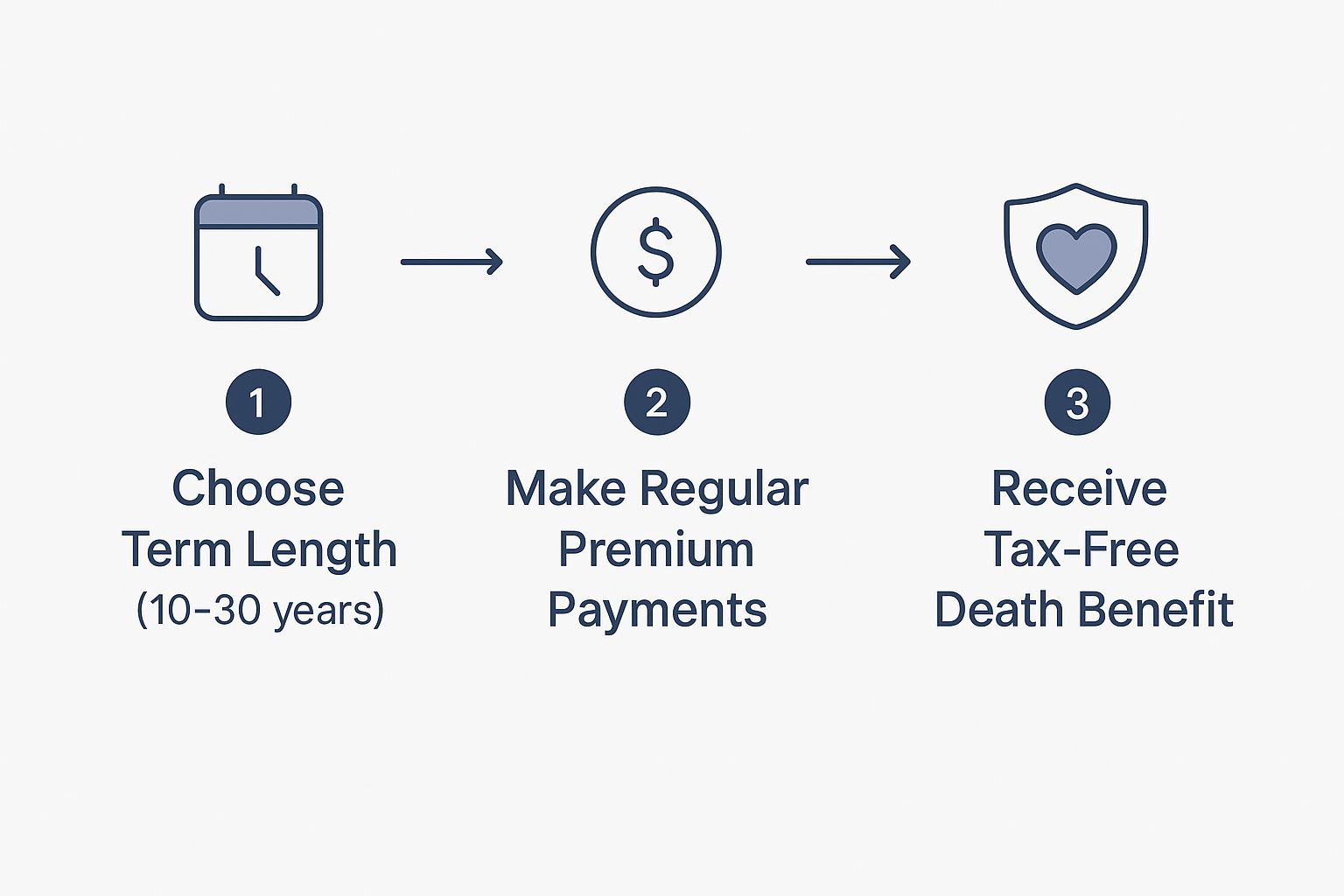
A 20-year payment life insurance policy is a form of limited-pay permanent life insurance where premiums are paid for exactly 20 years. After this period, the policy is considered "paid-up," meaning no further premiums are required, yet the death benefit and cash value remain active for the insured's entire life.
What is a 20-Year Payment Life Insurance Policy?
A 20-year payment life insurance policy—often referred to in the industry as 20-pay whole life—is a subset of permanent life insurance. Unlike traditional whole life insurance, where premiums are typically paid until death or age 100, the limited-pay structure compresses the cost of the policy into a two-decade window. This design is intended for individuals who want the lifetime guarantees of permanent coverage but wish to eliminate the ongoing financial obligation before they reach retirement or a fixed age.
In 2026, these policies remain a staple for conservative financial planning. Because the insurance company must collect enough capital within 20 years to fund a lifetime of coverage, the annual premiums for a 20-pay policy are significantly higher than those of a "continuous pay" whole life policy. However, this front-loading of capital leads to a much more rapid accumulation of cash value, which is the living benefit component of the policy that grows on a tax-deferred basis.
The Mechanics of "Paid-Up" Status
The term "paid-up" is a specific actuarial status. When you reach the end of the 20th year, the contract remains in force based on the internal math established at the time of purchase. The insurance carrier guarantees that the accumulated cash value and the interest or dividends it earns will be sufficient to cover the internal costs of insurance for the rest of your life. This provides a unique sense of financial finality that traditional term insurance or standard whole life insurance cannot offer.
How the 20-Pay Structure Works
To understand a 20-year payment policy, one must look at the interaction between the premium, the death benefit, and the cash value. Because you are paying more into the policy over a shorter period, the "equity" in your policy builds faster.
Accelerated Cash Value Growth
In a standard whole life policy, the cash value may take 10 to 15 years just to break even with the total premiums paid. In a 20-pay structure, the breakeven point often occurs much earlier, typically between years 7 and 10, depending on the carrier’s dividend performance and the age of the insured. This makes the policy a more effective "savings vehicle" in the early years compared to other permanent products.
Dividend Participation
Most 20-pay policies are "participating," meaning they are issued by mutual insurance companies that pay dividends to policyholders. While dividends are never guaranteed, they can be used to:
- Purchase Paid-Up Additions (PUAs): This is the most common choice, where dividends buy small amounts of additional death benefit that also have their own cash value. This creates a compounding effect.
- Reduce Premiums: Lowering the out-of-pocket cost during the 20-year paying period.
- Accumulate Interest: Leaving the dividends with the insurer to grow at a set rate.
- Cash Payments: Receiving the dividend as a check.
In 2026, with the stabilization of interest rates following the volatile early 2020s, dividend scales have become a focal point for those comparing 20-pay policies from major mutual carriers like Northwestern Mutual, MassMutual, or New York Life.
The Financial Advantages of the 20-Pay Structure
Choosing a 20-pay policy over a traditional life-pay policy involves a trade-off between current cash flow and long-term cost-efficiency.
1. Lifetime Cost Savings
While the annual premium is higher, the total sum of premiums paid over the life of the policy is usually much lower with a 20-pay plan than with a policy where you pay for 50+ years. This makes it an attractive option for younger buyers who have the income to support higher payments now in exchange for a "free" policy in their later years.
2. Retirement Planning Alignment
Many professionals choose 20-pay policies in their 30s or 40s specifically so the payments end exactly as they enter retirement. Eliminating a major fixed expense like a life insurance premium during the distribution phase of retirement can significantly improve a household’s cash flow and reduce the "sequence of returns" risk associated with withdrawing from 401(k)s or IRAs to pay bills.
3. Asset Location and Diversification
The cash value in a 20-pay policy serves as a "tier one" asset—a low-volatility, liquid reserve. In the financial landscape of 2026, where market volatility remains a concern, the guaranteed growth of a 20-pay policy provides a non-correlated asset that can be borrowed against via policy loans for opportunities like real estate investment or business expansion.
Potential Drawbacks and Considerations
Despite the benefits, a 20-year payment life insurance policy is not suitable for everyone. The primary barrier is the opportunity cost of the higher premium.
- Higher Entry Cost: For the same death benefit, a 20-pay policy might cost three to four times more annually than a term policy. If the primary goal is maximizing the death benefit for a young family on a budget, a 20-pay policy may provide insufficient coverage.
- The MEC Threshold: Under Internal Revenue Code Section 7702, there is a limit on how much money can be put into a life insurance policy relative to the death benefit before it is classified as a Modified Endowment Contract (MEC). If a 20-pay policy is structured too aggressively for cash growth, it might lose its tax-free loan privileges. Professional agents in 2026 use sophisticated software to ensure the policy remains "non-MEC."
- Lapse Risk in Early Years: Because the premiums are high, if the policyholder suffers a job loss in year three or four, they may find it difficult to maintain the policy. While whole life policies have "non-forfeiture options," lapsing a policy in its infancy can lead to a total loss of the premiums paid.
Comparative Analysis: 20-Pay vs. Other Models
To help decide if this is the right path, it is essential to compare it to the most common alternatives.
| Feature | 20-Year Payment Whole Life | Traditional Whole Life (Life-Pay) | 20-Year Term Life |
|---|---|---|---|
| Duration of Coverage | Lifetime | Lifetime | 20 Years Only |
| Premium Duration | 20 Years | Until Death or Age 100/121 | 20 Years |
| Annual Premium | High | Moderate | Low |
| Cash Value Growth | Rapid | Steady | None |
| Total Lifetime Cost | Lowest (if long-lived) | Highest | Moderate (but no asset remains) |
| Policy Loans | Available early | Available eventually | Not Available |
| Best For | Retirement planning/Wealth transfer | Basic permanent needs | Temporary protection (mortgage) |
Tax Implications and IRS Compliance
The tax treatment of 20-pay life insurance is one of its most complex and valuable attributes. In 2026, tax laws continue to favor life insurance as a vehicle for wealth transfer.
Tax-Deferred Accumulation
The growth of the cash value is not taxed as it happens. This allows for a compounding effect that is more efficient than a taxable brokerage account. If you never surrender the policy, the growth is never taxed.
Tax-Free Death Benefit
Under Section 101(a) of the tax code, the death benefit is generally received by beneficiaries free of federal income tax. For 20-pay policies used in estate planning, this ensures that the "paid-up" asset transitions to the next generation without a massive tax haircut.
Policy Loans vs. Withdrawals
Policyholders can access their cash value via loans. These loans are generally not considered taxable income, even if the amount borrowed exceeds the "basis" (the total premiums paid). However, if the policy is a MEC, loans are taxed as "income first," which is why proper 20-pay structuring is vital.
Who Should Consider This Policy in 2026?
The 20-pay model is a specialized tool. It is most effective for specific personas:
- Parents and Grandparents (Juvenile Insurance): Purchasing a 20-pay policy for a child or grandchild is a classic move. By the time the child is an adult, the policy is fully paid for, has a significant cash value for college or a first home, and provides a lifetime of guaranteed insurability.
- High-Income Earners (Maxing Out Qualified Plans): If you have already maxed out your 401(k) and IRA, the 20-pay policy offers an additional "bucket" for tax-advantaged savings with no government-mandated contribution limits (other than the MEC limit).
- Business Owners: A 20-pay policy can be used to fund Buy-Sell Agreements. The business pays the premiums for 20 years, and the policy remains an asset on the balance sheet forever, ready to fund a buyout whenever a partner retires or passes away.
- Estate Planning: For individuals who know they will have an estate tax liability, a 20-pay policy inside an Irrevocable Life Insurance Trust (ILIT) ensures the liquidity to pay taxes is fully funded within 20 years.
Adding Flexibility Through Policy Riders
You can customize a 20-pay policy with "riders" to meet specific needs. In 2026, several riders have become industry standards:
- Waiver of Premium: If you become totally disabled during the 20-year payment period, the insurance company will pay the premiums for you, ensuring the policy still becomes "paid-up" as planned.
- Accelerated Death Benefit (Long-Term Care): This allows you to access a portion of the death benefit while still alive if you are diagnosed with a terminal illness or require chronic care. This turns the 20-pay policy into a "hybrid" long-term care solution.
- Guaranteed Insurability Rider: This allows you to purchase more coverage at specific intervals without undergoing a new medical exam, which is crucial if your health declines during the 20-year window.
Common Pitfalls and How to Avoid Them
The most common mistake with a 20-year payment life insurance policy is viewing it as a short-term investment. It is a long-term contract with a high exit cost in the first few years.
Avoid "Under-Funding": Some policyholders try to lower the premium by reducing the death benefit too much, which can inadvertently trigger MEC status. Avoid "Over-Borrowing": Because the cash value builds quickly, it is tempting to take large loans. If the loan interest accrues and exceeds the cash value, the policy could lapse, triggering a massive tax bill on the "gain" in the policy. Verify the Carrier: Only buy a 20-pay policy from a carrier with an "A" or better rating from agencies like A.M. Best or Fitch. Since the policy is meant to last 50+ years, the company's long-term solvency is paramount.
Frequently Asked Questions
Can I stop paying before the 20 years are up?
Yes, but the policy will not be "fully paid-up." You would usually have to exercise a "Reduced Paid-Up" (RPU) option, where the insurance company calculates how much of a permanent death benefit your current cash value can support for life without further payments. The death benefit will be significantly lower than the original amount.
What happens if I live past the 20-year mark?
Nothing changes regarding your coverage. You simply stop writing checks. Your cash value will continue to grow through guaranteed interest and potential dividends, and your death benefit will remain in force until your death, at which point it is paid to your beneficiaries.
Is a 20-pay policy better than a 10-pay policy?
A 10-pay policy is even more aggressive, with higher premiums and faster cash value growth. A 20-pay policy is often seen as the "middle ground"—offering a more manageable annual premium than a 10-pay while still providing the benefit of a limited payment window.
Can I change my 20-pay policy to a traditional life-pay policy later?
Generally, no. Life insurance contracts are usually fixed in their premium structure. You can often go from a life-pay to a "paid-up" status via RPU, but you cannot easily "stretch out" a 20-pay policy into a longer payment term once the contract is signed.
Are the premiums for a 20-pay policy tax-deductible?
No. For individuals, life insurance premiums are considered a personal expense and are paid with after-tax dollars. The trade-off is the tax-free growth and tax-free death benefit.
Practical Recommendation
If you are considering a 20-year payment life insurance policy in 2026, your first step should be to request a comprehensive policy illustration from at least three different mutual insurance companies. Look specifically at the "Guaranteed" vs. "Non-Guaranteed" columns. The guaranteed column shows you the absolute worst-case scenario.
For most people, the 20-pay structure is ideal if they are currently in their peak earning years and want to "pre-fund" their legacy. If you are uncertain about your income stability over the next two decades, a traditional whole life policy with an "offset" option (where dividends eventually pay the premiums) might offer more flexibility. However, if your goal is the fastest guaranteed path to a paid-up permanent asset, the 20-pay policy remains the gold standard.