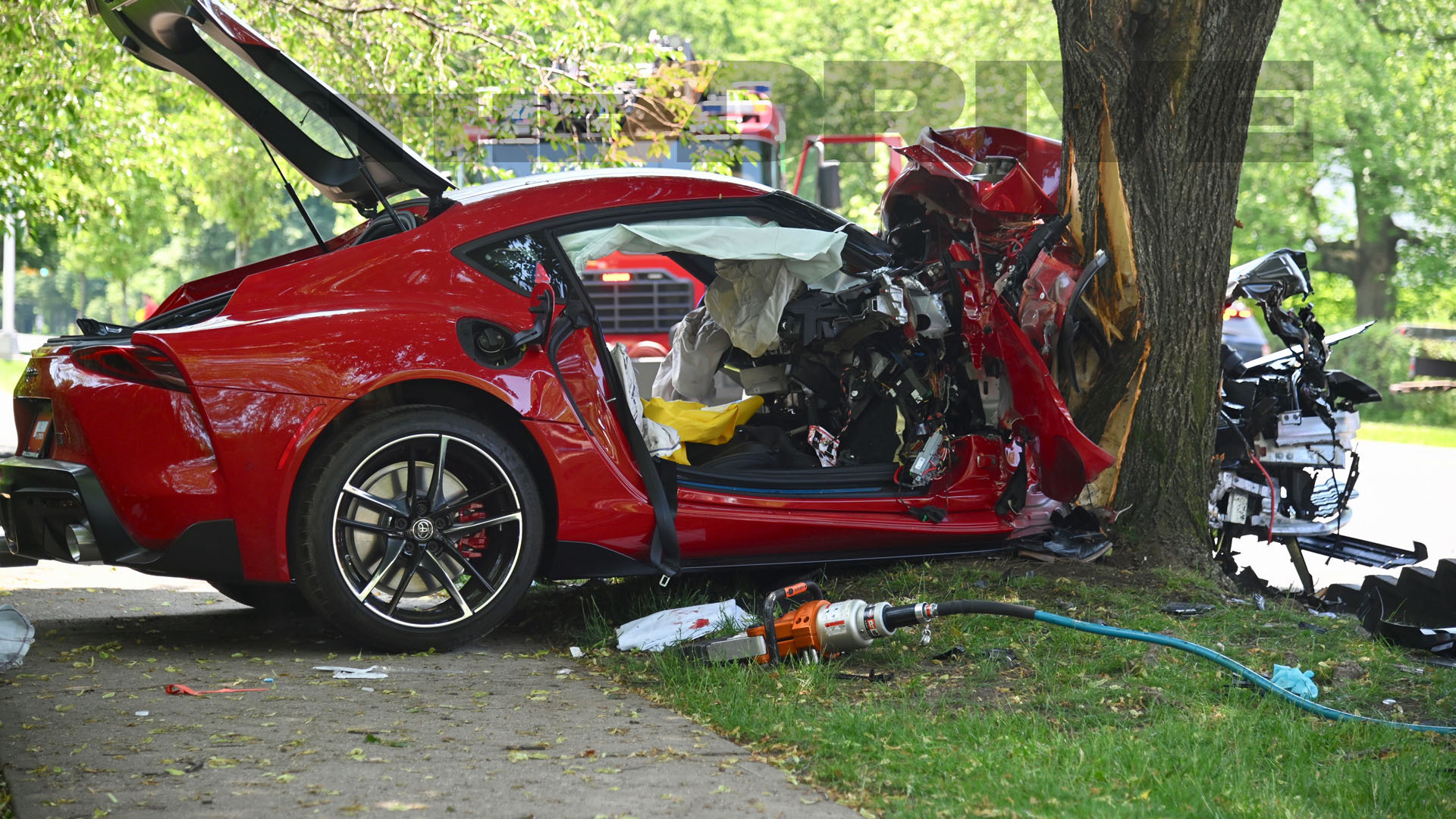
High-performance Toyota Supra crashes documented by 1320Video often involve vehicles producing 1,500 to 2,500 horsepower, where mechanical failure, aerodynamic lift, or loss of traction occurs at speeds exceeding 150 mph. These incidents highlight the critical importance of SFI-rated safety equipment, professional chassis tuning, and the inherent risks of pushing the A80 and A90 platforms to their absolute physical limits.
The Toyota Supra, particularly the MKIV (A80) generation, has become synonymous with the "horsepower wars" of the 21st century. 1320Video, the premier media outlet for drag racing and street car culture, has spent over two decades documenting these machines. However, with extreme power comes extreme risk. When a 2,000-horsepower machine loses traction or suffers a mechanical failure at the "big end" of the track, the results are often catastrophic. Analyzing these crashes provides a somber look at the physics of high-speed racing and the engineering required to keep drivers safe in 2026.
The Anatomy of a High-Speed Supra Crash
Most Supra crashes captured by 1320Video follow a specific physical pattern. To understand why these cars, which are engineered for stability, occasionally end up in the wall, one must look at the intersection of torque, tire physics, and aerodynamics.
Traction Loss and the "Power Band" Problem
The legendary 2JZ-GTE engine is famous for its ability to handle massive boost. However, large turbochargers—often 80mm or larger—create a very "peaky" power delivery. In many documented crashes, the driver loses control not at the starting line, but mid-track when the turbo reaches full spool. If the track surface (or the road, in street racing contexts) cannot support the sudden influx of 1,000+ lb-ft of torque, the rear tires (typically drag radials or slicks) break loose.
Once the tires lose static friction at high speeds, the car enters a state of "yaw." Because the Supra has a relatively short wheelbase compared to dedicated dragsters, it can rotate quickly. If the driver does not immediately lift off the throttle and deploy the parachute, the car can "hook" and dart toward the retaining wall.
Aerodynamic Lift at the "Big End"
As of 2026, the fastest Supras are regularly eclipsing 200 mph in the quarter-mile and even higher in half-mile events. At these velocities, the factory aerodynamics of an A80 Supra—or even an improperly tuned A90—can become a liability. If the front of the car lifts slightly due to air pressure building under the chassis, the steering becomes unresponsive. In several 1320Video features, Supras are seen "walking" across the lane at 180+ mph. This is often the result of "aero-wash" or a lack of sufficient front-end downforce, leading to a high-speed oscillation that eventually overcomes the driver's ability to correct.
Notable Incidents in 1320Video History
Several specific incidents have stood out over the years, serving as cautionary tales for the racing community. These events are often analyzed by builders to improve chassis rigidity and safety protocols.
The Geartheory White Supra Incident
One of the most famous and harrowing clips in 1320Video’s archive involves a white MKIV Supra known as the "Geartheory" car. During a high-speed run on a closed course, the vehicle suffered a catastrophic loss of control. The car spun multiple times and struck a pole, nearly tearing the chassis in half.
The analysis of this crash emphasized two things: the sheer strength of the Supra's factory A-pillars and the absolute necessity of a professional-grade roll cage. The driver survived, but the incident prompted a massive shift in how "street" Supras were built, with many owners moving away from "street car" safety standards toward full NHRA-spec cages even for cars driven on the road.
TX2K and the Evolution of Track Safety
TX2K, often called the "Super Bowl of Street Racing," is a staple of 1320Video coverage. Over the years, several Supras have met their end at the Houston Raceway Park (and later Texas Motorplex). A common theme in these crashes is the "transition" from the prepped groove to the un-prepped portion of the track. When a Supra making 1,800 horsepower drifts just a few inches out of the "groove," the difference in traction between the left and right tires can cause an immediate snap-oversteer.
Technical Safety Requirements for High-Horsepower Builds
In 2026, the regulations for high-speed drag racing have become more stringent to prevent fatalities. Any Supra participating in sanctioned events like those covered by 1320Video must adhere to specific safety tiers based on their projected elapsed time (ET) and trap speed.
SFI Ratings and Chassis Certification
For a Supra to legally run faster than 150 mph or quicker than 8.50 seconds in the quarter-mile, it must have a chassis certification. This involves a third-party inspector verifying the thickness of the roll cage tubing and the quality of the welds.
- SFI 25.1, 25.2, or 25.3: These certifications are for full-tube or back-half cars capable of running into the 6-second range.
- Fire Suppression: Modern builds now require multi-nozzle fire suppression systems that cover both the engine bay and the driver's footwell, as 2JZ engines are prone to oil downs if a rod is thrown through the block at high RPM.
Parachute Deployment Mechanics
In many 1320Video crash clips, the difference between a "close call" and a total loss is the parachute. At speeds over 150 mph, mechanical brakes are often insufficient to stabilize a car that has begun to oscillate. A parachute acts as a stabilizing force, pulling the rear of the car straight. Drivers are now trained to "hit the laundry" the moment they feel the rear end "wiggle" at high speeds.
| Safety Component | Purpose | Required Threshold (Typical) |
|---|---|---|
| Roll Cage (6-Point) | Prevents cabin collapse during rollover | Faster than 11.49s (1/4 mile) |
| SFI 15.1 Parachute | Aerodynamic braking and stabilization | Faster than 150 mph |
| Fire Suit (SFI 3.2A/5) | Protects driver from methanol/oil fires | All competitive drag classes |
| HANS Device | Prevents basilar skull fractures in sudden stops | Faster than 150 mph or 9.99s |
| Window Net | Keeps driver's limbs inside the vehicle | Faster than 10.0s |
Common Mechanical Failures Leading to Crashes
While driver error is a factor, mechanical failure is a frequent culprit in Supra accidents. The 2JZ engine and the associated drivetrain components are pushed to 300% or 400% of their original design capacity.
- Tire Bead Failure: When running low tire pressures for maximum grip, the tire can spin on the rim or "unbead" during the run. This causes an immediate and uncontrollable pull to one side. This is why "beadlock" wheels are now standard on any Supra making over 1,000 horsepower.
- Driveshaft Snapping: If a driveshaft fails at 160 mph, it can act like a flail, cutting through brake lines and even the floorboard. High-quality loops are required to catch the shaft and prevent it from digging into the pavement and "vaulting" the car.
- Oil Pressure Drops/Engine Blowouts: If the engine "grenades," it often sprays hot oil onto the rear tires. This is effectively like driving on ice. Many professional Supra teams now use "diapers"—Kevlar blankets wrapped around the oil pan—to catch any escaping fluids.
The Role of 1320Video in Safety Education
While 1320Video is an entertainment channel, it has inadvertently become one of the most effective safety educators in the automotive world. By showing the raw, unedited footage of crashes, they provide a "reality check" to the community.
In the early 2010s, it was common to see Supras with massive turbos and stock seats. By 2026, largely due to the visibility of these high-speed accidents, the culture has shifted. Now, a "street" Supra featured on the channel is almost guaranteed to have Kirkey racing seats, a 5-point harness, and a Hans-compatible setup. The "cool factor" has moved from just having the most power to having the most "well-built" car that can handle that power safely.
Assessing the A90 Supra (MKV) in High-Speed Contexts
The newer A90 Supra, powered by the B58 engine, has presented new challenges. While it features more advanced electronic stability control and a stiffer chassis from the factory, it has a shorter wheelbase than the MKIV. This makes it even more "twitchy" at the limit. 1320Video has documented several A90s losing control during "roll racing" events. The integration of modern ABS and traction control can sometimes conflict with drag racing setups, leading to "brake-induced" swerving if the electronics try to compensate for wheelspin in a way the driver doesn't expect.
Frequently Asked Questions
What is the most common cause of Supra crashes on 1320Video?
Loss of traction during the "transition" or mid-track boost hit is the most frequent cause. When the turbo reaches full boost, the sudden torque surge can overcome the tires' grip, especially if the car isn't perfectly centered in the prepped lane. Mechanical failures, such as blown tires or oil leaks onto the rear wheels, are the second most common cause.
Has anyone ever died in a Supra crash featured by 1320Video?
While there have been many violent crashes, 1320Video typically focuses on events where the safety equipment worked as intended. Most drivers featured in their "crash" segments walk away with minor injuries thanks to roll cages, harnesses, and helmets. The channel generally avoids glamorizing or showing fatal incidents out of respect for the families and the sport.
Why do Supras seem to crash more than other drag cars?
Supras are unique because they are often "street cars" pushed to "pro-mod" power levels. Unlike a purpose-built dragster with a 150-inch wheelbase, a Supra is a short-wheelbase sports car. This makes it inherently less stable at 200 mph than a dedicated race chassis. Additionally, the "laggy" nature of large turbochargers makes power delivery harder to manage than a naturally aspirated or supercharged engine.
Is it safer to race a Supra on a track vs. the street?
Statistically, yes. Tracks have "prep" (traction-enhancing chemicals like VHT or PJ1) that helps the tires stick. Tracks also have emergency crews, fire extinguishers, and retaining walls designed to deflect energy. Street racing lacks these safeguards, and uneven pavement or "crowns" in the road can cause a high-power Supra to lose control much more easily.
What safety gear is recommended for a 1,000 HP Supra?
At a minimum, you should have a 6-point roll bar, an SFI-rated fire suit, a HANS device, and a fire suppression system. If you plan on exceeding 150 mph, a parachute is not just recommended; it is a vital stability tool that can save the car if it begins to "dance" at the top end of the track.
Final Recommendations for Enthusiasts
If you are building or operating a high-horsepower Supra in 2026, the primary lesson from decades of 1320Video coverage is that safety must outpace performance. Never add more boost until you have the chassis and safety equipment to handle the current power level. For those looking to push into the 7-second or 6-second range, professional driver coaching and data logging are essential. Understanding the "slip angle" of your tires and the aerodynamic balance of your car can be the difference between a record-breaking pass and a viral crash video.
Prioritize beadlock wheels to prevent tire slippage, invest in a high-quality parachute system, and always ensure your roll cage is certified for the speeds you intend to reach. Racing is an inherently dangerous pursuit, but with modern engineering and a "safety-first" mindset, the risks can be managed.