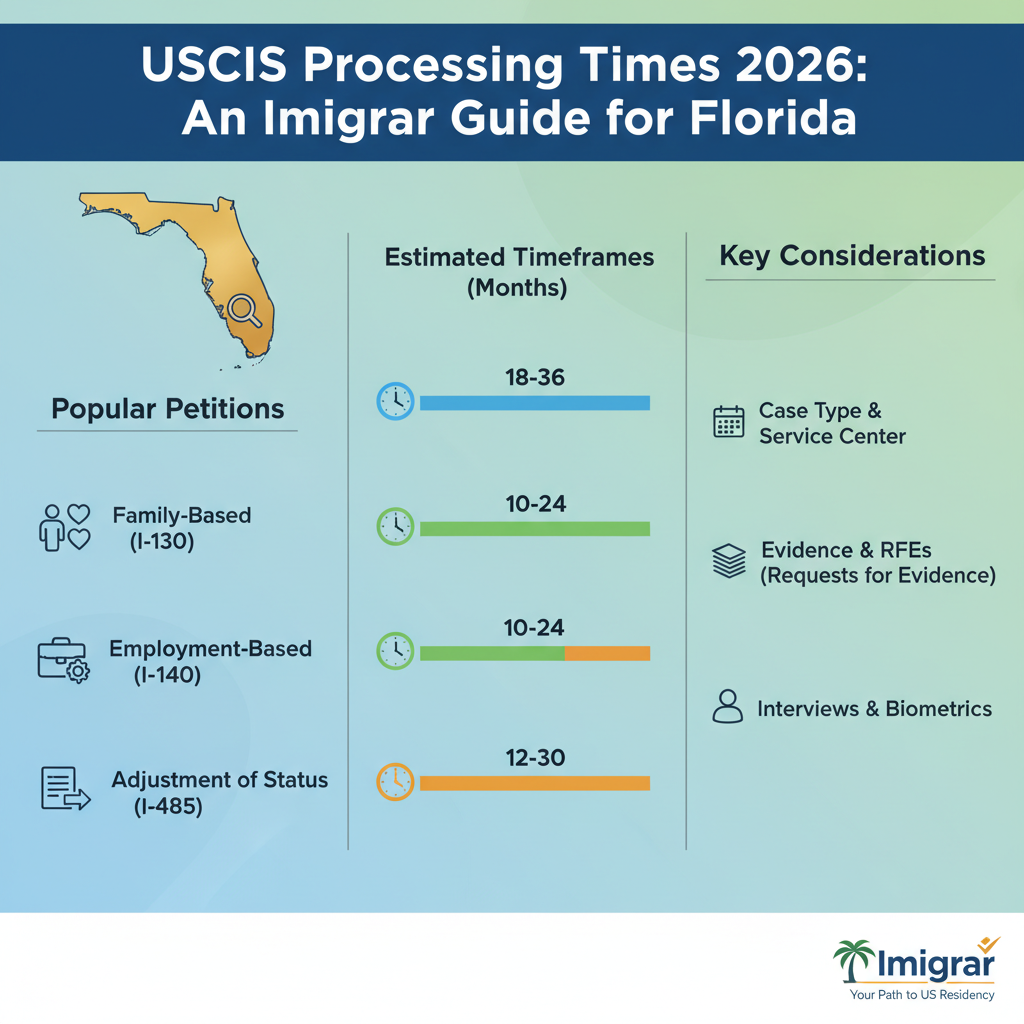
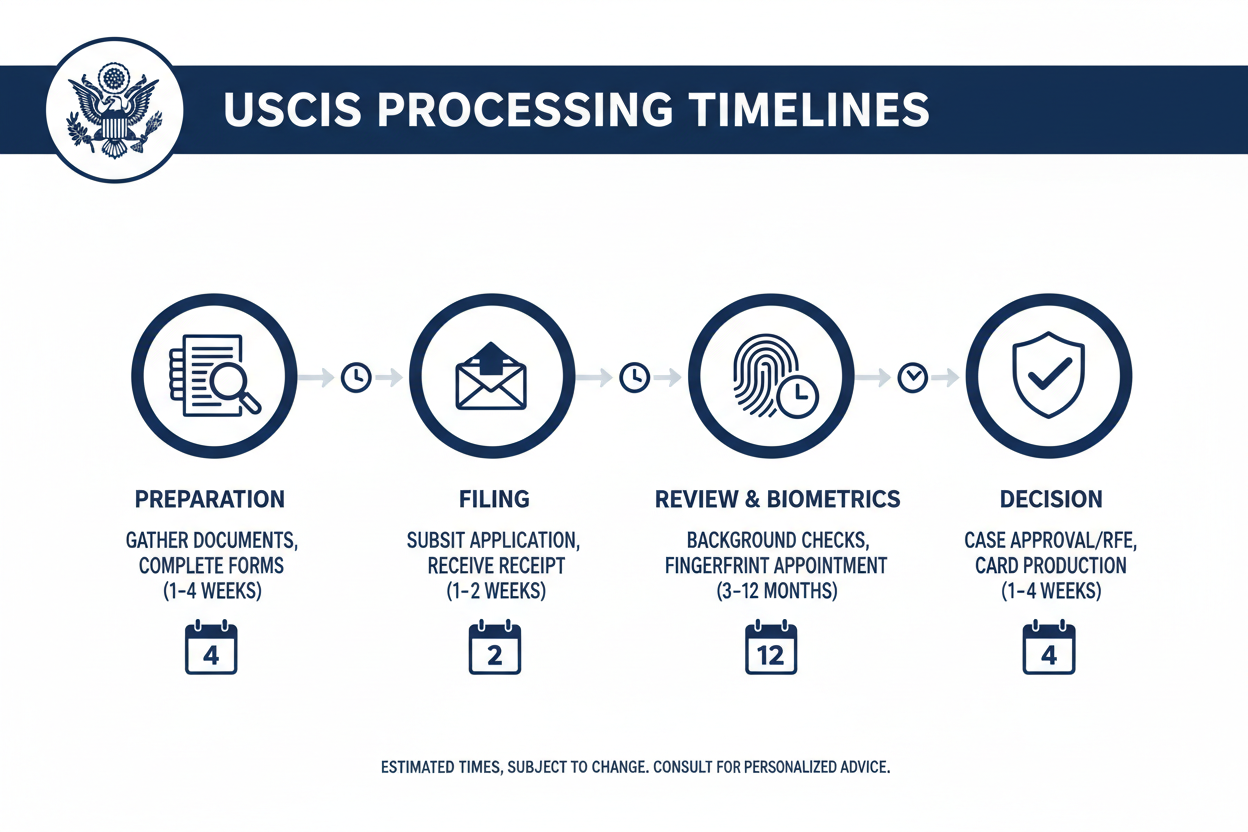
When tracking an employment-based immigrant visa petition, navigating U.S. Citizenship and Immigration Services (USCIS) processing times requires understanding internal review milestones, service center workloads, and the distinction between standard processing and expedited requests. While a specific "10-week review" timeframe often surfaces in administrative inquiries, Requests for Evidence (RFEs), or premium processing windows, managing expectations requires analyzing historical baselines, statutory frameworks, and the precise mechanics governing Form I-140, Immigrant Petition for Alien Workers.
Foundations of the EB-2 Visa Category and USCIS Processing
The EB-2 (Employment-Based Second Preference) visa category is designed for foreign nationals who are members of the professions holding advanced degrees or their equivalent, or who possess exceptional ability in the sciences, arts, or business. The lifecycle of an EB-2 petition typically begins with the Department of Labor through the PERM Labor Certification process, unless the applicant qualifies for a National Interest Waiver (NIW). Once the PERM application is certified, the petitioner—usually the sponsoring employer, or the self-petitioning individual in the case of an NIW—files Form I-140 with USCIS.
Understanding how USCIS evaluates these petitions involves looking at how workloads are distributed across regional service centers, such as the Nebraska Service Center and the Texas Service Center. Processing times fluctuate continuously based on incoming application volumes, staffing levels, and legislative mandates. Consequently, applicants frequently look for benchmarks, such as a 10-week review window, to gauge where their case stands in the administrative queue.
The Role of Service Centers and Intake Processing
USCIS utilizes specialized service centers to adjudicate Form I-140 petitions. When a petition arrives, it undergoes an initial intake review to ensure proper filing fees, signatures, and document completeness. This initial intake phase often takes a few weeks before an official receipt notice (Form I-797C) is issued.
For many applicants, the period following the issuance of a receipt notice is where tracking begins. While generalized processing time dashboards on the official USCIS website provide estimated completion ranges (often measured in months), specific administrative reviews or inquiries can prompt more granular timeframes, occasionally touching upon internal 10-week benchmarks for specific types of correspondence or supervisory reviews.
Decoding Timeframes: Standard Processing vs. Premium Processing
When analyzing processing durations for EB-2 petitions, it is essential to separate standard adjudication queues from expedited or premium processing services administered by USCIS.
| Adjudication Pathway | Typical Timeframe | Description and Applicability |
|---|---|---|
| Standard Processing | Variable (Several months) | Standard queue for Form I-140 petitions based on service center workloads and priority dates. |
| Premium Processing (Form I-907) | 45 Calendar Days | Expedited adjudication service for Form I-140, guaranteeing a decision or RFE within 45 calendar days for an additional fee. |
| Service Inquiry Window | Outside Normal Processing Time | The threshold at which a petitioner can officially submit an inquiry regarding a delayed case, often tied to published historical processing bands. |
The introduction of premium processing options under Form I-907 has transformed how many EB-2 applicants manage their timelines. Under current USCIS guidelines, premium processing for EB-2 advanced degree and exceptional ability petitions guarantees that the agency will take adjudicative action within 45 calendar days, or 45 business days depending on the specific sub-category and regulatory updates governing the phase-in schedule. This structured window provides a predictable alternative to the broader, highly variable standard processing queues.
What Happens During an Administrative Review or Inquiry?
When a case exceeds typical internal review periods or when an applicant or legal representative submits a formal service request—sometimes colloquially tracked around a 10-week milestone for specific follow-ups—USCIS initiates a secondary file review. This process involves several distinct administrative steps:
- Queue Verification: The system verifies whether the petition is actively assigned to an adjudications officer or sitting in a pre-processing holding queue.
- Background Checks: Interagency security checks, including name and fingerprint clearances through federal databases, must remain current and clear.
- Substantive Adjudication: The officer reviews the educational credentials, professional experience letters, or exceptional ability evidence to ensure statutory compliance under 8 CFR § 204.5.
- Decision or RFE Issuance: The officer determines whether to approve the petition, deny it, or issue a Request for Evidence (RFE) or Notice of Intent to Deny (NOID).
If an RFE is issued, the clock stops on normal processing times. The petitioner is typically given up to 87 days (plus mailing time allowances under current administrative rules) to submit a comprehensive response. Once USCIS receives the RFE response, a new review cycle begins, which can reset expectations for final adjudication timelines.
Common Bottlenecks and Factors Affecting EB-2 Timelines
Several operational variables can cause an EB-2 petition to drift outside expected review windows. Identifying these factors helps petitioners prepare documentation proactively to minimize delays.
Documentation Deficiencies and Educational Evaluations
A frequent source of delay during initial or secondary reviews is incomplete credential evaluation. For EB-2 advanced degree petitions, foreign educational degrees must be evaluated by a recognized credential evaluation service to prove they are equivalent to a U.S. bachelor's or master's degree. If the degree is a three-year foreign bachelor's degree, establishing equivalence to a U.S. four-year bachelor's degree requires meticulous documentation. Ambiguities in these evaluations frequently trigger Requests for Evidence, extending the overall review timeline significantly beyond any initial 10-week benchmark.
National Interest Waiver (NIW) Complexity
For EB-2 petitions filed under a National Interest Waiver, the evidentiary burden shifts heavily toward satisfying the Matter of Dhanasar framework. Petitioners must demonstrate that the proposed endeavor has both substantial merit and national importance, that the applicant is well-positioned to advance the endeavor, and that on balance, it would be beneficial to the United States to waive the requirements of a job offer and labor certification. Because these criteria involve complex discretionary analysis by USCIS officers, they often require extended supervisory reviews, moving timelines outside standard processing norms.
Practical Steps to Monitor and Verify Case Status
Applicants and employers seeking real-time updates on their EB-2 petitions should rely strictly on official tracking mechanisms rather than informal estimates.
- USCIS Online Account: Creating and maintaining an official USCIS online account allows users to track case history, view notices digitally, and submit inquiries securely.
- Case Status Online Tool: By entering the 13-character receipt number (e.g., EAC, WAC, LIN, SRC, IOE), users can check the immediate status of their Form I-140.
- Processing Times Page: Reviewing the specific service center processing times tool on the official USCIS website provides the exact historical threshold required before an "e-Request" for outside normal processing times can be filed.
It is important to note that legal advice regarding immigration procedures should be sought from qualified immigration attorneys or Department of Justice (DOJ) accredited representatives, as immigration laws and processing environments are subject to continuous administrative modification.
Frequently Asked Questions
What does a 10-week review period mean for an EB-2 petition?
A 10-week timeframe is often referenced in administrative processing contexts, such as the window for certain background checks, supervisory secondary reviews, or the tracking of specific service inquiries. However, it is not a universal guarantee or statutory timeline for standard Form I-140 adjudications, which vary based on service center workloads and whether premium processing is utilized.
How can I speed up my EB-2 USCIS processing time?
The primary authorized method to accelerate an EB-2 Form I-140 petition is filing Form I-907, Request for Premium Processing, along with the required fee. This shifts the petition into an expedited queue with a defined statutory review timeframe, independent of standard processing backlogs.
What happens if my EB-2 petition exceeds normal processing times?
If your case status online indicates that your petition has been pending longer than the current published processing time range for your specific service center and form type, you can submit an online inquiry through the USCIS website under the "E-Request" tool to prompt a status check.
Does an RFE reset the processing timeline?
Yes. When USCIS issues a Request for Evidence (RFE), the original processing clock pauses. Once the petitioner submits a complete response within the allotted deadline, USCIS typically re-evaluates the file, and a new review period begins.
Can I travel internationally while my EB-2 Form I-140 is pending?
Form I-140 is an immigrant petition filed by an employer (or self-petitioned for an NIW) on behalf of a worker; it does not confer nonimmigrant status or travel authorization on its own. Travel decisions depend entirely on the applicant's current underlying nonimmigrant visa status (such as H-1B, L-1, or O-1) and whether they maintain valid visas and travel documents.
Next Actions and Strategic Recommendations
For petitioners and applicants navigating EB-2 processing timelines, proactive preparation remains the most effective tool. Ensure that all supporting documents, including PERM labor certifications, corporate financial records, or comprehensive professional recommendation letters for National Interest Waivers, are meticulously organized prior to filing. Utilize official USCIS tracking resources to monitor case progress, and consult with a licensed immigration professional to evaluate whether premium processing aligns with your strategic immigration and career goals.