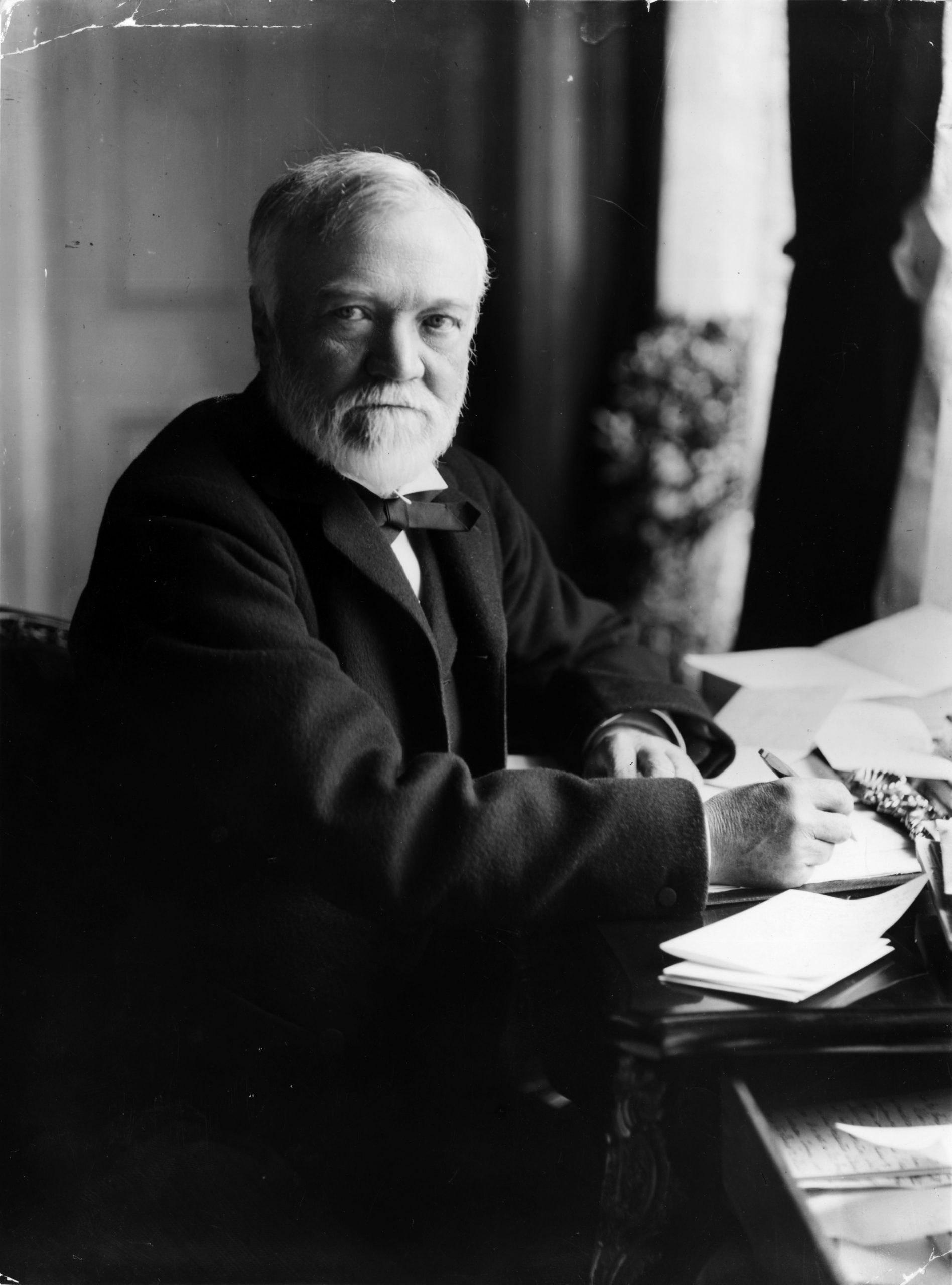
To understand the 1 billion plus estimate of Andrew Carnegie’s net worth, one must distinguish between nominal 19th-century dollars and modern economic equivalents. While Carnegie’s nominal peak wealth was approximately $480 million following the 1901 sale of Carnegie Steel, modern relative-GDP adjustments value his fortune at over $310 billion in 2026.
The Financial Genesis of the Carnegie Fortune
Andrew Carnegie’s journey from a "bobbin boy" in a Pittsburgh cotton mill to the world’s richest man is the quintessential American success story, but the financial mechanics behind his wealth were far from simple. His fortune was not merely a result of hard work; it was the product of aggressive vertical integration, early adoption of the Bessemer steel-making process, and a ruthless focus on cost-cutting.
By the late 1880s, Carnegie had consolidated his various holdings into the Carnegie Steel Company. Unlike his competitors, Carnegie controlled every aspect of production—from the iron ore mines in the Mesabi Range to the railroads and steamships that transported the raw materials. This vertical integration allowed him to lower prices and drive competitors out of the market.
As of 2026, historians emphasize that Carnegie’s net worth was uniquely tied to the industrialization of the United States. During the Gilded Age, the demand for steel for railroads, bridges, and skyscrapers was insatiable. By 1900, Carnegie Steel was producing more steel than the entire United Kingdom. This dominance set the stage for the largest financial transaction in history at that time: the sale of Carnegie Steel to J.P. Morgan.
The $480 Million Transaction: The Peak Nominal Wealth
The most significant event in the history of Carnegie’s wealth occurred in 1901. J.P. Morgan, seeking to consolidate the steel industry into a massive trust, approached Carnegie’s partner, Charles M. Schwab, to see if Carnegie was willing to sell. Carnegie famously scrawled a price on a scrap of paper: $480 million. Morgan accepted without hesitation, famously saying, "I congratulate you, Mr. Carnegie, on becoming the richest man in the world."
To put this "nominal" figure into perspective, $480 million in 1901 was an astronomical sum. Carnegie’s personal share of the sale was approximately $226 million. This was paid out not in cash, but in 5% gold bonds of the newly formed United States Steel Corporation. These bonds were kept in a special vault in New Jersey, and the interest alone generated millions of dollars annually—wealth that grew even as Carnegie began his journey into philanthropy.
Understanding the "1 Billion Plus" Discrepancy
When people discuss a "1 billion plus estimate" for Carnegie, they are rarely referring to nominal dollars in 1901. Instead, they are referring to one of two things:
- Total Asset Valuation: If Carnegie had held onto his steel interests and allowed them to compound through the early 20th century, the valuation would have easily cleared $1 billion by the 1920s.
- Relative Wealth: The most accurate way to compare historical wealth is to measure a person's fortune as a percentage of the total U.S. Gross Domestic Product (GDP). Using this "relative share" method, Carnegie’s wealth is often estimated at a value exceeding $300 billion in today's (2026) economy.
Adjusting for Inflation: Why $480 Million Is Much Larger Than It Sounds
Simply using a Consumer Price Index (CPI) calculator to adjust Carnegie’s wealth to 2026 dollars often fails to capture the true scale of his power. A CPI adjustment might place his $480 million at roughly $16 billion to $20 billion today. However, this is considered a poor metric for historical wealth because it only measures purchasing power for consumer goods like bread and milk.
To truly understand Carnegie’s position, economists look at GDP Share. In 1901, the U.S. GDP was approximately $21 billion. Carnegie’s $480 million company represented over 2% of the entire national economy. If an individual today owned 2% of the 2026 U.S. GDP (which is over $28 trillion), their net worth would be approximately $560 billion. This is why Carnegie is consistently ranked alongside John D. Rockefeller as one of the two richest Americans to ever live.
Comparison of Historical Industrial Titans (2026 Adjusted Estimates)
The following table compares Carnegie’s peak wealth against his contemporaries and modern figures using the Relative GDP Share method.
| Name | Industry | Nominal Peak Wealth | Modern Equivalent (Estimated) |
|---|---|---|---|
| John D. Rockefeller | Oil | $900 Million (1913) | $400 Billion+ |
| Andrew Carnegie | Steel | $480 Million (1901) | $310 Billion - $370 Billion |
| Cornelius Vanderbilt | Railroads | $105 Million (1877) | $230 Billion |
| Modern Billionaires | Tech/Finance | Variable | $200 Billion - $300 Billion |
The Gospel of Wealth and the Liquidation of a Fortune
Carnegie’s net worth is also unique because he was one of the few individuals in history who actively and successfully tried to give away his entire fortune before he died. In his 1889 essay, The Gospel of Wealth, Carnegie argued that "the man who dies thus rich dies disgraced."
By the time of his death in 1919, Carnegie had given away roughly $350 million—the equivalent of 90% of his fortune. This philanthropy was systematic and strategic. He did not believe in "charity" in the sense of handouts; he believed in providing the "ladders" upon which the aspiring could climb.
Major Philanthropic Outlays
- Public Libraries: Carnegie funded the construction of 2,509 libraries worldwide. He provided the buildings, provided the local community agreed to stock the books and maintain the facility.
- The Carnegie Corporation of New York: Established with an endowment of $135 million (the bulk of his remaining wealth in 1911), this foundation continues to influence education and international peace in 2026.
- Carnegie Mellon University: Originally the Carnegie Technical Schools, his investment in Pittsburgh's education infrastructure remains a cornerstone of his legacy.
- The Hero Fund: Established to recognize civilians who perform extraordinary acts of heroism.
Because he liquidated so much of his net worth during his lifetime, his estate at the time of his death was valued at a relatively modest $30 million. This creates a paradox: Carnegie was the richest man in the world in 1901, but he died with a net worth that was a mere fraction of his peak.
Analyzing the $1 Billion Estimate in Modern Financial Terms
In 2026, when financial analysts discuss the "1 billion plus" figure for Carnegie, they are often looking at the Enduring Asset Value. If the Carnegie Corporation of New York and the various Carnegie Endowments were viewed as a single financial entity, their combined historical grants and current assets would far exceed any $1 billion benchmark.
Furthermore, the "1 billion" number often surfaces in "What if" scenarios. If Carnegie had transitioned his steel wealth into the burgeoning oil or automotive sectors of the 1920s, his nominal wealth would have almost certainly crossed the $1 billion threshold by 1915, potentially rivaling John D. Rockefeller's peak nominal wealth of $900 million.
The Technical Depth of Gilded Age Economics
To understand the scale of a $1 billion estimate for Carnegie, we must look at the concentration of wealth in the 1900s. There were no income taxes until 1913, and corporate regulations were in their infancy. This allowed for a level of capital accumulation that is virtually impossible today without triggering antitrust actions or massive tax liabilities.
Carnegie’s wealth was also "hard" wealth. It was backed by physical assets—blast furnaces, coal mines, and railroad tracks. Unlike modern tech fortunes, which are often based on the market capitalization (speculative stock price) of companies that may not yet be profitable, Carnegie’s $480 million was based on a cash-and-bond transaction for an industry that produced the physical infrastructure of the world.
Common Misconceptions About Carnegie’s Wealth
There are several recurring myths regarding Carnegie’s net worth that merit clarification:
- The "Billionaire" Label: Carnegie was never a nominal billionaire. The first American to reach a nominal $1 billion net worth was John D. Rockefeller, and even he didn't reach that milestone until roughly 1916.
- Inflation Confusion: Many people see the $480 million figure and think it’s small. In 1901, a skilled laborer earned about $1.50 a day. Carnegie’s personal income from interest alone was approximately $15,000 to $20,000 per day.
- The "Hidden" Fortune: Some speculate Carnegie had hidden wealth. However, as a public figure who advocated for the transparent distribution of wealth, his finances were some of the most scrutinized in history. His 5% gold bonds were public knowledge.
Frequently Asked Questions
Was Andrew Carnegie richer than Elon Musk or Jeff Bezos?
In nominal dollars, no. In 2026, modern billionaires have nominal net worths exceeding $200 billion. However, when adjusted for the size of the economy (GDP Share), Carnegie was significantly wealthier. Carnegie’s wealth represented roughly 2.1% of the U.S. economy, whereas modern billionaires typically represent less than 1% of the U.S. GDP.
How much did Carnegie give away in total?
Andrew Carnegie gave away approximately $350 million throughout his life. In modern 2026 relative-wealth terms, this would be equivalent to giving away over $250 billion. His most famous legacy is the funding of over 2,500 libraries.
What was the source of the "1 billion plus" figure?
The "1 billion plus" figure usually refers to the modern-day adjusted valuation of his peak fortune. While he only had $480 million in nominal 1901 dollars, any historical adjustment for inflation or economic power places his value well into the hundreds of billions.
Did Andrew Carnegie pay taxes on his wealth?
At the time of the sale of Carnegie Steel in 1901, there was no federal income tax in the United States. The 16th Amendment, which authorized a federal income tax, was not ratified until 1913. This allowed Carnegie to keep the entirety of his sale proceeds for his philanthropic endeavors.
How much was Carnegie Steel worth when it was sold?
The company was sold for $480 million. This led to the creation of U.S. Steel, the first corporation in the world with a market capitalization of over $1 billion. This might be another source of the "$1 billion" figure—the value of the resultant company, not Carnegie’s personal share.
Conclusion and Final Recommendation
When assessing the "1 billion plus estimate" of Andrew Carnegie’s net worth, it is essential to define the metric being used. If you are looking for a nominal historical figure, Carnegie never reached $1 billion. However, if you are looking for his economic impact and power, his fortune was worth many hundreds of billions in today’s context.
For researchers and students of financial history, the most accurate way to describe Carnegie’s wealth is to cite the 1901 sale price of $480 million while providing the context that this represented roughly 2% of the U.S. GDP. For those comparing him to modern moguls, use the relative GDP adjustment, which places his legacy at the top of the historical wealth hierarchy. Carnegie’s true "billion-plus" legacy, however, is not found in his bank ledger, but in the thousands of institutions he funded, which continue to operate globally in 2026.