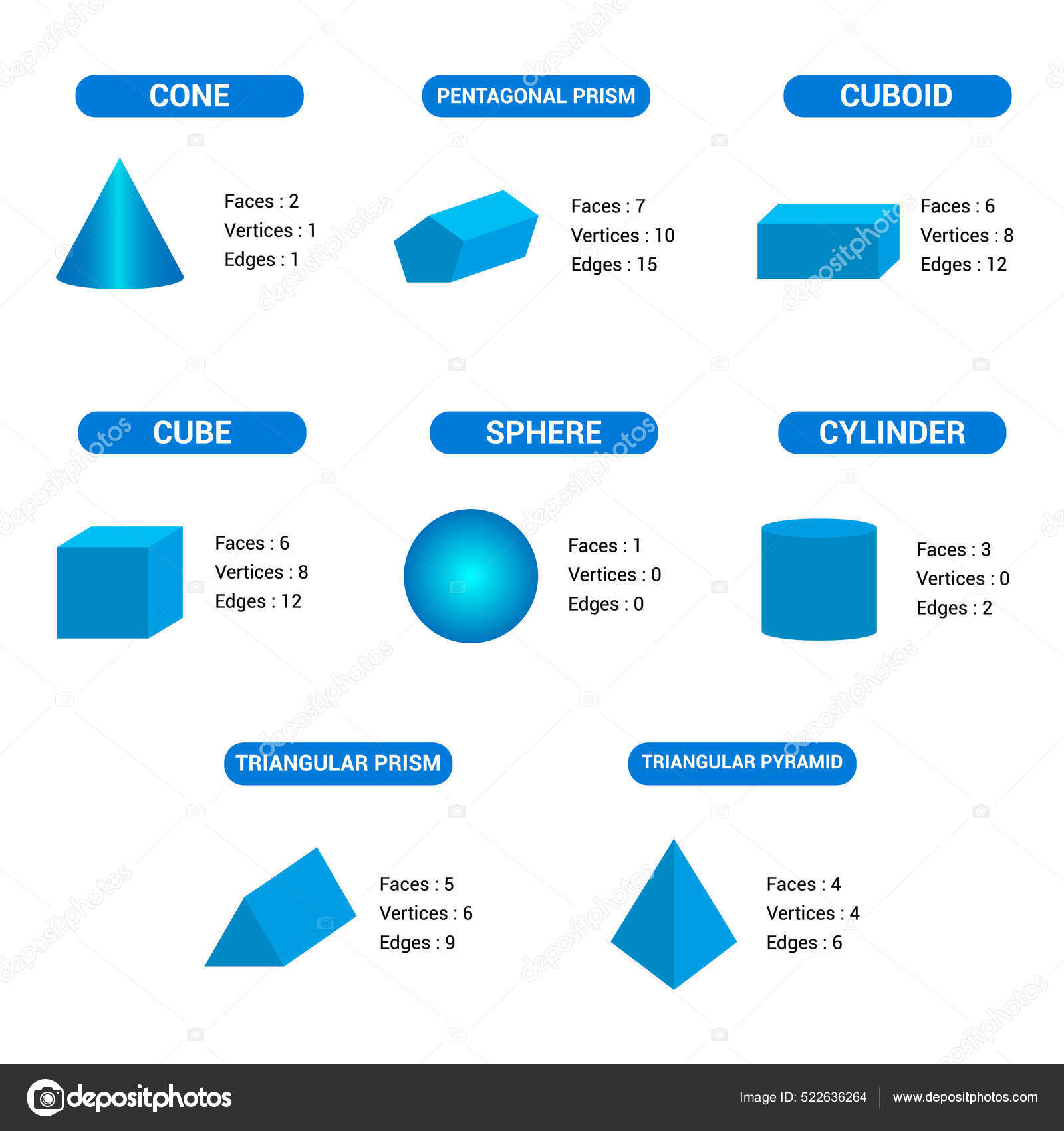
A shape with six vertices is called a hexagon. In geometry, a hexagon is a polygon defined by six straight sides and six interior angles, with its vertices representing the points where two adjacent sides meet. While the term generally refers to any six-sided flat figure, the most recognizable form is the regular hexagon, characterized by equal side lengths and equal interior angles.
Defining the Hexagon Through Geometry
At its core, a hexagon is a two-dimensional closed plane figure. The term is derived from the Greek words "hex" (six) and "gonia" (angle). By definition, if a shape is a polygon, the number of vertices must always equal the number of sides. Therefore, any hexagon necessarily possesses six vertices, six sides, and six interior angles.
When discussing polygons, mathematicians distinguish between convex and concave shapes. A convex hexagon is one where all interior angles are less than 180 degrees, and all diagonals remain inside the boundary of the shape. A concave hexagon, conversely, contains at least one "reflex" angle—an angle greater than 180 degrees—which causes the shape to indent inward.
Properties of the Regular Hexagon
The regular hexagon serves as the standard geometric model. It is defined by high symmetry, possessing six lines of reflectional symmetry and rotational symmetry of order 6. This means that if you rotate a regular hexagon around its center by 60 degrees, it maps onto itself.
Key geometric properties include:
- Interior Angle Sum: The sum of the interior angles of any hexagon is 720 degrees, calculated by the formula (n-2) × 180, where n is the number of sides. For a regular hexagon, each interior angle measures 120 degrees.
- Tessellation: The regular hexagon is one of the three regular polygons that can tile a flat plane without leaving gaps or overlaps (the others being the equilateral triangle and the square). This property is fundamental to its prevalence in both nature and engineering.
Mathematical Calculations and Formulas
Working with hexagons requires an understanding of their dimensions, specifically the relationship between the side length (denoted as 's') and other geometric measures like area and circumradius.
Calculating Area
The area of a regular hexagon can be derived by dividing it into six equilateral triangles. If the side length is 's', the area of one of these equilateral triangles is (√3 / 4) * s². Consequently, the total area of the regular hexagon is: Area = (3√3 / 2) * s²
Relationship to the Circumradius
In a regular hexagon, the distance from the center to any vertex (the circumradius) is exactly equal to the length of the side of the hexagon. This unique relationship simplifies many engineering and design problems, as it allows architects and drafters to construct a hexagon easily using only a compass and a straightedge.
Occurrence in Nature
The shape with six vertices is perhaps the most efficient structure in the natural world. Evolution has favored the hexagon because it offers the highest ratio of area to perimeter, meaning it provides the maximum amount of storage space while requiring the minimum amount of structural material.
The Honeycomb Phenomenon
Bees construct honeycombs using a dense packing of hexagonal prisms. This architecture allows them to store large quantities of honey and raise brood while minimizing the amount of wax needed. Scientists have studied this for centuries, confirming that the hexagonal lattice is the most stable and efficient way to divide a surface into regions of equal area with the least total perimeter.
Molecular and Crystalline Structures
Beyond biology, the hexagon is a fundamental building block of chemistry. The benzene ring, a foundational concept in organic chemistry, is a hexagonal structure of carbon atoms. Furthermore, graphene—a single layer of carbon atoms—is organized into a hexagonal lattice. This arrangement is responsible for graphene’s extraordinary strength and electrical conductivity, highlighting how a simple six-vertex geometry influences the physical properties of matter at the atomic level.
Practical Applications in Design and Engineering
Because of its structural integrity and ability to tessellate, the hexagon is a preferred shape in various industrial and architectural applications.
Engineering and Construction
- Lightweight Structures: By utilizing hexagonal patterns, such as honeycomb cores in aerospace panels, engineers create materials that are incredibly lightweight yet exceptionally stiff. This is common in the production of aircraft wings and high-performance racing car bodies.
- Grid Design: In urban planning and mapping, hexagonal grids are frequently used to model environments. Because hexagons are roughly circular, they provide a more uniform distribution of points compared to square grids, which can be critical for cellular network coverage or resource allocation.
Comparison of Regular Polygons
The following table outlines how the hexagon compares to other common polygons in terms of tiling efficiency and geometric properties.
| Polygon | Number of Vertices | Interior Angle | Tiling (Tessellation) | Efficiency |
|---|---|---|---|---|
| Triangle | 3 | 60° | Yes | Moderate |
| Square | 4 | 90° | Yes | High |
| Pentagon | 5 | 108° | No | Low |
| Hexagon | 6 | 120° | Yes | Very High |
| Octagon | 8 | 135° | No (alone) | Moderate |
Efficiency in this context refers to the ratio of area to perimeter; higher efficiency implies lower material usage for the same internal volume.
Troubleshooting Common Misconceptions
A common point of confusion arises when distinguishing between a hexagon and other shapes that may appear similar, such as the octagon or various irregular polygons.
- Vertex Counting: When identifying a shape, always count the points where two edges meet. If you count exactly six, it is a hexagon. If a shape is irregular, the sides may have different lengths and the interior angles may vary, but as long as there are six vertices, it remains a hexagon by definition.
- "Regular" vs. "Irregular": Do not assume that all hexagons are regular. While the regular hexagon is the most common in textbooks, irregular hexagons occur frequently in nature and architecture. A hexagon that has been stretched, skewed, or compressed still qualifies as a hexagon, provided the vertex count remains at six.
- Internal vs. External Angles: Students often confuse the sum of interior angles with the sum of exterior angles. For any convex polygon, the sum of exterior angles is always 360 degrees, regardless of the number of vertices. Only the interior angle sum changes based on the number of vertices.
Historical Context and Symbolism
The hexagon has held a position of importance in human history, often associated with balance, harmony, and natural order. Its presence in the geometry of the snowflake—a byproduct of water molecules crystallizing into a hexagonal lattice—has inspired design motifs in art and architecture across diverse cultures. In 2026, the use of hexagonal patterns in digital design remains a dominant trend, as it provides a modern, organic, yet structured aesthetic for user interfaces and data visualization.
Next Actions and Further Study
To master the geometry of the hexagon, one should focus on the transition from theory to practice. Whether you are an architecture student, a designer, or a curious mathematician, the following steps will deepen your understanding:
- Manual Construction: Use a compass and straightedge to draw a regular hexagon. Begin by drawing a circle, keeping the compass width constant, and marking points along the circumference. This hands-on exercise demonstrates why the circumradius is equal to the side length.
- Structural Modeling: If interested in engineering, experiment with creating a "honeycomb" panel using cardboard. Observe how a hexagonal grid resists buckling compared to a square or triangular grid.
- Advanced Geometry: Explore the concept of the "truncated" polygon. For instance, a truncated triangle becomes a hexagon. Learning how shapes evolve through geometric operations will provide a broader understanding of why the hexagon acts as a bridge between simple and complex polyhedra.
Understanding the hexagon is essentially understanding the language of efficiency. By focusing on its six vertices, you gain access to the principles governing everything from the architectural strength of bridges to the microscopic efficiency of the chemical bonds that make life possible.