Finding a previously undocumented painting in a 19th-century studio requires a systematic approach involving climate stabilization, provenance research, and forensic authentication. To confirm its value and origin, owners must consult with art historians and conservation scientists who use brushstroke analysis, pigment testing, and archival records to distinguish a genuine masterwork from period-accurate copies.
The Significance of 19th-Century Studio Discoveries
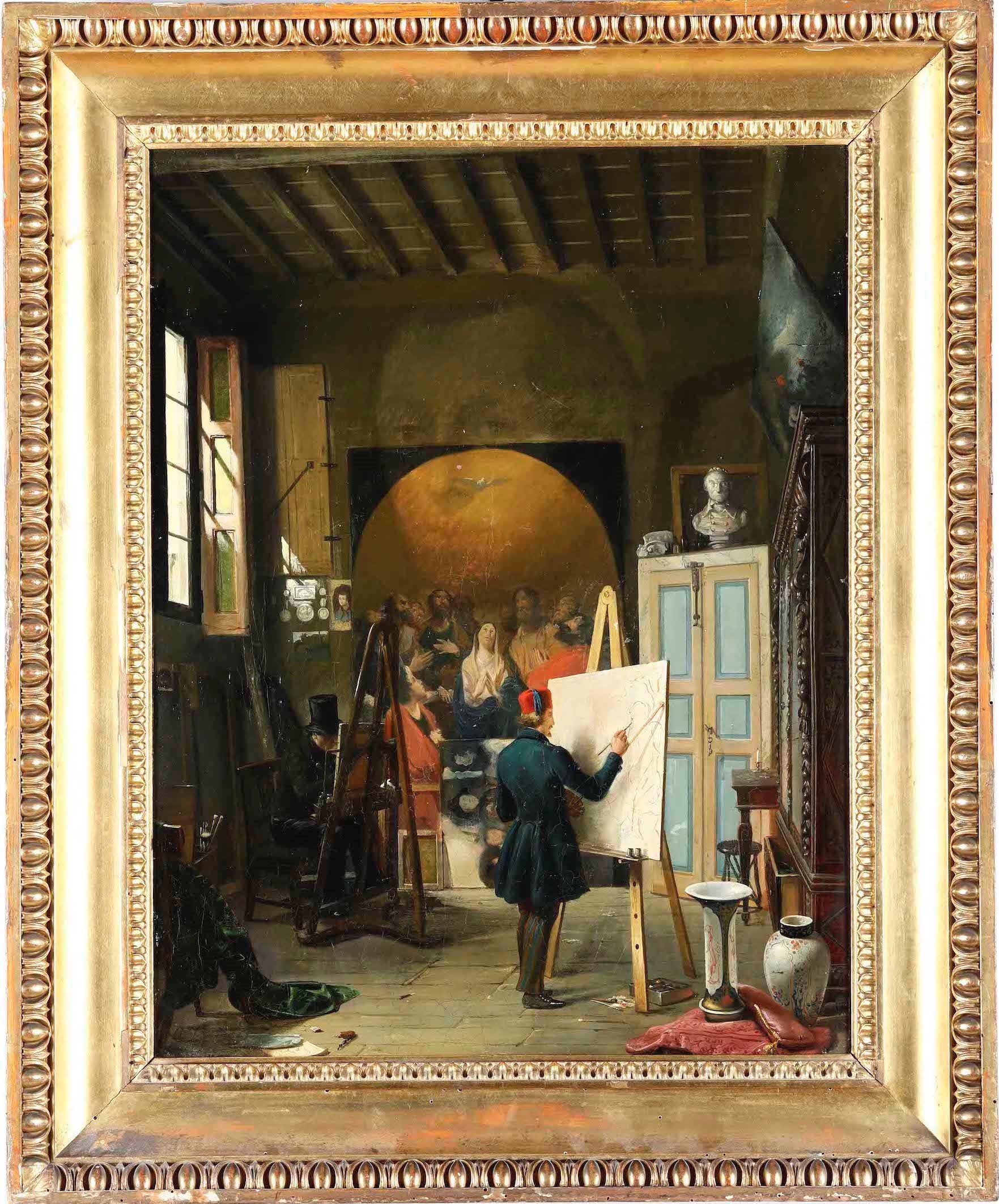
The 19th century was an era of unprecedented artistic production, characterized by the rise of the "Atelier" system and the transition from traditional patronage to the modern art market. When a "new" painting is discovered in a studio from this period—whether a dusty attic in Paris or a repurposed barn in the Hudson River Valley—it represents more than just a financial windfall; it is a missing piece of art history.
In 2026, the fascination with these "lost" works remains high because the 19th century sits at the intersection of classical technique and industrial innovation. Artists like Turner, Monet, and Sargent were experimenting with new chemical pigments and portable canvases. Studios were often cluttered spaces where sketches (croquis) and underpaintings (ébauches) were tucked away and forgotten as styles shifted rapidly from Neoclassicism to Romanticism and eventually Impressionism.
Immediate Steps Following a Discovery
The moments following the discovery of a painting that has been stationary for over a century are critical. The primary goal is to prevent "discovery shock," where sudden changes in the environment cause irreversible damage to the artwork.
Environmental Stabilization
Paintings found in 19th-century studios have often reached a state of equilibrium with their environment, however suboptimal that environment might be. If a painting is moved from a humid, dark cellar to a modern, air-conditioned room, the wooden stretcher bars can contract and the oil paint layer can crack or flake.
- Avoid Direct Light: Do not expose the work to sunlight or high-intensity LED photography lights immediately.
- Maintain Humidity: Ideally, the work should be kept at a relative humidity of 45-55%.
- Minimal Handling: Always use nitrile gloves. The oils from human skin can react with 19th-century varnishes, which were often made of natural resins like dammar or mastic.
Initial Documentation
Before cleaning or moving the piece, take high-resolution photographs of its "as-found" state. This includes the back of the canvas (the verso). In the 19th century, many artists used pre-primed canvases from specific suppliers. Finding a stamp from a "marchand de couleurs" (color merchant) like Lefranc & Bourgeois or Winsor & Newton can provide an immediate baseline for dating the work and narrowing down the artist's location.
The Path to Authentication and Verification
Authenticating a 19th-century painting is a multi-disciplinary process. No single piece of evidence is usually sufficient; instead, a "preponderance of evidence" must be built across three primary pillars: Provenance, Connoisseurship, and Forensic Science.
1. Provenance Research
Provenance is the documented history of an object’s ownership. For a painting found in a studio, the provenance often begins with the artist's estate records. Researchers look for exhibition labels on the frame, auction house stencils, or mentions in the artist’s personal correspondence.
In the 19th century, it was common for artists to trade works with colleagues or leave them as collateral for rent. Finding a painting in a specific studio location suggests it might be an "attribution by association," but this must be verified through inventory lists often found in national archives or museum "catalogues raisonnés" (comprehensive listings of an artist's known works).
2. Connoisseurship (Stylistic Analysis)
This involves an expert’s subjective but highly trained eye. A specialist in 19th-century art will examine the brushwork (impasto), the treatment of light, and the anatomical or architectural accuracy. By 2026, this human expertise is often augmented by AI-driven brushstroke analysis, which compares high-resolution scans of the "new" painting against thousands of verified works to identify the unique "hand" of the artist.
3. Forensic Science and Materials Analysis
Forensic testing provides objective proof that the materials used are consistent with the 19th century. If a painting purportedly from 1850 contains Titanium White (which didn't see widespread use until the 1920s), it is a modern forgery or a later copy.
- X-Ray Radiography: This reveals what lies beneath the surface. Many 19th-century artists reused canvases. Finding an earlier, stylistically consistent sketch underneath the visible painting is a strong indicator of authenticity.
- X-Ray Fluorescence (XRF): This non-destructive technique identifies the chemical elements in the paint. Common 19th-century pigments include Lead-Tin Yellow, Emerald Green (containing arsenic), and French Ultramarine.
- Ultraviolet (UV) Fluorescence: This helps identify areas of later restoration. Old varnish typically fluoresces a milky green, while newer paint appears as dark spots.
Technical Specifications: 19th-Century Materials vs. Modern Alternatives
| Material Component | 19th-Century Standard | Modern Equivalent/Indicator | Significance for Authentication |
|---|---|---|---|
| Canvas Material | Hand-woven linen or heavy hemp. | Machine-woven cotton or synthetic blends. | Weave density and irregularities confirm the era. |
| Priming (Gesso) | Lead-based oil ground or animal glue. | Acrylic Gesso (Titanium-based). | Acrylics did not exist; presence of acrylic is a "red flag." |
| Pigment Binder | Cold-pressed linseed oil or poppy oil. | Synthetic resins or modified oils. | Chemical aging (oxidation) of oils takes decades to occur. |
| Stretchers | Fixed-corner or early keyed wooden joints. | Precision-milled plywood or metal. | 19th-century wood shows specific aging and tool marks. |
| Varnish | Natural resins (Dammar, Mastic). | Synthetic UV-stable polymers. | Natural resins yellow and become brittle over time. |
Legal and Ethical Considerations in 2026
When a painting is discovered, legal questions of ownership often supersede the excitement of the find. If the studio is part of a deceased estate, the "find" may be subject to inheritance taxes or claims from distant heirs.
Furthermore, the "Art Loss Register" must be consulted. During the 19th and early 20th centuries, many artworks were displaced during conflicts or colonial movements. In 2026, due diligence requires ensuring the painting was not previously reported stolen or confiscated. Under modern international laws, a "good faith" discovery does not always grant the finder legal title if a prior theft can be proven.
Restoration: To Clean or Not to Clean?
The urge to see the "true colors" of a discovered painting is strong, but professional intervention is mandatory. 19th-century paintings are often covered in "grime"—a mixture of soot from coal fires (common in Victorian studios), tobacco smoke, and oxidized varnish.
A professional conservator will perform "cleaning tests" on small, inconspicuous areas. The goal is not to make the painting look "new," but to stabilize the paint layer and remove substances that are actively degrading the canvas. In 2026, laser cleaning technology allows for the removal of darkened varnish layers without touching the delicate pigment beneath, a significant advancement over the harsh chemical solvents used in previous decades.
Common Obstacles in Authentication
Even with the best technology, several factors can complicate the verification of a painting found in a 19th-century studio:
- Student Works: Master artists often had students who copied their style perfectly as part of their training. Distinguishing a "Work by the Studio of..." from a "Work by the Hand of..." is a major challenge for appraisers.
- Unfinished States: An unfinished painting may lack the signature or the final glazes that define an artist’s mature style, making it harder to definitively attribute.
- The "Foundry" Problem: For sculptures or paintings produced in multiples (like certain lithographs or sketches), determining which one was the "primary" version is difficult.
Frequently Asked Questions
What should I do if I find a signature on the painting?
Do not assume a signature equals authenticity. Signatures were frequently added to 19th-century paintings by unscrupulous dealers later in the work's life to increase value. A genuine signature should be "integrated" into the paint layer—meaning it was applied while the paint was still relatively fresh—rather than sitting on top of the cracked varnish (an "over-paint" signature).
How much does it cost to have a painting authenticated?
Costs vary significantly based on the level of testing required. A preliminary verbal opinion from an expert might cost $500–$1,000. Full forensic testing (XRF, Pigment analysis, Carbon dating of the frame) can range from $5,000 to $15,000. It is important to note that reputable authenticators charge flat fees, not a percentage of the painting’s value, to avoid conflicts of interest.
Is carbon dating effective for 19th-century paintings?
Carbon dating (C14) is generally less effective for items less than 200 years old because the margin of error (often +/- 50 years) is too wide to distinguish between the mid-19th century and the early 20th century. Dendrochronology (tree-ring dating) is more useful if the painting is on a wooden panel, as it can pinpoint the exact year the tree was felled.
Can I sell the painting before it is fully authenticated?
You can sell it "as-is" or "attributed to," but you will receive only a fraction of its potential value. Most major auction houses, such as Sotheby's or Christie's, will not accept a work for a high-value sale unless their internal experts are satisfied with the authentication and provenance. Selling an unverified work also carries legal risks regarding "misrepresentation."
Does the frame matter?
Yes, the frame is often as important as the painting for dating purposes. 19th-century frames were typically made of wood and gilded with gold leaf over a layer of "gesso" (rabbit-skin glue and gypsum). A frame that is original to the period and shows consistent wear with the painting provides strong circumstantial evidence of the work's age.
Recommendation for Next Actions
If you have discovered a painting in a 19th-century studio, your first step is to secure the environment. Do not attempt to clean the surface with water, bread, or household chemicals. Second, photograph the work in high detail, including any markings on the back. Finally, contact a member of a professional appraisal association, such as the International Society of Appraisers (ISA) or the Appraisers Association of America. Request a "Initial Consultation for Attribution" to determine if the work warrants the significant expense of forensic testing and archival research.
By proceeding with caution and scientific rigor, you ensure that the artwork is preserved for the future and that its historical and financial value is fully realized.