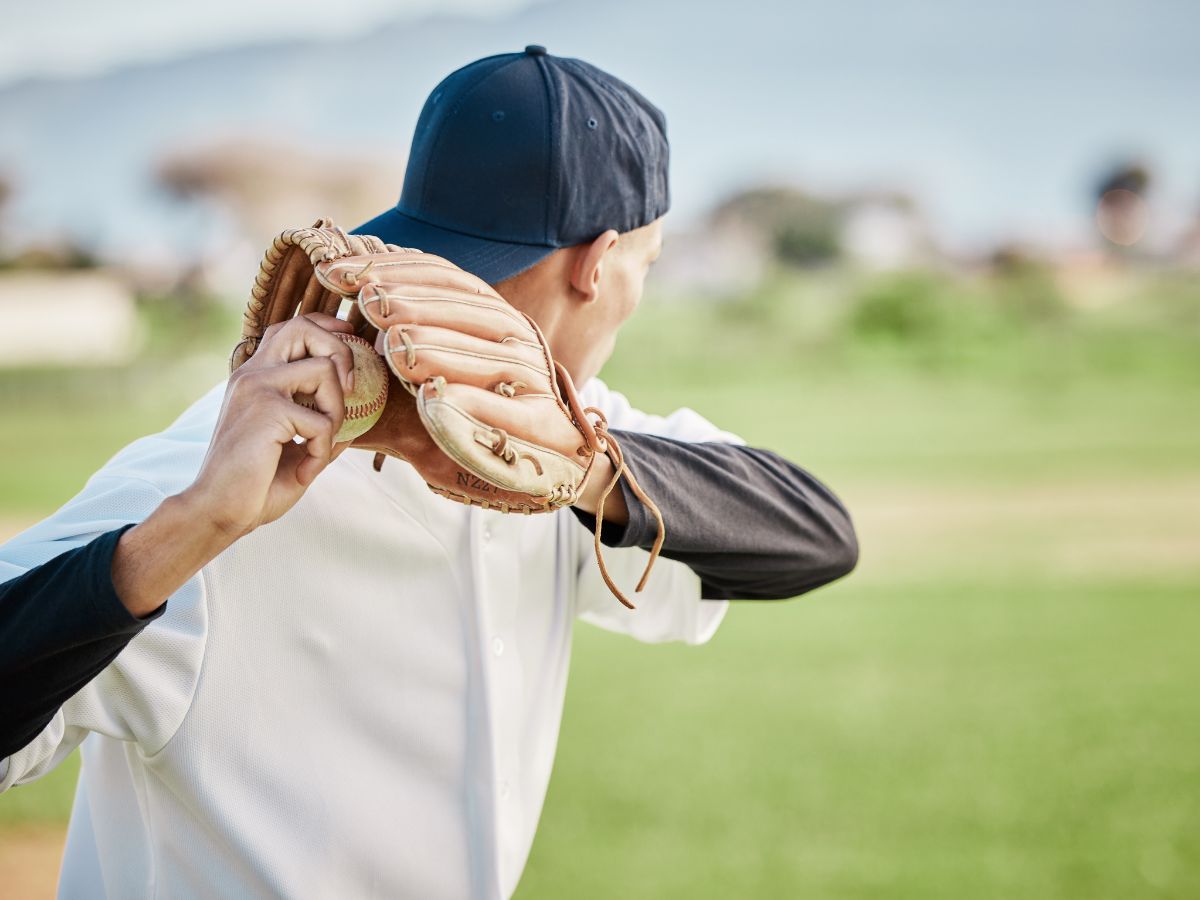
A knuckleball is a specialized baseball pitch thrown with minimal spin, causing it to move erratically and unpredictably through the air. By minimizing the Magnus effect, the ball's trajectory is dictated by airflow over the seams, resulting in sudden "fluttering" or "dancing" movements that challenge both hitters and catchers alike.
The knuckleball occupies a unique, almost mystical space in the landscape of professional baseball. In an era defined by triple-digit fastballs and high-spin-rate sliders, the knuckleball remains the ultimate outlier. It is a pitch that defies the standard conventions of physics and coaching. While every other pitch in a pitcher's arsenal relies on spin to generate movement, the knuckleball relies on the absence of spin to create chaos. In 2026, as technology allows us to track every millimeter of a ball's flight path, the knuckleball continues to be one of the few remaining "black boxes" of the sport—a pitch that can be measured but never fully mastered or predicted.
The Aerodynamics of the Flutter: Why It Moves
To understand why a knuckleball is a low spin unpredictable baseball pitch, one must first understand the fundamental physics of flight. Most pitches utilize the Magnus effect. When a pitcher throws a fastball with backspin, the air moves faster over the top of the ball and slower underneath it, creating a pressure differential that generates lift. A curveball uses topspin to create the opposite effect, forcing the ball to "break" downward.
The knuckleball, however, operates on the principle of seam-shifted wake and aerodynamic turbulence. When a ball is thrown with almost zero rotation—ideally between 0.25 and 0.75 revolutions on its way to the plate—the air flowing over the raised seams becomes turbulent at different points on the ball's surface. As the ball moves, the position of the seams relative to the oncoming wind changes ever so slightly. This causes the "wake" or the pocket of low pressure behind the ball to shift violently from one side to another.
In 2026, high-speed optical tracking systems like Statcast show that a successful knuckleball does not follow a smooth arc. Instead, it experiences sudden lateral and vertical jumps. These "breaks" are caused by the boundary layer of air separating from the ball's surface at different intervals. Because the seams are asymmetrical, the air resistance is never balanced. The result is a pitch that might dart six inches to the left, only to suddenly "tumble" downward just as it reaches the hitting zone.
Anatomical Precision: The Grip and Release
Despite its name, the knuckleball is rarely thrown with the knuckles themselves. For the vast majority of practitioners, it is a fingernail pitch. The mechanics of the grip are among the most difficult to master in all of sports, requiring a combination of extreme finger strength and delicate touch.
The Grip Configuration
The pitcher typically digs the tips or nails of the index, middle, and sometimes the ring finger into the leather of the ball, usually just behind the "horseshoe" part of the seams. By using the nails, the pitcher creates a rigid point of contact that allows for a clean "push" rather than a "roll." The thumb and pinky provide stability on the sides of the ball.
The "Push" Release
The secret to the knuckleball’s lack of spin lies in the release. While a traditional pitcher "snaps" their wrist to generate spin, a knuckleballer must keep the wrist completely stiff. The ball is essentially "pushed" toward the plate, much like a shot putter but with far more finesse. At the moment of release, the pitcher must retract their fingers simultaneously to avoid "flicking" the ball. Any significant rotation—even a single extra revolution—will cause the ball to behave like a slow, hanging batting-practice pitch, which is often hit for significant distance.
Historical Icons of the "Butterfly" Pitch
The history of the knuckleball is a history of survival and longevity. Because the pitch does not require the high-velocity arm speed of a fastball, knuckleballers often pitch well into their 40s.
- Phil Niekro: Perhaps the most famous "knuckler," Niekro used the pitch to win 318 games and earn a spot in the Hall of Fame. He often spoke about the pitch as having a mind of its own, once famously saying, "I don't even know where it's going, so how is the hitter supposed to know?"
- Hoyt Wilhelm: The first knuckleballer to be inducted into the Hall of Fame, Wilhelm proved that the pitch could be effective both as a starter and as a devastating weapon out of the bullpen.
- Tim Wakefield: A mainstay of the Boston Red Sox for nearly two decades, Wakefield used the pitch to rack up over 2,000 strikeouts. His success in the early 21st century kept the tradition alive for a new generation.
- R.A. Dickey: In 2012, Dickey became the first knuckleball pitcher to win the Cy Young Award. He threw a "hard" knuckleball, which reached speeds in the upper 70s and low 80s (MPH), whereas traditional knuckleballs usually sit between 60 and 70 MPH.
The Catcher’s Struggle: The "Oversized" Requirement
It is often said that the hardest job in baseball is not hitting a knuckleball, but catching one. The unpredictability that baffles hitters is equally problematic for the person behind the plate. Historically, teams employing a knuckleballer have had to use a specialized catcher's mitt—often referred to as a "pancake" or a "softball-style" mitt—which is significantly larger than a standard MLB catcher's glove.
The technique for catching a knuckleball is fundamentally different from catching high-velocity heat. Rather than "framing" the pitch or meeting it at a specific point, the catcher must wait until the very last microsecond to react. This often leads to a high frequency of passed balls and wild pitches. In the 2026 professional landscape, specialized "knuckleball-only" catchers are rare but highly valued assets for teams that choose to develop this type of pitching talent.
Comparison of Pitch Characteristics
| Pitch Metric | Four-Seam Fastball | 12-6 Curveball | Knuckleball |
|---|---|---|---|
| Average Velocity (2026) | 94–101 MPH | 75–82 MPH | 62–78 MPH |
| Spin Rate (RPM) | 2,100–2,600 | 2,400–2,900 | 0–150 |
| Primary Movement | Vertical Lift (Magnus) | Vertical Drop (Magnus) | Erratic/Turbulent |
| Predictability | High (Linear path) | Moderate (Consistent arc) | Very Low (Non-linear) |
| Arm Stress | High | Moderate/High | Low |
The Strategic Advantage and Modern Utility
In 2026, the knuckleball serves as a powerful "change of pace" in a league dominated by velocity. When a hitter spent the first two games of a series timing 100 MPH fastballs, facing a 68 MPH knuckleball in the third game can be psychologically and physically draining. The timing mechanism required to hit a knuckleball is entirely different; hitters cannot "load" their swing in the same way because they don't know where the ball will be when it crosses the plate.
Furthermore, the knuckleballer provides a unique advantage to a team's pitching staff: durability. Because the delivery is low-effort and places minimal strain on the ulnar collateral ligament (UCL), knuckleballers can often throw more pitches per outing and require fewer days of rest between starts. In an era where "load management" and "pitch counts" are strictly monitored, a pitcher who can consistently provide 200 innings a season is a goldmine for a front office.
Common Pitfalls in Mastering the Pitch
Developing a knuckleball is a labor of years, not weeks. Most pitchers who attempt to learn it fail because of three primary issues:
- Inconsistent Finger Pressure: If one finger applies more pressure than the others during the "push," it creates "side-spin." This results in a pitch that simply drifts rather than dancing.
- Over-Throwing: Many pitchers try to throw the knuckleball too hard, which causes them to naturally snap their wrist. The "hard knuckler" popularized by R.A. Dickey is an exception that requires even more precise finger strength.
- The "Hanging" Knuckleball: If the ball does not flutter, it is effectively the slowest pitch in baseball with zero movement. These are frequently hit for home runs, leading to a high "risk-reward" ratio that discourages many young pitchers from pursuing the craft.
FAQs About the Knuckleball
Why is it called a knuckleball if you use your fingernails?
The name is a bit of a misnomer originating from the early 20th century. Early practitioners like Eddie Cicotte and Dutch Leonard may have experimented with using their actual knuckles to grip the ball. However, over time, pitchers realized that the fingernails provided much better control and a cleaner release. The name "knuckleball" stuck despite the shift in technique.
Can anyone learn to throw a knuckleball?
While anyone can learn the grip, very few can master the release. It requires a specific type of tactile sensitivity in the fingers and a "quiet" upper body delivery. Additionally, the pitcher must have the mental toughness to handle the fact that sometimes, even a perfectly thrown knuckleball won't move due to atmospheric conditions, resulting in a home run.
Does humidity or wind affect how the knuckleball moves?
Yes, significantly. Because the pitch relies on the interaction between the seams and the air, higher air density (humidity) can sometimes enhance the turbulence, making the ball move more. Conversely, a strong wind can either dampen the movement or make it so extreme that even the best catchers cannot keep it in front of them.
Why are there so few knuckleballers in the MLB today?
Modern scouting focuses heavily on "repeatable" high-velocity mechanics. Most organizations view the knuckleball as a high-risk project. Because it takes years to develop the feel for the pitch, many players are released before they can reach a professional level of proficiency. It is often a "pitch of last resort" for players whose traditional careers are failing.
What happens if the ball spins just a little bit?
A "slow-spinning" knuckleball is actually quite effective if it rotates only about a quarter or half turn. This allows the seams to change position relative to the wind. However, if it spins more than two or three times, it becomes a "cement mixer"—a pitch with no movement that stays in a straight, slow line, making it very easy for professional hitters to track and hit.
Practical Recommendation for Aspiring Pitchers
If you are looking to develop a knuckleball in 2026, the first step is to focus on your grip and fingernail health. You cannot throw this pitch effectively with short, bitten-down nails or weak fingers. Use a grip strengthener and practice the "push" release against a wall or a net at short distances before trying to throw from a full 60 feet, 6 inches.
Monitor your spin rate using a modern ball-tracking app or device. Your goal is to keep the RPM (revolutions per minute) below 150. Once you can consistently throw the ball with no visible rotation, focus on your "cues"—the mental triggers that help you keep your wrist stiff through the zone. Remember that the knuckleball is a marathon, not a sprint; it took the greats decades to perfect, and your greatest asset will be patience and the willingness to let the wind do the work for you.