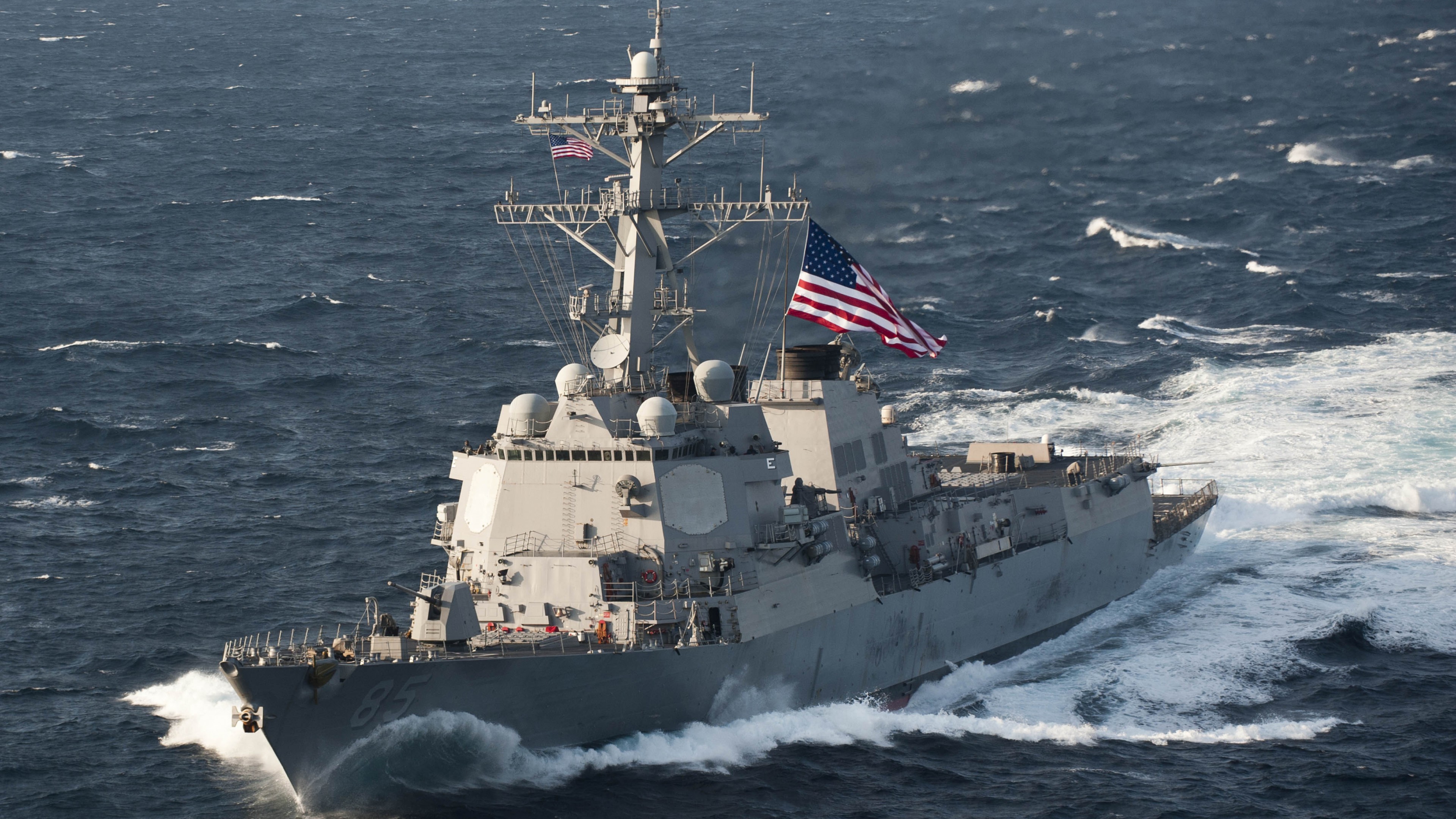
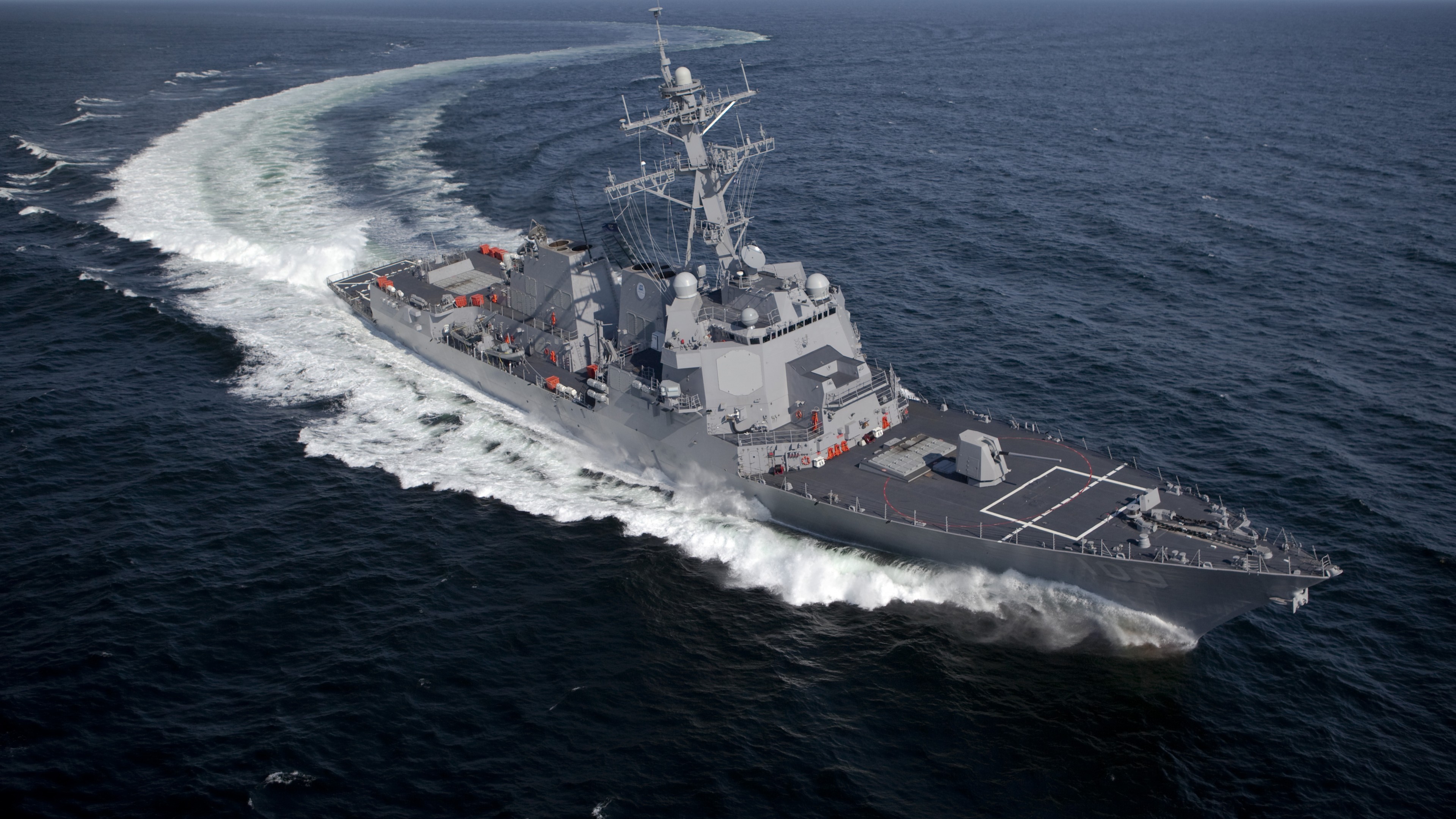
The Arleigh Burke class (DDG-51) is a series of multi-mission guided-missile destroyers that serves as the backbone of the United States Navy's surface fleet. Known for the advanced Aegis Combat System and massive firepower, these ships provide anti-air, anti-submarine, and anti-surface warfare capabilities across four distinct design "Flights," representing the pinnacle of modern naval engineering.
The Genesis of the Arleigh Burke Class
The development of the Arleigh Burke class began in the late 1970s as the U.S. Navy sought a replacement for the older Charles F. Adams and Coontz-class destroyers. The primary objective was to create a survivable, high-performance surface combatant capable of defending carrier strike groups against saturated Soviet missile attacks. Named after Admiral Arleigh Burke, a legendary destroyer commander from World War II, the lead ship (DDG-51) was commissioned in 1991.
Unlike previous destroyer classes that utilized significant amounts of aluminum in their superstructures to save weight, the Arleigh Burke was designed with an all-steel hull and superstructure. This decision was largely influenced by the 1975 collision between the USS Belknap and the USS John F. Kennedy, which demonstrated the vulnerability of aluminum to fire. The result was a significantly more rugged vessel capable of absorbing damage while continuing to fight. The hull also features a "stealthy" design, with angled surfaces and a low radar cross-section (RCS) to reduce detectability by enemy sensors.
As of 2026, the class has seen continuous production for over three decades, an unprecedented feat in modern naval history. This longevity is due to the inherent modularity of the design, which has allowed the Navy to integrate new technologies, sensors, and weapons systems without needing to design an entirely new hull from scratch.
Propulsion and Hull Architecture
At the heart of the Arleigh Burke's mobility is the COGAG (Combined Gas and Gas) propulsion system. Each ship is powered by four General Electric LM2500 gas turbine engines, which generate a combined 100,000 shaft horsepower. These engines drive two shafts with controllable-pitch propellers, allowing the ship to reach speeds in excess of 30 knots.
The LM2500 engines are renowned for their reliability and power density. They allow the destroyer to accelerate from a dead stop to full speed in a remarkably short period, a critical capability when maneuvering in hostile environments or responding to sudden threats. In the newer Flight III ships, the power generation system has been significantly upgraded to support the energy-intensive AN/SPY-6 radar. These ships utilize 4160-volt gas turbine generators, a substantial increase over the 450-volt systems used in earlier Flights.
The hull itself is approximately 505 to 510 feet long, depending on the Flight, with a beam of 66 feet. The displacement has grown from roughly 8,300 tons in Flight I to over 9,700 tons in the Flight III variant. This increase in mass reflects the additional armor, sensors, and helicopter facilities added over the years.
The Aegis Combat System: The Brain of the Ship
The defining feature of the Arleigh Burke class is the Aegis Combat System. Aegis is a centralized, automated command-and-control and weapons-control system that integrates the ship's sensors and weapons to track and engage hundreds of targets simultaneously.
The core sensor of the Aegis system is the AN/SPY-1 phased-array radar (on Flights I through IIA) or the newer AN/SPY-6(V)1 Air and Missile Defense Radar (on Flight III). Unlike traditional rotating radars, these systems use fixed panels to provide 360-degree coverage without the mechanical delays of rotation.
AN/SPY-6(V)1 and the Flight III Revolution
As of 2026, the introduction of the AN/SPY-6(V)1 has fundamentally changed the class's role. This Active Electronically Scanned Array (AESA) radar is roughly 30 times more sensitive than its predecessor. It can detect targets at twice the range and half the size, which is essential for defending against modern hypersonic missiles and advanced ballistic threats. The integration of this radar required a total redesign of the ship's internal power and cooling infrastructure, leading to the designation of the "Flight III" ships as a major leap forward in naval capability.
Armament and the Vertical Launch System (VLS)
The Arleigh Burke's primary offensive and defensive punch comes from the Mk 41 Vertical Launch System (VLS). The VLS consists of a series of cells embedded in the deck—typically 90 cells on Flight I/II and 96 cells on Flight IIA/III. This "honeycomb" design allows the ship to carry a flexible mix of missiles, including:
- RIM-66 Standard Missile (SM-2): The primary medium-to-long-range surface-to-air missile.
- RIM-161 Standard Missile 3 (SM-3): Specifically designed for Ballistic Missile Defense (BMD) to intercept targets in the exo-atmosphere.
- RIM-174 Standard Missile 6 (SM-6): A multi-mission missile capable of anti-air, anti-surface, and terminal ballistic missile defense.
- BGM-109 Tomahawk: A long-range cruise missile for land-attack missions.
- RUM-139 VL-ASROC: A rocket-thrown torpedo used for anti-submarine warfare.
- RIM-162 ESSM: The Evolved SeaSparrow Missile, used for short-to-medium-range defense against highly maneuverable anti-ship missiles.
In addition to the VLS, the ships are equipped with a 5-inch (127mm) Mk 45 lightweight gun for shore bombardment and surface engagements. For close-in defense against missiles and aircraft, the ships carry either the Phalanx Close-In Weapon System (CIWS) or the SeaRAM system.
Generational Evolution: Flights I through III
The Arleigh Burke class is categorized into "Flights" based on the era of construction and the specific technological suites installed.
Flight I and II (DDG-51 to DDG-78)
These were the original designs. Flight I established the baseline, while Flight II introduced improvements in electronic warfare and communications. A notable limitation of these early ships was the lack of a helicopter hangar; they possessed a landing pad but could not permanently house aircraft.
Flight IIA (DDG-79 to DDG-124 & DDG-127)
This was the most numerous variant. The most significant change was the addition of two hangars to accommodate MH-60R Seahawk helicopters. This addition transformed the Arleigh Burke from a ship that supported anti-submarine warfare into a ship that could lead it. Flight IIA also saw the removal of the Harpoon anti-ship missile canisters on many hulls to save weight and space, relying instead on the multi-role SM-6 or Tomahawk for surface strikes.
Flight III (DDG-125, DDG-126, and DDG-128 onwards)
The current production standard in 2026. As mentioned, Flight III is built around the AN/SPY-6 radar and the Aegis Baseline 10 software suite. These ships are designed specifically to handle the "Great Power Competition" requirements, focusing on Integrated Air and Missile Defense (IAMD).
Technical Specifications Comparison
| Feature | Flight I/II | Flight IIA | Flight III |
|---|---|---|---|
| Lead Ship | USS Arleigh Burke (DDG-51) | USS Oscar Austin (DDG-79) | USS Jack H. Lucas (DDG-125) |
| Displacement | ~8,300 tons | ~9,200 - 9,500 tons | ~9,700+ tons |
| Length | 505 ft | 509 ft | 509 ft |
| VLS Cells | 90 | 96 | 96 |
| Main Radar | AN/SPY-1D | AN/SPY-1D(V) | AN/SPY-6(V)1 |
| Hangars | None (Landing Pad only) | 2 Hangars (MH-60R) | 2 Hangars (MH-60R) |
| Power Output | 3x 2,500kW Generators | 3x 2,500kW Generators | 3x 4,000kW Generators |
Operational Roles in 2026
By 2026, the Arleigh Burke class has evolved into a multi-role platform that can operate independently or as part of a larger task force.
- Carrier Strike Group (CSG) Protection: The primary role remains defending the aircraft carrier from aerial and sub-surface threats. The Aegis system can coordinate with other ships via Cooperative Engagement Capability (CEC), allowing one ship to fire a missile based on the radar data of another.
- Ballistic Missile Defense (BMD): Many Arleigh Burkes are specifically BMD-tasked, patrolling areas like the Sea of Japan or the Mediterranean. With SM-3 missiles, they provide a shield against medium-range ballistic missiles.
- Surface Strike: With the Tomahawk Land Attack Missile (TLAM), these destroyers are the "long arm" of U.S. foreign policy, capable of striking targets deep inland with high precision.
- Anti-Submarine Warfare (ASW): Utilizing the AN/SQS-53 sonar suite and the AN/SQR-19 or MFTA (Multi-Function Towed Array), combined with onboard helicopters, the class is highly effective at hunting quiet diesel-electric and nuclear submarines.
Future Outlook and the DDG(X)
While the Flight III Arleigh Burkes are the most capable destroyers in the fleet in 2026, the U.S. Navy recognizes that the DDG-51 hull has reached its physical limit. There is no more "growth margin" for additional weight or power-hungry systems like high-energy lasers or advanced railguns without compromising the ship's stability.
Consequently, the Navy is currently developing the DDG(X), the next-generation destroyer. However, the Arleigh Burke class is expected to remain in active service well into the 2060s. The continued investment in the class ensures that the U.S. Navy maintains a qualitative edge in surface warfare while the next generation of ships undergoes development and testing.
Frequently Asked Questions
How many Arleigh Burke destroyers are currently in service?
As of 2026, there are over 75 Arleigh Burke-class destroyers in active service, with several more in various stages of construction and sea trials. The Navy has authorized a total of more than 90 ships of this class, making it the most produced destroyer class in the U.S. Navy since World War II.
What is the cost of a single Arleigh Burke destroyer?
The cost varies by Flight. A new Flight III Arleigh Burke destroyer costs approximately $2.2 billion to $2.4 billion. This price includes the hull, the Aegis Combat System, the AN/SPY-6 radar, and the various weapons suites. Operations and maintenance costs add several million dollars to the annual budget for each vessel.
Can an Arleigh Burke destroyer shoot down a satellite?
Yes. In 2008, a modified Arleigh Burke-class destroyer (USS Lake Erie, though a Ticonderoga class used the same Aegis tech, later applied to DDGs) successfully intercepted a failing satellite using an SM-3 missile. Modern Arleigh Burkes with the Aegis BMD capability are theoretically capable of such "anti-satellite" (ASAT) missions if provided with the correct targeting parameters.
How many crew members serve on an Arleigh Burke?
The crew size typically ranges from 270 to 330 personnel, including officers and enlisted sailors. Flight IIA and Flight III ships generally have slightly larger crews to accommodate the helicopter detachment and the additional technical staff required to maintain more complex sensor suites.
What is the difference between a destroyer and a cruiser?
In the modern U.S. Navy, the distinction has blurred. Historically, cruisers were larger and had more command-and-control facilities for fleet-wide coordination. However, the Flight III Arleigh Burke destroyers are heavier and more capable than the aging Ticonderoga-class cruisers they are beginning to replace. The primary remaining difference is the cruiser's additional VLS cells (122 vs 96) and larger staff facilities for an Admiral or "Air Defense Commander."
Summary and Next Actions
For those interested in naval defense and maritime strategy, the Arleigh Burke class represents the gold standard of surface combatant design. Its ability to adapt to four decades of technological shifts is a testament to its robust engineering.
If you are researching the class for professional or academic purposes, your next step should be to monitor the Naval Sea Systems Command (NAVSEA) official updates and the Congressional Research Service (CRS) reports. These sources provide the most current data on procurement schedules, budgetary shifts, and the transition toward the DDG(X) program. Understanding the Arleigh Burke is not just about looking at a single ship, but observing the continuous evolution of naval doctrine in an era of rapid technological change.