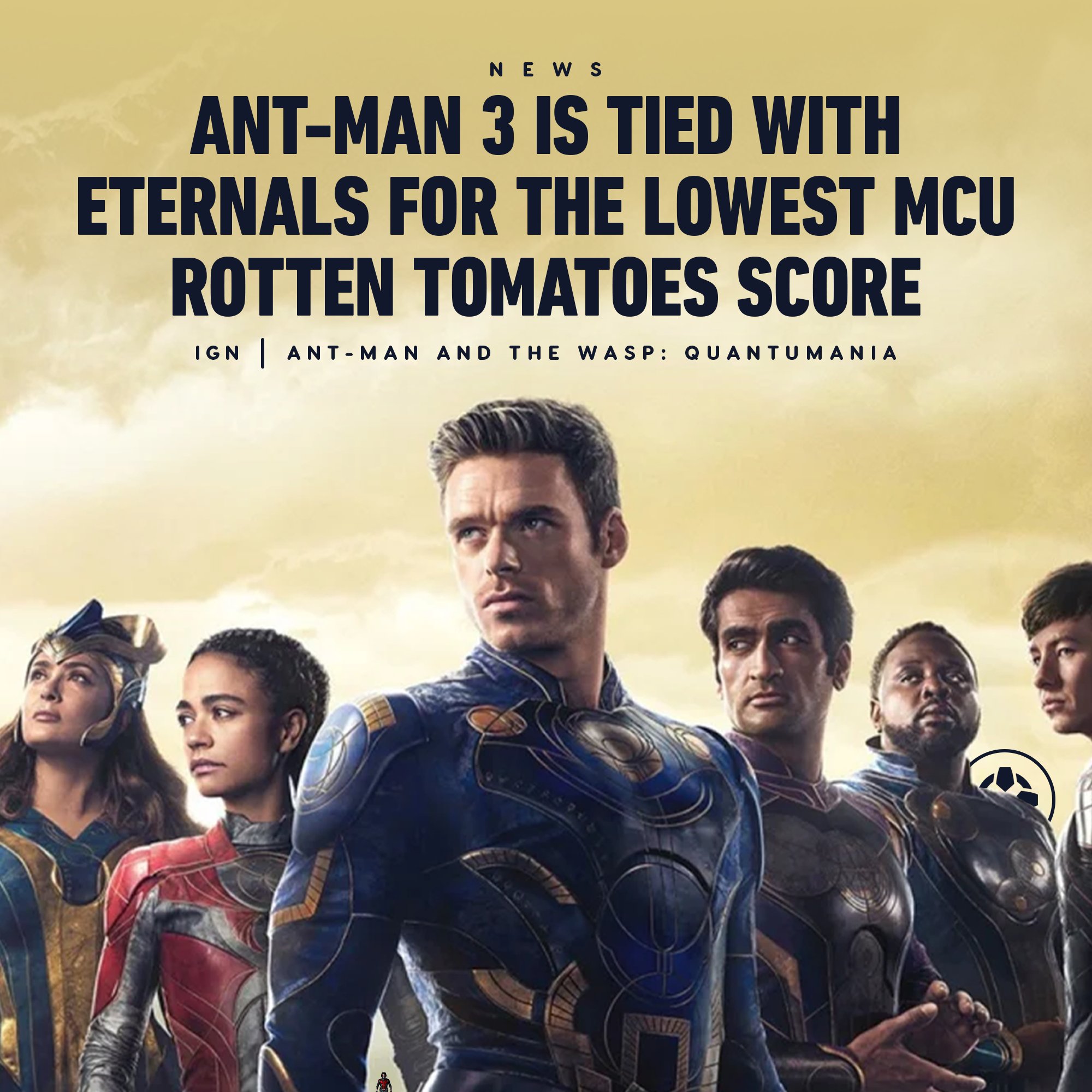
Ant-Man and the Wasp: Quantumania holds a "Rotten" rating on Rotten Tomatoes, with a final Tomatometer score of 46% based on critical reviews. This figure represents the aggregate percentage of positive professional critiques, reflecting a polarized reception that highlights a significant divide between the film’s visual ambition and its perceived narrative execution within the Marvel Cinematic Universe.
Understanding the Rotten Tomatoes Aggregation Model
To understand why the Ant-Man and the Wasp: Quantumania score landed where it did, one must first grasp the mechanics of the Rotten Tomatoes platform. Unlike a weighted average—where a 2/5 and a 5/5 might balance out—the Tomatometer is a binary system. Each critic provides a "Fresh" (positive) or "Rotten" (negative) designation. The final percentage represents the proportion of critics who gave the film a positive review.
When a high-profile blockbuster like a Marvel entry receives a 46% score, it implies that slightly less than half of the critics surveyed felt the film was "Fresh." In the case of this specific project, the reviews were often characterized by a dichotomy: high praise for the visual effects and Jonathan Majors' performance as Kang the Conqueror, countered by sharp criticism regarding the screenplay’s pacing, emotional weight, and the perceived "CGI-heavy" aesthetic of the Quantum Realm.
Historical Context and Expectations
Released in February 2023, the film served as the kickoff for Phase Five of the Marvel Cinematic Universe (MCU). Expectations were exceptionally high, not only because it was the third installment in the Ant-Man franchise but because it was positioned as the primary introduction to the multiverse-spanning antagonist who was intended to define the next several years of the franchise.
The critical discourse often focused on how the film transitioned from the smaller, heist-oriented stakes of the previous two Ant-Man entries into a grand, operatic space-fantasy. Critics who rated the film as "Rotten" frequently pointed to this tonal shift as a primary failure, suggesting that the film lost the "heart" and "humor" that made the first two movies unique in favor of standard franchise world-building. Conversely, those who provided "Fresh" ratings often appreciated the adventurous spirit and the world-building mechanics of the Quantum Realm, noting that it pushed the boundaries of what a solo superhero film could attempt in terms of scale.
Critical Metrics: A Comparative Breakdown
The following table provides a breakdown of how the film compares to other entries within the broader Ant-Man and MCU ecosystem. This allows for a clearer view of the critical landscape at the time of release.
| Film Title | Release Year | Rotten Tomatoes Score |
|---|---|---|
| Ant-Man | 2015 | 83% |
| Ant-Man and the Wasp | 2018 | 87% |
| Ant-Man and the Wasp: Quantumania | 2023 | 46% |
| MCU Phase 5 Average (Approx.) | 2023-2024 | 60-65% |
The drop from the mid-80s percentage range of the first two films to the mid-40s for the third installment represents one of the most significant statistical dips for a single Marvel franchise. This data point became a focal point in industry discussions regarding "superhero fatigue" and the challenges of maintaining consistency across a decades-long cinematic project.
Analyzing the Professional Critique
Critics who analyzed the film generally coalesced around three specific pillars of discourse: the script, the visual palette, and the antagonist.
The Narrative Framework
A recurring theme in the negative reviews was the "over-stuffed" nature of the screenplay. Critics often noted that the film was tasked with too many objectives: resolving the Ant-Man family arc, introducing the Quantum Realm, and establishing the threat of Kang. Many reviewers argued that this led to character development being sacrificed for exposition. The consensus among those who gave it a negative score was that the film felt less like a complete, self-contained story and more like a necessary bridge for future content.
The Quantum Realm Aesthetic
Visually, the film was a massive departure from the grounded, real-world locations of the previous films. Because the vast majority of the movie takes place inside a CGI-generated landscape, critics were divided on the execution. Some hailed the vibrant, alien designs as a creative high point for the MCU, while others characterized the heavy reliance on digital volume stages as "visual noise" that lacked the tactile reality of traditional filmmaking.
The Performance of Kang
Jonathan Majors’ portrayal of Kang was the most universally praised element of the film. Even among critics who awarded the film a "Rotten" rating, there was significant acknowledgment of his commanding presence. This creates an interesting nuance in the data; a film can have a "Rotten" score while still containing elements that critics highly recommend. The score is a measure of the whole, not a lack of quality in the individual components.
Audience Reception vs. Critical Consensus
It is essential to distinguish between the critic-sourced Tomatometer and the Audience Score. While the critical score settled at 46%, the Audience Score—which is verified based on ticket purchases—generally trended higher, often hovering in the 80% range.
This gap is common in major franchise cinema. Critics often evaluate films based on craft, originality, and narrative coherence, whereas general audiences often evaluate them based on entertainment value, the resolution of fan expectations, and the "fun" factor of the genre. The disparity in this specific case highlights how different stakeholders approach film evaluation. For a viewer deciding whether to watch the movie in 2026, the 46% score serves as a warning of mixed narrative quality, while the higher audience score may suggest that the film remains a satisfying "popcorn" experience for fans of the genre.
Addressing Common Questions
To better understand the role of the film's score in the current media landscape, it is helpful to look at the following frequently asked questions.
Does the Rotten Tomatoes score impact the film’s place in the MCU timeline?
No. Despite the critical reception, the events of the film are canonically set and remain pivotal to the understanding of the Multiverse Saga. Skipping the film would leave a narrative void in the overarching story of the MCU.
Should I trust the critical consensus or the audience score?
The ideal approach is to utilize both. The critics help identify potential flaws in writing or pacing, while the audience score helps determine if the film delivers on the promises of the genre. If you prioritize character-driven dramas, the critics' consensus may be more aligned with your tastes. If you enjoy world-building and franchise spectacles, the audience score might be more relevant.
Is the score a reflection of "Superhero Fatigue"?
Many analysts have argued that the reception of this film was a bellwether for a broader shift in how critics receive superhero content. The score is not necessarily an indictment of the character of Ant-Man, but rather a reflection of a critical environment that had grown more stringent toward high-budget, interconnected franchise films.
Why was the score so much lower than the previous Ant-Man films?
The shift from a "heist/comedy" genre to a "space opera" genre alienated critics who preferred the smaller scale of the first two films. The expectation for a more grounded, funny, and intimate story was not met by the grander scope of the third film, leading to a disconnect between expectation and product.
The Legacy of the Score in 2026
In 2026, looking back at the reception of the film, it serves as a case study in how franchise management affects critical perception. The "Rotten" label does not mean the film is unwatchable, but rather that it occupies a contested space in pop culture history. It stands as a reminder of the risks involved when shifting the tone of a established, successful franchise.
Whether one views the film as a brave expansion of the MCU or a stumble in the franchise’s quality control, the 46% rating provides a baseline for evaluating the film’s specific brand of storytelling. When preparing to watch the film, manage expectations by recognizing it as a transitional piece of work rather than a standalone comedy-heist entry. By focusing on the visual spectacle and the introduction of its central villain, you can appreciate the work’s contributions to the universe while acknowledging the valid criticisms regarding its narrative pacing.
Final Recommendation for Viewers
If you are currently deciding whether to engage with this film, approach it as a visual expansion of the MCU. Do not go in expecting the same grounded humor or tight, self-contained narrative of the first Ant-Man. Instead, view it as a high-concept sci-fi adventure that serves primarily to set the stage for subsequent MCU entries. If you find the pacing slow or the exposition heavy, you are experiencing exactly what the 46% of critics who rated it "Rotten" were identifying; if you find the world-building engaging, you align with the viewers who saw the creative ambition behind the digital-heavy production.