Animal experiments in space involve launching biological specimens into suborbital and orbital environments to evaluate the physiological, genetic, and behavioral impacts of microgravity and cosmic radiation. Modern space animal research primarily utilizes model organisms like mice, fruit flies, and nematodes aboard orbiting laboratories to develop countermeasures for human spaceflight and terrestrial medical applications.
The Evolution of Animals in Spaceflight Research
The history of biological spaceflight spans nearly eight decades, evolving from early survival testing to sophisticated molecular biology studies. Before human spaceflight was feasible, researchers used live animals to establish whether vertebrate organisms could survive the high acceleration forces of launch, the weightlessness of microgravity, and exposure to unfiltered cosmic radiation.
| Year / Period | Chronology of Space Biology Milestones |
|---|---|
| 1947 | First animals in space (Fruit flies launched via V-2 rocket) |
| 1949 | First mammal in space (Albert II, Rhesus macaque) |
| 1957 | First orbital animal flight (Laika aboard Sputnik 2) |
| 1960 | First orbital return with survivors (Belka & Strelka) |
| 1961 | Operational task testing (Ham the Chimp, Mercury-Redstone) |
| 1970s–1990s | Specialized platforms (Bion satellites, Spacelab missions) |
| 2000s–Present | Model organism genetics on the ISS (Rodent Research/MHU) |
Early Suborbital and Orbital Pioneers (1947–1960s)
The earliest bio-astronautic experiments began in 1947 when the United States launched fruit flies (Drosophila melanogaster) aboard V-2 rockets to analyze cosmic radiation exposure at extreme altitudes. In June 1949, a rhesus macaque named Albert II became the first mammal to cross the Karman line (100 kilometers altitude), providing initial telemetry on vertebrate cardiovascular response during suborbital flight.
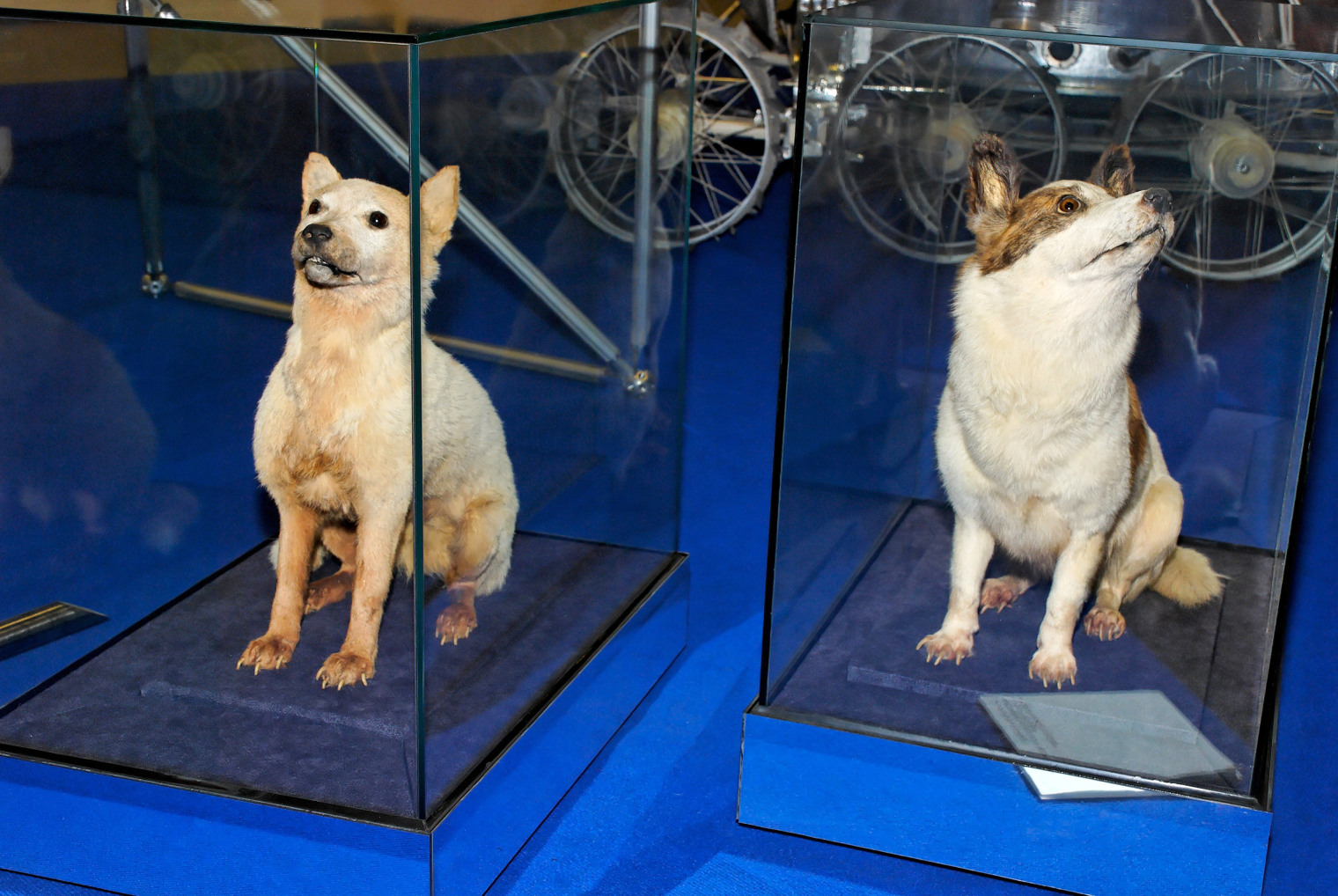
The Soviet space program launched the canine test subject Laika aboard Sputnik 2 in November 1957, establishing the first recorded orbital flight of a living mammal. Although Sputnik 2 lacked de-orbit and recovery systems, the mission provided vital telemetry confirming that higher mammals could withstand sustained orbital insertion. By August 1960, the Soviet Korabl-Sputnik 2 (Sputnik 5) mission successfully returned two dogs, Belka and Strelka, alongside mice, insects, and plants, demonstrating that physiological recovery from orbital flight was attainable.
During NASA's Mercury project, non-human primates verified environmental control systems and cognitive performance under acceleration and weightlessness. Ham the Chimp's suborbital flight in January 1961 demonstrated that motor skills and reaction times remained functional during microgravity, paving the way for Alan Shepard's crewed flight months later. In November 1961, Enos the chimpanzee completed two full orbits, confirming that life-support systems were capable of sustaining human crews during prolonged space missions.
Transition to Microgravity Model Organisms (1970s–Present)
As crewed spaceflight became routine, space biology shifted focus from baseline survival to understanding fundamental physiological systems. The Soviet Union's Bion program (Biosatellite), launched in 1973 in collaboration with international scientific agencies, utilized dedicated automated capsules to conduct physiological studies on rats, amphibians, and non-human primates.
With the operation of NASA's Space Shuttle and its integrated Spacelab modules, researchers introduced standardized rodent and invertebrate research facilities. These missions established that microgravity induces systemic biological altered states, including rapid bone mineral density loss, skeletal muscle atrophy, and immune dysregulation.
In the current era of space station operations, research on large animals has been phased out entirely by space agencies such as NASA, the European Space Agency (ESA), and the Japan Aerospace Exploration Agency (JAXA). Modern space animal experiments rely exclusively on small model organisms:
- Mice (Mus musculus) and Rats (Rattus norvegicus): Essential for mammalian mammalian physiological, genomic, and metabolic research.
- Nematodes (Caenorhabditis elegans): Utilized for studying neuromuscular decay, cellular aging, and multi-generational genetic adaptations.
- Fruit Flies (Drosophila melanogaster): Used to evaluate immune system expression, cardiovascular function, and circadian rhythm alterations.
- Zebrafish (Danio rerio) and Medaka (Oryzias latipes): Employed for bone remodeling and tissue regeneration research due to their transparent embryos and rapid development.
Primary Scientific Objectives of Spaceflight Animal Research
Space microgravity and radiation present environmental stressors distinct from any terrestrial analog. Animal models allow researchers to isolate specific physiological systems, control environmental variables, and obtain tissues for molecular profiling.
- SPACEFLIGHT SYSTEMIC STRESS
- Mechanical Unloading
- Bone Loss & Muscle Atrophy
- Fluid Shift & Redistribution
- Cardiovascular Remodeling
- Deep-Space Radiation
- DNA Damage & Immune Decay
- Mechanical Unloading
Musculoskeletal Degradation and Microgravity
In weightlessness, structural bones and skeletal muscles no longer bear mechanical loads. This mechanical unloading leads to accelerated osteopenia (bone loss) and sarcopenia (muscle loss).
Mice aboard the International Space Station (ISS) experience cancellous bone density degradation at rates up to ten times higher than human osteoporosis patients, losing 1 to 2 percent of bone mass per month. Research demonstrates that osteoclasts (bone-resorbing cells) increase their activity, while osteoblasts (bone-forming cells) show suppressed gene expression.
Simultaneously, postural skeletal muscle fibers—particularly slow-twitch muscle groups like the soleus—undergo rapid atrophy and shift toward fast-twitch oxidative profiles. NASA’s Rodent Research studies have utilized mouse models to test therapeutic interventions, including myostatin inhibitors and sclerostin-neutralizing antibodies. These treatments show promise for mitigating microgravity-induced bone and muscle loss while providing data for terrestrial clinical treatments for bedridden patients and elderly populations suffering from age-related frailty. Detailed findings on microgravity-induced bone loss are documented in studies accessible through the National Center for Biotechnology Information (NCBI).
Cardiovascular Remodeling and Fluid Shifts
Microgravity alters fluid dynamics by eliminating the hydrostatic pressure gradient present under Earth's gravity. Fluid shifts cephalad (toward the head), producing acute increases in central blood volume and intracranial pressure.
Animal research has provided insights into vascular remodeling in response to these fluid shifts. Arteries in the upper body experience elevated structural pressure, leading to smooth muscle hypertrophy, while vessels in the lower limbs undergo hypotrophic remodeling due to reduced workload. Studies using rodent and teleost fish models on the ISS show that long-duration spaceflight alters vascular tone control, increases arterial stiffness, and induces cardiac structural remodeling, characterized by left ventricular mass reduction.
Deep-Space Cosmic Radiation and Genomic Integrity
Outside the protective envelope of Earth's atmosphere and magnetosphere, biological tissues are exposed to high-energy solar particle events (SPE) and Galactic Cosmic Rays (GCR), consisting of high-Z and high-energy particles (HZE ions).
Animal models are critical for measuring the mutagenic risks of cosmic radiation. Experiments evaluating tissue samples from space-flown mice reveal increased levels of double-stranded DNA breaks, elevated oxidative stress markers, and accelerated telomere attrition. Furthermore, rodent models subjected to simulated space radiation at terrestrial accelerator facilities—such as the NASA Space Radiation Laboratory—demonstrate persistent neurological deficits, neuroinflammation, and altered synaptic plasticity in hippocampal structures, informing risk assessments for long-duration interplanetary missions.
Neurological, Behavioral, and Reproductive Physiology
Spaceflight environments combine operational noise, altered light-dark cycles, hyper-gravity launch stress, microgravity, and confinement. Research on model organisms helps disentangle how these factors interact to alter neurobiology and behavior.
- Circadian Rhythms: Studies on Drosophila and rodents demonstrate that microgravity disruption of circadian clock genes (Clock, Bmal1) leads to metabolic dysregulation, altered immune signaling, and altered sleep architecture.
- Neuro-Vascular Unit: Mouse models flown on the ISS show changes in the integrity of the blood-brain barrier, which may contribute to systemic neuro-inflammatory responses observed after spaceflight.
- Reproduction and Development: Multi-generational studies conducted aboard orbital platforms evaluate whether mammals can mate, conceive, and undergo normal embryonic development in microgravity. While amphibian, fish, and invertebrate species have successfully reproduced in orbit, mammalian reproductive experiments reveal challenges: mouse embryos cultured in microgravity display altered blastocyst formation rates, and male rodents show temporary germ cell apoptosis and reduced sperm motility.
Experimental Hardware Facilities on the ISS
Conducting animal research in microgravity requires specialized life-support hardware capable of maintaining strict bio-containment, automated environmental control, waste management, and real-time telemetry output.
NASA Rodent Research Hardware System
The NASA Rodent Research Hardware System is a standardized payload facility integrated into the ISS Express Racks. It consists of three primary modules:
- Transporter Module: Maintains rodents during transit aboard cargo spacecraft (e.g., SpaceX Dragon) with regulated air flow, food bars, and water delivery systems.
- Habitat Module: Houses up to 10 mice or 6 rats per unit aboard the ISS, featuring controlled day/night light cycles, automated waste collection through negative pressure airflow, and video monitoring systems.
- Animal Access Unit: Allows crew members to perform operational protocols, health checks, tissue sampling, or therapeutic injections within a HEPA-filtered biocontainment environment.
Data collected via this hardware is accessible through NASA's Open Science Data Repository, providing open-access genomic, transcriptomic, and phenotypic datasets for research worldwide.
JAXA Mouse Habitat Unit (MHU) and Cell Biology Experiment Facility (CBEF)
The Japan Aerospace Exploration Agency operates the Mouse Habitat Unit (MHU) within the Kibo module. The MHU features an internal centrifuge capable of producing artificial gravity ranging from 0.0g to 1.0g while in orbit.
- JAXA MHU ARTIFICIAL GRAVITY EXPERIMENTAL DESIGN
- ISS MICROGRAVITY ENVIRONMENT
- Microgravity Control Group (0.0g Space Effects)
- Centrifuge Group (1.0g) (Isolated Weightless Stress Control)
- Comparative Molecular & Tissue Analysis
- ISS MICROGRAVITY ENVIRONMENT
By comparing mice housed in the 0g microgravity compartment with mice exposed to 1.0g artificial gravity aboard the same space station centrifuge, researchers can isolate the effects of weightlessness from confounding spaceflight stressors such as launch acceleration, radiation, background noise, and altered gas concentrations.
Comparative Summary of Spaceflight Animal Research Platforms
The table below summarizes the key operational characteristics, capabilities, and target scientific domains of animal research hardware utilized in modern spaceflight.
| Research Hardware Platform | Operating Agency / Partner | Target Model Organism(s) | Environmental Controls & Features | Primary Research Applications |
|---|---|---|---|---|
| Rodent Research System (RRS) | NASA / CASIS | Mice (Mus musculus), Rats (Rattus norvegicus) | Automated airflow, light/dark cycles, waste filtration, internal video monitoring | Musculoskeletal atrophy, immunology, vascular biology, drug testing |
| Mouse Habitat Unit (MHU) | JAXA | Mice (Mus musculus) | Integrated centrifuge for artificial gravity control (0.0g to 1.0g) | Disentangling microgravity effects from space radiation and orbital stressors |
| Cell Biology Experiment Facility (CBEF) | JAXA | Invertebrates, Cell Cultures, Small Fish | Precise temperature control, humidity control, micro-g and 1.0g centrifuges | Cellular differentiation, developmental biology, gene expression |
| Aquatic Habitat (AQH) | JAXA / ESA | Zebrafish (Danio rerio), Medaka (Oryzias latipes) | Closed-loop water circulation, automatic feeding, day/night lighting, LED monitoring | Bone tissue remodeling, muscle degeneration, neurobiology |
| Ice Cube / Experiment Units | ESA / Commercial | Nematodes (C. elegans), Tardigrades | Automated fluidic injection, micro-channel monitoring, optical recording | Aging mechanisms, extreme survival limits, genetic repair pathways |
| Advanced Biological Capsule (Bion-M) | Roscosmos / International | Mice, Reptiles, Microorganisms | Autonomous satellite platform, specialized life support for up to 30 days orbit | Deep-space radiation interaction, high-g entry physiological impacts |
Ethical Standards, Regulatory Frameworks, and the 3Rs Principle
Animal experiments in space are subject to strict ethical oversight, regulatory frameworks, and standard operating procedures designed to prioritize animal welfare while maximizing scientific yield.
Institutional Animal Care and Use Committee (IACUC) Oversight
All space biology experiments involving vertebrate animals must receive formal approval from an Institutional Animal Care and Use Committee (IACUC) prior to payload development. Agency protocols—such as those published in the NASA Principles for the Care and Use of Animals—require detailed justification for using vertebrate species, explicit definitions of humane endpoints, and complete minimization of pain or distress during launch, orbital operations, and recovery.
Key regulatory steps include:
- Pre-Flight Protocol Review: Evaluation of housing parameters, diet formulations, environmental enrichment, and telemetry gathering methods.
- Environmental Validation Testing: Ensuring baseline noise, vibration, and acceleration profiles do not exceed established stress thresholds.
- Crew Training: Training astronauts in low-gravity handling techniques, anesthesia administration, and humane euthanasia protocols to prevent distress in microgravity conditions.
Application of the 3Rs: Replacement, Reduction, and Refinement
Space research programs strictly apply the internationally recognized 3Rs Framework:
- Replacement: Researchers are required to utilize non-animal alternatives—such as organ-on-a-chip microfluidic devices, 3D cell culture models, and computational simulations—wherever scientifically feasible. Vertebrate models are approved only when systemic organ interactions must be evaluated.
- Reduction: To minimize the total number of animals flown, space agencies utilize tissue-sharing programs. Following a single mission, preserved tissues (e.g., bones, cardiac muscle, brain, liver, blood) are distributed among multiple independent global research teams to maximize data extraction per animal.
- Refinement: Experimental designs continuously undergo refinement. Housing facilities aboard spacecraft feature custom bio-containment features, smooth internal surfaces to prevent injury during unexpected acceleration, specialized food bars designed for microgravity feeding, and automated telemetry systems that reduce human intervention.
Frequently Asked Questions
Are large animals like dogs or monkeys still sent into space?
No. Space agencies including NASA, ESA, JAXA, and Roscosmos long ago discontinued the use of non-human primates, dogs, and cats in spaceflight research. Modern biological research in space focuses exclusively on small model organisms—primarily mice, fruit flies, nematodes, and small teleost fish—which offer well-characterized genomic profiles, smaller payload volumes, and rapid life cycles.
What happens to mice aboard the International Space Station?
Mice launched to the ISS live in controlled habitat units featuring regulated light cycles, filtered airflow, special food bars, and liquid nutrient dispensers accessible in weightlessness. Crew members perform routine health checks, cage maintenance, and experimental protocols. At designated mission endpoints, animals are either humanely euthanized for immediate tissue preservation in microgravity or returned to Earth alive via cargo capsules for post-flight recovery analysis.
How do animals behave in microgravity?
When first introduced to microgravity, animals display initial disorientation. Within several days, mice adapt to their weightless environment, using cage walls to push off, groom, and navigate their habitat comfortably. Video monitoring aboard the ISS shows that rodents adjust their motor patterns to use microgravity for locomotion, moving efficiently throughout their enclosures.
How does space animal research benefit human health on Earth?
Because spaceflight accelerates physiological processes like bone loss, muscle wasting, and immune decay, studying animal models in microgravity enables researchers to observe degenerative pathways much faster than on Earth. Insights gained from testing therapeutics in space contribute directly to treatments for terrestrial conditions, including osteoporosis, sarcopenia, muscular dystrophy, autoimmune disorders, and cardiovascular disease.
Practical Resources and Next Steps
For researchers, educators, and students seeking to explore space animal research data or participate in space biology initiatives, the following resources provide open-access research tools:
- NASA Open Science Data Repository (OSDR): Access open datasets spanning transcriptomics, proteomics, epigenetics, and histology from past flight payloads (including Rodent Research missions).
- NASA Space Life Sciences Data Archive (LSDA): Review historical mission logs, physiological telemetry, and hardware specifications from early bio-astronautic programs to present-day ISS experiments.
- European Space Agency (ESA) Life Sciences Database: Examine experimental parameters and results from European biological payloads, including C. elegans and aquatic research platforms.
- Space Biology Grant Opportunities: Academic researchers can review funding calls published via NASA Solicitations and Proposal Integrated Review and Evaluation System (NSPIRES) or ESA's Open Space Innovation Platform (OSIP) for microgravity research access.