Evaluating cloud security risks is now a critical prerequisite for equity analysts, venture capitalists, private equity firms, and institutional investors. Unmitigated cloud vulnerabilities can lead to catastrophic data breaches, severe regulatory penalties, immediate stock price devaluation, and lasting brand erosion. To accurately price risk and evaluate long-term enterprise valuation, investors must look beyond top-line SaaS growth metrics and systematically assess a target company's cloud security posture, compliance obligations, and operational resilience.
Why Cloud Security is a Material Financial Risk
For decades, technology due diligence focused primarily on software architecture scalability, intellectual property ownership, and technical debt. As public cloud adoption has become standard across mid-market and enterprise firms, cloud security has shifted from an operational IT matter to a material financial risk.
When a public or private company suffers a major cloud security compromise, the operational and financial fallout can impair enterprise value across multiple vectors:
- Direct Financial Losses: Expenses associated with immediate breach containment, forensic investigation, legal defense, ransom payouts, and customer credit monitoring services.
- Regulatory Penalties and Enforcement: Heightened enforcement by international regulators—such as the U.S. Securities and Exchange Commission (SEC), European Union Data Protection Authorities under GDPR, and financial regulators enforcing the EU Digital Operational Resilience Act (DORA)—can result in fines reaching up to 4% of global annual turnover or millions in statutory sanctions.
- Valuation Haircuts and Deal Disruptions: In mergers and acquisitions (M&A), unaddressed cyber vulnerabilities discovered during due diligence regularly trigger purchase price adjustments, indemnification demands, escrow withholdings, or complete deal collapse.
- Reputational Damage and Customer Churn: Data breaches destroy customer trust, leading to increased churn rates, delayed sales cycles, and discounting pressures that directly erode long-term earnings before interest, taxes, depreciation, and amortization (EBITDA) margins.
- Material Financial Impact Path:
- Cloud Vulnerability / Misconfiguration
- Unsanctioned Access & Data Exfiltration
- Regulatory Fines & SEC Disclosure Mandates
- Customer Churn & Revenue Contraction
- Remediation, Forensic & Legal Costs
- Multiple Contraction & Valuation Reduction
Regulatory frameworks treat cybersecurity oversight as a core fiduciary responsibility. For instance, the SEC rules on cybersecurity risk management, strategy, governance, and incident disclosure require public reporting companies to disclose material cybersecurity incidents on Form 8-K within four business days of determining materiality. Companies must also provide annual disclosures regarding their cybersecurity risk assessment and management processes on Form 10-K. Investors must understand how target entities identify, quantify, and govern these risks to prevent unexpected capital losses.
Primary Cloud Security Vulnerabilities Disrupting Business Value
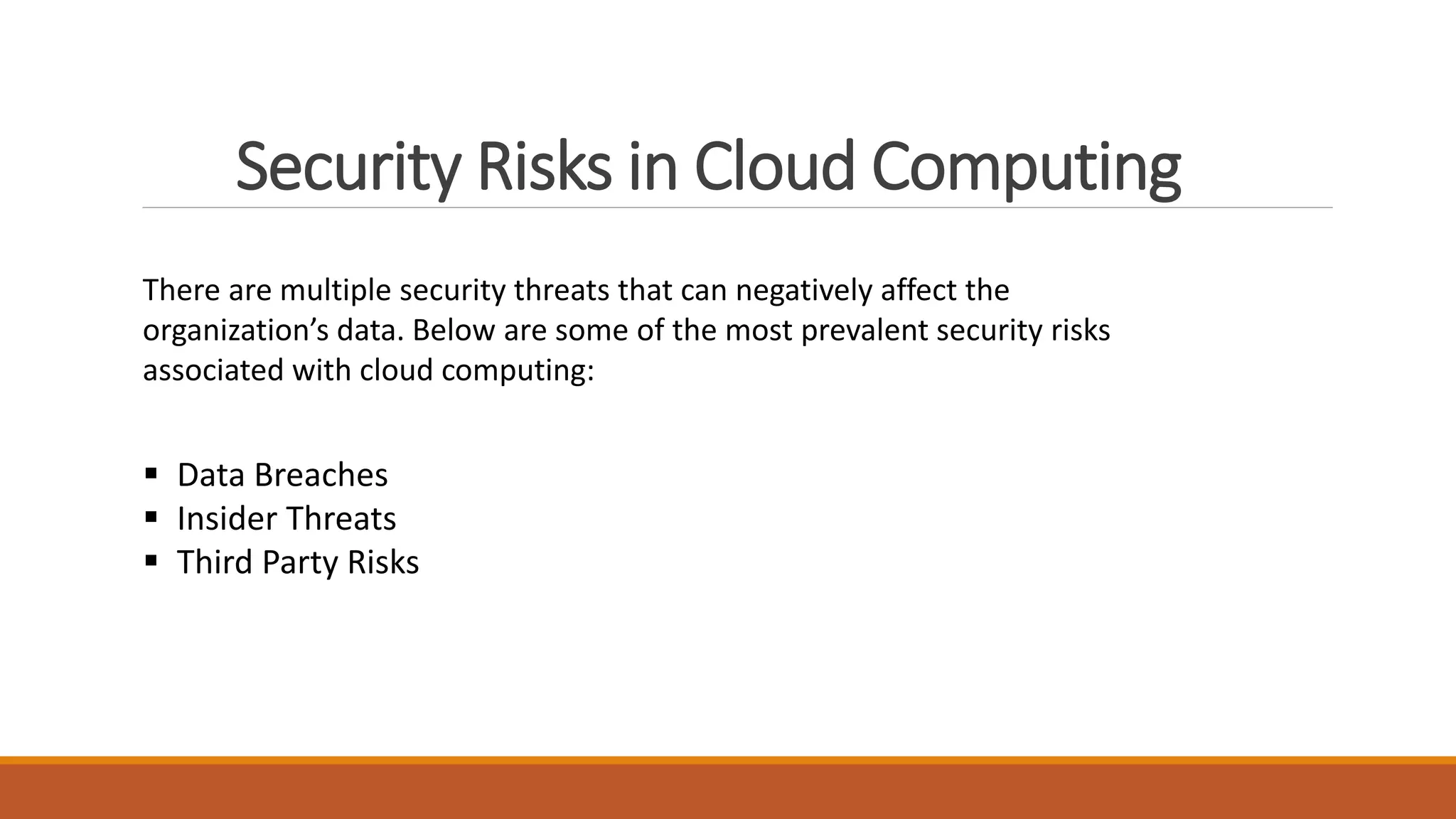
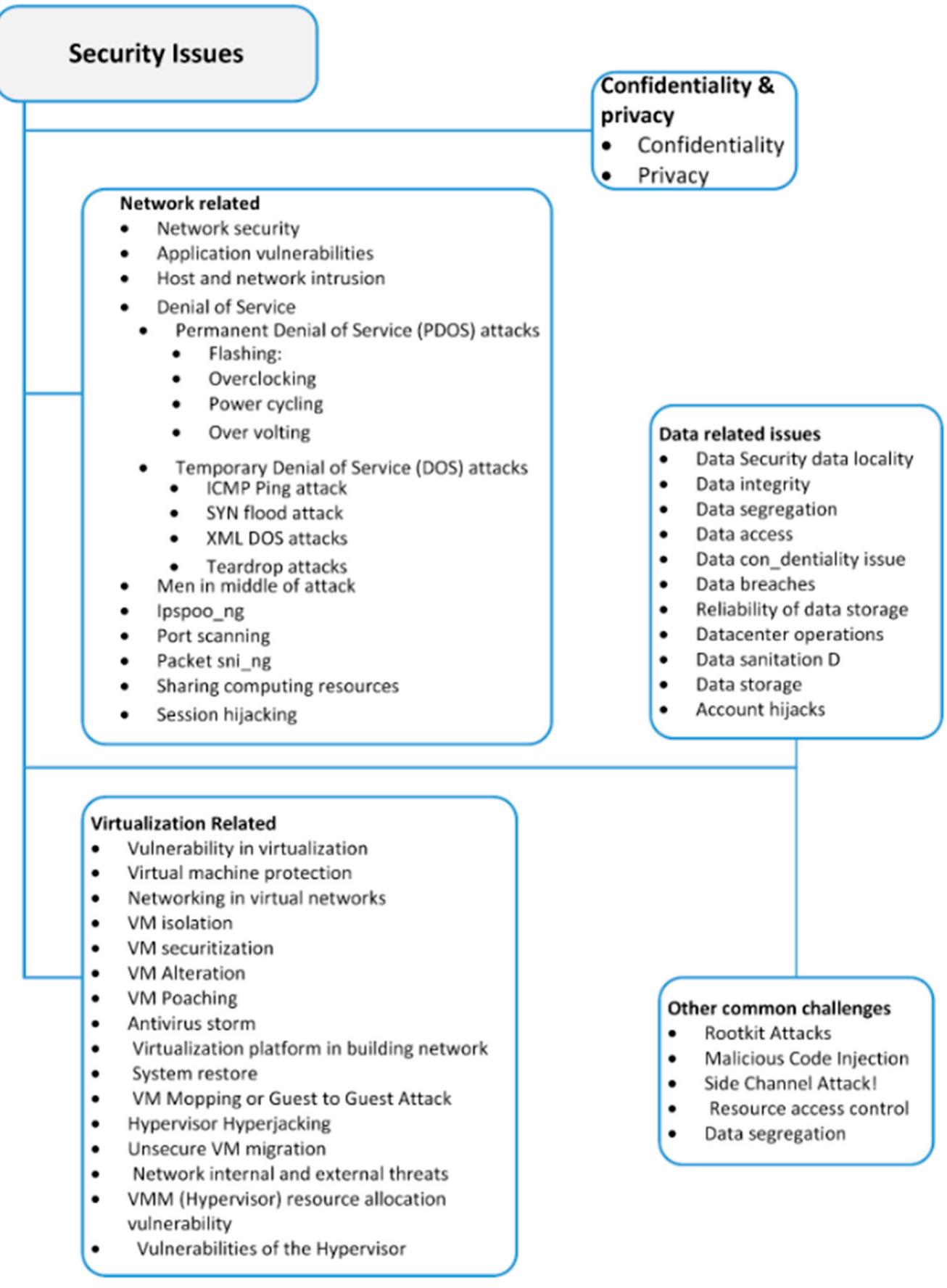
Cloud computing environments differ fundamentally from legacy on-premises data centers. Public cloud infrastructure relies on dynamic, highly interconnected, software-defined perimeters. While this architecture provides unmatched elasticity, it creates specific threat vectors that investors must evaluate during valuation models.
1. Identity and Access Management (IAM) Failures
Identity has replaced the traditional network perimeter in cloud environments. Misconfigured Identity and Access Management (IAM) policies remain the single most frequent cause of cloud security incidents. Common structural defects include over-privileged user accounts, failure to enforce multi-factor authentication (MFA) across all administrative endpoints, hardcoded API keys in source code repositories, and stale credentials left active after employee offboarding.
When an attacker compromises a privileged IAM identity, they bypass traditional firewall defenses, gaining lateral access to underlying object storage buckets, production databases, and serverless application functions.
2. Cloud Misconfigurations and Asset Invisibility
Cloud environments allow developers to spin up databases, storage buckets, and virtual machines in seconds. Without automated cloud governance, this velocity leads to shadow IT, unmanaged cloud assets, and simple configuration errors.
Examples of value-threatening misconfigurations include leaving cloud storage repositories publicly accessible without authentication, failing to encrypt sensitive data at rest using customer-managed encryption keys (CMEK), and configuring overly permissive Security Groups or Network Access Control Lists (NACLs).
3. Supply Chain Vulnerabilities and Hyperscaler Dependency
Modern cloud applications heavily depend on third-party software-as-a-service (SaaS) integrations, open-source libraries, and container registries. A vulnerability in a third-party dependency can grant attackers unauthorized entry into a target company's primary cloud tenant.
Furthermore, cloud concentration risk—over-reliance on a single Cloud Service Provider (CSP) such as Amazon Web Services (AWS), Microsoft Azure, or Google Cloud Platform (GCP)—exposes enterprises to systemic cloud outages. If a core availability zone or centralized identity service experiences prolonged downtime, dependent businesses suffer operational paralysis and immediate revenue leakage.
4. API Exploitation and Interconnectivity Risks
Application Programming Interfaces (APIs) form the glue of cloud computing, enabling real-time communication between microservices, databases, and third-party applications. Unsecured or unmonitored APIs represent a major attack surface. Broken object-level authorization (BOLA), missing rate limits, and unauthenticated API endpoints allow malicious actors to scrape massive volumes of proprietary customer data directly from cloud infrastructure without triggering standard endpoint security alerts.
The Shared Responsibility Model: Mapping Investor Exposure
A frequent point of confusion during financial and technical due diligence is the allocation of security obligations between the cloud provider and the enterprise customer. Investors often assume that migrating workloads to top-tier providers like AWS, Azure, or GCP fully transfers security risk to the hyperscaler. This assumption is factually incorrect and exposes investment portfolios to significant unpriced risk.
Cloud computing operates under a strict Shared Responsibility Model. While the specific boundaries vary based on the service model—Infrastructure as a Service (IaaS), Platform as a Service (PaaS), or Software as a Service (SaaS)—the underlying principle remains constant:
- Security OF the Cloud: The cloud service provider assumes responsibility for protecting the physical infrastructure, host operating systems, virtualization software, physical data centers, and foundational networking infrastructure.
- Security IN the Cloud: The enterprise customer retains full responsibility for protecting its own data, configuring IAM policies, managing database access control, securing client-side and server-side code, maintaining operating system patches (in IaaS), and auditing network traffic configurations.
| Service Model | Managed by Cloud Provider | Managed by Enterprise |
|---|---|---|
| IaaS | Physical Hardware, Facility, Core Networking, Hypervisor | OS, Middleware, Runtime, Data, Applications, IAM, Encryption |
| PaaS | Hardware, Network, Facilities, Runtime Environment, OS | Applications, User Data, IAM, API Integrations, Configurations |
| SaaS | Application, Infrastructure, Physical Security, Middleware | User Access Control, Data Governance, Identity, Devices |
From an investor perspective, almost all material cloud breaches stem from failures in Security IN the Cloud. Consequently, target management teams cannot shift liability to their CSP when an incident occurs. Investors must audit the enterprise's internal cloud security operations rather than relying on the vendor's reputation.
Investor Framework for Cloud Security Due Diligence
To convert technical cloud security realities into actionable financial insights, investment teams require a structured due diligence framework. This framework evaluates quantitative metrics, regulatory compliance posture, operational maturity, and governance standards.
Core Metrics and Due Diligence Indicators
The following matrix outlines the primary security indicators investors should request and evaluate during technical due diligence, alongside their corresponding risk implications:
| Assessment Area | Key Metric / Document | Target Standard | Investment Risk / Red Flag |
|---|---|---|---|
| Independent Audits | SOC 2 Type II Report | Unqualified opinion covering Trust Services Criteria (Security, Availability, Confidentiality) with no major exceptions. | Absence of SOC 2 Type II, relying solely on SOC 2 Type I (point-in-time snapshot), or major audit exceptions noted by auditor. |
| Global Standards | ISO/IEC 27001 / ISO 27017 | Active certification covering cloud operations and data processing environments. | Expired certifications, narrow scope statements excluding core product environments, or reliance on self-assessments. |
| Government Compliance | FedRAMP / StateRAMP | Authorized status for solutions targeting public sector clients. | Prolonged "In-Process" status without clear authorization timelines, limiting total addressable market (TAM) expansion. |
| Mean Time to Detect / Respond | MTTD and MTTR | MTTD < 24 hours; MTTR < 48 hours for critical security incidents. | Lack of telemetry tracking, response times measured in weeks or months, or absence of 24/7 SOC coverage. |
| Patch & Vulnerability Management | Critical Patch Cadence | SLA requiring remediation of critical cloud vulnerabilities within 7–14 days. | Backlog of unpatched CVEs exceeding 30 days, manual deployment pipelines lacking automated scanning. |
| Data Protection & Key Governance | CMEK & Envelope Encryption | Customer-Managed Encryption Keys used for sensitive data stores; strict key rotation. | Unencrypted S3/Blob storage, default cloud provider keys shared across multi-tenant databases. |
| Third-Party Risk Management | Vendor Risk Scoring | Automated, continuous monitoring of third-party software supply chain risks. | Failure to audit external software dependencies; absence of Software Bill of Materials (SBOM). |
| Financial Risk Transfer | Cyber Insurance Coverage | Comprehensive policy including cloud outage, business interruption, regulatory defense, and ransomware. | Underinsured relative to enterprise value, high self-insured retention (deductible), or exclusions for cloud CSP outages. |
Targeted Due Diligence Questions for Target Executives
When interviewing Chief Information Security Officers (CISOs), Chief Technology Officers (CTOs), or executive leadership during deal negotiations, investors should pose targeted questions designed to uncover hidden operational risks:
- Architecture & Isolation: "How is customer data isolated in your multi-tenant cloud application, and how do you test for tenant-bleed vulnerabilities?"
- Configuration Management: "Do you deploy Cloud Security Posture Management (CSPM) and Infrastructure as Code (IaC) security scanning tools directly within your Continuous Integration/Continuous Deployment (CI/CD) pipelines?"
- Governance & Access Control: "What percentage of cloud environments are managed using Zero Trust Architecture (ZTA) principles, and how frequently are IAM roles subjected to automated least-privilege pruning?"
- Incident Response Preparedness: "When was your last third-party cloud penetration test and table-top exercise, and what specific remediation items from that report remain open today?"
- Regulatory Preparedness: "How do your cloud logging and retention policies align with the SEC's four-day incident reporting window and the operational resilience requirements under EU DORA?"
Evaluating Cloud Security as an Investment Catalyst
While cloud security issues present significant operational downside, they also create secular tailwinds for software sector investments. As enterprises migrate increasingly complex workloads to multi-cloud environments, enterprise spending on advanced cloud security tooling continues to outpace general IT budget growth.
Investors analyzing cybersecurity sector opportunities or evaluating target firms' competitive moats should identify companies capitalizing on key industry shifts:
Cloud Security Posture Management (CSPM) and DSPM
Legacy vulnerability scanners designed for static on-premises servers cannot process the dynamic nature of cloud environments. Capital is flowing rapidly into Cloud Security Posture Management (CSPM) and Data Security Posture Management (DSPM) platforms. These solutions offer continuous, real-time visibility into multi-cloud asset inventories, misconfiguration detection, compliance tracking, and automated remediation. Target software providers that integrate CSPM and DSPM capabilities into unified, single-pane-of-glass operational dashboards command higher valuation multiples due to high enterprise retention rates.
- Modern Cloud Security Architecture Taxonomy:
- CSPM / DSPM (Config & Data Posture)
- CWPP (Container & Workload)
- PEM / IAM (Entitlement & Access)
- CNAPP (Unified Cloud-Native Platform)
Shift Toward Cloud-Native Application Protection Platforms (CNAPP)
Enterprise buyers are actively consolidating point solutions into unified Cloud-Native Application Protection Platforms (CNAPPs). CNAPP aggregates CSPM, Cloud Workload Protection Platforms (CWPP), Cloud Infrastructure Entitlement Management (CIEM), and container security into a cohesive framework. Companies that provide comprehensive CNAPP platforms benefit from expanding net retention rates (NRR) and stronger operating leverage, making them attractive targets for technology growth investors and private equity buyouts.
Adoption of Zero Trust Architecture (ZTA)
The implicit trust model of traditional perimeter networks is obsolete. Zero Trust Architecture assumes that network perimeters are continually compromised. Under ZTA, every access request—whether originating inside or outside the organization's virtual private cloud—must be explicitly authenticated, authorized based on dynamic context, and encrypted end-to-end. Enterprise targets that demonstrate mature Zero Trust implementation show lower breach frequency and lower average costs per incident according to benchmark studies published by research institutions like the NIST Cybersecurity Framework.
Step-by-Step Risk Remediation Plan for Portfolio Companies
When a private equity or venture capital fund identifies material cloud security vulnerabilities in an existing portfolio company, immediate risk mitigation is necessary to protect invested capital. Operating partners and management teams should execute a phased remediation plan:
Phase 1: Baseline Audit and Asset Discovery (Days 1–30)
- Deploy automated CSPM tools across all active cloud accounts (AWS, Azure, GCP, private infrastructure) to map the attack surface.
- Enforce mandatory Multi-Factor Authentication (MFA) across all corporate identity providers (IdPs), code repositories, and cloud management consoles.
- Conduct an immediate audit of public-facing storage buckets, exposed administrative ports, and unauthenticated API endpoints.
Phase 2: IAM Least-Privilege Pruning (Days 31–60)
- Analyze historical usage logs to strip away unused permissions, administrative access rights, and stale service accounts.
- Transition from static, long-lived API access keys to short-term, dynamically generated credentials (e.g., using secret management solutions).
- Isolate production environments from development and staging accounts via strict cloud account boundary controls.
Phase 3: Infrastructure-as-Code (IaC) Integration (Days 61–90)
- Embed automated static code analysis into the developer CI/CD pipeline to detect infrastructure misconfigurations before deployment.
- Enforce customer-managed encryption (CMEK) standard operating procedures across all static and dynamic database assets.
- Formalize incident response runbooks tailored specifically to cloud-native incidents, including clear legal and regulatory disclosure protocols.
Frequently Asked Questions
How do SEC rules impact public target disclosures regarding cloud breaches?
The SEC mandates that public companies must disclose any material cybersecurity incident on Form 8-K within four business days of determining that the incident is material. Additionally, companies must detail their cybersecurity risk management processes and governance structures in their annual Form 10-K disclosures. For investors, this requirement increases operational transparency, making undisclosed breaches or weak governance a major legal and regulatory liability.
Can an enterprise fully outsource its cloud security risk to hyperscalers like AWS or Azure?
No. Under the Shared Responsibility Model, cloud providers only secure the underlying physical infrastructure, host operating systems, and virtualization layers. Enterprise customers retain full legal, regulatory, and operational responsibility for securing their own data, configuration settings, user identities, applications, and network routing within the cloud environment.
What is the difference between SOC 2 Type I and SOC 2 Type II reports during due diligence?
A SOC 2 Type I report evaluates the suitability of the design of a company's security controls at a single, specific point in time. A SOC 2 Type II report evaluates the operational effectiveness of those security controls over an extended monitoring period (typically 6 to 12 months). Investors should prioritize SOC 2 Type II reports, as they demonstrate sustained operational adherence to security standards.
How does cloud concentration risk impact private equity valuation models?
Over-reliance on a single cloud service provider without secondary backup regions or multi-cloud contingency architecture introduces single-point-of-failure risk. Prolonged outages at the primary CSP can halt revenue generation and breach SLA commitments, incurring contractual penalties. Value-at-risk (VaR) calculations should incorporate potential business interruption losses tied to CSP concentration.
What cloud security metrics provide the clearest view of operational maturity?
The most reliable indicators include Mean Time to Detect (MTTD), Mean Time to Respond (MTTR), percentage of cloud infrastructure configured via Infrastructure as Code (IaC) with automated security linting, patch management cadence for high/critical vulnerabilities, and the percentage of enterprise endpoints operated under strict Zero Trust access controls.
Practical Action Plan for Investment Committees
Evaluating cloud computing security issues should not be treated as a post-acquisition operational detail. It must be integrated directly into the deal structuring, investment committee presentations, and pre-signing due diligence phases.
- Mandate Specialized Cloud Security Audits: Standard financial and legal due diligence providers frequently miss deep cloud infrastructure configuration defects. Engage specialized technical advisory firms to perform dedicated cloud tenant reviews, architecture assessments, and code repository scans prior to deal execution.
- Adjust Valuation Models for Remediation Debt: If due diligence uncovers significant security debt—such as missing logging infrastructure, unencrypted databases, or non-compliant IAM frameworks—calculate the capital expenditure (CapEx) and operating expenditure (OpEx) required to remediate the posture. Deduct this cost directly from the enterprise value or reflect it in adjusted purchase multiples.
- Tie Security Metrics to Executive Compensation: Establish clear cybersecurity Key Performance Indicators (KPIs)—such as achieving SOC 2 Type II compliance, zero unpatched critical vulnerabilities, and continuous Zero Trust rollout—as milestone conditions for management earnouts and equity vesting schedules.
- Verify Adequate Cyber Insurance: Confirm that the target company holds robust corporate cyber liability insurance tailored for cloud deployments, ensuring that policy terms explicitly cover third-party CSP outages, business interruption, regulatory penalties, and incident remediation expenses.
Disclaimer: This article is designed solely for educational, analytical, and informational purposes and does not constitute financial, investment, accounting, or legal advice. Investors must conduct independent due diligence and consult with qualified legal counsel and certified cybersecurity specialists prior to executing capital transactions.