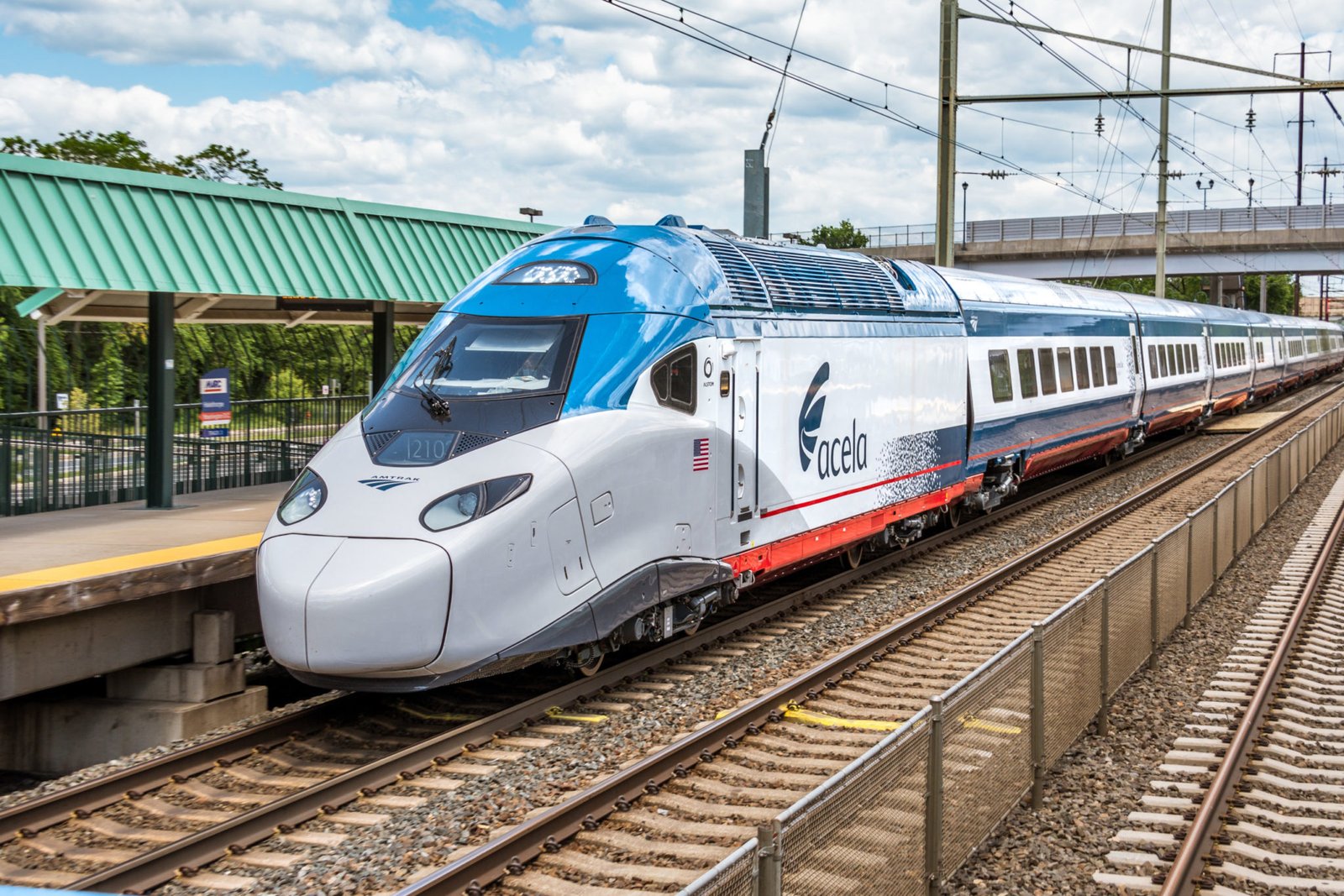
Amtrak electric locomotives serve as the high-speed, high-performance backbone of the Northeast Corridor (NEC) between Washington, D.C., and Boston. These heavy-duty traction units rely on overhead catenary wires—supplying 12kV or 25kV AC power—to move passengers across the most densely traveled rail line in the United States, utilizing advanced regenerative braking and rapid acceleration capabilities to maintain rigorous schedules.
The Operational Context of Electric Traction
The use of electric locomotives by Amtrak is not a universal system-wide strategy but rather a localized necessity dictated by the infrastructure of the Northeast Corridor. Unlike diesel-electric locomotives that carry their own fuel source and prime mover (an internal combustion engine), electric locomotives act as receivers for power delivered through external infrastructure.
This system requires a complex network of catenary wires suspended above the tracks. Amtrak manages a massive electrical distribution system that converts utility-grid power into the specialized frequencies and voltages required for train propulsion. The primary advantage of this setup is the massive power-to-weight ratio; electric motors can provide immediate torque, allowing heavy passenger trains to accelerate quickly after station stops, which is essential for maintaining the high-frequency service patterns observed in cities like Philadelphia, New York, and Newark.
Evolution of the Fleet: From AEM-7 to ACS-64
The history of Amtrak’s electric fleet is a study in technological transition. For decades, the Swedish-designed AEM-7, often nicknamed the "Toaster," was the workhorse of the corridor. These locomotives, introduced in the late 1970s, replaced aging GG1 locomotives and provided reliable, albeit limited, performance.
As of 2026, the fleet is dominated by the Siemens ACS-64, known officially as the Amtrak Cities Sprinter. Introduced to replace both the AEM-7 and the HHP-8, the ACS-64 represents a significant leap in safety and efficiency. These units are designed to operate at speeds up to 125 mph on standard sections of the NEC and are built to comply with stringent crashworthiness standards mandated by the Federal Railroad Administration (FRA). The transition to the ACS-64 marked a move toward standardized maintenance procedures, as the Siemens platform shares significant commonality with other commuter rail systems across the United States.
Technical Specifications and Operational Mechanics
Electric locomotives operate using traction motors—typically AC induction motors—that are powered by an onboard transformer and power electronics suite (inverters). The catenary wire delivers electricity via a pantograph, a rooftop-mounted frame that maintains constant contact with the wire.
Key technical aspects include:
- Voltage Flexibility: Modern units are designed to handle the various voltages found along the NEC, including 12kV 25Hz, 12kV 60Hz, and 25kV 60Hz segments.
- Regenerative Braking: When the locomotive slows down, the traction motors act as generators, feeding electricity back into the overhead catenary system. This not only reduces mechanical wear on brake shoes but also improves the overall energy efficiency of the rail network.
- Redundancy: Modern electric units are equipped with multiple inverter modules. If one module fails, the locomotive can often continue to operate at a reduced capacity, preventing significant delays.
Comparison of Amtrak Electric Traction Assets
| Locomotive Class | Primary Manufacturer | Introduction Era | Primary Role |
|---|---|---|---|
| AEM-7 | EMD/ASEA | Late 1970s | Retired (Legacy) |
| HHP-8 | Bombardier/Alstom | Late 1990s | Retired (Legacy) |
| ACS-64 | Siemens | 2013–Present | Northeast Corridor Service |
| Airo (Dual-Mode) | Siemens | 2024–Future | Replacement/Expansion |
Note: The table above reflects the progression of the primary electric fleet. The Siemens Airo trainsets are currently entering the service rotation to modernize Amtrak's passenger experience.
The Role of Dual-Mode Locomotives
While the core of the NEC is electrified, certain operations require locomotives to move beyond the reach of the catenary wires, most notably when entering Penn Station in New York City from non-electrified territory (such as through the Hudson River tunnels).
For these transitions, Amtrak utilizes dual-mode locomotives. These units are capable of operating in pure electric mode using the third rail or catenary and can switch to diesel-electric mode when external power is unavailable. This hybrid capability is critical for cross-river traffic where the ventilation of exhaust gases becomes a safety concern. The transition process is usually seamless for passengers, though it requires precise coordination by the engineer to raise/lower the pantograph or engage the diesel engine.
Infrastructure Maintenance and Constraints
The performance of Amtrak’s electric locomotives is inherently tethered to the health of the catenary system. Because much of the Northeast Corridor infrastructure dates back to the early 20th century, maintenance is a perpetual task. Problems such as wire sagging, insulator failure, or substation issues can force locomotives to operate at reduced speeds.
Furthermore, the "dead zones"—small gaps in the catenary where a locomotive may lose power for a split second—require sophisticated onboard computers to manage the power transition without causing a fault or stall. Troubleshooting these "power gaps" involves a combination of driver expertise, who must manage the train's momentum, and electrical engineers, who monitor the load-balancing of the entire corridor grid.
Future Outlook: The Next Generation
As of 2026, the focus has shifted toward the deployment of the Siemens Airo trainsets. These are designed to provide a more modular and energy-efficient experience. Unlike traditional locomotives pulling separate coaches, these trainsets distribute power and control systems throughout the consist. This design minimizes the need for heavy, high-maintenance locomotives and allows for faster turnaround times at terminal stations.
The shift toward these fixed trainsets reflects a broader trend in rail transportation toward lower maintenance overhead and higher reliability. However, the existing ACS-64 fleet will continue to play a vital role in hauling heavy long-distance trains that require more sustained horsepower than a typical regional set might provide.
Frequently Asked Questions
1. Why don't all Amtrak trains use electric locomotives? Electric locomotives require a continuous, expensive-to-build overhead power system called catenary. Building this infrastructure across the entire United States is economically unfeasible due to the vast distances and lower population densities in many regions. Consequently, Amtrak uses electric power only where density justifies the capital investment.
2. What happens if an electric locomotive loses power? If a locomotive loses power from the overhead wire, it will naturally coast. Modern units have backup batteries for essential systems like lighting, communication, and emergency braking. If a complete failure occurs, a diesel "rescue" locomotive is dispatched to tow the train to the nearest station.
3. Are electric locomotives faster than diesel locomotives? Generally, yes. Electric locomotives provide higher continuous horsepower and better acceleration. Their ability to draw power from the grid means they are not limited by the size of the fuel tank or the output of an onboard engine, allowing for higher speeds and quicker recovery from station stops.
4. What is the difference between a pantograph and a third rail? A pantograph is an articulated framework on the roof of the locomotive that collects power from overhead wires. A third rail is a grounded power supply located on the ground next to the running rails. Amtrak primarily uses overhead catenary on the NEC, while the third rail is used in specific tunnel approaches like those leading into New York Penn Station.
5. How are Amtrak locomotives environmentally friendly? Electric locomotives emit zero emissions at the point of use. Their environmental impact depends on the generation mix of the power grid. By using energy-efficient traction motors and regenerative braking, these locomotives reduce the net energy consumption per passenger mile compared to diesel-powered transport.
Recommendation for Travelers
If you are planning to travel along the Northeast Corridor, understand that the "electric" nature of your train is a hallmark of the region's high-speed capabilities. Passengers interested in the mechanical side of the trip may note that the ACS-64 units are exceptionally quiet compared to the older locomotives of the past. To ensure the most reliable journey, monitor Amtrak’s official service alerts, as overhead power issues—while rare—can occasionally impact schedules. When choosing between Acela and Northeast Regional services, remember that both utilize these electric power platforms, ensuring a consistent and rapid transit experience regardless of the ticket class.