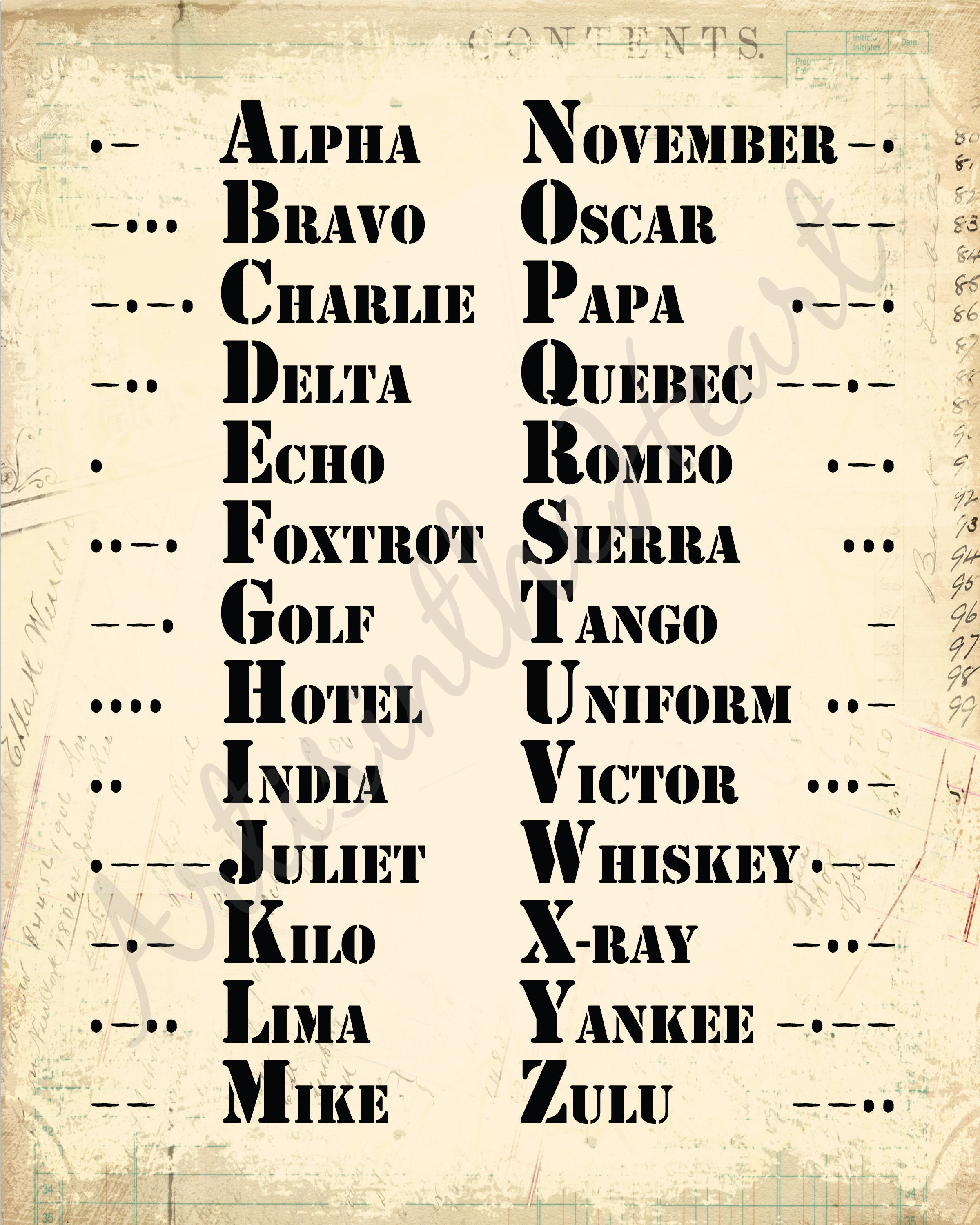
The NATO phonetic alphabet, often recognized by its opening sequence Alpha, Bravo, Charlie, is a standardized spelling alphabet used worldwide to ensure clear communication. It assigns distinct code words to the 26 letters of the English alphabet, minimizing errors caused by similar-sounding letters or poor audio quality in aviation, maritime, military, and emergency services.
Understanding the Purpose of Phonetic Coding
In high-stakes environments where a single misinterpreted letter can lead to catastrophic errors, the reliance on standard English letter names (A, B, C) is insufficient. Many letters rhyme or sound nearly identical over low-bandwidth radio frequencies or through heavy background noise—consider the phonetic similarity between "B," "C," "D," "P," and "V." To mitigate this risk, the International Civil Aviation Organization (ICAO) developed a system where each letter is represented by a multi-syllabic or distinct-sounding word.
As of 2026, this system remains the most widely used radiotelephony spelling alphabet in existence. While it is commonly called the "NATO phonetic alphabet," its official designation is the International Radiotelephony Spelling Alphabet. It is governed by several international bodies, including the ICAO, the International Telecommunication Union (ITU), and the International Maritime Organization (IMO).
The primary goal of the "Alpha Bravo Charlie" code is to provide a universal "language" for spelling out critical data, such as aircraft tail numbers, medical coordinates, or cryptographic keys. Because the words were chosen based on extensive linguistic testing involving hundreds of different nationalities, the code remains effective even when the speakers have thick accents or limited English proficiency.
The Complete NATO Phonetic Alphabet Table
To master the alphabet in code, one must understand not just the words themselves, but their specific pronunciations. The spelling of "Alfa" and "Juliett" in official documentation is intentional, designed to prevent non-native English speakers from mispronouncing them.
| Letter | Code Word | International Pronunciation (IPA) | Primary Stress |
|---|---|---|---|
| A | Alfa | ˈalfa | AL-FAH |
| B | Bravo | ˈbravo | BRAH-VOH |
| C | Charlie | ˈtʃali | CHAR-LEE |
| D | Delta | ˈdɛlta | DELL-TAH |
| E | Echo | ˈɛko | ECK-OH |
| F | Foxtrot | ˈfɔkstrɔt | FOKS-TROT |
| G | Golf | ɡɔlf | GOLF |
| H | Hotel | hoˈtɛl | HO-TELL |
| I | India | ˈindia | IN-DEE-AH |
| J | Juliett | ˈdʒuliˈɛt | JEW-LEE-ETT |
| K | Kilo | ˈkilo | KEE-LOH |
| L | Lima | ˈlima | LEE-MAH |
| M | Mike | maik | MIKE |
| N | November | noˈvɛmba | NO-VEM-BER |
| O | Oscar | ˈɔska | OSS-CAH |
| P | Papa | paˈpa | PAH-PAH |
| Q | Quebec | keˈbɛk | KEH-BECK |
| R | Romeo | ˈromio | ROW-ME-OH |
| S | Sierra | siˈɛra | SEE-AIR-RAH |
| T | Tango | ˈtanɡo | TANG-GO |
| U | Uniform | ˈjunifɔm | YOU-NEE-FORM |
| V | Victor | ˈviktɔ | VIK-TAH |
| W | Whiskey | ˈwiski | WISS-KEY |
| X | X-ray | ˈɛksrei | ECKS-RAY |
| Y | Yankee | ˈjaŋki | YANG-KEY |
| Z | Zulu | ˈzulu | ZOO-LOO |
Numerical Codes and Specialized Pronunciations
Clear communication does not stop at letters. Numbers are equally susceptible to distortion. In the NATO system, certain numbers are modified to ensure they cannot be confused with other words or numbers.
- Zero (ZEE-RO): Generally remains standard, though in some aviation contexts, it is emphasized clearly.
- One (WUN): Pronounced with a strong "N" sound.
- Two (TOO): Standard pronunciation.
- Three (TREE): The "H" is often dropped to assist those who find the "th" sound difficult to pronounce, preventing it from sounding like "free."
- Four (FOW-ER): Two syllables are used to distinguish it from "for."
- Five (FIFE): The "V" is replaced with an "F" sound because "five" can sound like "fire" over a static-heavy radio.
- Six (SIX): Standard pronunciation.
- Seven (SEV-EN): Standard pronunciation.
- Eight (AIT): Standard pronunciation.
- Nine (NINER): An extra syllable is added to prevent confusion with the German word "nein" (meaning "no") or the number five.
The Historical Evolution of Phonetic Alphabets
The current "Alpha Bravo Charlie" iteration was not the first. Before its adoption in 1956, various military branches and nations used their own proprietary lists. During World War I, the British Royal Navy used a version that included "Apples, Butter, Charlie." By World War II, the United States military relied on the Able Baker Charlie alphabet.
The problem with these early versions was their heavy reliance on English-specific cultural references and phonemes. As international travel and global telecommunications expanded after the war, the need for a non-biased, internationally recognizable system became urgent.
The ICAO commissioned Jean-Paul Vinay, a professor of linguistics at the Université de Montréal, to conduct extensive research. He tested thousands of words across 31 nationalities to find terms that were:
- Common to English, French, and Spanish.
- Easily pronounceable by speakers of most major languages.
- Acoustically distinct from one another.
After several years of refinement and a brief period where "Nectar" was used for "N" and "Coca" for "C," the version we use in 2026 was finalized. NATO adopted it shortly after its publication by the ICAO, leading to its common name.
Practical Applications in 2026
While technology has advanced significantly, the need for human-to-human phonetic spelling remains critical in various professional sectors.
Aviation and Air Traffic Control
In 2026, air traffic remains congested, and clear communication is the primary safeguard against mid-air collisions. Pilots use the phonetic alphabet to state their callsigns (e.g., "November One-Two-Three Alfa Victor") and to confirm taxiway instructions (e.g., "Taxi to gate via Charlie and Delta"). This prevents a pilot from mistaking "Gate B" for "Gate D."
Maritime Operations
Ship-to-shore communication often occurs over VHF radio, which is prone to atmospheric interference. Mariners use the phonetic alphabet to communicate vessel names, MMSI numbers, and coordinates during search and rescue operations.
Information Technology and Cybersecurity
In the corporate world, IT professionals and cybersecurity analysts use these codes to dictate complex alphanumeric passwords, server IDs, or software license keys over the phone. Using "Alpha Bravo" eliminates the frustration of "Was that an 'M' as in Mary or an 'N' as in Nancy?"
Emergency Services
Dispatchers for police, fire, and medical services use the code to relay license plate numbers (e.g., "Seven-Sierra-Victor-Nine-Niner-Four") or names of individuals in loud, chaotic environments. This ensures that records are entered accurately into national databases.
Training and Memorization Techniques
Learning the alphabet in code is a requirement for many certifications, including private pilot licenses and amateur radio (HAM) licenses. For those looking to master it, several proven methods exist:
- License Plate Drills: While driving or walking, look at the license plates of nearby cars and spell them out using the phonetic alphabet. This provides a constant stream of random letters for practice.
- Visualization: Associate the word with its letter visually. For "S," imagine a mountain ridge (Sierra); for "G," imagine a Golf ball.
- The Rhythmic Approach: Many people find success by reciting the alphabet in groups of five: "Alfa-Bravo-Charlie-Delta-Echo," followed by "Foxtrot-Golf-Hotel-India-Juliett."
- Phonetic Apps: In 2026, numerous mobile applications are available that quiz users on these codes using voice recognition to ensure correct pronunciation.
Common Mistakes and Misunderstandings
Even experienced professionals sometimes stumble when using the phonetic alphabet. One of the most frequent errors is "reverting to type"—using common names like "Mary," "Nancy," or "David" instead of "Mike," "November," or "Delta." While these may be understood, they are not standard and can cause confusion in international contexts.
Another common issue is the "slurring" of syllables. The power of the NATO alphabet lies in its distinct cadence. "Alpha" should have two clear beats. "Juliett" must end with a crisp "T" sound. If the words are rushed, they lose their phonetic advantage.
Furthermore, people often confuse the NATO phonetic alphabet with Morse code. Morse code is a system of dots and dashes used for signal transmission, whereas the phonetic alphabet is a system of spoken words. While they serve similar purposes (accurate data transmission), they are entirely different skill sets.
Why Standardization Still Matters
In an era of AI-driven speech recognition and digital data links, some might argue that learning "Alpha Bravo Charlie" is an archaic skill. However, digital systems fail. Data links drop, and automated voices can be misinterpreted. The human element remains the ultimate fail-safe.
Standardization ensures that a pilot from Brazil, a dispatcher in Japan, and a technician in the United Kingdom all share a common reference point. It removes the ambiguity of dialect and the fragility of radio signals, creating a foundation of safety that has persisted for over 70 years.
Frequently Asked Questions
What is the most used phonetic alphabet?
The NATO (ICAO) phonetic alphabet is the most widely used system globally. It is the standard for international aviation, maritime travel, and military operations. While some local police departments in the United States use a "Police Phonetic Alphabet" (e.g., Adam, Boy, Charles), the NATO version is the universal standard for international communication.
Why is "9" pronounced as "Niner"?
The number nine is pronounced as "Niner" to distinguish it from the German word "Nein," which means "no." In a noisy radio environment, a pilot saying "Nine" could be interpreted by a German-speaking controller as a refusal of an instruction. Adding the "er" suffix makes the word unmistakable.
Is the phonetic alphabet the same in all languages?
The words themselves remain the same regardless of the speaker's native language. However, the spelling of certain words is altered in official manuals to guide pronunciation. For example, "Alpha" is spelled "Alfa" because "ph" is not pronounced like "f" in all languages. "Juliett" is spelled with an extra "t" because, in French, a single "t" at the end of a word is often silent.
How long does it take to learn the Alpha Bravo Charlie code?
Most individuals can memorize the 26 words in a few hours of focused study. However, achieving "fluency"—the ability to recall and speak the words instantly without hesitation—usually takes a few weeks of consistent practice, such as the license plate drill mentioned earlier.
Final Recommendation for Mastering the Code
If you are entering a field that requires radio communication or high-accuracy data entry, do not settle for a surface-level understanding of "Alpha Bravo Charlie." Begin by printing the table provided in this guide and placing it in a visible location. Practice spelling your name, your street address, and random strings of characters daily. By treating the phonetic alphabet as a second language rather than a list of words, you will ensure that your communications remain professional, clear, and, most importantly, safe in any environment.