As of 2026, Allstate Insurance Company and its primary property-casualty subsidiaries maintain an AM Best Financial Strength Rating (FSR) of A+ (Superior). This rating signifies a superior ability to meet ongoing insurance obligations and reflects Allstate's robust balance sheet, favorable operating performance, and highly diversified business profile within the United States insurance market.
When selecting an insurance provider, consumers often focus on monthly premiums or customer service reviews. However, the financial stability of the insurer is arguably the most critical factor, as it determines whether the company can actually pay out claims following a major disaster. For a company the size of Allstate, which insures millions of homes and vehicles, maintaining a "Superior" rating is a foundational element of its market position.
What is an AM Best Rating?
AM Best is a global credit rating agency with a unique focus on the insurance industry. Unlike general credit agencies that assess all types of corporate debt, AM Best specializes in evaluating an insurance company’s "claims-paying ability." This is an assessment of whether the insurer has enough capital, liquidity, and risk management protocols to survive catastrophic events, such as hurricanes, wildfires, or economic downturns, while still fulfilling its promises to policyholders.
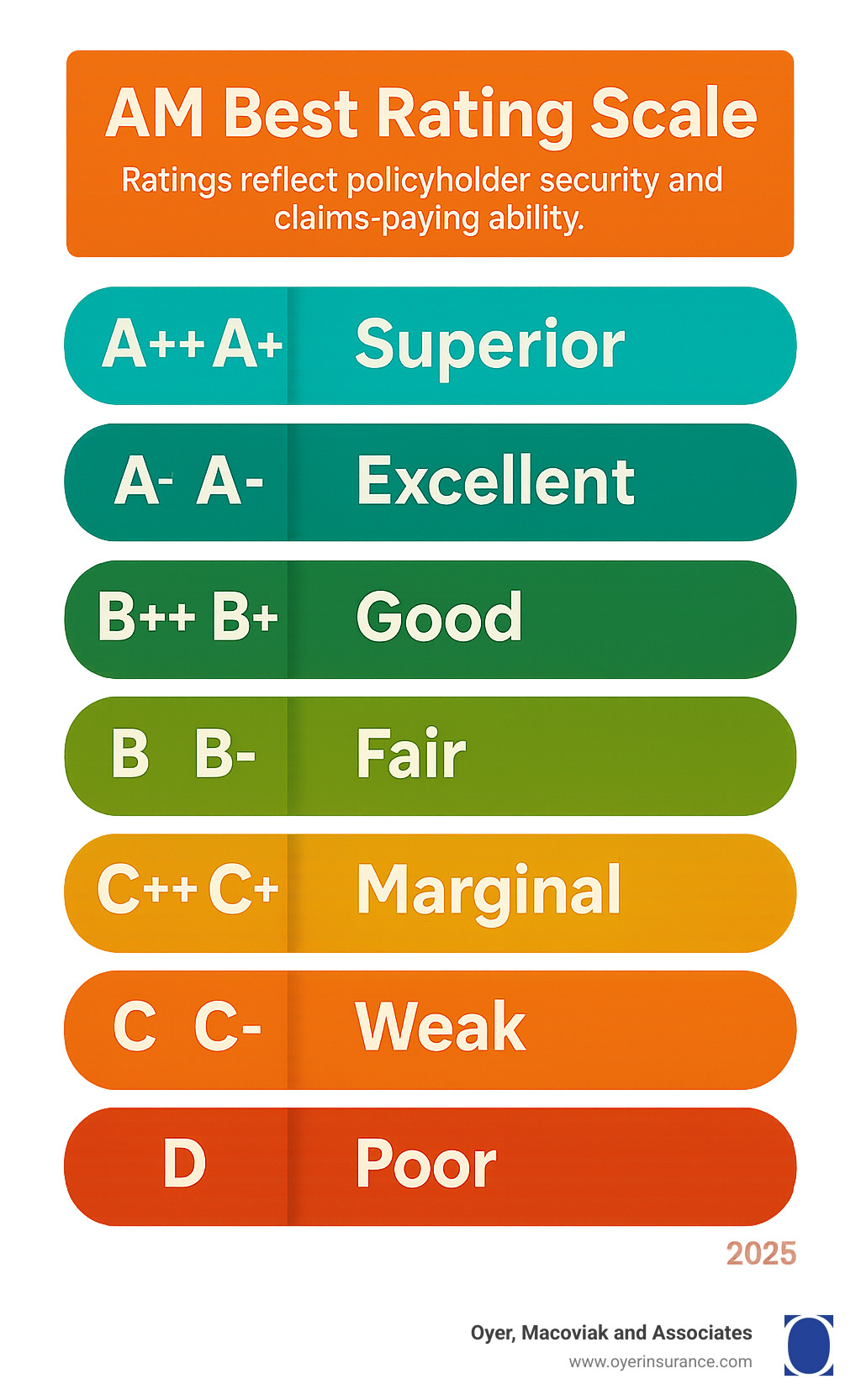
The AM Best rating scale ranges from A++ (Superior) at the top down to D (Poor). Allstate’s A+ (Superior) rating places it in the second-highest possible category. This classification is reserved for companies that demonstrate very strong balance sheet strength and a proven track record of managing complex risks across various economic cycles.
The Components of Allstate’s A+ Rating in 2026
AM Best does not assign ratings based on a single metric. Instead, the "A+" rating is the result of a comprehensive evaluation of four key pillars: balance sheet strength, operating performance, business profile, and enterprise risk management.
1. Balance Sheet Strength
Allstate maintains a very strong level of risk-adjusted capitalization. In 2026, this is supported by a sophisticated investment portfolio and significant liquidity. The company’s ability to access capital markets and its disciplined approach to managing its debt-to-capital ratio allow it to absorb large-scale losses without compromising its solvency.
2. Operating Performance
AM Best evaluates how efficiently Allstate generates profit. Despite the challenges of inflation and increasing repair costs for modern vehicles, Allstate has historically demonstrated a strong ability to adjust premiums (rate adequacy) to match the evolving risk landscape. Their operating performance is bolstered by their "Integrated Service Business" segment, which includes roadside assistance and protection plans, providing diversified revenue streams.
3. Business Profile
Allstate is one of the largest personal lines insurers in the United States. Its massive scale provides a competitive advantage in terms of brand recognition and data analytics. By leveraging the Allstate, National General, and Esurance brands, the company captures a wide demographic of customers, from those seeking high-touch agent relationships to those preferring digital-only experiences.
4. Enterprise Risk Management (ERM)
For a company exposed to climate-related catastrophes, ERM is vital. Allstate utilizes advanced catastrophe modeling to limit its exposure in high-risk areas, such as coastal Florida or wildfire-prone regions of California. Their extensive use of reinsurance—essentially insurance for insurance companies—acts as a safety net that protects their capital from being depleted by a single massive event.
Comparing Allstate’s Ratings to Industry Peers
To understand the value of an A+ rating, it is helpful to see where Allstate stands relative to other major national insurers. While many top-tier companies share the "A" range, subtle differences in their ratings can reflect different capital structures or risk appetites.
| Insurer | AM Best Financial Strength Rating (2026) | Rating Category | Outlook |
|---|---|---|---|
| Allstate Insurance | A+ | Superior | Stable |
| State Farm | A++ | Superior | Stable |
| Progressive | A+ | Superior | Stable |
| GEICO | A++ | Superior | Stable |
| Liberty Mutual | A | Excellent | Stable |
| Farmers Insurance | A | Excellent | Stable |
| Travelers | ++A | Superior | Stable |
Note: Ratings are subject to periodic updates by AM Best. A "Stable" outlook suggests the rating is unlikely to change in the near term.
Why the AM Best Rating Matters to the Consumer
A "Superior" rating from AM Best serves as an independent third-party validation that your insurance policy isn't just a piece of paper, but a reliable financial contract.
Reliability During Catastrophes
If a major hurricane hits a metropolitan area, an insurance company might suddenly face billions of dollars in claims within a single week. Companies with lower ratings (in the B or C range) may struggle with liquidity or even face insolvency in such scenarios. Allstate’s A+ rating provides peace of mind that they have the "war chest" necessary to handle an influx of claims.
Impact on Mortgage and Auto Loans
Most mortgage lenders and auto financing companies require borrowers to maintain insurance with a company that meets a minimum financial strength threshold. Generally, lenders require a rating of at least "B+" or "A-." Allstate’s A+ rating comfortably exceeds these requirements, ensuring that your policy will be accepted by any financial institution in the country.
Long-Term Policy Stability
Insurance is a long-term relationship. You may pay premiums for 20 years before ever filing a significant claim. The AM Best rating looks at the company’s long-term viability. A company with a "Superior" rating is judged to have the strategic management necessary to remain a market leader for decades to come.
Factors That Could Impact Allstate’s Rating in the Future
While Allstate remains in a strong position in 2026, ratings are not permanent. AM Best continuously monitors several "headwinds" that could put pressure on the A+ designation.
- Catastrophic Loss Trends: As the frequency and severity of weather events increase, Allstate must continually refine its pricing and reinsurance. If catastrophe losses consistently outpace the company’s projections, it could lead to a ratings downgrade.
- Regulatory Environments: In states like California, Florida, and Louisiana, insurance regulators often limit how much companies can raise rates. If Allstate is unable to charge premiums that reflect the actual risk of loss in these states, its profitability—and subsequently its rating—could be pressured.
- Investment Market Volatility: Allstate earns a significant portion of its income from investing the premiums it collects. A prolonged downturn in the bond or equity markets could reduce the capital buffer that supports the A+ rating.
- Technological Disruption: The rise of autonomous vehicle technology and advanced telematics is changing the nature of auto insurance. Allstate’s ability to adapt its underwriting to these new technologies is essential for maintaining its "Superior" business profile.
How to Verify Allstate’s Current Rating
Ratings can change based on quarterly financial reports or major corporate restructuring. To verify the most current status of Allstate or any of its subsidiaries (such as Allstate Property and Casualty Insurance Company), consumers can use the following methods:
- AM Best Consumer Portal: Visit the AM Best website and search for "Allstate." You can view a summary of the rating for free, though detailed reports require a subscription.
- Allstate Investor Relations: As a publicly traded company (NYSE: ALL), Allstate publishes its credit ratings in its annual reports and quarterly filings.
- State Insurance Departments: Your state’s Department of Insurance keeps records of the financial health of all insurers licensed to operate in your jurisdiction.
Professional Advice Limitation
This article provides an analysis of financial strength ratings for educational purposes and does not constitute financial, legal, or investment advice. While AM Best ratings are a highly regarded industry standard, they are opinions of financial strength and not guarantees of future performance. Consumers should consider ratings alongside other factors like coverage options, customer service history, and pricing.
Frequently Asked Questions
Is A+ the highest AM Best rating Allstate can get?
No, the highest possible rating is A++ (Superior). While Allstate's A+ rating is also in the "Superior" category and indicates exceptional financial health, some competitors like State Farm or GEICO have historically held the A++ tier. The difference between A+ and A++ is often related to the absolute size of the capital reserve or the specific structure of the company’s debt.
Does a high AM Best rating mean Allstate has good customer service?
Not necessarily. The AM Best rating measures financial solvency, not user experience. A company can have an A+ rating because it is financially rock-solid but still have mixed reviews regarding its claims process or mobile app. For customer service evaluations, consumers should look at the J.D. Power U.S. Auto Insurance Study or the NAIC Complaint Index.
Why did my Allstate premium go up if they have a Superior rating?
A high financial rating and premium costs are often inversely related. Maintaining a "Superior" financial position requires the company to collect enough premiums to cover all potential losses and maintain high capital reserves. If the cost of repairing cars or rebuilding homes rises due to inflation, Allstate must increase premiums to maintain the financial strength that the A+ rating requires.
What happens if an insurance company’s rating drops?
A downgrade (for example, from A+ to B++) usually signals that the company’s financial risks have increased. This might be due to heavy losses or a decline in capital. For the consumer, a minor downgrade usually has no immediate impact, but a significant drop (into the C range) might prompt lenders to reject the policy or suggest that the policyholder look for a more stable carrier.
Does Allstate’s rating cover National General?
Yes, Allstate acquired National General in 2021. Following the integration, AM Best typically aligns the ratings of significant subsidiaries with the parent company, provided they are part of a pooled financial structure. In 2026, most of Allstate’s primary operating subsidiaries share the A+ rating.
Final Recommendation
When shopping for insurance in 2026, Allstate’s A+ (Superior) AM Best rating should give you high confidence in their ability to pay claims. If you live in an area prone to natural disasters—such as the Gulf Coast or wildfire zones—this rating is a vital safeguard. However, because financial strength is only one piece of the puzzle, you should compare Allstate’s quote with other "A" rated carriers to ensure you are getting the best balance of stability, coverage, and price for your specific needs.