To understand the evolution of modern cinema, one must study the filmography of Al Pacino. From his breakout as Michael Corleone to his late-career triumphs, Pacino’s work represents a masterclass in Method acting. This guide identifies the essential films that define his legacy and demonstrate his unparalleled range and intensity.
The Foundation of a Legend: The 1970s
The 1970s are often cited as the greatest decade in American film history, and Al Pacino was its undisputed engine. During this period, he moved away from the "movie star" archetype and toward a gritty, realistic portrayal of complex men. His collaboration with directors like Francis Ford Coppola and Sidney Lumet set the standard for dramatic performance.
The Godfather (1972) and The Godfather Part II (1974)
It is impossible to discuss Al Pacino movies you should know without starting with the Corleone saga. In the first film, Pacino plays Michael Corleone, the war hero who wants nothing to do with his family’s criminal enterprise. His performance is a study in stillness and internal transformation. By the time we reach the sequel, Michael has become a cold, calculating tyrant.
Technically, Pacino’s work here is remarkable for its economy of movement. Unlike his later, more explosive roles, the Michael Corleone of the early 70s communicates through his eyes and subtle shifts in posture. The Godfather Part II is frequently cited by critics as one of the few instances where a sequel surpasses the original, largely due to Pacino’s haunting portrayal of a man losing his soul while gaining the world.
Serpico (1973)
Directed by Sidney Lumet, Serpico tells the true story of Frank Serpico, an honest NYPD officer who blew the whistle on systemic corruption within the department. This role allowed Pacino to showcase a different kind of intensity—righteous indignation.
The film is notable for its authentic New York atmosphere and Pacino’s physical transformation throughout the story. As his character becomes more isolated and paranoid, his appearance changes, reflecting the toll of his moral crusade. It remains a definitive entry in the "whistleblower" subgenre of crime dramas.
Dog Day Afternoon (1975)
Another Lumet collaboration, Dog Day Afternoon, features Pacino as Sonny Wortzik, a first-time bank robber who attempts a heist to pay for his partner’s gender-affirming surgery. The film is a masterclass in pacing and tone, shifting from high-stakes tension to tragicomedy.
Pacino’s performance is electric, particularly during the famous "Attica! Attica!" scene, where he incites a crowd against the police. This role solidified his status as the voice of the marginalized and the desperate, earning him one of his many Academy Award nominations.
The Iconography of Excess: The 1980s
The 1980s saw a shift in Pacino’s acting style. While the 70s were characterized by nuance and realism, the 80s brought a heightened, more operatic approach to his characters. This era produced one of the most recognizable figures in pop culture history.
Scarface (1983)
Brian De Palma’s Scarface was polarizing upon its initial release but has since become a cult phenomenon. Pacino plays Tony Montana, a Cuban refugee who rises to become a cocaine kingpin in Miami.
Everything about this performance is "big"—the accent, the outbursts, and the final bloody shootout. While some critics initially found the performance over-the-top, it perfectly fits the film’s themes of American greed and the corruption of the "American Dream." Tony Montana remains a staple of modern iconography, influencing everything from hip-hop culture to video games.
The Veteran Master: The 1990s
In the 1990s, Pacino entered a new phase of his career. He finally won his elusive Academy Award and participated in some of the decade’s most significant technical achievements in filmmaking.
Scent of a Woman (1992)
After seven previous nominations, Al Pacino finally won the Academy Award for Best Actor for his role as Lieutenant Colonel Frank Slade. Slade is a blind, retired Army officer who takes a young prep school student (played by Chris O'Donnell) on a final wild weekend in New York City.
The film is famous for Pacino’s catchphrase "Hoo-ah!" and the iconic tango scene. While some argue he should have won for earlier roles, his performance in Scent of a Woman is a tour de force of charisma and vulnerability, showing a man struggling with his loss of purpose and physical sight.
Heat (1995)
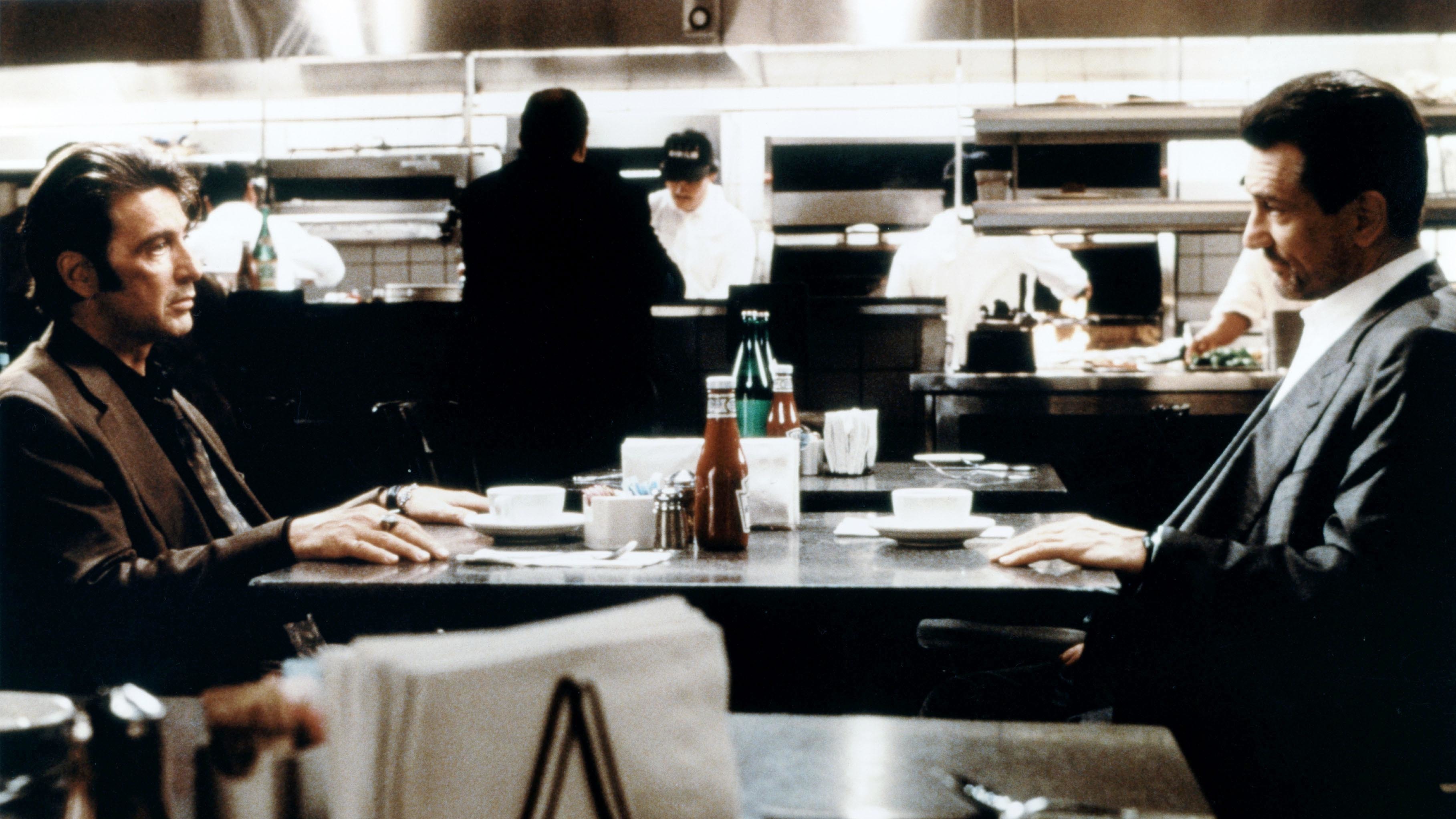
Michael Mann’s Heat is a landmark in the heist genre, famous for being the first film to feature Al Pacino and Robert De Niro on screen together. Pacino plays Vincent Hanna, a dedicated and slightly unhinged robbery-homicide detective chasing De Niro’s professional thief.
The technical execution of the street shootout in Heat is often studied in film schools for its sound design and tactical realism. Pacino’s performance is highly energized, serving as a perfect foil to De Niro’s restrained and methodical character. Their coffee shop scene remains one of the most analyzed moments in cinematic history.
The Insider (1999)
In a departure from his more aggressive roles, Pacino delivered a controlled and sophisticated performance in The Insider. Directed by Michael Mann, the film follows the true story of a tobacco industry whistleblower (Russell Crowe) and the 60 Minutes producer (Pacino) who tries to get his story on air.
Pacino’s portrayal of Lowell Bergman focuses on the ethics of journalism and the pressures of corporate interference. It is a quiet, intellectual performance that reminds audiences of his range beyond the "shouting" roles he had become known for in the early 90s.
Modern Masterpieces and Recent Successes
As we look back from 2026, Pacino’s later work proves that his talent has not diminished with age. He has continued to seek out challenging material and collaborate with elite filmmakers.
The Irishman (2019)
Reuniting with Martin Scorsese and Robert De Niro, Pacino took on the role of Jimmy Hoffa in The Irishman. This was Pacino’s first time working with Scorsese, a collaboration decades in the making.
Pacino captures Hoffa’s charismatic public persona and his private arrogance with equal skill. The film used de-aging technology to allow the actors to play their characters over several decades, a technical feat that, while controversial to some, allowed Pacino to portray Hoffa's rise and eventual disappearance with continuity. His chemistry with De Niro and Joe Pesci is the heart of this three-and-a-half-hour epic.
Donnie Brasco (1997)
Though technically from the late 90s, Donnie Brasco serves as a bridge to his later career "elder statesman" roles. Pacino plays Lefty Ruggiero, a low-level mob hitman who unknowingly mentors an undercover FBI agent (Johnny Depp). Unlike the high-ranking Corleone, Lefty is a weary, tragic figure who has spent his life working for a system that doesn't care about him. It is one of Pacino's most poignant and underrated performances.
Summary of Essential Al Pacino Films
The following table provides a quick reference for the essential films every movie enthusiast should watch to understand Al Pacino's career trajectory.
| Film Title | Year | Role | Primary Genre | Key Achievement/Note |
|---|---|---|---|---|
| The Godfather | 1972 | Michael Corleone | Crime/Drama | Defined the modern crime epic |
| Serpico | 1973 | Frank Serpico | Biopic/Crime | Established the "honest cop" trope |
| Dog Day Afternoon | 1975 | Sonny Wortzik | Crime/Drama | Iconic "Attica" scene |
| Scarface | 1983 | Tony Montana | Crime/Action | Major cultural and pop-icon impact |
| Scent of a Woman | 1992 | Frank Slade | Drama | Academy Award for Best Actor |
| Heat | 1995 | Vincent Hanna | Heist/Thriller | First on-screen pairing with De Niro |
| Donnie Brasco | 1997 | Lefty Ruggiero | Crime/Drama | Nuanced, tragic portrayal of a mobster |
| The Insider | 1999 | Lowell Bergman | Drama/Thriller | Masterclass in journalistic ethics |
| The Irishman | 2019 | Jimmy Hoffa | Biopic/Crime | First collaboration with Martin Scorsese |
Analyzing the "Pacino Style"
To truly appreciate Al Pacino movies you should know, one must understand Method acting. Developed by Lee Strasberg at The Actors Studio, where Pacino trained, Method acting encourages actors to draw upon their own emotions and experiences to create a sincere performance.
The Evolution of Intensity
In his early career (1971–1975), Pacino was the king of internal conflict. His characters were often quiet, brooding, and dangerous because of what they weren't saying. In The Godfather, Michael Corleone’s power comes from his stillness.
By the late 80s and 90s, this shifted into what fans call "The Roar." In movies like Any Given Sunday or Scent of a Woman, Pacino utilized his voice as a musical instrument, varying his volume and pitch to dominate the screen. This intensity became his trademark, though it was always grounded in the emotional truth of the character.
Collaboration with Directors
Pacino’s career is also a story of great director-actor partnerships.
- Francis Ford Coppola: Brought out his ability to play tragic, Shakespearean figures.
- Sidney Lumet: Utilized his street-wise, gritty New York energy.
- Michael Mann: Highlighted his professionalism and technical precision.
- Brian De Palma: Pushed him toward operatic, larger-than-life performances.
Frequently Asked Questions
Which Al Pacino movie should I watch first?
If you are new to his work, The Godfather is the essential starting point. It provides the foundation for his career and is widely considered one of the greatest films ever made. For those who prefer a faster pace, Heat offers a more modern, high-octane introduction to his style.
How many Academy Awards has Al Pacino won?
As of 2026, Al Pacino has won one Academy Award for Best Actor for his role in Scent of a Woman (1992). Despite this, he has received nine nominations throughout his career, spanning from the 1970s to the 2020s, making him one of the most nominated actors in history.
Did Al Pacino and Robert De Niro ever act together before Heat?
While both actors appeared in The Godfather Part II (1974), they did not share any scenes because their stories took place in different time periods (De Niro played the young Vito Corleone in flashbacks, while Pacino played Michael in the "present"). Heat (1995) was their first actual on-screen appearance together.
What is Al Pacino's most famous quote?
While he has many, "Say hello to my little friend!" from Scarface is likely his most famous. Other notable lines include "Just when I thought I was out, they pull me back in!" from The Godfather Part III and his "Hoo-ah!" from Scent of a Woman.
Is Scarface based on a true story?
Scarface (1983) is a remake of the 1932 film of the same name, which was loosely based on the life of Al Capone. The 1983 version updated the setting to the 1980s drug trade in Miami but is considered a work of fiction, though it incorporated real-world elements of the Mariel boatlift and the era's cocaine wars.
Final Recommendations for Viewers
To get the most out of an Al Pacino marathon, it is recommended to watch his films in chronological order. Starting with The Panic in Needle Park (his first lead role) and moving through the 70s masterpieces allows you to see the development of a raw talent into a refined artist. Pay close attention to his eyes in the early films; they often tell more of the story than the dialogue.
Whether you are looking for a gritty crime drama, a sprawling epic, or a character-driven biopic, Pacino’s filmography offers a depth of experience rarely matched in the history of the medium. For your next viewing, consider Carlito’s Way (1993) for a perfect blend of his 70s sensitivity and 80s intensity.