DEN is the internationally recognized IATA airport code for Denver International Airport, the primary commercial aviation hub serving the Denver metropolitan area and the broader Rocky Mountain region. Located approximately 25 miles from downtown Denver, it is the largest airport in North America by land area and serves as a critical global gateway.
In the world of global logistics and passenger travel, the three-letter identifier DEN carries significant weight. Often referred to by locals as "DIA," the airport officially uses its IATA code for all flight bookings, baggage routing, and air traffic communication. Since its opening in 1995, Denver International Airport has evolved from a controversial infrastructure project into one of the busiest and most efficient aviation facilities in the world. As of 2026, it continues to set records for passenger volume and operational expansion.
The Historical Shift: From Stapleton to DEN
To understand the significance of the DEN airport code today, one must look at the transition from Denver’s former aviation hub, Stapleton International Airport. Stapleton served the city for decades, but by the 1980s, it faced insurmountable challenges. It was landlocked by residential neighborhoods, preventing runway expansion, and its parallel runways were too close together to allow for safe simultaneous landings during the frequent foul weather typical of the Colorado Front Range.
The decision to build a new airport on the vast prairies east of the city was a monumental undertaking. When Denver International Airport opened on February 28, 1995, it inherited the "DEN" IATA code that had previously belonged to Stapleton. This transition marked a new era in aviation technology. Unlike its predecessor, the new DEN was designed with a massive land footprint—over 33,000 acres—ensuring that it would not face the same expansion limitations as Stapleton for at least a century.
Physical Scale and Geographic Significance
Denver International Airport is unique due to its sheer size. Spanning 53 square miles (135.7 square kilometers), it is larger than the island of Manhattan. This vast space allows for a layout that minimizes noise pollution for surrounding communities while providing ample room for six active runways.
The airport's geographic location makes it a "mid-continent" hub. For airlines, DEN is a strategic asset because it allows for efficient connections between the East and West Coasts of the United States. Its high altitude (5,431 feet above sea level) presents unique technical challenges for aviation, which are addressed by the airport’s infrastructure. Because the air is thinner at high altitudes, aircraft require more speed—and thus more runway length—to generate lift. To accommodate this, DEN features one of the longest commercial runways in the world, Runway 16R/34L, which stretches 16,000 feet (3.03 miles).
Terminal Infrastructure and the Jeppesen Design
The centerpiece of the DEN airport code experience is the Jeppesen Terminal. Named after Elrey Borge Jeppesen, a pioneer in aviation navigation, the terminal is world-renowned for its iconic white peaked roof.
The Roof and the Great Hall
The roof is composed of a double-layered, Teflon-coated fiberglass membrane. Its design is intended to evoke the snow-capped peaks of the Rocky Mountains, though some see it as a nod to the Native American teepees that once dotted the plains. In 2026, travelers experience the fully realized "Great Hall" project, a multi-year renovation that has modernized the terminal’s interior. This project successfully relocated security checkpoints to the upper levels, streamlining passenger flow and creating a more open, intuitive check-in process.
The Concourse System
DEN utilizes a "hub-and-spoke" concourse system connected by an automated underground train (the Automated Guideway Transit System, or AGTS).
- Concourse A: Accessible via the train or a pedestrian bridge from the Jeppesen Terminal. It primarily handles international arrivals and serves as a major base for Frontier Airlines and various international carriers.
- Concourse B: This is the primary hub for United Airlines. It is one of the longest airport concourses in the world and has undergone significant expansion to include more gates and premium lounges.
- Concourse C: Primarily utilized by Southwest Airlines, this concourse has seen the most rapid growth in gate capacity over the last few years to accommodate Southwest’s massive expansion into the Denver market.
Airline Hub Operations and Market Share
The DEN airport code is synonymous with three major domestic carriers. While many airports are dominated by a single airline, Denver is rare because it serves as a massive hub for United, a primary base for Frontier, and a top-tier "city of interest" (effectively a hub) for Southwest.
| Airline | Concourse | Hub Status | Primary Focus |
|---|---|---|---|
| United Airlines | B (Primary), A | Global Hub | International & Transcontinental |
| Southwest Airlines | C | Major Base | Domestic & Regional |
| Frontier Airlines | A | Primary Hub | Low-Cost Domestic |
| Delta Air Lines | A | Outstation | Key Network Connections |
| American Airlines | A | Outstation | Major Hub Connections |
| International Carriers | A | International Gateways | Europe, Asia, Latin America |
The competition between these airlines at DEN has historically kept airfares relatively competitive compared to other major hub airports. By 2026, the gate expansion projects across all three concourses have increased the airport’s capacity to over 100 million passengers annually.
Technical Navigation: IATA vs. ICAO
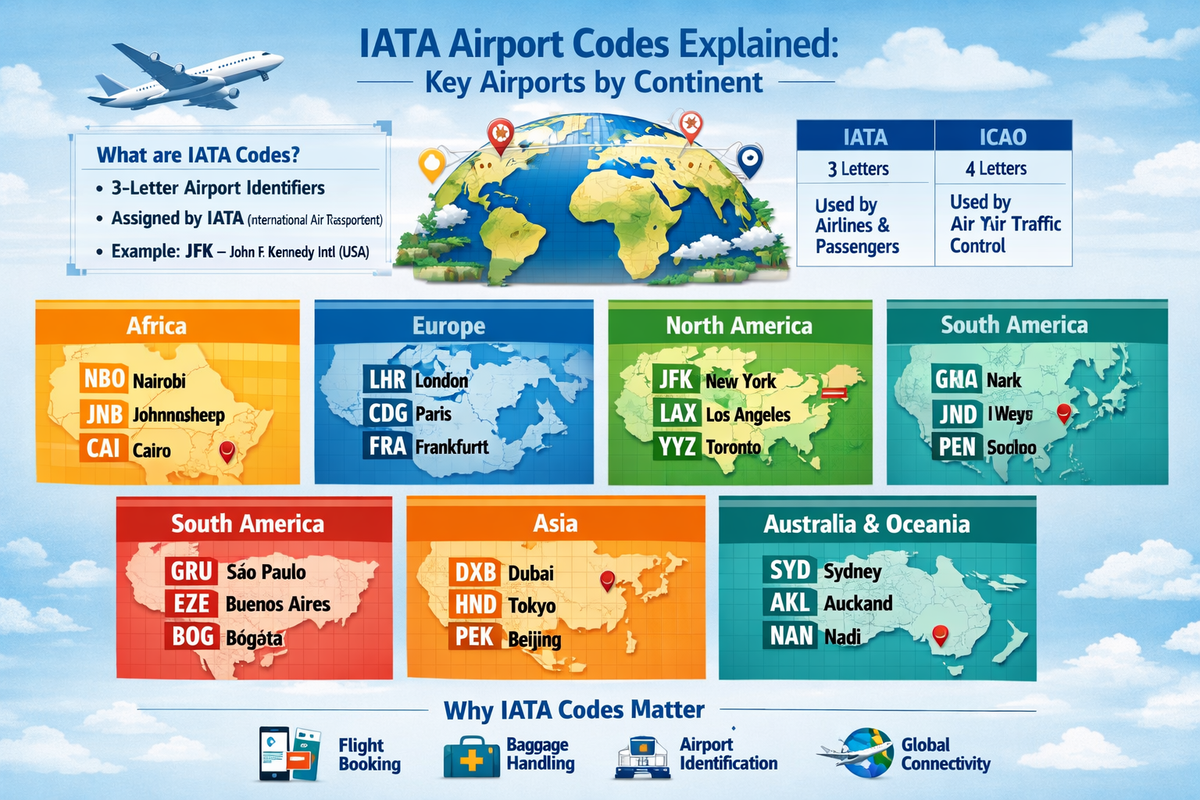
For passengers, "DEN" is the only code they need to know. However, in the world of flight planning and technical aviation, the airport is identified by its ICAO code: KDEN.
- IATA (DEN): Used by travel agents, airlines for ticketing, and on baggage tags. It is a three-letter code assigned by the International Air Transport Association.
- ICAO (KDEN): Used by pilots and air traffic controllers for flight plans and weather reports. The "K" prefix denotes the continental United States, followed by the three-letter identifier.
When looking at weather reports (METARs) or navigating using a GPS, professionals always look for KDEN. This distinction is vital for safety, ensuring that there is no confusion with other airports globally that might share similar-sounding names.
Ground Transportation and Access
Navigating to and from the DEN airport code has been significantly improved by the integration of the RTD A-Line rail service. Known as the "Train to the Plane," the A-Line connects the Jeppesen Terminal directly to Denver Union Station in the heart of downtown.
- A-Line Rail: The journey takes approximately 37 minutes. Trains run every 15 minutes during peak hours. As of 2026, the fare remains a cost-effective alternative to ridesharing, which can be subject to heavy traffic on Peña Boulevard.
- Peña Boulevard: This is the dedicated highway artery for DEN. It was named after Federico Peña, the former Denver Mayor and U.S. Secretary of Transportation who was a key proponent of the airport’s construction.
- Rideshare and Parking: DEN maintains several parking options, from the expensive Garage Parking (East and West) to more affordable "Pikes Peak" and "Mt. Elbert" shuttle lots. Rideshare services (Uber/Lyft) operate from Level 5 of the terminal.
The Cultural Identity of DEN
Perhaps no other airport code in the world is as shrouded in urban legend and pop-culture fascination as DEN. The airport administration has famously leaned into these theories, which range from "secret underground bunkers" to "Illuminati headquarters."
- "Blucifer": The "Blue Mustang" statue by Luis Jiménez is a 32-foot-tall fiberglass sculpture with glowing red eyes. Located near the airport entrance, it has become a mascot for the airport’s unique personality.
- Art Programs: DEN allocates a significant portion of its budget to public art. This includes the murals in Concourse A and the unique floor designs in the Jeppesen Terminal that depict Colorado's natural and cultural history.
- Conspiracy Culture: During renovations, the airport often uses signage that mocks the conspiracy theories, with slogans like "What are we doing behind this fence? Building a secret lair? No, just a better bathroom."
Technical Specifications for Pilots and Aviation Enthusiasts
For those interested in the operational side of the DEN airport code, the technical specs are impressive. The airport operates in a complex airspace environment due to the proximity of the Rocky Mountains to the west and several smaller regional airports.
- Elevation: 5,431 ft / 1,655 m.
- Runways: Six total. Five are 12,000 feet long; one (16R/34L) is 16,000 feet long. All are 150 feet wide.
- Pavement: The runways and taxiways are constructed of 17-inch to 20-inch thick Portland cement concrete.
- De-icing: DEN features some of the most advanced de-icing pads in the world, necessary for maintaining operations during Colorado’s heavy winter snowstorms.
Security and Logistics in 2026
By 2026, Denver International Airport has implemented advanced biometric screening at most gates. The Great Hall renovation has centralized security, meaning travelers no longer have to navigate the confusing split-bridge security lines of the early 2010s.
TSA PreCheck and CLEAR are heavily utilized at DEN. Due to the airport’s high volume, travelers without these expedited services are advised to arrive at least 2.5 to 3 hours before their scheduled departure, especially during the "banked" departure times in the early morning and late afternoon when United and Southwest launch their primary waves of flights.
DEN Reserve
A notable feature available in 2026 is DEN Reserve. This service allows passengers to book a specific time slot for security screening for free. This has significantly reduced the unpredictability of wait times for travelers who do not have paid memberships like CLEAR.
FAQ: Common Questions About the DEN Airport Code
Why is the airport code DEN when everyone calls it DIA?
"DIA" is an acronym for Denver International Airport. However, in the 1940s, the International Air Transport Association (IATA) standardized three-letter codes. Since "DIA" was already assigned to Doha International Airport (now primarily DOH) or was otherwise unavailable in the hierarchy, Denver retained the "DEN" code from the old Stapleton Airport. Using "DEN" ensures global consistency in flight systems.
Which concourse is the best for food and amenities?
While Concourse B is the largest and has the most high-end options (including several United Clubs), Concourse C is often cited for its modern, local Denver eateries. Concourse A offers a more relaxed atmosphere and features a unique pedestrian bridge where you can watch planes taxi beneath you. All concourses now feature outdoor "patios" where travelers can enjoy fresh air and views of the Rockies.
How do I get between the terminal and the concourses?
The primary method is the underground train (AGTS). It runs every 2 minutes. If you are going to Concourse A, you also have the option to walk across the passenger bridge from the terminal. There is no walking path to Concourses B or C; you must take the train.
Is DEN the highest airport in the United States?
No, it is not the highest. That title belongs to Leadville (KLXV), also in Colorado, at 9,934 feet. However, DEN is the highest major international airport in the U.S., which significantly impacts aircraft performance and necessitates its long runways.
Does DEN have a hotel on-site?
Yes. The Westin Denver International Airport is located directly attached to the Jeppesen Terminal. Its distinct "bird-like" shape complements the tent roof of the main terminal. It is situated directly above the A-Line transit center, making it incredibly convenient for early morning flights.
Recommendations for Travelers Using DEN
If you are flying through or into Denver in 2026, keep these practical tips in mind to navigate the DEN airport code like a professional:
- Check Your Concourse Early: Since the train is the only way to reach Concourses B and C, ensure you leave the Jeppesen Terminal with enough time to transit. The train ride itself is short (under 5 minutes), but platforms can be crowded.
- Hydrate: Denver’s altitude and dry climate can lead to "altitude sickness" for those arriving from sea level. Drink plenty of water before and during your flight.
- Use the A-Line: Unless you have an excessive amount of luggage, the rail link to downtown is almost always faster and cheaper than a taxi or Uber during rush hour.
- Explore the Art: If you have a long layover, take the time to walk the bridge to Concourse A or visit the outdoor decks. The views of the mountains at sunset are among the best of any airport in the world.
Denver International Airport (DEN) is more than just a transit point; it is a massive, high-functioning machine that serves as the heartbeat of the American West's economy. Whether you are coming for the skiing, business, or just passing through to the coast, the DEN code represents a gateway to one of the most technologically advanced aviation experiences available today.