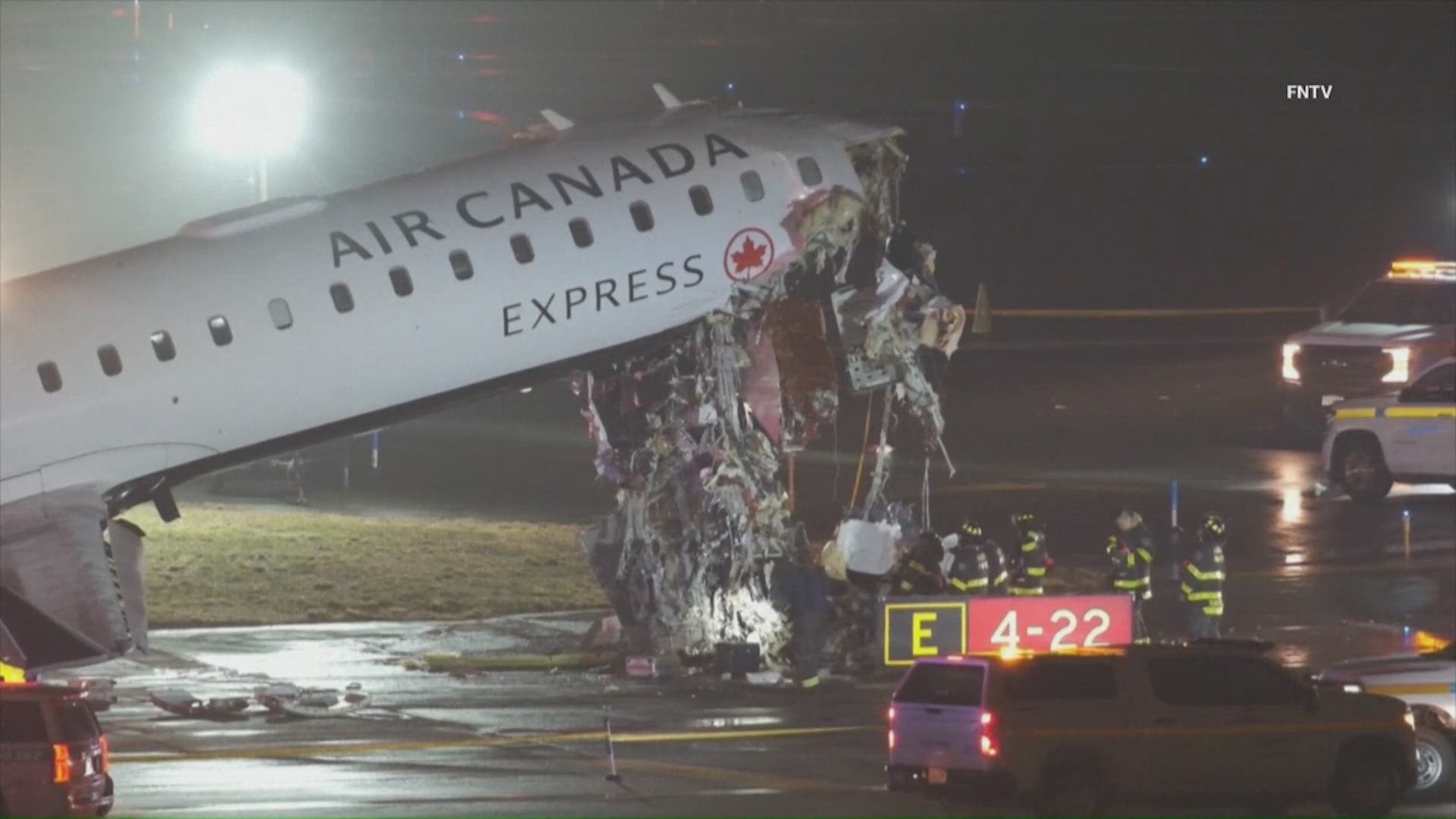
Aviation incidents in New York have historically served as the primary catalysts for global safety reforms, ranging from the implementation of the "1,500-hour rule" for pilots to the redesign of aircraft fuel systems. High-profile events such as TWA Flight 800 and the "Miracle on the Hudson" have forced the industry to adapt, making New York’s airspace one of the most scrutinized and regulated corridors in the world.
New York remains a focal point for global aviation, serving as a gateway between the United States and the international community. However, the density of its airspace—controlled primarily through the New York Terminal Radar Approach Control (TRACON)—presents unique challenges. This region manages traffic for John F. Kennedy International (JFK), LaGuardia (LGA), and Newark Liberty International (EWR), creating a complex web of flight paths. Over the decades, several significant air crashes in New York have not only left a mark on the local community but have also dictated the trajectory of international aviation safety standards.
The Complexity of New York Airspace
To understand why New York has been the site of several landmark aviation incidents, one must first look at the geographical and operational constraints of the region. The "New York Tri-State Area" contains some of the busiest airports in the world in extremely close proximity. Unlike airports in flatter or less populated regions, New York pilots must navigate around skyscrapers, water bodies, and noise-abatement procedures that require precise maneuvering at low altitudes.
In 2026, the Federal Aviation Administration (FAA) continues to utilize the lessons learned from these geographical constraints to refine "NextGen" satellite-based navigation. This system replaces traditional ground-based radar with GPS technology, allowing for more efficient routes. However, before these technological leaps, the margin for error was significantly thinner, and the history of New York air crashes reflects the struggle between increasing demand and the limits of mid-20th-century technology.
TWA Flight 800: The Catalyst for Technical Redesign
On July 17, 1996, TWA Flight 800, a Boeing 747-100 bound for Paris, exploded and crashed into the Atlantic Ocean off the coast of East Moriches, Long Island. All 230 people on board perished. This incident remains one of the most significant air crashes in New York history due to the scale of the investigation and the technical changes it mandated.
The Investigation and Findings
The National Transportation Safety Board (NTSB) conducted a four-year investigation, which is still cited as one of the most exhaustive in history. While early theories suggested a surface-to-air missile or a bomb, the NTSB eventually determined the cause was an explosion of flammable fuel/air vapors in the Center Wing Fuel Tank (CWT). The most likely ignition source was a short circuit in the wiring associated with the fuel quantity indication system.
Lasting Safety Impact
The legacy of TWA Flight 800 is the Fuel Tank Flammability Reduction (FTFR) rule. Following the investigation, the FAA mandated that aircraft manufacturers install systems to reduce the oxygen content in fuel tanks—typically by injecting nitrogen-enriched air. This process, known as "inerting," has become a standard safety feature on modern commercial aircraft, virtually eliminating the risk of a similar explosion.
American Airlines Flight 587: Structural Integrity and Pilot Training
Just two months after the September 11 terrorist attacks, on November 12, 2001, American Airlines Flight 587 crashed into the Belle Harbor neighborhood of Queens shortly after taking off from JFK. The crash killed all 260 people on board and five people on the ground. Given the timing, initial fears of terrorism were high, but the NTSB investigation pointed toward a structural and human-factors failure.
The Role of Wake Turbulence
The Airbus A300-600 encountered wake turbulence from a Japan Airlines Boeing 747 that had departed minutes earlier. The first officer responded by using aggressive, full-scale rudder pedal inputs. The aerodynamic loads caused by these rapid side-to-side movements caused the vertical stabilizer (the tail fin) to snap off the aircraft, making it uncontrollable.
Reforms in Pilot Education
This air crash in New York changed how pilots are trained to handle upsets and turbulence. It was discovered that many pilots mistakenly believed that "maneuvering speed" (Va) protected the aircraft from structural damage regardless of the severity of control inputs. In reality, multiple full-scale inputs can exceed structural limits even below that speed. Today, upset recovery training emphasizes "smooth and deliberate" inputs rather than aggressive corrections.
US Airways Flight 1549: The Miracle on the Hudson
On January 15, 2009, US Airways Flight 1549 became the most famous "success story" in the history of New York aviation. After striking a flock of Canada geese during its initial climb from LaGuardia, both engines of the Airbus A320 lost power. Captain Chesley "Sully" Sullenberger and First Officer Jeffrey Skiles successfully ditched the plane in the Hudson River.
Why This Event Was Unique
Ditching a commercial airliner in water without the plane breaking apart is statistically improbable. The crew’s ability to maintain a stable glide path and the rapid response from New York waterway ferries resulted in zero fatalities.
Operational Changes for Bird Strike Mitigation
While often celebrated for the heroism involved, the "Miracle on the Hudson" led to a massive increase in bird-strike reporting and mitigation. Airports in the New York area now employ rigorous wildlife management programs, including habitat modification and avian radar systems. Furthermore, the event prompted the FAA to re-evaluate engine certification standards to ensure they can withstand larger bird ingestions without total power loss.
Colgan Air Flight 3407: Redefining Pilot Experience
While occurring near Buffalo, New York, on February 12, 2009, the crash of Colgan Air Flight 3407 (operating as Continental Connection) is intrinsically linked to New York’s regional aviation landscape. The Bombardier Dash 8 Q400 stalled on approach to Buffalo Niagara International Airport, killing 50 people.
Fatigue and Training Issues
The investigation revealed that the pilots were improperly trained to handle the "stick shaker" (a stall warning device) and were likely suffering from fatigue. The first officer had commuted from Seattle to Newark overnight before starting her shift, highlighting a systemic issue in the regional airline industry regarding pilot pay and rest requirements.
The 1,500-Hour Rule
The families of the victims of Flight 3407 successfully lobbied Congress to pass the Airline Safety and Federal Aviation Administration Extension Act of 2010. This law drastically changed pilot requirements:
- Flight Hours: Co-pilots must now have at least 1,500 hours of flight time to qualify for an Airline Transport Pilot (ATP) certificate, up from the previous 250 hours.
- Rest Rules: Stricter "Part 117" flight and duty time limitations were established to prevent pilot fatigue.
- Training Standards: Enhanced training for stall recognition and recovery became mandatory.
Historical Air Crash Comparison in New York
The following table summarizes the most influential air crashes in New York and the primary safety protocols they established.
| Flight / Incident | Date | Primary Cause | Key Safety Outcome |
|---|---|---|---|
| TWA Flight 800 | July 17, 1996 | CWT Fuel Explosion | Fuel tank inerting systems (FTFR Rule) |
| AA Flight 587 | Nov 12, 2001 | Structural Failure (Pilot Input) | Revised rudder use & maneuvering speed training |
| US Airways 1549 | Jan 15, 2009 | Bird Strike / Engine Loss | Enhanced wildlife management & ditching training |
| Colgan Air 3407 | Feb 12, 2009 | Pilot Error (Stall) | 1,500-hour rule & fatigue management (Part 117) |
| Avianca Flight 52 | Jan 25, 1990 | Fuel Exhaustion | Improved ATC communication & fuel management |
| 1960 NYC Collision | Dec 16, 1960 | Mid-air Collision | Expansion of Air Traffic Control (ATC) radar |
Navigating New York’s Skies in 2026
In 2026, the safety of New York’s airspace is at an all-time high, thanks to the data-driven approach adopted by the FAA and NTSB. The focus has shifted from reactive measures (fixing what broke) to proactive monitoring using Big Data. The Aviation Safety Information Analysis and Sharing (ASIAS) system now allows airlines to share de-identified flight data to spot trends before they lead to an accident.
For passengers flying into JFK or LaGuardia, the "next generation" of safety involves ADS-B (Automatic Dependent Surveillance-Broadcast). This technology allows aircraft to broadcast their precise position to both controllers and other aircraft, providing much better visibility in congested New York corridors than traditional radar ever could.
The Role of JFK and LGA Modernization
The physical redevelopment of New York’s airports in the mid-2020s has also played a role in safety. Wider taxiways, better runway lighting (using LED technology), and modern terminal designs reduce the risk of "runway incursions"—situations where an aircraft or vehicle is in the wrong place on the runway.
Legal and Emotional Aftermath of NY Air Crashes
When an air crash in New York occurs, the legal proceedings are often governed by the Montreal Convention for international flights or domestic tort law. New York courts are frequently the venue for these cases due to the presence of major airline hubs.
Beyond the legalities, the emotional toll on the city is significant. Memorials, such as the one for Flight 587 in Belle Harbor and the TWA Flight 800 International Memorial at Smith Point County Park, serve as permanent reminders of the lives lost. These sites are not just for grieving but are used as educational touchstones for new generations of aviation safety professionals.
Frequently Asked Questions
Is it safe to fly into New York airports today?
Yes, New York’s airports (JFK, LGA, EWR) are among the most strictly monitored in the world. Since the reforms following the Colgan Air and US Airways incidents, commercial aviation in the United States has maintained an unprecedented safety record. In 2026, satellite-based navigation and automated safety systems have further reduced the risk of human error.
What was the deadliest air crash in New York?
Excluding the events of September 11, 2001, the deadliest accident was American Airlines Flight 587 in 2001, which resulted in 265 fatalities (including five on the ground). Prior to that, the 1960 New York mid-air collision between a United DC-8 and a TWA Super Constellation resulted in 134 deaths.
How did the 1,500-hour rule affect New York flights?
The 1,500-hour rule, implemented after the crash in Buffalo (Colgan Air 3407), ensured that every pilot in the cockpit of a commercial flight has significant flight experience. While it initially caused a pilot shortage in regional airlines serving smaller New York cities, it is widely credited with the near-elimination of "pilot error" crashes in the regional sector over the last decade.
Are bird strikes still a major concern in New York?
Bird strikes remain a common occurrence due to New York's proximity to major migratory paths and waterways. However, because of the lessons from Flight 1549, engines are now designed to handle larger ingestions, and airports use sophisticated technology to keep birds away from active runways.
What happens if an engine fails over New York City?
Modern commercial aircraft are designed to fly safely on a single engine. Pilots are trained extensively in simulators to handle engine failures during all phases of flight. In the extremely rare event of a total power loss (as seen in 1549), pilots are trained to identify the nearest safe landing site, which could include an airport or, as a last resort, a water body.
Next Steps for Aviation Safety
The history of air crashes in New York demonstrates that every tragedy leads to a safer future. For those interested in the technical aspects of these incidents, the NTSB’s public database provides detailed accident reports and safety recommendations. If you are a frequent traveler, staying informed about the current FAA safety ratings and the technological upgrades at your local airport can provide peace of mind. As we move through 2026, the focus remains on integrating autonomous technology and reducing the carbon footprint of aviation without compromising the rigorous safety standards established over the last century.