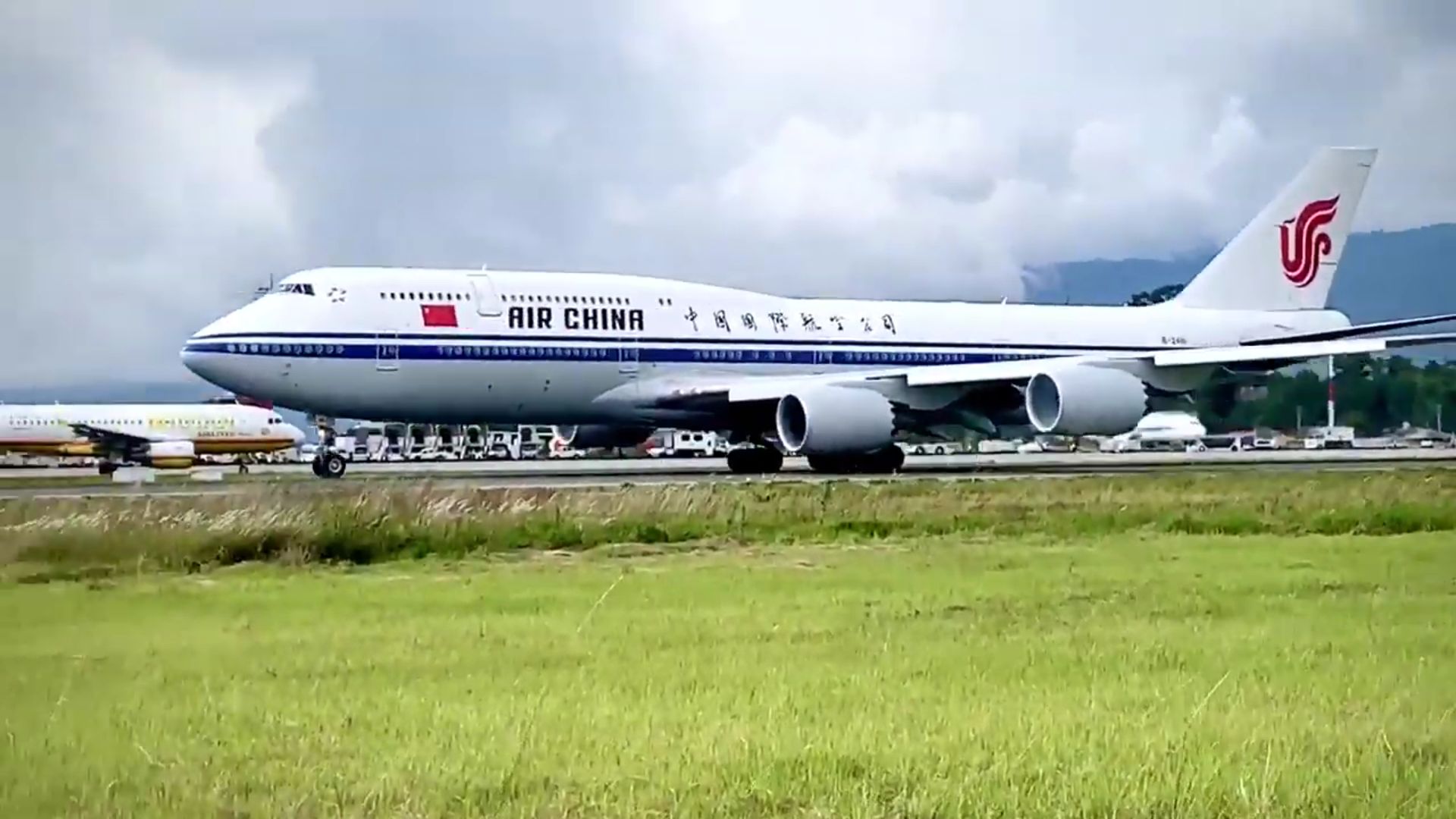
As of 2026, the Air China Boeing 747-8 Intercontinental remains one of the most prestigious and recognizable aircraft in the sky. As the flagship of China’s national carrier, it serves a dual role: a high-capacity commercial workhorse on premier routes and the primary transport for Chinese state officials, maintaining the legendary "Queen of the Skies" legacy.
The Evolution of a Legend: From the 400 to the 8i
The Boeing 747-8 is the final evolution of a lineage that began in the late 1960s. While many airlines transitioned to twin-engine aircraft like the Boeing 777 or the Airbus A350 for their long-haul needs, Air China recognized the unique value of the 747-8 Intercontinental (747-8i). Entering service with the airline in late 2014, these aircraft were intended to replace the aging Boeing 747-400 fleet, offering better fuel efficiency, a quieter cabin, and significantly increased capacity.
Unlike its predecessor, the 747-8 features a fuselage stretch of 5.6 meters (18.3 feet), making it the longest passenger aircraft in the world at the time of its debut. This extra length allowed Boeing to redesign the iconic "hump," extending the upper deck and providing a more spacious environment for premium passengers. For Air China, this was not just an upgrade in size; it was a statement of modernization. The aircraft utilizes the same engine technology and wing aerodynamics as the Boeing 787 Dreamliner, specifically the General Electric GEnx-2B engines, which are easily identified by their distinctive chevron-shaped noise-reduction nozzles.
In 2026, the Air China 747-8 remains a rare sight. With the global retirement of the passenger 747 by most major carriers, Air China stands alongside Lufthansa and Korean Air as the only remaining operators of the 747-8i. This rarity has only increased the aircraft's "head-turning" status among aviation enthusiasts and travelers who prefer the stability and grandeur of a four-engine jumbo jet.
Air China’s Unique Fleet Composition and State Role
Air China operates a specialized fleet of seven Boeing 747-8 aircraft. These are registered under the sequence B-2479 through B-2487 (excluding B-2483 and B-2484). While most of these aircraft operate standard commercial flights, the fleet is perhaps most famous for its role in Chinese diplomacy.
The aircraft registered as B-2479 is frequently configured for state use, serving as the official transport for the President of the People's Republic of China. When not in use for high-level diplomatic missions, it can be found in a specialized maintenance rotation or occasionally operating on key domestic segments. This "dual-purpose" nature of the Air China 747-8 fleet adds a layer of mystery and prestige to the aircraft. Unlike the dedicated VC-25A (Air Force One) in the United States, Air China's state aircraft is part of the commercial fleet’s logistical ecosystem, though it features a heavily modified interior and advanced secure communication systems during government service.
The remaining aircraft, such as B-2485, B-2486, and B-2487, are the backbone of the airline's "high-prestige" domestic and international corridors. In 2026, these giants are frequently deployed on the "golden triangle" routes: Beijing (PEK) to Shanghai (SHA), Guangzhou (CAN), and Shenzhen (SZX). On these routes, the 747-8 provides the massive capacity needed to move hundreds of passengers between China's primary economic hubs during peak hours.
Technical Specifications: The Engineering of the Giant
To understand why the 747-8 still turns heads, one must look at the engineering that separates it from the older -400 series. The wings are completely redesigned, utilizing a thicker and deeper structure that holds more fuel, combined with raked wingtips that reduce drag more effectively than the vertical winglets found on the 747-400.
| Feature | Specification | Passenger Benefit |
|---|---|---|
| Length | 76.3 meters (250 ft 2 in) | Allows for a larger, more spacious cabin layout. |
| Wingspan | 68.4 meters (224 ft 5 in) | Improved aerodynamic efficiency for a smoother ride. |
| Engines | 4x GEnx-2B67 | 30% quieter and 15% more fuel-efficient than the 747-400. |
| Maximum Range | 14,310 km (7,730 nmi) | Enables non-stop flights from Beijing to New York or London. |
| Typical Capacity | 365 seats (Four-Class) | Offers a variety of service levels from Economy to First Class. |
| Cruising Speed | Mach 0.855 | One of the fastest commercial jets in the sky. |
The use of composite materials in the wings and the fly-by-wire flight control technology makes the 747-8 a bridge between the classic era of "heavy" metal jets and the new era of carbon-fiber twins. For the crew, the cockpit is a modern glass-panel environment that mirrors the 787 and 777 layouts, allowing for easier pilot cross-training and enhanced situational awareness.
Onboard Experience: The Air China Configuration
Air China’s interior design for the 747-8 emphasizes traditional Chinese cultural elements combined with modern luxury. The aircraft is typically configured in a four-class layout: Forbidden Pavilion (First Class), Capital Class (Business Class), Premium Economy, and Economy.
The Forbidden Pavilion (First Class)
Located at the very front of the main deck, beneath the cockpit, the First Class cabin offers 12 open suites in a 1-2-1 configuration. Because of the curvature of the nose, these seats provide a unique view that is nearly forward-facing. The "Forbidden Pavilion" branding reflects the exclusivity of the space, featuring lie-flat beds, high-definition entertainment screens, and premium dining that often includes traditional Chinese tea ceremonies and gourmet cuisine.
Capital Class (Business Class)
The Business Class cabin is split between the main deck and the entire upper deck. For many travelers, the upper deck is the "holy grail" of the 747 experience. With a 2-2 configuration on the upper deck, it feels like a private jet. The side storage bins located under the windows are a beloved feature, providing extra space that is unavailable on any other aircraft type. The main deck business class usually follows a 2-2-2 layout, which is less private but feels incredibly spacious due to the 747's wide fuselage.
Economy and Premium Economy
Air China was one of the early adopters of a distinct Premium Economy cabin on the 747-8. These seats offer increased legroom and a deeper recline compared to standard Economy. In the main Economy cabin, the 3-4-3 layout is standard. While the density is high, the 747-8's advanced environmental control system—which maintains higher humidity and lower cabin altitude pressure—reduces the physical toll of long-haul travel, leaving passengers feeling more refreshed upon arrival.
Operational Strategy: Why the 747-8 Remains in 2026
The survival of the Air China 747-8 into 2026 is a result of specific operational needs that twin-engine aircraft cannot always satisfy. While the Boeing 777-300ER and the Airbus A350-900 are more fuel-efficient on a per-seat basis, the 747-8 offers two distinct advantages for a carrier like Air China.
First, the 747-8 remains an incredible cargo-heavy passenger jet. The aircraft’s massive lower-hold capacity allows Air China to transport significant amounts of belly cargo alongside a full passenger load. On routes between China and Europe or North America, where e-commerce and high-value electronics exports are constant, the 747-8’s cargo revenue can offset the higher fuel burn of its four engines.
Second, there is the factor of national prestige. Air China, as the flag carrier, uses the 747-8 to project an image of strength and stability. In the aviation world, the 747 is an icon of the "Golden Age." Maintaining a fleet of these giants ensures that when an Air China jet taxis to a gate in Frankfurt, Los Angeles, or Paris, it commands attention in a way that smaller, more common aircraft do not.
Challenges of Maintaining the Queen
Operating a small sub-fleet of only seven aircraft presents significant logistical challenges in 2026. Spare parts for the passenger 747-8 are becoming more specialized, as the global fleet of the -8i variant (passenger) was much smaller than the -8F (freighter). Air China must maintain a dedicated maintenance infrastructure and a pool of pilots specifically rated for the type.
Maintenance "D-Checks"—the most heavy and comprehensive inspections—require specialized hangars and tooling. However, because the 747-8 shares many engine components with the 787 and many structural philosophies with the 777, Air China leverages its massive engineering subsidiary, Ameco Beijing, to keep the fleet in pristine condition. Ameco’s expertise in Boeing widebodies is world-renowned, and they are one of the few facilities globally capable of performing the highest levels of maintenance on the 747-8.
The Aesthetic Appeal: Why it "Turns Heads"
The 747-8 is widely considered one of the most beautiful aircraft ever built. Its proportions are more balanced than the shorter -400, and the scalloped engine nacelles provide a futuristic aesthetic. For photographers and "planespotters," the Air China livery—a clean white fuselage with a classic blue cheatline and the red phoenix logo—complements the 747's lines perfectly.
In an era of "Euro-white" liveries and generic twin-engine silhouettes, the 747-8 stands out. The sight of the giant rotating its nose into the air at Beijing Capital International Airport remains a highlight for anyone watching the airfield. Its take-off roll is majestic, and its landing flare is famously stable, thanks to the massive surface area of its wings and the complex triple-slotted flaps that allow it to descend gracefully.
FAQs About the Air China 747-8
Which routes does the Air China 747-8 fly in 2026?
The 747-8 is primarily deployed on high-capacity domestic routes between Beijing Capital (PEK) and Shanghai Hongqiao (SHA), Guangzhou (CAN), and Shenzhen (SZX). Internationally, it is frequently used on the Beijing to Frankfurt (FRA) and Beijing to New York (JFK) routes, depending on seasonal demand and aircraft rotation.
How many seats are on the Air China 747-8?
The aircraft typically features 365 seats in a four-class configuration. This includes 12 seats in First Class, 54 in Business Class, 66 in Premium Economy, and 233 in Economy. This layout ensures a high ratio of premium seating, catering to both corporate travelers and government officials.
Is the Air China 747-8 safe?
Yes, the 747-8 is one of the safest aircraft ever built. It incorporates decades of lessons from the 747-100, -200, and -400 series, combined with the modern safety systems of the 787. Having four engines provides a significant margin of safety for long-haul overwater flights, although modern twin-engine aircraft are also extremely reliable.
Can I book a seat on the upper deck?
Yes. On Air China's 747-8, the upper deck is dedicated entirely to Capital Class (Business Class). If you book a Business Class ticket, you can usually select a seat on the upper deck during the check-in process, provided seats are available. The upper deck offers a 2-2 configuration, which is highly recommended for couples or those seeking a quieter cabin.
How much longer will Air China fly the 747-8?
While there is no official retirement date as of 2026, the 747-8 fleet is relatively young, with most aircraft being 10 to 12 years old. Given their role as state aircraft and their utility on high-density routes, they are expected to remain in service well into the 2030s, provided that maintenance costs remain manageable.
Practical Advice for Travelers
If you are planning to fly on this "giant that still turns heads," there are a few steps you can take to ensure the best experience. First, always verify the aircraft type in the Air China app or website before booking, as the airline may swap the 747-8 for a Boeing 777-300ER on short notice for maintenance reasons.
For the best views of the engines and the unique wing design, choose a seat behind the wing in the Economy or Premium Economy sections. If you are flying Business Class, the upper deck is a must-try experience for any aviation enthusiast. Finally, if you are flying out of Beijing Capital International Airport, arrive early; the sight of the 747-8 docked at Terminal 3 is one of the most impressive views in modern commercial aviation.