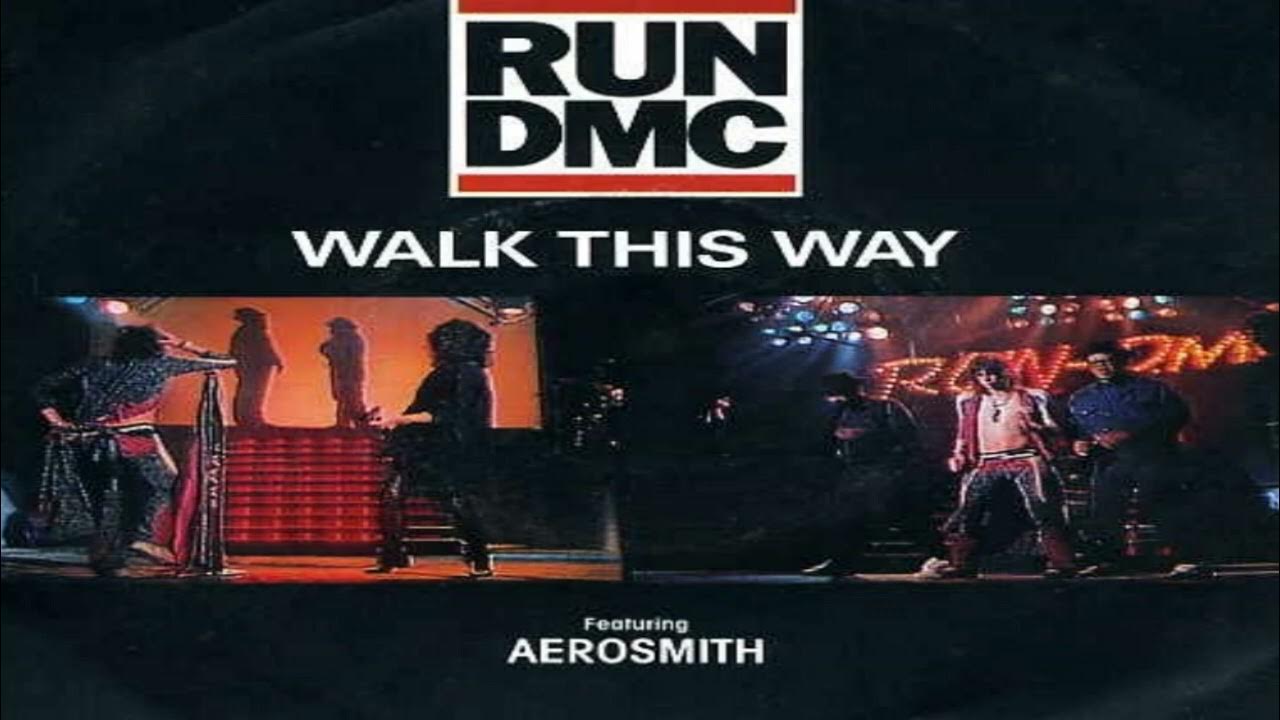
Aerosmith originally released "Walk This Way" on April 8, 1975, as part of their seminal third studio album, Toys in the Attic. Columbia Records subsequently issued the track as an official single on November 28, 1976. A decade later, rap group Run-D.M.C. released their iconic remake on July 4, 1986, reshaping popular music forever.
The Original 1975 Album Release and 1976 Single Launch
Understanding the release history of "Walk This Way" requires looking at two distinct promotional windows: the initial album launch on Toys in the Attic and its subsequent reissue as a standalone commercial single.
Toys in the Attic Debut (April 1975)
When Aerosmith entered Record Plant studios in New York City during early 1975 with producer Jack Douglas, the band was under intense pressure to build upon the moderate success of their 1974 release, Get Your Wings. On April 8, 1975, Columbia Records released Toys in the Attic. "Walk This Way" appeared as the fourth track on side one of the vinyl LP.
At the time of the album's release, Columbia Records prioritized "Sweet Emotion" as the lead single. "Sweet Emotion" broke into the top 40 of the US Billboard Hot 100, providing Aerosmith with their first mainstream radio break since the re-charting of "Dream On." Consequently, "Walk This Way" remained an album track for over a year, gaining heavy airplay on album-oriented rock (AOR) FM stations across North America before getting an official single press.
Single Release and Commercial Breakthrough (November 1976 – 1977)
Recognizing the song's popularity on radio and during live performances, Columbia Records officially released "Walk This Way" as a 7-inch vinyl single on November 28, 1976 (catalog number Columbia 3-10446, backed with "Uncle Salty").
The single debuted on the Billboard Hot 100 in early December 1976 and steadily climbed the charts throughout the winter. It peaked at Number 10 on the Billboard Hot 100 in early 1977. This peak solidified Aerosmith's status as arena rock superstars and established "Walk This Way" as a signature anthem of 1970s hard rock.
Genesis of the Track: How "Walk This Way" Was Written and Recorded
The creation of "Walk This Way" represents one of the most famous spontaneous songwriting sessions in hard rock history. The track combined improvised funk R&B grooves with heavy guitar distortion and fast-talking lyricism.
The Honolulu Soundcheck and Joey Kramer’s Drum Groove
In December 1974, while touring in support of Get Your Wings, Aerosmith flew to Honolulu, Hawaii, to perform at the HIC Arena. During a pre-show soundcheck, lead guitarist Joe Perry began playing a funk-infused, syncopated guitar riff inspired by the funk rhythm sections of James Brown and The Meters.
Drummer Joey Kramer matched Perry's guitar work with a distinctive beat, anchored by a tight hi-hat accent and a snapping snare drum. Bassist Tom Hamilton joined in, establishing the bottom-end groove. The band jammed on the rhythm for nearly twenty minutes, recording the rough instrumental snippet onto a portable cassette recorder so they wouldn't lose the idea when they returned to the studio.
Jack Douglas, Scat Vocals, and Young Frankenstein Inspiration
When record producer Jack Douglas gathered the band at Record Plant studios in early 1975, the instrumental track was laid down quickly. However, the song lacked finished vocal melodies and lyrics. Vocalist Steven Tyler initially sang non-lexical scat vocables over the track to establish the rhythm and cadence necessary to match Joe Perry's riff.
The breakthrough for the song's title and theme occurred during a band break. Producer Jack Douglas and members of Aerosmith went to see Mel Brooks' comedy film Young Frankenstein at a local theater in Times Square. In one famous scene, Marty Feldman's character, Igor, instructs Gene Wilder's character to "walk this way," limping down the stairs so that Wilder follows his gait.
Tyler immediately seized on the phrase. Back at the studio, he spent hours writing lyrics across the studio walls and on notepad paper, crafting a humorous narrative about high school teenage sexuality, awkward encounters, and coming of age. The fast tempo and heavy word count required Tyler to deliver the verses in a rhythmic style that presaged modern rap vocals.
The Landmark 1986 Run-D.M.C. Collaboration Release
While the 1975/1976 version of "Walk This Way" remains a cornerstone of classic rock, the track achieved secondary global prominence in 1986 through a groundbreaking crossover collaboration engineered by producer Rick Rubin.
Raising Hell and Rick Rubin's Vision (July 1986)
In 1986, hip-hop group Run-D.M.C. (consisting of Joseph "Run" Simmons, Darryl "D.M.C." McDaniels, and Jason "Jam Master Jay" Mizell) was preparing their third studio album, Raising Hell, for Profile Records. Jam Master Jay had frequently scratched the opening drum beat of Aerosmith's 1975 recording of "Walk This Way" during live DJ sets and breakbeat sessions in Queens, New York.
Co-producer Rick Rubin suggested that the group record a complete cover of the song rather than just sampling its drum beat. Run and D.M.C. were initially hesitant, referring to the rock instrumentation as "hillbilly music." Rubin persuaded them to bring Steven Tyler and Joe Perry into the studio to re-record their original vocal and guitar parts over modern drum machine arrangements and DJ scratching.
Profile Records released the Run-D.M.C. version of "Walk This Way" as a single on July 4, 1986. It also served as the centerpiece of Raising Hell, which had been released weeks earlier on May 15, 1986.
| Date | Event |
|---|---|
| April 8, 1975 | Released on Aerosmith's album "Toys in the Attic" |
| Nov 28, 1976 | Released as Columbia Records 7" Single (Aerosmith) |
| Jan-Feb 1977 | Peaks at #10 on the US Billboard Hot 100 |
| May 15, 1986 | Released on Run-D.M.C.'s album "Raising Hell" |
| July 4, 1986 | Released as Profile Records Single (Run-D.M.C. ft. Aerosmith) |
| Sept 1986 | Peaks at #4 on the US Billboard Hot 100 |
Breaking Cultural Barriers and Chart Milestones
The 1986 release of "Walk This Way" achieved unprecedented crossover success across radio formats and music television:
- Top-Five Mainstream Success: The single peaked at Number 4 on the US Billboard Hot 100, surpassing the chart performance of the original 1976 release.
- MTV Heavy Rotation: The accompanying music video—featuring a literal wall separating a rock band and a rap group until they break it down—became one of the most played videos on MTV.
- Revitalization of Aerosmith: Before the 1986 collaboration, Aerosmith faced declining commercial fortunes and substance-related setbacks. The success of the single reintroduced Tyler and Perry to a younger generation, laying the groundwork for their major comeback album Permanent Vacation (1987).
- Hip-Hop Mainstream Acceptance: The single helped push rap music from urban club scenes into mainstream pop culture, making Raising Hell the first hip-hop album to achieve triple-platinum certification from the Recording Industry Association of America (RIAA).
Comparing Both Release Cycles: Aerosmith (1975/1976) vs. Run-D.M.C. (1986)
To understand the scope and impact of both iterations of "Walk This Way," the following table breaks down key operational, technical, and commercial metrics for each release cycle.
| Feature / Metric | Original Aerosmith Version | Run-D.M.C. Collaboration Version |
|---|---|---|
| Initial Album Release Date | April 8, 1975 (Toys in the Attic) | May 15, 1986 (Raising Hell) |
| Official Single Release Date | November 28, 1976 | July 4, 1986 |
| Record Label | Columbia Records | Profile Records |
| Primary Producers | Jack Douglas | Rick Rubin, Russell Simmons |
| US Billboard Hot 100 Peak | #10 (1977) | #4 (1986) |
| UK Singles Chart Peak | #85 (1976) | #8 (1986) |
| Primary Genre Classification | Hard Rock / Funk Rock | Rap Rock / Crossover Hip-Hop |
| Key Instrumental Personnel | Joe Perry, Tom Hamilton, Joey Kramer, Brad Whitford | Jam Master Jay, Joe Perry, Rick Rubin (drum programming) |
| Vocalists | Steven Tyler | Joseph Simmons, Darryl McDaniels, Steven Tyler |
| Recording Studio | Record Plant (New York City) | Electric Lady Studios (New York City) |
Musical Composition, Gear, and Riff Analysis
"Walk This Way" is widely studied in music theory and musicology due to its blend of funk rhythms and hard rock instrumentation.
Joe Perry's Guitar Setup and Gibson Les Paul / Stratocaster Dynamics
The signature opening riff of "Walk This Way" relies heavily on syncopation and precise pickup placement. While Joe Perry used various guitars live, the original studio recording featured a combination of classic American electric guitars and tube amplification:
- Guitar Selection: Perry executed the primary riff using a 1959 Gibson Les Paul Standard, alongside a Fender Stratocaster for specific fill layers. The bridge pickup selection provided the cutting mid-range bite necessary to sit on top of the rhythm section.
- Amplification: The guitar tone was driven through Marshall 100-watt Plexi amplifier heads coupled with 4x12 speaker cabinets loaded with Celestion Greenback speakers. Overdrive was generated through natural power amp saturation rather than extreme high-gain pedal distortion.
- Key and Scale: The iconic riff is constructed primarily in the key of C major / C minor pentatonic, utilizing open-string pull-offs and quarter-step blues bends on the lower strings.
Syncopation, Rhythm Section, and Steven Tyler's Vocal Delivery
What sets "Walk This Way" apart from standard mid-1970s hard rock is its heavy emphasis on the "one" beat, borrowed directly from James Brown’s funk arrangements.
Joey Kramer’s drum track begins with an unadorned two-measure kick-and-snare intro that features a subtle open hi-hat on the off-beat. This drum beat later became one of the most sampled breaks in early hip-hop history, alongside tunes like the Incredible Bongo Band's "Apache."
Vocalist Steven Tyler matched this rhythmic foundation by delivering his lyrics with rapid-fire, quarter-note and eighth-note cadence. The vocal style features minimal melodic pitch variation during the verses, relying instead on timbre, internal rhyme schemes, and rhythmic syncopation—elements that made the track a natural fit for rap adaptation a decade later.
Cultural Legacy and Impact on Rock and Hip-Hop Fusion
The two release dates of "Walk This Way"—November 28, 1976, and July 4, 1986—bookend a crucial decade in modern American popular music history.
- "Walk This Way" Cultural Influence
- 1976 Rock Era Impact
- Standardized Funk-Rock
- Defined 1970s Arena Guitar Riff Standards
- 1986 Crossover Era Impact
- Birthed Rap-Rock Genre
- Broke Hip-Hop into MTV
- Saved Aerosmith Career
- 1976 Rock Era Impact
The 1986 version bridged the gap between two genres that were frequently segregated on radio playlists. The track opened commercial doors for future rap-rock fusion acts, including Rage Against the Machine, the Beastie Boys, Faith No More, and Red Hot Chili Peppers.
Both versions have received major industry recognitions:
- Grammy Hall of Fame: Aerosmith's original recording was inducted into the Grammy Hall of Fame for its lasting historical significance.
- Rock and Roll Hall of Fame: The song is featured in the Rock and Roll Hall of Fame's permanent exhibit of 500 Songs That Shaped Rock and Roll.
- Rolling Stone 500 Greatest Songs: Both the 1975 original and the 1986 remake have earned spots on various editions of Rolling Stone’s list of the greatest songs of all time.
Frequently Asked Questions (FAQ)
What is the official release date of Aerosmith's original "Walk This Way"?
Aerosmith first released "Walk This Way" on the album Toys in the Attic on April 8, 1975. Columbia Records later released it as a standalone 7-inch vinyl single on November 28, 1976.
When did Run-D.M.C. release their version of "Walk This Way"?
Run-D.M.C. released their collaboration version featuring Steven Tyler and Joe Perry as a single on July 4, 1986. The track also appeared on their album Raising Hell, which debuted on May 15, 1986.
Which version of "Walk This Way" charted higher on the Billboard Hot 100?
The 1986 version by Run-D.M.C. featuring Aerosmith charted higher, reaching Number 4 on the Billboard Hot 100. Aerosmith's original 1976 single peaked at Number 10 in early 1977.
Why did Aerosmith name the song "Walk This Way"?
The title was inspired by Mel Brooks' 1974 comedy film Young Frankenstein. After seeing the movie during a studio break, producer Jack Douglas and the band adopted the phrase from Marty Feldman's character Igor, who tells Gene Wilder to "walk this way" while limping down stairs.
Who produced the 1975 original version versus the 1986 version?
Jack Douglas produced the original 1975 recording for Aerosmith at Record Plant studios in New York City. Rick Rubin and Russell Simmons produced the 1986 collaboration version for Profile Records at Electric Lady Studios.
Key Takeaways for Music Historians and Rock Enthusiasts
When cataloging or referencing "Walk This Way," music historians distinguish between three primary release milestones:
- April 8, 1975: Album track release on Aerosmith's Toys in the Attic.
- November 28, 1976: Commercial single release by Aerosmith, reaching #10 on the Hot 100 in 1977.
- July 4, 1986: Commercial single release by Run-D.M.C. featuring Steven Tyler and Joe Perry, reaching #4 on the Hot 100.
Both release eras represent pivotal moments in American music. The 1976 single defined the heights of 1970s hard rock guitar riffing, while the 1986 remake dismantled genre boundaries between rock and hip-hop, leaving a lasting legacy across modern popular culture.