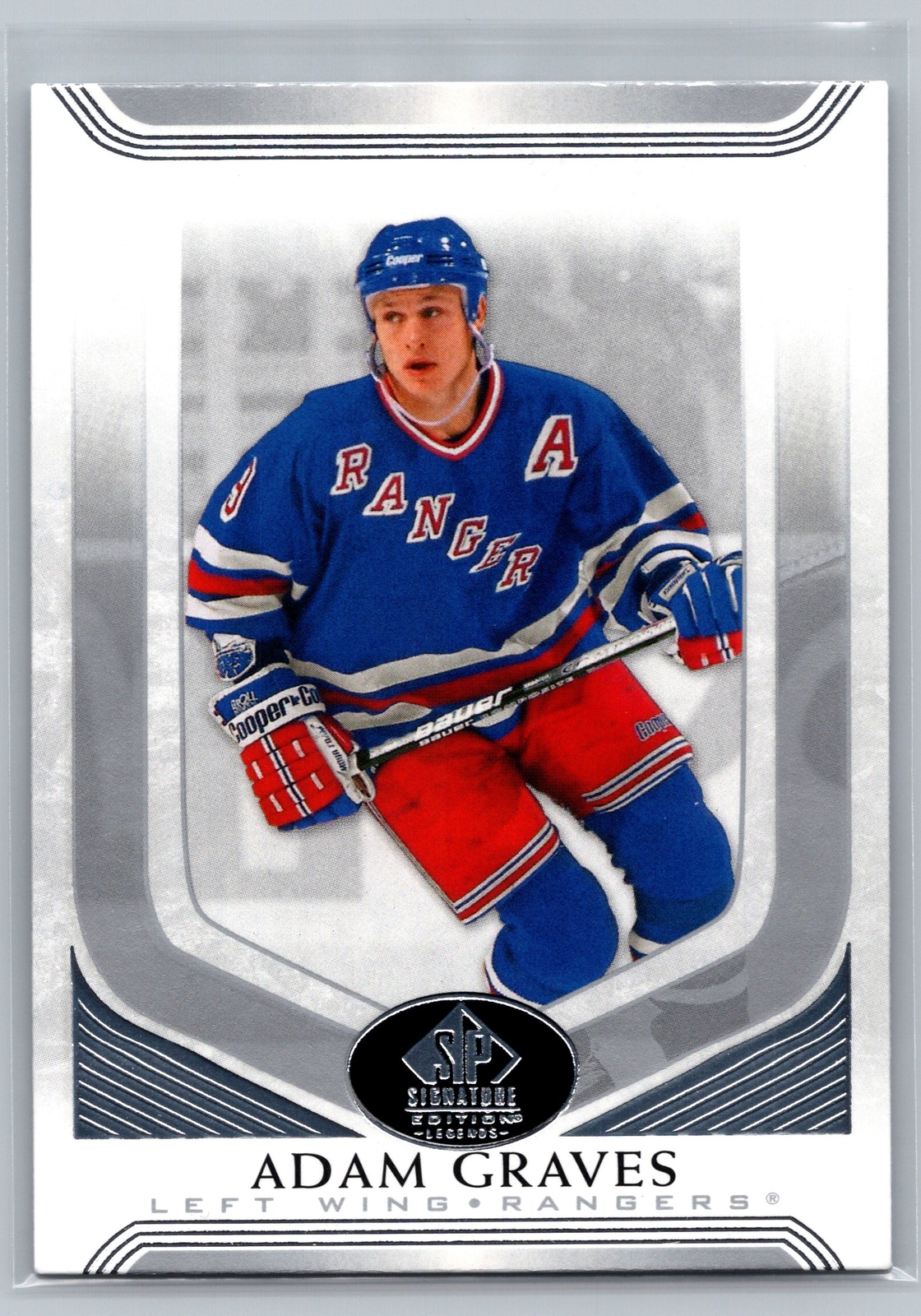
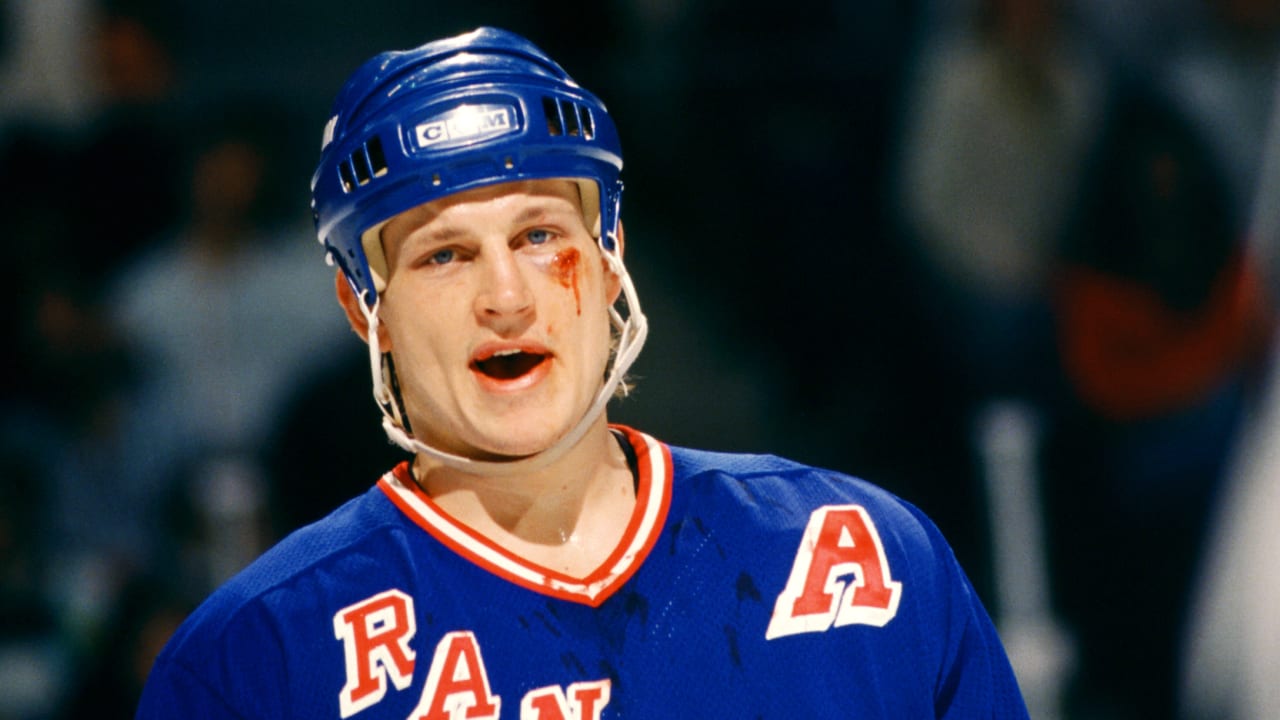
Adam Graves' legacy with the New York Rangers represents the ultimate intersection of elite athletic achievement, physical toughness, and selfless community leadership. As a key core member of the historic 1994 Stanley Cup championship team, a 52-goal scorer, and a multi-time NHL humanitarian award winner, Graves established a standard of character that remains the benchmark for the franchise.
The Arrival in New York: Transitioning from Role Player to Franchise Anchor
When Adam Graves signed with the New York Rangers as a free agent in the summer of 1991, few predicted he would evolve into one of the most iconic figures in original-six hockey history. Drafted 9th overall by the Detroit Red Wings in 1986 and later traded to the Edmonton Oilers—where he won his first Stanley Cup in 1990 as part of the famed "Kid Line" alongside Joe Murphy and Martin Gelinas—Graves possessed raw power and operational discipline. However, his offensive upside remained largely untapped in limited ice time.
Rangers General Manager Neil Smith recognized that Graves possessed an uncommon combination of net-front physicality, soft hands around the crease, and unquestioned leadership. Joining a Blueshirts roster undergoing a dramatic cultural transformation—headlined by the arrival of team captain Mark Messier—Graves immediately seamlessly slotted into a top-line role.
- Red Wings Draft (1986)
- Oilers Stanley Cup (1990)
- Rangers Signing (1991)
- 52-Goal Season & Cup (1994)
In his first season in New York (1991–92), Graves exploded for 26 goals and 49 points, doubling his previous career highs. More importantly, he established an identity on the ice that resonated instantly with the fanbase inside Madison Square Garden. Graves operated in the high-danger areas of the ice, anchoring himself in front of opposing goaltenders, screening shots, deflecting passes, and absorbing punishment from opposing defensemen without hesitation.
His chemistry with Mark Messier became the operational engine of the Blueshirts forward corps. While Messier provided imposing, driving leadership and elite playmaking, Graves delivered relentless forechecking, physical protection, and lethal finishing ability close to the net. This partnership transformed the Rangers from a talented yet inconsistent club into a perennial Stanley Cup contender.
The Historic 1993–94 Season: Shattering Records and Ending the Drought
The 1993–94 NHL regular season stands as the apex of Adam Graves’ on-ice career. Under the demanding tactical framework of head coach Mike Keenan, Graves posted numbers that secured his place in hockey lore. Playing all 84 regular-season games, Graves scored 52 goals, breaking Vic Hadfield’s long-standing single-season franchise goal record of 50, set during the 1971–72 campaign.
- 1971–72: Vic Hadfield (50 Goals)
- 1993–94: Adam Graves (52 Goals) - Franchise Record for 12 Years
- 2005–06: Jaromír Jágr (54 Goals)
Graves’ 52-goal threshold was not built on perimeter sniping or high-volume transition scoring. Instead, it was forged through relentless net-front battles, power-play conversions, and second-chance rebounds. Of his 52 goals that season, 20 came on the power play, highlighting his critical role as the net-front screen in coordinator tactical setups involving defensemen Brian Leetch and Sergei Zubov.
Key Performance Drivers in 1993–94
- Net-Front Presence: Graves dominated the blue paint, converting high-danger deflections while preventing goaltenders from establishing clear sightlines.
- Power-Play Efficiency: Functioning as the central bumper and tip man on one of the league's top power plays.
- Even-Strength Durability: Playing heavy minutes against opponent top defense pairs while maintaining positive shot-differential metrics.
- Clutch Scoring: Recording 9 game-winning goals during the regular season, establishing early momentum for a championship campaign.
When the 1994 Stanley Cup Playoffs commenced, Graves’ role shifted from primary goal scorer to high-leverage power forward. Across 23 postseason contests, he recorded 10 goals and 7 assists for 17 points, helping the Rangers navigate emotionally taxing series against the New York Islanders, Washington Capitals, New Jersey Devils, and Vancouver Canucks.
In Game 7 of the Stanley Cup Finals against Vancouver, Graves logged heavy, courageous shifts, helping secure a 3–2 victory that banished 54 years of frustration and brought the Stanley Cup back to Manhattan. His image celebrating with the trophy on the Madison Square Garden ice remains an indelible symbol of New York sports history.
Adam Graves: Key Career Milestones and Honors
To fully grasp the magnitude of Adam Graves' impact on the New York Rangers franchise, it is helpful to examine his major achievements, statistical markers, and league honors side by side.
| Metric / Honor | Year / Record | Context & Significance to Rangers History |
|---|---|---|
| Stanley Cup Championship | 1994 | Core member of the team that ended the 54-year championship drought. |
| Franchise Single-Season Goal Record | 52 Goals (1993–94) | Broke Vic Hadfield's 50-goal mark; stood until Jaromir Jagr scored 54 in 2006. |
| King Clancy Memorial Trophy | 1994 | Awarded by the NHL for exemplary leadership and humanitarian contributions. |
| Bill Masterton Memorial Trophy | 1994 | Recognized for perseverance, sportsmanship, and dedication to ice hockey. |
| NHL Foundation Player Award | 2000 | Honors an NHL player who applies core hockey values to enrich lives in the community. |
| Steven McDonald Extra Effort Award | 5-Time Winner (1992, 1993, 1994, 1999, 2000) | Voted by Rangers fans for playing "above and beyond the call of duty." |
| Jersey Retirement (#9) | February 3, 2009 | Number 9 banner raised to the MSG rafters (shared honor with Andy Bathgate). |
| Rangers Franchise Games Played | 772 Games | Ranks among the top forward games-played leaders in franchise history. |
| Rangers Franchise Goals | 280 Goals | Holds a top-ten spot in all-time franchise goal scoring. |
Character, Sportsmanship, and On-Ice Mentorship
While goals and championships define the physical record, Graves' character elevated his reputation across the entire National Hockey League. He exemplified accountability, sportsmanship, and physical protection of his teammates. In an era marked by intense physical confrontation, Graves fought when necessary to defend his team, yet he consistently maintained high standards of discipline and respect for opponents.
His exceptional conduct was recognized in 1994 when he swept two of the NHL’s most prestigious individual honors: the Bill Masterton Memorial Trophy (dedication and perseverance) and the King Clancy Memorial Trophy (leadership and humanitarian work). It remains rare for a player to claim both awards in the same season, underscoring the deep respect he commanded from coaches, writers, and fellow players alike.
Rangers fans honored Graves' work ethic by awarding him the Steven McDonald Extra Effort Award five times. Named after the brave New York City police officer injured in the line of duty, the award measures heart, hustle, and commitment—qualities that Graves displayed in every single shift.
- On-Ice Power Forward
- 52-Goal Scorer
- Net-Front Battles
- 1994 Stanley Cup
- Power-Play Efficiency
- Emotional Heartbeat
- 5x Steven McDonald Award
- Masterton & King Clancy Trophies
- Unwavering Teammate Defense
- 52-Goal Scorer
During the rebuilding years of the late 1990s, Graves served as an invaluable mentor to younger players entering the Rangers system. He modeled how to navigate the intense media environment of New York, handle high expectations, and balance professional athletics with deep personal involvement in the local community.
The Off-Ice Legacy: Philanthropy and the Garden of Dreams
Adam Graves’ legacy with the Rangers extends far beyond his ten seasons wearing the sweater. Following his retirement as an active player in 2003, Graves returned to the Rangers organization in a executive and ambassadorial capacity, helping reshape the team’s philanthropic vision.
Graves became a foundational pillar of the Garden of Dreams Foundation, a non-profit organization working in partnership with Madison Square Garden and MSG Entertainment. The foundation works with children facing severe obstacles, including illness, financial hardship, and displacement, creating life-changing opportunities and long-term support.
- Garden of Dreams Foundation Impact Areas:
- Pediatric Hospital & Health Support
- Youth Hockey & Athletics Access
- Educational Scholarships & Grants
- Community Crisis Relief Projects
Unlike public figures who participate solely in photo opportunities, Graves established a hands-on, daily commitment to community service. He regularly visits local pediatric hospitals, hosts families at Rangers games, organizes youth hockey clinics in underserved communities, and guides the distribution of educational scholarships.
His genuine warmth and empathy transformed how professional athletes in New York engage with civic responsibility. For decades, Graves has personally responded to fan mail, visited sick youth outside the public eye, and ensured that the New York Rangers organization remains deeply rooted in helping vulnerable families across the tri-state area.
Raising #9 to the Rafters: Immortalization at Madison Square Garden
On February 3, 2009, the New York Rangers formally cemented Adam Graves’ place in franchise history by retiring his number 9 banner to the rafters of Madison Square Garden.
The ceremony was a deeply moving tribute, bringing together teammates from the 1994 championship squad, including Mark Messier, Brian Leetch, and Mike Richter. It also honored Rangers legend Andy Bathgate, who had worn number 9 during his Hall of Fame career in the 1950s and 1960s. Both icons saw their shared number raised together, uniting two distinct generations of Rangers excellence.
During his address to the crowd, Graves deflected personal praise, characteristic of his modesty, focusing instead on expressing gratitude to the arena staff, trainers, teammates, fans, and his family. The retirement banner serves as a permanent reminder to every player who puts on a Rangers sweater of what it means to represent New York with integrity, physical courage, and humility.
- MSG Rafters Co-Honors (#9):
- Andy Bathgate (1952–1964) - Hall of Fame Playmaker
- Adam Graves (1991–2001) - 1994 Champion & Philanthropist
Today, when modern Rangers power forwards—such as Chris Kreider—drive to the net, block shots, and mentor younger teammates, they operate in the direct shadow of the standard established by Adam Graves. His influence remains woven into the organizational DNA, serving as an enduring blueprint for player development and community impact.
FAQs: Understanding Adam Graves' Rangers Legacy
How many goals did Adam Graves score in his single-season record year for the Rangers?
Adam Graves scored 52 goals during the 1993–94 NHL regular season. This set a new franchise single-season record, surpassing Vic Hadfield’s 50-goal mark set in 1971–72. Graves' record stood for 12 years until Jaromir Jagr scored 54 goals during the 2005–06 season. Chris Kreider also tied Graves with 52 goals in 2021–22.
What trophies did Adam Graves win while playing for the New York Rangers?
During his tenure with the Rangers, Graves won the Stanley Cup in 1994. In that same magical 1993–94 season, he won both the King Clancy Memorial Trophy (for leadership and humanitarian contributions) and the Bill Masterton Memorial Trophy (for perseverance and sportsmanship). Later, in 2000, he received the NHL Foundation Player Award. Locally, he won the fan-voted Steven McDonald Extra Effort Award five times.
Why is the number 9 sweater shared between Adam Graves and Andy Bathgate?
When the Rangers retired number 9 on February 3, 2009, they chose to honor both Adam Graves and Andy Bathgate. Bathgate was an elite Hall of Fame winger who dominated for the Blueshirts in the 1950s and 1960s, while Graves was the heart and soul of the 1994 championship team. Both players made historic contributions to the franchise, so their achievements are jointly commemorated under banner #9.
What is Adam Graves' role with the Garden of Dreams Foundation?
Since retiring from professional hockey, Adam Graves has worked extensively with the Rangers front office and community relations department, serving as a primary leader and advocate for the Garden of Dreams Foundation. He leads outreach efforts, works directly with children facing severe illnesses or hardships, helps raise funds, and organizes community initiatives across New York, New Jersey, and Connecticut.
How many Stanley Cups did Adam Graves win during his NHL career?
Adam Graves won two Stanley Cups during his 16-season NHL career. His first championship came in 1990 as a young forward with the Edmonton Oilers. His second championship came four years later in 1994 as a core leader, alternate captain, and top-line forward for the New York Rangers.
Practical Takeaways: Lessons from the Legacy of #9
For sports historians, hockey analytics researchers, young athletes, and passionate fans studying the history of the New York Rangers, Adam Graves’ career provides several clear operational takeaways:
- Master High-Danger Area Execution: Graves built an elite offensive career by specializing in net-front screens, deflection angles, and rebound conversions rather than relying strictly on perimeter shooting.
- Combine Physicality with Discipline: Despite playing a heavy, physical style during a violent era of hockey, Graves maintained self-control, earning individual awards for sportsmanship while effectively protecting his teammates.
- Build Sustainable Community Value: Graves demonstrated that an athlete's true legacy is extended by genuine, long-term personal investment in civic causes, as shown by his ongoing decades-long work with the Garden of Dreams Foundation.
- Study Historical Blueprinting: Young power forwards looking to adapt their game to modern NHL structures can study Graves' 1993–94 game film to understand how net-front positioning creates space for elite playmakers.
Adam Graves remains one of the most beloved figures in New York sports history because he measured success not merely by goals scored or banners raised, but by the positive impact he left on his team, his city, and the lives of those around him.