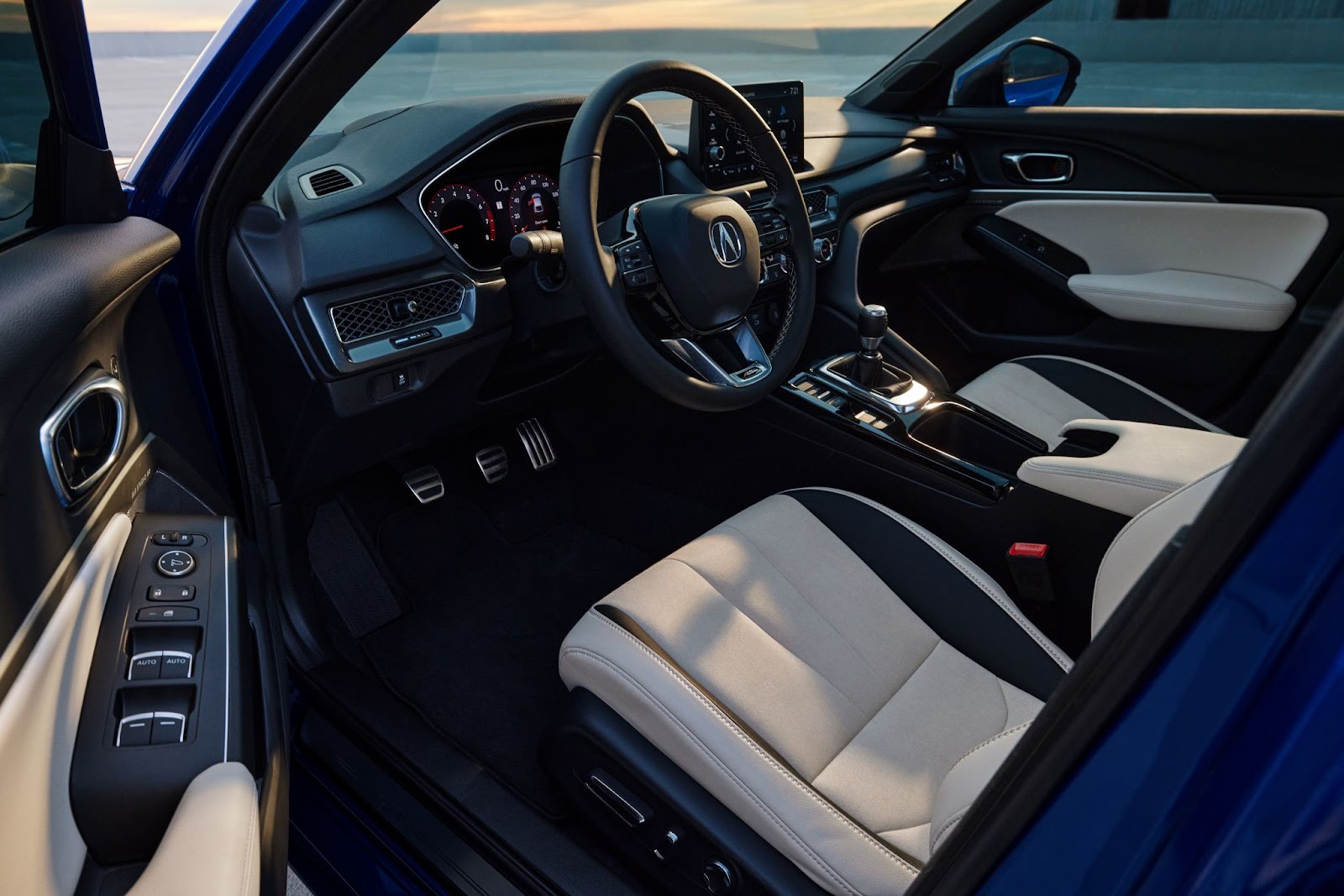
The name Acura is not a traditional Japanese word; rather, it is a neologism derived from the Latin root "acu," meaning "done with precision" or "sharp." Created in the mid-1980s for Honda’s luxury division, the name was designed to communicate technical excellence, accuracy, and the high-end engineering of its vehicles.
The Etymology of "Acura": Latin Roots in a Japanese Context
To understand what "Acura" means, one must look toward linguistics rather than a Japanese dictionary. When Honda decided to launch a luxury brand in North America in the 1980s, they sought a name that would resonate with a global audience while conveying a sense of sophisticated engineering. They commissioned NameLab, a marketing consultancy, to develop a title that felt both modern and prestigious.
The word "Acura" is based on the Latin morpheme "acu," which appears in words like accurate, acumen, and acupuncture. In Latin, acutus means sharp or pointed. By adding the suffix "-ra," the creators formed a word that suggests the "result of precision." This was a deliberate move to distance the luxury line from the "Honda" parent brand, which at the time was synonymous with reliable but affordable economy cars.
For a Japanese company, choosing a Latin-based name was a strategic masterstroke. It bridged the gap between Japanese manufacturing prowess and Western perceptions of luxury. While the brand is undeniably Japanese in its ownership, engineering, and cultural heritage, its name is a product of international branding science designed to evoke a specific psychological response: the feeling that every component of the vehicle has been measured to the millimeter.
The Strategic Birth of a Brand (1986)
In the early 1980s, the "Big Three" Japanese automakers (Honda, Toyota, and Nissan) faced a dilemma. They were producing high-quality vehicles, but they were trapped in the "economy car" segment. To compete with European giants like BMW and Mercedes-Benz, they needed a new identity. Honda was the first to act, launching Acura on March 27, 1986.
Why Honda Needed a New Name
During this era, the "Honda" nameplate was highly respected for the Civic and the Accord, but it lacked the "prestige factor" required to sell a $20,000+ luxury sedan (a significant sum at the time). Consumers in North America were hesitant to pay premium prices for a brand they associated with fuel efficiency and sensible commuting. By creating Acura, Honda established a "firewall" between its mass-market products and its high-performance luxury offerings.
The Competition: Acura vs. Lexus vs. Infiniti
Acura’s success forced its competitors to follow suit. Shortly after Acura’s debut, Toyota launched Lexus and Nissan launched Infiniti. Each followed a similar naming convention:
- Lexus: Often associated with "Luxury Exports to the U.S." (though Toyota claims it was chosen for its sleek, high-end sound).
- Infiniti: Representing the "infinite" possibilities of performance and luxury.
Acura, however, remained unique by focusing specifically on the concept of precision. This theme has remained the cornerstone of the brand's identity through 2026, influencing everything from their suspension tuning to their interior ergonomics.
Decoding the Acura Logo: The Caliper and the "A"
The meaning of Acura is not only found in its name but also in its visual identity. The Acura logo, frequently mistaken for a simple stylized letter "A," actually has a deeper technical meaning. It is based on a caliper, a precise measuring tool used by engineers to ensure accuracy in thickness and diameter.
When the brand was first conceived, the logo was essentially a pair of calipers partially closed. However, before the brand went to market, Soichiro Honda—the legendary founder of the parent company—noticed that the logo lacked a clear connection to the "A" in Acura. He famously insisted on adding a small horizontal bar to connect the two sides of the caliper, effectively turning the tool into a bold, stylized "A."
This logo serves as a visual "definition" of the brand. It tells the consumer that the car they are driving is not just an assembly of parts, but a collection of components verified by the most precise instruments available. In 2026, as Acura continues its transition into high-performance electric vehicles (EVs), this caliper logo remains a symbol of the brand's "Precision Crafted Performance" mantra.
Is "Acura" a Word in Japanese?
Technically, no. If you were to search for "Acura" in a traditional Japanese-to-English dictionary, you would not find a definition related to cars or precision. In Japan, the brand did not even exist as a separate entity for decades; many Acura models were sold simply as high-end Hondas. For example, the legendary Acura NSX was known as the Honda NSX in Japan.
When written in Japanese, the name is rendered in Katakana as アキュラ (Akyura). Katakana is the Japanese script used specifically for foreign loanwords, names, and technical terms. This further reinforces that the name is an international creation rather than a traditional Japanese word like Sakura (cherry blossom) or Hikari (light).
However, the concept behind Acura—precision engineering—is deeply rooted in Japanese culture, specifically the philosophy of Monozukuri. This term refers to the art of making things with a focus on excellence, continuous improvement (Kaizen), and a respect for the manufacturing process. While the word "Acura" is Latinate, the soul of the brand is entirely Japanese.
Comparing Luxury Brand Identities
The following table illustrates how Acura’s name and meaning compare to its primary Japanese and international competitors as of 2026.
| Brand | Origin Year | Name Meaning/Root | Core Philosophy |
|---|---|---|---|
| Acura | 1986 | Latin Acu (Precision/Sharp) | Precision Crafted Performance |
| Lexus | 1989 | Neologism (Luxury/Elegance) | The Pursuit of Perfection |
| Infiniti | 1989 | English (Limitless/Infinite) | Human-Centric Performance |
| Genesis | 2015 | Greek/English (Beginning) | Athletic Elegance |
| Audi | 1910 | Latin (To Listen/Horch) | Progress through Technology |
Precision Crafted Performance: The Slogan’s Relation to the Name
The tagline "Precision Crafted Performance" is more than just marketing; it is a literal translation of the brand's name for the consumer. Over the decades, Acura has used this slogan to justify its engineering choices, such as:
- SH-AWD (Super Handling All-Wheel Drive): A system designed to precisely distribute torque to individual wheels to improve cornering.
- VTEC Engines: Using precision valve timing to balance fuel efficiency with high-RPM power.
- Advanced Compatibility Engineering (ACE): A body structure designed to precisely manage crash energy.
By 2026, this focus has shifted toward software-defined vehicles. The "precision" now refers to the millisecond-level response times of electric motors and the accuracy of advanced driver-assistance systems (ADAS). The name "Acura" has successfully evolved from describing mechanical sharpness to describing digital accuracy.
Common Misconceptions About Acura's Origins
Despite being a well-established brand for 40 years, several myths persist regarding what Acura means and where it came from.
Myth 1: It is a Japanese word for "Sun" or "Star"
This is a common confusion with names like "Subaru" (which refers to the Pleiades star cluster). Acura has no celestial meaning in Japanese.
Myth 2: It stands for "American Honda"
While Acura was created specifically for the North American market, the name is not an acronym. It was chosen for its phonetic qualities and linguistic roots, not as a shorthand for its parent company’s regional office.
Myth 3: Acura cars are just "fancy Hondas"
While they share platforms, the "meaning" of an Acura lies in the bespoke engineering. Acura models often feature different suspension geometries, unique engine tunes, and premium materials that are not available in the standard Honda lineup. The brand exists to fulfill a different mission: providing a spirited driving experience that goes beyond basic transportation.
The Evolution of the Brand Identity into 2026
As of 2026, the meaning of Acura has taken on a new dimension with the full-scale rollout of its electric vehicle lineup, such as the ZDX and subsequent precision-focused EVs. The "sharpness" implied by the name now applies to the "instant-on" torque of electric motors and the sleek, aerodynamic "Precision EV" design language.
The brand has also leaned back into its heritage by reviving legendary names like the Integra. By doing so, they are reminding consumers that the "precision" in their name is backed by decades of enthusiast-grade performance. The Integra, in particular, serves as a bridge between the analog precision of the 1990s and the digital precision of the mid-2020s.
FAQ
Does Acura exist in Japan?
For most of its history, the Acura brand was not used in Japan. Vehicles sold as Acuras in North America (like the RSX, TSX, and Legend) were sold under the Honda brand in the Japanese domestic market (JDM). While there have been various corporate discussions about launching the Acura channel in Japan, it remains primarily a brand for North America, China, and a few other international markets.
Who owns Acura?
Acura is the luxury vehicle division of Honda Motor Company, headquartered in Minato, Tokyo, Japan. While the brand is Japanese-owned, a significant portion of its design and manufacturing takes place in North America, particularly in Ohio.
Is the Acura logo a "H" turned upside down?
No, though it is a common joke among enthusiasts. The Acura logo is a stylized pair of calipers (an engineering tool). While it resembles an "A," it was specifically designed to mirror the "H" logo of Honda in its structural weight and silver finish, creating a family resemblance while remaining distinct.
Why did Honda choose a Latin name instead of a Japanese one?
In 1986, Japanese brands were still fighting the "cheap" stigma. By using a Latin-based name like Acura, Honda was able to tap into a sense of "European" sophistication and scientific rigor, which appealed more to the luxury buyers of that era than a Japanese name might have.
What was the first Acura car ever made?
The brand launched in 1986 with two models: the Legend (a luxury sedan) and the Integra (available as a coupe or sedan). The Legend was particularly significant as it was the first Japanese luxury car to feature a V6 engine, truly challenging the European establishment.
Practical Recommendation for Enthusiasts and Buyers
If you are researching the meaning of Acura because you are considering purchasing one in 2026, remember that the name is a promise of technical exactness. When evaluating a used or new Acura, pay close attention to the features that define "Precision Crafted Performance," such as the Super Handling All-Wheel Drive (SH-AWD) system and the quality of the interior interface.
Understanding that Acura means "precision" helps clarify the brand's position in the market: they are rarely the most "opulent" cars (like a Rolls-Royce) or the "loudest" cars (like a Lamborghini). Instead, they are designed for drivers who value mechanical and digital accuracy, high-revving efficiency, and long-term reliability. If your priority is a vehicle that feels "sharply" engineered and meticulously put together, the Acura nameplate continues to fulfill its original 1986 mission.