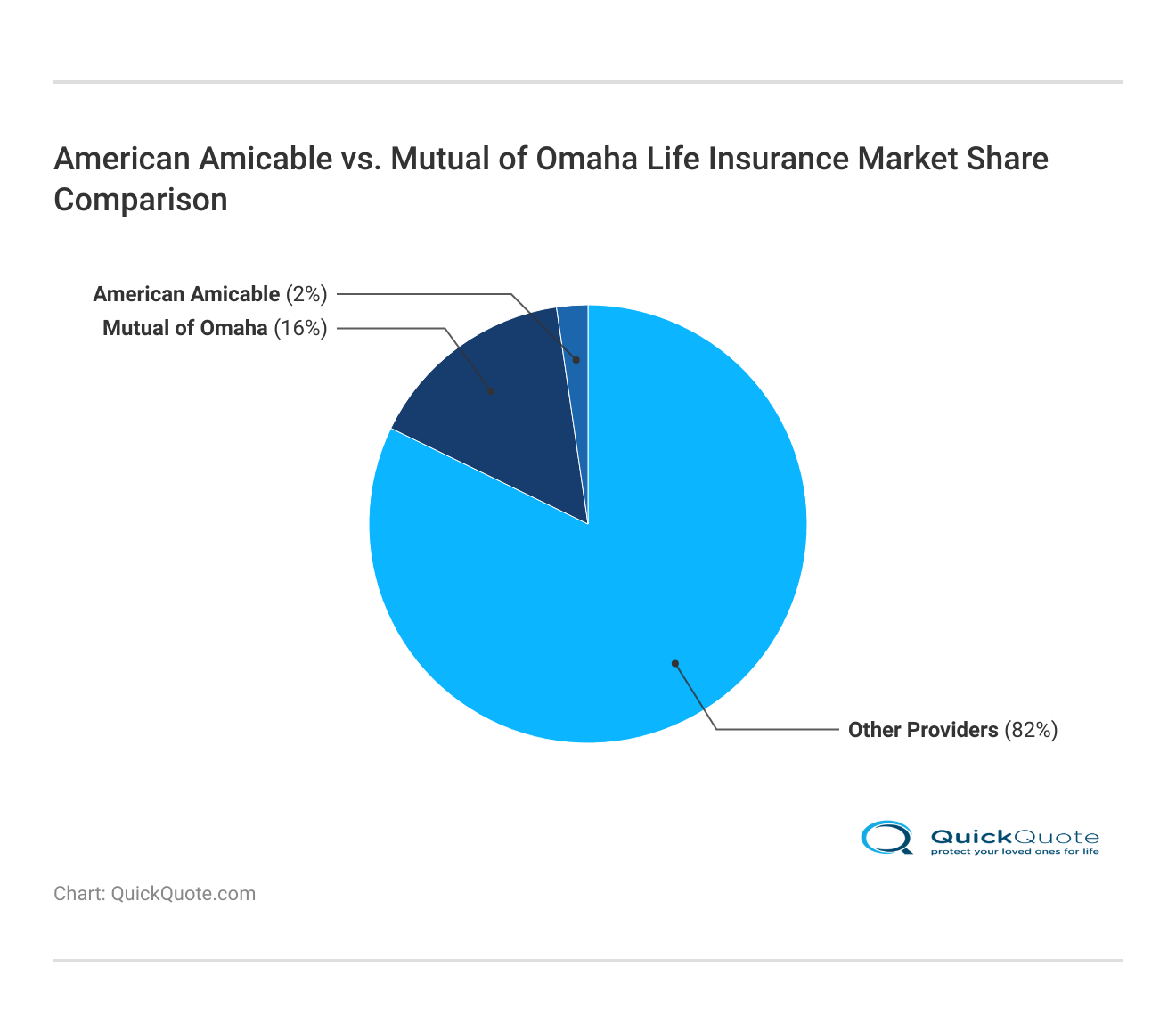
Choosing between AARP Life Insurance and United of Omaha depends primarily on your health status, age, and coverage needs. AARP, underwritten by New York Life, offers convenient term and whole life options exclusive to members, while United of Omaha (a Mutual of Omaha company) provides highly competitive final expense and guaranteed acceptance policies with more flexible age requirements.
The landscape of senior life insurance in 2026 remains dominated by these two giants. Both organizations have specialized in the "senior market"—typically those aged 50 and older—but they approach risk and product structure in fundamentally different ways. For many, the decision is not just about the monthly premium, but about the long-term stability of those premiums and the ease of the application process.
Understanding the Providers: Who Is Behind the Name?
When comparing these two entities, it is vital to distinguish between the brand and the insurer. AARP is not an insurance company; it is an interest group for people over 50. The AARP Life Insurance Program is exclusively underwritten by New York Life Insurance Company. New York Life is one of the oldest and largest mutual life insurance companies in the United States, consistently maintaining top-tier financial strength ratings from agencies like AM Best and S&P Global.
On the other side, United of Omaha is a subsidiary of Mutual of Omaha. Like New York Life, Mutual of Omaha is a mutual company, meaning it is owned by its policyholders rather than public shareholders. This structure often allows these companies to focus on long-term stability rather than short-term quarterly profits. In the 2026 market, both companies remain "A+" or better rated, indicating a high degree of certainty that they will be able to pay out claims decades from now.
AARP Life Insurance (New York Life) Overview
The AARP Life Insurance Program is designed with simplicity in mind. Because it is tailored to AARP members, the marketing and application processes are streamlined. However, there are specific nuances to their products—particularly their term life insurance—that applicants must understand before signing a contract.
1. AARP Term Life Insurance
AARP's term life product is one of the most recognized in the industry. It generally offers coverage up to $150,000, though higher amounts may be available based on specific eligibility. The primary characteristic of AARP term life is that it is "simplified issue." This means there is no medical exam; you simply answer a few health questions.
The most critical factor to note in 2026 is the pricing structure. AARP term life insurance uses five-year age bands. This means your premium stays the same for five years, but increases every time you enter a new age bracket (e.g., at age 55, 60, 65, etc.). While this makes the insurance very affordable in your 50s and early 60s, it can become prohibitively expensive as you reach 75 or 80.
2. AARP Whole Life Insurance
For those seeking permanent coverage that does not expire, AARP offers a whole life policy. Like the term product, it is simplified issue. The coverage amounts are typically lower, often capping at $50,000. Unlike the term policy, the premiums for whole life are level, meaning they never increase regardless of your age or health changes.
3. AARP Guaranteed Acceptance
This is a small whole life policy (usually up to $25,000) intended for those with significant health issues who cannot qualify for simplified issue. There are no health questions. However, in exchange for this guaranteed entry, the policy includes a two-year waiting period. If the insured dies of natural causes within the first two years, the beneficiary receives the premiums paid plus interest, rather than the full death benefit.
United of Omaha (Mutual of Omaha) Overview
United of Omaha focuses heavily on the "Final Expense" or "Burial Insurance" market. Their products are often the gold standard for seniors who want to ensure their funeral costs are covered without leaving a burden on their families.
1. The "Living Promise" Whole Life Policy
United of Omaha’s flagship product for seniors is the Living Promise Whole Life Insurance. It is divided into two categories: Level Benefit and Graded Benefit.
- Level Benefit: Designed for those in relatively good health. It offers immediate full coverage from day one. In 2026, this remains one of the most price-competitive products for seniors aged 45 to 85.
- Graded Benefit: Designed for those with some health complications. Similar to AARP’s guaranteed acceptance, it has a waiting period (usually two years), but the underwriting is slightly different, sometimes offering better rates for specific chronic conditions than a pure "guaranteed" product.
2. Guaranteed Acceptance Whole Life
United of Omaha also offers a pure guaranteed acceptance policy for those aged 45 to 85. Like the AARP version, it requires no medical exam and no health questions. The premiums are fixed for life, and the policy builds cash value over time.
Comparing Technical Specifications and Limits
To choose the right provider, you must look at the specific limits and requirements. Below is a comparison table based on the standard offerings available in 2026.
| Feature | AARP (New York Life) | United of Omaha (Mutual of Omaha) |
|---|---|---|
| Issue Ages (Term) | 50 – 74 | Varies (often up to 70 or 80) |
| Issue Ages (Whole Life) | 50 – 80 | 45 – 85 |
| Max Coverage (Term) | Typically $150,000+ | $1,000,000+ (Fully Underwritten) |
| Max Coverage (Whole) | $50,000 | $40,000 – $50,000 (Final Expense) |
| Premium Structure | Increases every 5 years (Term) | Level / Fixed (All Whole Life) |
| Medical Exam | Not required for most plans | Not required for Final Expense |
| Membership Required | Yes (AARP Membership) | No |
| Cash Value Build-up | Yes (Whole Life only) | Yes (Whole Life only) |
Key Differences in Underwriting and Eligibility
Underwriting is the process by which an insurance company evaluates your risk. This is where the two companies diverge significantly.
AARP’s simplified issue questions are often "knock-out" questions. If you answer "yes" to having a chronic condition like COPD or certain heart issues within a specific timeframe, you may be automatically moved to the Guaranteed Acceptance pool, which is more expensive and has a waiting period.
United of Omaha is known for having slightly more nuanced underwriting for their Living Promise product. They may accept certain health conditions that other insurers reject, or they may offer a "graded" benefit instead of a flat rejection. This makes them a favorite for seniors with manageable conditions like controlled diabetes or high blood pressure who still want to avoid the high costs of guaranteed acceptance.
Furthermore, United of Omaha offers coverage starting at age 45, whereas AARP products generally require you to be 50 to join and apply. For those between 45 and 50, United of Omaha is the clear winner by default.
Cost Analysis: Which is More Affordable?
When discussing cost, you must separate short-term affordability from long-term value.
For a healthy 55-year-old, AARP Term Life is often very inexpensive initially. Because the risk of death at 55 is low, New York Life can offer high coverage for a low monthly fee. However, the "age band" trap is real. By the time that individual reaches 75, the premium for that same AARP term policy may have tripled or quadrupled. If the individual is on a fixed income, they may be forced to drop the coverage exactly when they need it most.
United of Omaha Whole Life policies usually have a higher starting premium than AARP’s term insurance for the same amount of coverage. However, that premium is locked in for life. If you buy a policy at 60, you will pay the exact same amount at 90. For many seniors, the predictability of a level premium is worth the higher initial cost.
In 2026, data suggests that for Guaranteed Acceptance (no health questions), United of Omaha frequently edges out AARP on price for men, while AARP is often highly competitive for women. It is always advisable to get a direct quote from both, as rates are adjusted based on the current actuarial tables.
Pros and Cons: AARP Life Insurance
Pros:
- Brand Trust: New York Life is a massive, highly stable insurer.
- Convenience: If you are already an AARP member, the application is incredibly fast, often taking only minutes online.
- High Term Limits: Offers higher death benefits for term insurance without a medical exam than many other "no-exam" competitors.
Cons:
- Membership Fee: You must pay for an AARP membership to even apply.
- Increasing Premiums: The term insurance gets significantly more expensive every five years.
- Age Limits: Coverage for term insurance generally ends or becomes unsustainable once you pass age 80.
Pros and Cons: United of Omaha
Pros:
- Predictability: Most of their senior products feature level premiums that never increase.
- Flexible Age Range: Available to those as young as 45 and as old as 85.
- Living Benefits: Many policies include accelerated death benefit riders, allowing you to access a portion of the money if you are diagnosed with a terminal illness.
- No Membership Required: Open to the general public.
Cons:
- Lower Whole Life Caps: Their final expense policies generally cap at $40,000 or $50,000, which might not be enough for those looking to leave a significant inheritance.
- Underwriting Sensitivity: While they are flexible, their questions can be rigorous for the "Level Benefit" tier.
When to Choose AARP Life Insurance
AARP is the better choice if you are in excellent health and need short-term coverage to bridge a specific gap. For example, if you are 55 and want to ensure your mortgage is paid off if you die before age 70, AARP’s term life insurance is a cost-effective and simple solution. The increasing premiums won't matter if you plan to cancel the policy before the later, more expensive age bands kick in.
It is also an excellent choice for those who value the "all-in-one" nature of AARP services and want a policy that is easy to manage alongside their other member benefits.
When to Choose United of Omaha
United of Omaha is the superior choice for Final Expense planning. If your goal is to make sure your funeral and burial costs are covered regardless of when you pass away, the Living Promise whole life policy is designed specifically for this purpose.
Additionally, if you have moderate health issues, United of Omaha’s underwriting often provides a better path to full, immediate coverage than AARP's simplified issue, which can be somewhat "all or nothing" in its health assessment. Finally, for anyone aged 45-49 or over 80, United of Omaha offers options that AARP simply does not.
Frequently Asked Questions
Does AARP life insurance require a medical exam? In most cases, no. Most AARP life insurance products offered through New York Life are "simplified issue," meaning you only need to answer health questions. Their "Guaranteed Acceptance" product has no health questions at all. Only very high-limit policies (rarely marketed to the general senior population) would require a physical exam.
Can United of Omaha cancel my policy if my health declines? No. As long as you continue to pay your premiums on time, United of Omaha (and AARP/New York Life) cannot cancel your life insurance policy due to changes in your health. This is one of the primary protections of a permanent life insurance contract.
What happens if I stop paying my AARP membership fee? To maintain an AARP Life Insurance policy, you generally must keep your AARP membership active. If your membership lapses, it could complicate your coverage or prevent you from renewing term policies. United of Omaha does not have this requirement, as it is not a membership-based organization.
Are the death benefits from these policies taxable? In 2026, as in previous years, life insurance death benefits are generally not subject to federal income tax. However, if the death benefit is paid into a very large estate, it could be subject to estate taxes. You should consult with a tax professional for specific estate planning advice.
Which company pays claims faster? Both New York Life (AARP) and Mutual of Omaha (United of Omaha) have excellent reputations for claims processing. Usually, once the death certificate and claim forms are received, claims are paid out within 7 to 30 days. Delays only typically occur if the death happens within the "contestability period" (the first two years of the policy).
Final Recommendation
If you are seeking a term policy for a large amount of coverage and are currently in good health, start by getting a quote from AARP. Its partnership with New York Life provides a robust platform for healthy seniors.
However, if you are looking for permanent protection to cover funeral costs, or if you have some health challenges, United of Omaha is likely your best bet. Their Living Promise product is specifically engineered for the needs of the 2026 senior market, offering price stability and a high likelihood of acceptance for those who might be rejected elsewhere.
Before signing any policy, always request a "Specimen Policy" to read the fine print regarding premium increases and exclusions. Comparing the two directly with your specific health history in hand is the only way to ensure you are getting the best rate for your situation.