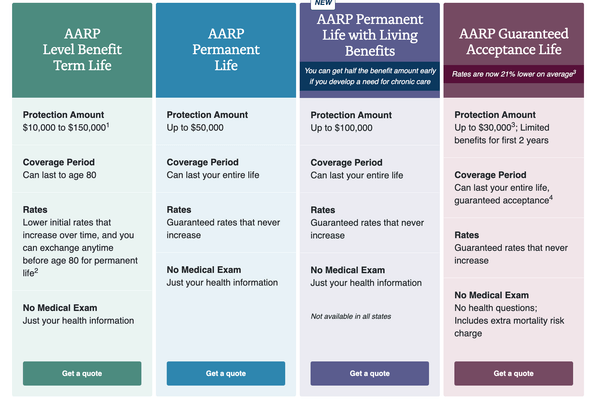
The AARP Life Insurance Program, underwritten by the New York Life Insurance Company, provides AARP members with accessible coverage options including term life, permanent life, and guaranteed acceptance policies. Designed specifically for the needs of seniors, this program offers simplified underwriting and competitive rates for individuals aged 50 to 80, ensuring financial protection for end-of-life expenses or legacy planning.
The partnership between AARP and New York Life is one of the most significant in the American insurance landscape. While consumers often search for the "AARP life insurance program from New York Work Life," it is important to clarify that the official provider is the New York Life Insurance Company. The confusion often stems from New York Life's "Workplace" divisions or branding variations, but the core entity remains one of the oldest and most financially stable mutual life insurance companies in the United States.
As of 2026, the program continues to serve millions of members, evolving its digital application processes while maintaining the specialized focus on the 50-plus demographic. Whether you are looking for a temporary safety net to cover a mortgage or a permanent solution for funeral costs, understanding the mechanics of these policies is essential for making an informed financial decision.
The Relationship Between AARP and New York Life
AARP (formerly the American Association of Retired Persons) is a non-profit interest group, not an insurance company. To provide value to its members, AARP endorses specific products from third-party providers. Since 1994, New York Life has been the exclusive provider of life insurance for AARP members.
This relationship is built on a "group" insurance model. Because AARP represents a massive pool of potential policyholders, they can negotiate certain terms and simplified application processes that might not be available to an individual shopper on the open market. For the policyholder, this means that while your contract is with New York Life, your eligibility depends on your active membership in AARP.
New York Life’s financial strength is a cornerstone of this program. Holding the highest possible ratings for financial strength from major agencies like A.M. Best and Standard & Poor’s, the company provides a level of security that is paramount for seniors who need to know their death benefit will be paid out decades after the policy is issued.
Core Policy Options within the Program
The AARP Life Insurance Program is not a single product but a suite of three primary options. Each is designed to address a different level of health risk and financial need.
1. AARP Level Benefit Term Life Insurance
Term life insurance is designed to provide high coverage amounts at a lower initial cost than permanent insurance. This policy is "term" because it provides protection for a specific period, though the AARP version is unique in its structure.
- Eligibility: Generally available to AARP members aged 50 to 74 (and their spouses aged 45 to 74).
- Coverage Amounts: Often available up to $100,000 or $150,000, depending on the current offerings in 2026.
- The Price Structure: Unlike many "level premium" term policies that lock in a rate for 20 years, the AARP Term Life program typically uses five-year age bands. This means your premium stays the same for five years and then increases as you move into the next age bracket (e.g., when you turn 55, 60, or 65).
- Conversion Option: A critical feature of this policy is the ability to convert it to a permanent policy later without a medical exam, which is vital if your health declines during the term.
2. AARP Permanent Life Insurance
This is a form of "Whole Life" insurance. It is designed to stay in force for the remainder of the insured's life, provided premiums are paid.
- Eligibility: Available to members aged 50 to 80.
- Fixed Premiums: Unlike the term policy, the premiums for permanent life insurance are locked in at the age you apply. They will never increase.
- Cash Value: Over time, these policies build a small amount of "cash value" that can be borrowed against if necessary, though this reduces the final death benefit.
- Underwriting: This policy usually requires answering a few health questions but does not require a physical medical exam (simplified issue).
3. AARP Guaranteed Acceptance Life Insurance
For those with significant health challenges who cannot qualify for the policies mentioned above, the Guaranteed Acceptance program is the final safety net.
- No Health Questions: There are no medical exams and no health questions. If you are an AARP member within the age range (usually 50 to 80), you cannot be turned down.
- Graded Death Benefit: Because the insurer is taking on a high risk without medical data, there is a "waiting period" (usually two years). If the insured dies of natural causes during this initial period, the beneficiaries receive the premiums paid plus a small amount of interest, rather than the full death benefit. Accidental death, however, is usually covered from day one.
- Lower Coverage Limits: These policies typically top out at $25,000, as they are intended strictly for final expenses and burial costs.
Comparison of AARP Life Insurance Features (2026)
The following table outlines the key differences to help you identify which path fits your current health and financial status.
| Feature | Level Benefit Term Life | Permanent Life (Whole Life) | Guaranteed Acceptance |
|---|---|---|---|
| Target Age | 50–74 | 50–80 | 50–80 |
| Max Coverage | $100k+ | $50,000 | $25,000 |
| Premiums | Increase every 5 years | Fixed for life | Fixed for life |
| Medical Exam | No (Health questions only) | No (Health questions only) | None |
| Waiting Period | None (Immediate coverage) | None (Immediate coverage) | 2-Year Graded Benefit |
| Cash Value | No | Yes | Yes |
The Application and Underwriting Process
Applying for the AARP Life Insurance Program from New York Life has been significantly streamlined as of 2026. Most members can complete the entire process via the New York Life/AARP portal.
Simplified Underwriting Explained
Most AARP policies use "Simplified Underwriting." This means you do not have to meet with a nurse, provide blood samples, or undergo a physical examination. Instead, you answer a series of "Yes/No" questions regarding your medical history over the last several years. New York Life then cross-references your answers with the Medical Information Bureau (MIB) and prescription drug databases to verify your health status.
Common Health Questions
Expect questions regarding:
- Hospitalizations within the last two years.
- History of heart disease, stroke, or cancer.
- Diagnosis of terminal illnesses.
- Treatment for chronic conditions like COPD or diabetes.
If you can answer "No" to these basic questions, you are typically approved for the Level Benefit Term or Permanent Life policies within minutes. If your health history is more complex, the system may automatically suggest the Guaranteed Acceptance path.
Understanding the Costs and Premium Hikes
One of the most important aspects of the AARP program to understand is how the Term Life premiums behave. Many seniors choose the term policy because the initial quote is significantly lower than the permanent policy. However, because the rates increase every five years, a policy that was affordable at age 60 might become prohibitively expensive by age 75.
In contrast, the Permanent Life Insurance policy is more expensive at the start but offers the security of a "level premium." For individuals planning for funeral costs (which average between $8,000 and $12,000 in 2026), a small $15,000 permanent policy often provides better long-term value than a $50,000 term policy that may be lapsed if the premiums become too high in later years.
Pros and Cons of the AARP Program
No insurance product is perfect for everyone. It is essential to weigh the benefits against the limitations of the New York Life partnership.
Advantages
- Brand Trust: New York Life is a highly reputable, stable company with a long history of paying claims.
- Convenience: The lack of medical exams is a major draw for seniors who may have minor health issues that would make traditional underwriting difficult.
- Ease of Use: AARP members can manage their policies, change beneficiaries, and pay premiums through a unified digital dashboard.
- Spousal Coverage: Spouses of AARP members can often apply even if they are slightly younger than the 50-year threshold (down to age 45 for term life).
Disadvantages
- Membership Required: You must pay the annual AARP membership fee to be eligible for these policies.
- Coverage Caps: If you need $500,000 or $1 million in coverage to protect a large estate, this program is likely not the right fit, as its limits are relatively low.
- Price Competition: If you are in excellent health, you might find cheaper rates on the open market through "fully underwritten" policies where you actually take the medical exam.
Managing Your Policy in 2026
For existing policyholders, managing the AARP Life Insurance program has become increasingly digital. New York Life provides a dedicated service center specifically for AARP members.
- Changing Beneficiaries: This can be done online or via mail. It is recommended to review your beneficiaries every three years or after major life events like a birth, death, or divorce.
- Policy Loans: For permanent and guaranteed acceptance policies that have built cash value, you can request a loan against the policy. Keep in mind that New York Life charges interest on these loans, and any unpaid balance is deducted from the death benefit.
- Claims Process: In the event of the policyholder's death, beneficiaries can initiate a claim through the AARP Life Insurance Claims Portal. New York Life is known for a relatively fast turnaround on "clean" claims (those occurring outside the two-year contestability period).
Frequently Asked Questions
What happens to my AARP life insurance if I cancel my AARP membership?
Generally, you must maintain an active AARP membership to keep the policy in force, especially for the term products. If your membership lapses, New York Life typically provides a grace period to renew your AARP membership before the insurance policy is affected. It is best to keep your membership current to avoid any risk of policy termination.
Is there a medical exam for the AARP New York Life program?
No. One of the primary selling points of the program is that none of the three main products (Term, Permanent, or Guaranteed Acceptance) require a physical medical exam. Coverage is based on your answers to health questions and data from medical databases.
Does the AARP life insurance policy pay out immediately?
The Term and Permanent Life policies provide full coverage from the first day the policy is active. However, the Guaranteed Acceptance policy has a "graded benefit" period, usually lasting two years. If you die of natural causes within those first two years, your beneficiaries will receive the premiums paid plus interest, not the full face value.
Can I have more than one AARP life insurance policy?
Yes, members often combine policies. For example, you might have a $50,000 Term Life policy to cover remaining mortgage debt and a $15,000 Permanent Life policy specifically earmarked for funeral expenses. However, there are total coverage limits per individual across the entire AARP program.
Are the dividends paid on AARP life insurance?
While New York Life is a mutual company that pays dividends on many of its "whole life" products, the specific policies offered through the AARP program are typically "non-participating," meaning they do not pay annual dividends to policyholders.
Final Recommendations for AARP Members
Choosing the right life insurance through the AARP and New York Life partnership requires an honest assessment of your health and your long-term budget. If you are in relatively good health and only need coverage for a specific number of years, the Level Benefit Term Life policy offers the most coverage for your dollar initially.
However, if your primary goal is to ensure that your family is not burdened by burial costs, the Permanent Life Insurance option is superior because the premiums will never increase, regardless of how long you live. For those who have been turned down elsewhere due to chronic illness, the Guaranteed Acceptance plan is a vital, albeit more expensive, tool to provide peace of mind.
Before signing up, compare the rates provided by New York Life with at least two other senior-focused insurers. While the AARP endorsement is a mark of quality, individual circumstances may occasionally find better value elsewhere, particularly for those in peak physical health who don't mind a traditional medical exam.