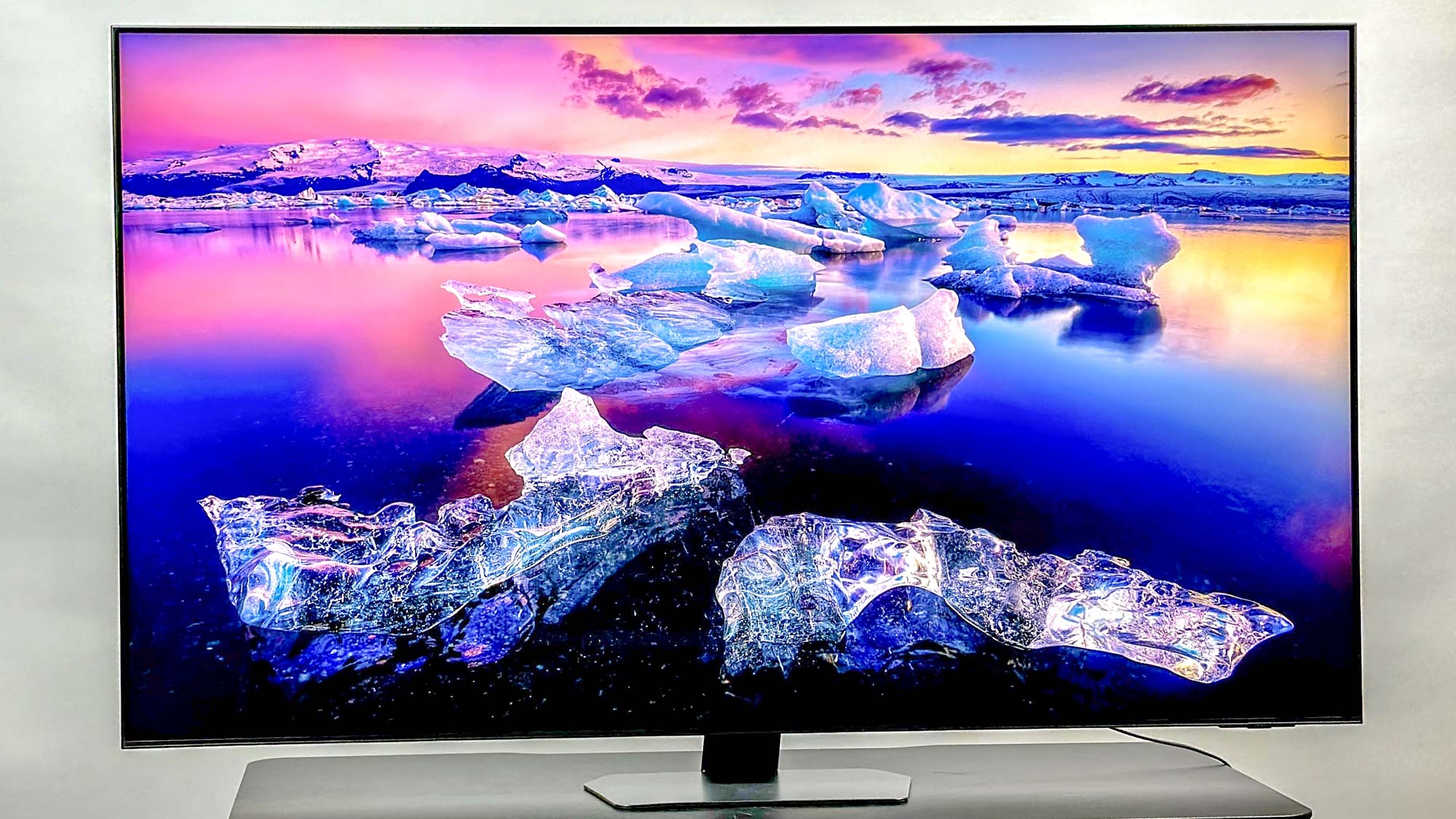
The 55-inch Samsung QLED TV market is evolving rapidly, moving beyond basic quantum dot color enhancement to feature advanced mini-LED backlighting, vastly improved local dimming algorithms, higher refresh rates for gaming, and smarter on-device processing. These hardware and software shifts redefine what buyers can expect from mid-to-large-scale premium displays without stepping up to larger, more expensive form factors.
The Evolution of the 55-Inch Form Factor in Samsung's Lineup
The 55-inch television footprint has long occupied a critical sweet spot in consumer electronics. It is large enough to deliver a cinematic, immersive viewing experience in standard living rooms, bedrooms, and media dens, yet compact enough to fit comfortably into entertainment centers without dominating architectural space. Within Samsung’s product hierarchy, the 55-inch QLED category serves as a key battleground where mainstream affordability intersects with flagship display technologies.
Historically, this size class relied on edge-lit LED configurations or basic direct-lit arrays. Over recent production cycles, Samsung has systematically transitioned its 55-inch tier to incorporate advanced panel engineering pioneered in its larger flagship sets. Buyers looking at current models no longer have to compromise on core picture quality metrics—such as peak luminance and black-level depth—just because they prefer a 55-inch display over a 65-inch or 75-inch model.
This shift reflects changing consumer expectations. Modern viewers consume high dynamic range (HDR) content across streaming platforms, physical media, and next-generation consoles. Consequently, manufacturers must pack advanced processing architectures into tighter chassis dimensions. Understanding what is changing in these displays requires looking closely at how backlighting architectures, semiconductor processing, and energy efficiency standards have converged.
Backlighting Breakthroughs: The Shift to Mini-LED
The most consequential hardware evolution in modern Samsung QLED displays is the widespread adoption of Quantum Mini-LED technology. Traditional QLED TVs utilize a relatively small number of conventional LEDs behind a liquid crystal display (LCD) panel, often resulting in blooming or halo effects around bright objects set against dark backgrounds.
Mini-LED technology shrinks the individual light-emitting diodes to 1/40th the size of conventional LEDs. In a 55-inch chassis, this miniaturization allows Samsung to pack thousands of individual diodes into tightly controlled zones. Instead of relying on a few dozen dimming zones, current premium 55-inch QLEDs leverage hundreds of independent local dimming zones.
- Precision Control: Smaller diodes mean tighter control over light dispersion, significantly reducing light bleed into dark scene areas.
- Peak Brightness: Mini-LED architectures can sustain exceptionally high peak brightness levels without the thermal degradation associated with older, larger diode designs.
- Contrast Ratios: By turning off backlighting entirely behind deep black areas, the display approaches the self-emissive contrast characteristics of OLED technology while maintaining superior brightness capabilities.
Quantum Dot Technology and Color Volume
Quantum dots remain the defining material science pillar of Samsung’s QLED (Quantum Dot Light Emitting Diode) lineup. These semiconductor nanocrystals emit precise wavelengths of light when illuminated by a blue LED backlight, resulting in saturated, highly accurate color reproduction.
Recent iterations of Samsung’s quantum dot filters have focused on maximizing color volume rather than just sRGB or DCI-P3 color space coverage at a single brightness level. Color volume measures a display’s ability to reproduce accurate colors across its entire luminance range.
When a television pumps out high peak brightness for HDR content, cheap panels often wash out, turning vibrant reds and greens into pale pastels. Samsung’s newer alloy-based quantum dot layers maintain deep color saturation even at maximum light output. This ensures that specular highlights—such as sunlight reflecting off metal or neon signs in a night scene—retain both high intensity and rich chromatic depth.
| Feature / Metric | Legacy Edge-Lit QLED | Modern Mini-LED QLED (55-Inch) |
|---|---|---|
| Backlight Type | Edge-mounted LEDs | Thousands of microscopic Mini-LEDs |
| Local Dimming Zones | None to very few (software-based) | Hundreds of independent hardware zones |
| Peak Brightness (Typical) | 500 – 800 nits | 1,000 – 2,000+ nits |
| Black Level Performance | Moderate (prone to gray blooming) | Deep black levels with minimal blooming |
| Primary Advantage | Lower manufacturing cost | Superior contrast, brightness, and HDR fidelity |
AI-Powered Processing and Upscaling
Hardware enhancements are only part of the equation. What is changing equally fast in premium 55-inch displays is the reliance on neural processing units (NPUs) and artificial intelligence for real-time video processing.
Most broadcast television, cable feeds, and older streaming content are mastered in standard definition (SD) or high definition (HD), far below the native 4K resolution of a modern 55-inch QLED panel. Samsung’s latest neural quantum processors utilize multi-layered neural networks to analyze incoming video streams frame by frame.
Rather than applying a blanket sharpening filter, these processors categorize visual elements—such as faces, text, foliage, and background geometry—and apply specialized restoration algorithms. Textures are reconstructed based on learned patterns, reducing compression artifacts and grain without introducing unnatural digital edge enhancement. Furthermore, AI-driven motion estimation and motion compensation (MEMC) algorithms have grown sophisticated enough to minimize judder in fast-moving sports content without triggering the dreaded "soap opera effect" in cinematic movies.
Gaming Enhancements and Response Times
The living room display has increasingly doubled as a high-performance computer monitor and console display. Samsung has responded by overhauling the gaming feature set across its 55-inch QLED inventory.
Modern premium displays in this size class routinely feature:
- Native 144Hz Refresh Rates: Moving beyond standard 60Hz and 120Hz ceilings, supporting high-end PC rigs and future-proofing console hardware.
- Variable Refresh Rate (VRR): Complete support for AMD FreeSync Premium Pro and HDMI 2.6/2.1 standards to eliminate screen tearing and stuttering.
- Auto Low Latency Mode (ALLM): Automatically switches the display into a low-latency game mode when a console or PC is powered on.
- Dedicated Game Hubs: Software interfaces that aggregate cloud gaming services (such as Xbox Cloud Gaming and NVIDIA GeForce NOW) directly onto the home screen without requiring dedicated hardware.
Design, Sustainability, and Form Factor Shifts
Aesthetics and environmental considerations have also transformed the physical engineering of the 55-inch QLED display. As backlighting modules have grown thinner, overall panel depths have decreased. Many premium 55-inch models now feature ultra-slim profiles designed to mount flush against walls, minimizing the gap between the chassis and drywall.
Simultaneously, Samsung has focused on supply chain sustainability. Changes in manufacturing include:
- Increased use of recycled plastics in rear chassis panels and internal brackets.
- Transitioning remote controls to solar-powered charging cells, eliminating the need for disposable alkaline batteries.
- Lightweight packaging designs that reduce shipping carbon footprints while maintaining structural drop protection.
Evaluating Value: Is a 55-Inch Premium QLED Right for You?
When shopping for a 55-inch Samsung QLED, buyers must weigh the technological leaps of mini-LED against pricing tiers. While entry-level QLEDs remain budget-friendly, stepping up to the higher tiers featuring full-array local dimming and advanced neural processors involves a significant financial investment.
For standard casual viewing in brightly lit rooms, mid-tier models offer exceptional daylight visibility and color accuracy. However, for dedicated movie enthusiasts who watch in dark rooms or competitive gamers demanding sub-5ms input lags alongside pristine HDR performance, top-tier 55-inch mini-LED models represent a worthwhile investment that bridges the performance gap previously occupied solely by OLED technology.
Frequently Asked Questions
What is the main difference between traditional QLED and Mini-LED QLED?
Traditional QLED TVs use conventional LEDs placed either on the edges or behind the panel with limited dimming zones, which can cause light bleed. Mini-LED QLEDs use thousands of microscopic LEDs grouped into hundreds of precise dimming zones, offering drastically better contrast, deeper blacks, and higher peak brightness.
Are 55-inch Samsung QLED TVs good for next-generation gaming?
Yes. Modern premium 55-inch Samsung QLEDs include HDMI 2.1 ports supporting 4K resolution at up to 144Hz, variable refresh rates (VRR), auto low latency mode (ALLM), and extremely low input lag, making them ideal for current-generation consoles and high-end gaming PCs.
Do 55-inch QLED displays suffer from burn-in like OLED TVs?
No. Because QLED technology utilizes an inorganic quantum dot layer over an LED backlight rather than organic self-emissive pixels, it is immune to permanent image retention or burn-in, making it safe for static HUDs in games and prolonged news ticker displays.
How does AI upscaling improve standard definition content on a 4K screen?
AI upscaling uses neural networks trained on millions of visual samples to analyze incoming video frames in real-time. It identifies objects like faces, text, and edges, intelligently reconstructing missing pixels to deliver a sharper, cleaner image on a 4K panel without introducing digital noise.
Is a 55-inch TV large enough for true 4K viewing benefits?
Yes, provided you sit at the correct viewing distance. For a 55-inch 4K television, the optimal viewing distance is typically between 5.5 and 7 feet, allowing the human eye to resolve the fine detail benefits of 4K resolution without straining.