Human body temperature, long standardized at 37.0°C (98.6°F), serves as a critical biomarker for metabolic health, immune function, and internal homeostasis. While often viewed as a fixed constant, modern clinical data in 2026 reveals that "normal" is a dynamic range influenced by age, sex, circadian rhythms, and long-term physiological shifts in the human population.
For more than 150 years, the figure of 37.0°C has been the benchmark for health professionals and the general public alike. It is the "gold standard" against which fever is measured and illness is suspected. However, understanding the nuance behind this number requires looking beyond a single digit. Maintaining this temperature is a complex bioenergetic feat, requiring a delicate balance between heat production from metabolic processes and heat loss through the skin and lungs.
The Origin of the 37.0°C Standard
The history of the 37.0°C benchmark begins in 1851 with the German physician Carl Reinhold August Wunderlich. Wunderlich is credited with performing one of the first massive clinical data analyses in history. He collected over a million axillary (underarm) temperature readings from approximately 25,000 patients in Leipzig. From this vast dataset, he calculated the mean to be 37.0°C.
Wunderlich’s work was revolutionary because it shifted medicine away from subjective descriptions of "feeling hot" toward objective, quantitative measurement. However, modern researchers have identified several limitations in his original study. The thermometers used in the mid-19th century were cumbersome—often up to a foot long—and required nearly 20 minutes to stabilize. Furthermore, axillary measurements are notoriously less accurate than oral or rectal readings, as they are more easily influenced by ambient air temperature.
By 2026, the medical community acknowledges that while Wunderlich’s 37.0°C remains a useful baseline for the "ideal" human state, the actual population average has drifted lower. Large-scale longitudinal studies conducted by institutions like Stanford University have demonstrated that the average human body temperature has been steadily declining by approximately 0.03°C per decade since the Industrial Revolution.
The Physiology of Thermoregulation
The human body is endothermic, meaning it generates its own heat internally. This process is governed by the hypothalamus, a small but vital region at the base of the brain that acts as the body's thermostat. The hypothalamus receives constant feedback from thermal receptors in the skin and within the body's core.
The Hypothalamic Set Point
The hypothalamus maintains a "set point"—the target temperature the body strives to maintain. When the blood flowing through the hypothalamus deviates from this point, the brain triggers a series of autonomic responses:
- Vasodilation: If the body is too warm, blood vessels near the skin surface expand (dilate) to allow more heat to radiate away from the body.
- Vasoconstriction: If the body is too cold, these same vessels constrict to keep warm blood near the vital organs.
- Thermogenesis (Shivering): To generate heat rapidly, the hypothalamus triggers involuntary muscle contractions.
- Evaporative Cooling (Sweating): Sweat glands release moisture, which carries heat away from the skin as it evaporates.
The Role of Metabolism
Temperature is essentially a byproduct of metabolism. Every chemical reaction in the body—from the breakdown of glucose for energy to the synthesis of proteins—releases heat. The high caloric intake of modern humans compared to our ancestors, combined with the energy-intensive nature of the human brain, necessitates a highly efficient cooling system to prevent overheating.
Why 37.0°C Matters for Human Health
The maintenance of a stable internal temperature is crucial for enzymatic activity. Enzymes are biological catalysts that facilitate almost every chemical reaction in the body. Most human enzymes have an "optimal temperature" near 37.0°C. If the temperature drops too low (hypothermia), these reactions slow down to dangerous levels. If it rises too high (hyperthermia or fever), the delicate protein structures of enzymes can begin to denature, or unfold, rendering them useless.
The Decline of the "Normal" Average
In 2026, clinical guidelines often cite a "normal" range between 36.1°C (97.0°F) and 37.2°C (99.0°F). Research suggests that the average body temperature of a healthy adult in the 21st century is actually closer to 36.6°C (97.9°F).
Several theories explain this downward trend:
- Reduced Inflammation: In the 19th century, chronic infections (tuberculosis, syphilis, periodontitis) were rampant. Chronic inflammation raises metabolic rates and body temperature. Improved public health and antibiotics have lowered the population's baseline inflammation.
- Environmental Stability: Modern heating and air conditioning mean the human body spends less energy maintaining homeostasis against extreme external temperatures.
- Lower Metabolic Rates: Changes in physical activity levels and body composition have subtly altered the rate at which we burn energy and produce heat.
Factors Influencing Temperature Variability
A single reading of 37.0°C does not tell the whole story. Several biological and environmental factors cause "normal" to fluctuate throughout the day.
Circadian Rhythm
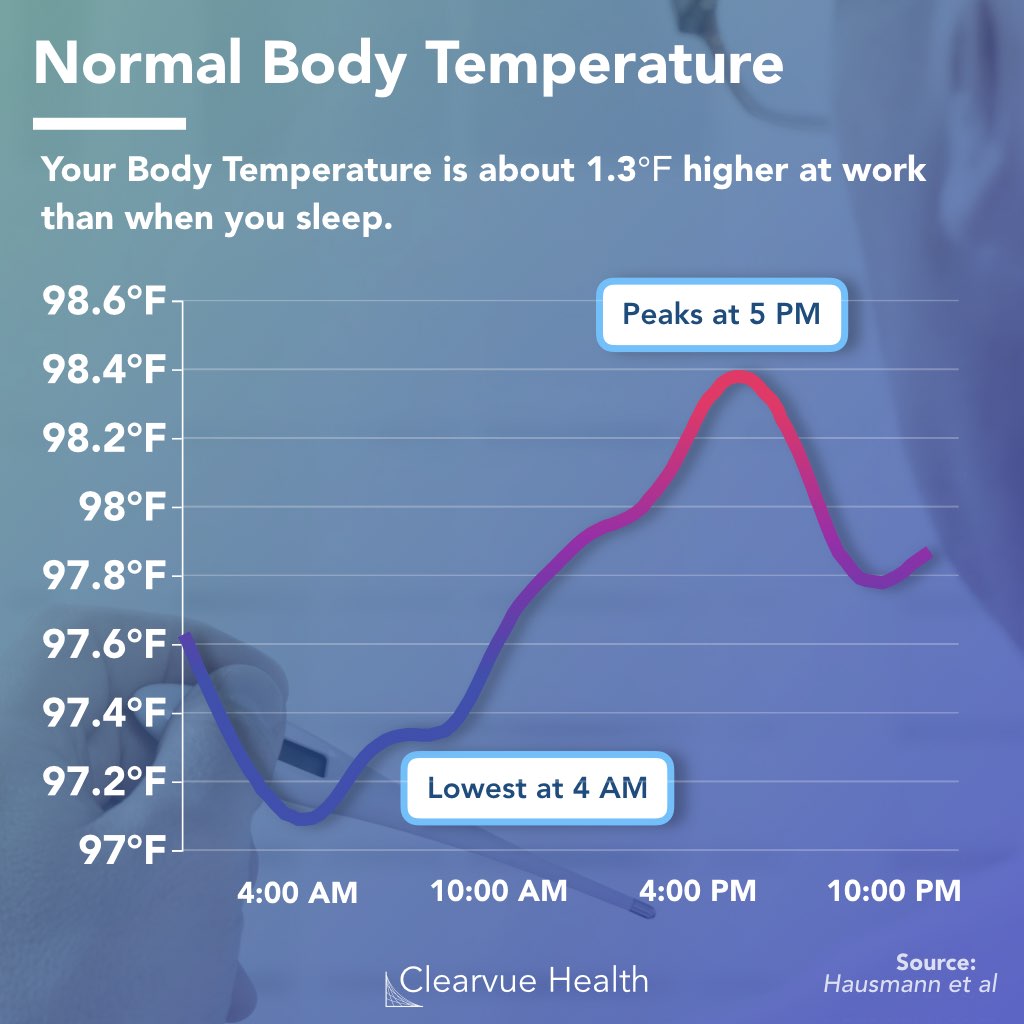
Body temperature follows a predictable 24-hour cycle. It is typically at its lowest point in the early morning (around 4:00 AM) and reaches its peak in the late afternoon or early evening (between 4:00 PM and 8:00 PM). This fluctuation can be as much as 0.5°C to 1.0°C. Consequently, a temperature of 37.2°C might be perfectly normal in the evening but could indicate a low-grade fever if recorded at dawn.
Biological Sex and Hormones
In individuals with a menstrual cycle, body temperature varies according to hormonal shifts. During the follicular phase (the first half of the cycle), temperatures are generally lower. Following ovulation, the hormone progesterone causes the basal body temperature (BBT) to rise by approximately 0.3°C to 0.5°C, staying elevated until the next period begins.
Age and Thermoregulation
Infants and children tend to have slightly higher average temperatures than adults because they have a higher surface-area-to-volume ratio and a more active metabolism. Conversely, older adults often have lower baseline temperatures. This is due to a decrease in muscle mass (which generates heat), thinner skin (which loses heat faster), and a potentially less responsive hypothalamus. In 2026, geriatric care protocols emphasize that a "normal" 37.0°C reading in an 85-year-old might actually represent a significant fever relative to their personal baseline.
Measurement Sites and Accuracy
Where you measure temperature is just as important as the reading itself. Different parts of the body provide different reflections of the "core" temperature.
| Measurement Site | Typical "Normal" Range | Accuracy Level | Factors Affecting Reading |
|---|---|---|---|
| Rectal | 36.6°C – 38.0°C | Highest (Core) | Most accurate for infants and critical care. |
| Oral | 35.5°C – 37.5°C | High | Affected by recent food, drink, or mouth breathing. |
| Tympanic (Ear) | 35.8°C – 38.0°C | Moderate to High | Affected by earwax or improper positioning. |
| Axillary (Armpit) | 34.7°C – 37.3°C | Lower | Usually 0.5°C to 1.0°C lower than oral. |
| Temporal (Forehead) | 35.8°C – 37.8°C | Moderate | Affected by sweat, airflow, and skin blood flow. |
Fever and Its Role in the Immune System
A fever (pyrexia) is not a disease in itself but a symptom of the body's immune response. When the immune system detects pathogens like bacteria or viruses, it releases chemicals called pyrogens. These pyrogens signal the hypothalamus to raise the temperature set point above 37.0°C.
This serves two primary purposes:
- Inhibiting Pathogens: Many viruses and bacteria replicate best at "normal" body temperatures. A higher temperature can slow their growth.
- Boosting Immune Response: Heat speeds up the activity of white blood cells and increases the production of antibodies.
In 2026, the medical consensus is that a fever in adults is generally defined as a temperature exceeding 38.0°C (100.4°F). While high fevers (above 39.4°C / 103°F) require medical attention, mild fevers are often left to run their course to allow the immune system to function effectively, provided the patient remains hydrated and comfortable.
Clinical Implications: Hyperthermia and Hypothermia
When the body's thermoregulation fails, the results can be life-threatening. These conditions are distinct from fever because the hypothalamic set point remains normal, but the body is unable to compensate for external or internal heat loads.
Hyperthermia and Heatstroke
Hyperthermia occurs when the body absorbs or generates more heat than it can dissipate. Unlike a fever, hyperthermia is often caused by external factors like high humidity and extreme heat exertion. If the core temperature rises above 40.0°C (104°F), the risk of heatstroke becomes critical, leading to potential organ failure or brain damage.
Hypothermia
Hypothermia is defined as a core body temperature below 35.0°C (95.0°F). This condition is dangerous because it leads to the progressive failure of the cardiovascular and nervous systems. Early signs include shivering and confusion ("the umbles": stumbles, mumbles, fumbles), but as the temperature drops, shivering stops, and the heart rate slows to a dangerous level.
The Future of Temperature Monitoring in 2026
As of 2026, the way we interact with the 37.0°C standard has been transformed by wearable technology. Continuous glucose monitors and advanced smart rings now allow individuals to track their Basal Body Temperature (BBT) 24/7.
This "personalized baseline" is far more useful than the 37.0°C average. By knowing their personal "normal," individuals can detect illness, track reproductive health, or monitor recovery from physical exertion days before traditional symptoms appear. For instance, a person whose baseline is consistently 36.4°C might recognize that 37.1°C represents a significant physiological stressor for them, even though it is technically "normal" by Wunderlich's 1851 standards.
Medical Disclaimer: This article is for informational purposes only and does not constitute medical advice, diagnosis, or treatment. Always seek the advice of a physician or other qualified health provider with any questions regarding a medical condition or changes in body temperature.
Frequently Asked Questions
Is 37.0°C always the "normal" temperature?
No. While 37.0°C (98.6°F) is the traditional average, most healthy adults have a baseline between 36.1°C and 37.2°C. Your personal "normal" fluctuates throughout the day based on activity, time of day, and age. Modern research suggests the population average is actually trending lower, near 36.6°C.
Why does my temperature increase in the evening?
This is due to your circadian rhythm. Your body's internal clock naturally raises your temperature in the late afternoon and evening to support metabolic activity and then lowers it in the early morning hours to facilitate deep sleep and energy conservation.
At what temperature should I be worried about a fever?
For most adults, a temperature of 38.0°C (100.4°F) or higher is considered a fever. However, you should seek medical attention if a fever is accompanied by a severe headache, stiff neck, rash, or difficulty breathing, regardless of the exact number on the thermometer.
Why do elderly people often have lower body temperatures?
Older adults typically have lower metabolic rates and less muscle mass, which results in less internal heat production. Additionally, the body's ability to regulate temperature through blood vessel constriction and shivering often becomes less efficient with age, leading to a lower baseline and a higher risk of hypothermia.
Is an oral thermometer as accurate as a rectal one?
Rectal thermometers provide the most accurate measurement of "core" body temperature because they are not affected by external factors like air or food. Oral thermometers are highly reliable if used correctly, but readings can be temporarily altered if you have recently consumed hot or cold liquids or if you breathe through your mouth during the measurement.
How does physical exercise affect my temperature?
During intense physical activity, muscle contractions generate significant heat, which can temporarily raise your core temperature to 38.0°C or even 39.0°C. The body compensates through sweating and increased blood flow to the skin. This is a physiological response to exertion, not a clinical fever.
Summary of Next Actions
To better monitor your health relative to the 37.0°C standard, consider establishing a personal temperature baseline. Measure your temperature at the same time each morning for one week while you are healthy. This will give you a much more accurate point of comparison for when you feel unwell. In 2026, utilizing wearable sensors that track temperature trends during sleep can provide the most comprehensive view of your thermoregulatory health.