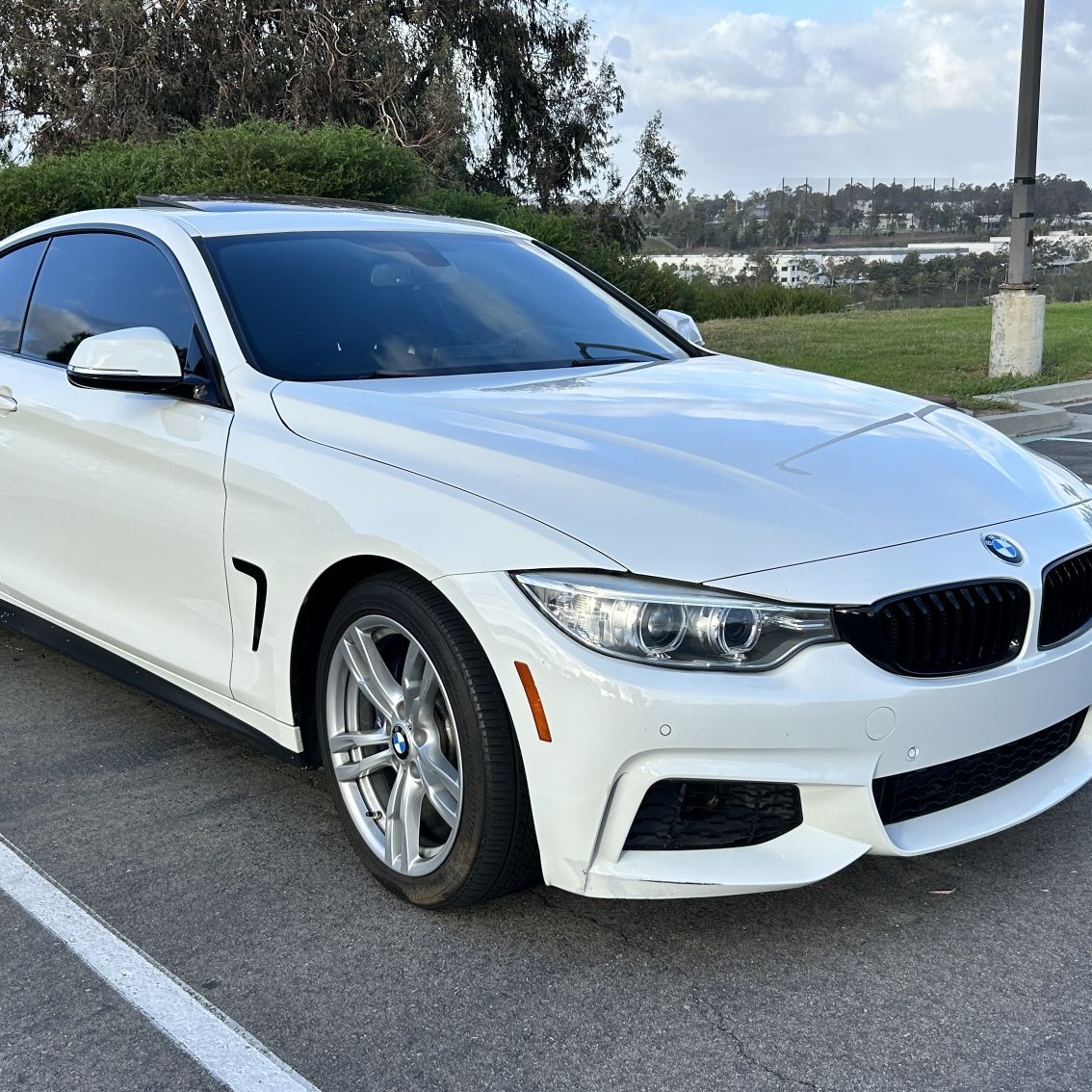
The 2014 BMW 428i Coupe equipped with the 8-speed automatic transmission achieves an official factory 0–60 mph time of 5.7 seconds in Rear-Wheel Drive (RWD) and 5.5 seconds with xDrive All-Wheel Drive (AWD). Independent automotive instrumented tests frequently recorded 0–60 mph sprints as quick as 5.3 to 5.5 seconds for the coupe under ideal drag-strip conditions.
2014 BMW 428i 0-60 Performance Figures Across Variants
When BMW spun off the two-door coupe and convertible models from the 3 Series line into the 4 Series for the 2014 model year (F32 coupe and F33 convertible chassis), it introduced a refined performance baseline. The entry-level 428i displaced the older naturally aspirated inline-six engines with a high-efficiency turbocharged four-cylinder engine.
Acceleration performance varies across the 2014 428i lineup depending on body style, drivetrain configuration, and transmission choice. Weight differences between the lightweight fixed-roof coupe and the heavier folding-hardtop convertible play a significant role in off-the-line sprint capability, as does the instant launch traction provided by BMW's xDrive system.
| Variant | Acceleration |
|---|---|
| Coupe RWD (Auto) | 5.3 - 5.7s |
| Coupe xDrive (Auto) | 5.3 - 5.5s |
| Coupe RWD (Manual) | 5.6 - 5.7s |
| Convertible RWD (Auto) | 6.0 - 6.2s |
Factory Claims vs. Real-World Instrumented Testing
BMW historically provides conservative performance estimates for its vehicles. Factory ratings represent repeatable figures achieved under average road surfaces, standard fuel conditions, and conservative launch methods. Period testing by major automotive publications—such as Car and Driver, MotorTrend, and Road & Track—routinely outperformed BMW’s official claims due to optimized launch techniques, prepped drag surfaces, and weather correction factors.
For the 2014 BMW 428i Coupe RWD Automatic, BMW quoted a 0–60 mph time of 5.7 seconds. In independent instrumented testing, media outlets recorded 0–60 mph accelerations in as little as 5.3 seconds, with the quarter-mile cleared in 14.1 seconds at 98 mph.
The 428i xDrive Coupe benefited from all-wheel-drive traction, virtually eliminating wheel slip off the line. While BMW claimed a 5.5-second 0–60 mph time for the xDrive automatic, real-world tests consistently validated times between 5.3 and 5.4 seconds.
The 428i Convertible, featuring a complex three-piece retractable hardtop mechanism, added approximately 300 to 400 pounds of weight over the coupe. As a result, the 428i Convertible RWD recorded a factory 0–60 time of 6.2 seconds, with real-world tests bringing that figure down to around 6.0 seconds.
| Variant | Drivetrain | Transmission | Approx. Curb Weight | Factory 0-60 mph | Tested 0-60 mph | Tested 1/4-Mile |
|---|---|---|---|---|---|---|
| 428i Coupe | RWD | 8-Speed Automatic | 3,470 lbs | 5.7 sec | 5.3 - 5.5 sec | 14.1 sec @ 98 mph |
| 428i Coupe | RWD | 6-Speed Manual | 3,430 lbs | 5.7 sec | 5.6 - 5.7 sec | 14.3 sec @ 97 mph |
| 428i xDrive Coupe | AWD | 8-Speed Automatic | 3,620 lbs | 5.5 sec | 5.3 - 5.4 sec | 14.0 sec @ 97 mph |
| 428i Convertible | RWD | 8-Speed Automatic | 3,980 lbs | 6.2 sec | 6.0 - 6.1 sec | 14.6 sec @ 95 mph |
| 428i xDrive Convertible | AWD | 8-Speed Automatic | 4,110 lbs | 6.3 sec | 6.1 - 6.2 sec | 14.7 sec @ 94 mph |
The Engineering Behind the Speed: N20 Engine and Drivetrain
The core component driving the 2014 BMW 428i’s acceleration is the N20B20 engine—a 2.0-liter, double-overhead-cam (DOHC), 16-valve inline four-cylinder engine featuring BMW’s TwinPower Turbo technology. Despite displacing less volume than the 3.0-liter N52 naturally aspirated inline-six it succeeded, the turbocharged N20 delivered substantially higher torque across a wider rev range.
- N20B20 Engine Performance Profile:
- Power Output: 240 hp @ 5,000 – 6,500 RPM
- Torque Output: 255 lb-ft @ 1,250 – 4,800 RPM
- Turbo Architecture: Twin-Scroll Single Turbocharger
Key Technical Specifications of the N20 Engine
- Horsepower: 240 hp @ 5,000 – 6,500 rpm
- Peak Torque: 255 lb-ft @ 1,250 – 4,800 rpm
- Turbocharging: Twin-scroll single turbocharger feeding off two engine exhaust tracts to minimize turbo lag.
- Fuel Injection: High-Precision Direct Injection operating at pressures up to 200 bar (2,900 psi).
- Valvetrain: Valvetronic fully variable valve lift combined with Double-VANOS variable camshaft timing.
The defining characteristic of the 428i's powertrain is its torque curve. Peak torque of 255 lb-ft is available from just 1,250 rpm and holds flat all the way to 4,800 rpm. This immediate low-end grunt allows the car to launch off the line without waiting for high engine revolutions, delivering linear power delivery that mimics a larger-displacement engine while maintaining fuel efficiency.
Transmission Dynamics: ZF 8HP vs. 6-Speed Manual
The gearbox paired with the N20 plays a crucial role in achieving these 0–60 mph figures:
- ZF 8HP45 8-Speed Steptronic Automatic: This transmission is widely considered one of the finest torque-converter automatics of its era. With short lower gear ratios (1st gear ratio of 4.71:1), lightning-fast shift speeds under wide-open throttle, and sophisticated control software, the 8-speed automatic allows the 428i to stay squarely inside its powerband during hard acceleration.
- 6-Speed Manual Transmission: Offered as a no-cost option on rear-wheel-drive coupes, the 6-speed manual delivers high driver engagement but is generally slower in 0–60 sprints. Human shift speed, gear ratios spread over fewer cogs, and the drop in boost pressure between shifts make the manual roughly 0.2 to 0.4 seconds slower to 60 mph than its automatic counterpart.
xDrive All-Wheel Drive Mechanics
BMW’s xDrive system uses an electronically controlled multi-plate wet clutch in the transfer case. Under standard driving conditions, it distributes torque 40/60 front-to-rear.
When launching aggressively from a standstill, xDrive can direct up to 100% of available engine torque to either axle within milliseconds. This eliminates tire spin on unpaved or wet surfaces and enables full-throttle launches without stability control intervention, allowing the heavier xDrive coupe to match or beat the lighter rear-wheel-drive model in 0–60 mph tests.
Era Comparisons: How the 2014 428i Stacked Up Against Competitors
When the 2014 BMW 428i debuted, the luxury sport coupe market was undergoing a industry-wide shift toward turbocharged four-cylinder engines. The 428i competed directly against established luxury two-door models from Audi, Mercedes-Benz, Lexus, and Infiniti.
| Model | 0-60 mph Time |
|---|---|
| 2014 BMW 428i Coupe (2.0T I4, 240 hp) | 5.3 - 5.5s |
| 2014 Audi A5 2.0T Quattro (2.0T I4, 220 hp) | 5.8 - 6.1s |
| 2014 Mercedes-Benz C250 Coupe (1.8T I4, 201 hp) | 6.8 - 7.0s |
| 2014 Mercedes-Benz C350 Coupe (3.5L V6, 302 hp) | 5.5 - 5.7s |
| 2014 Lexus IS 250 C (2.5L V6, 204 hp) | 8.3 - 8.5s |
| 2014 Infiniti Q60 Coupe (3.7L V6, 330 hp) | 5.3 - 5.5s |
Audi A5 2.0T Quattro
The 2014 Audi A5 Coupe utilized a 2.0-liter turbocharged four-cylinder engine making 220 horsepower and 258 lb-ft of torque, paired with an 8-speed automatic or 6-speed manual and Quattro AWD.
While its torque matched the BMW 428i, its lower horsepower output and slightly heavier kerb weight resulted in 0–60 mph times ranging between 5.8 and 6.1 seconds. The BMW 428i comfortably outpaced the Audi A5 in both standing launches and 50–70 mph passing tests.
Mercedes-Benz C-Class Coupe (C250 vs. C350)
Mercedes-Benz split its entry-level coupe offering between the C250 and C350:
- C250 Coupe: Powered by a 1.8-liter turbocharged inline-4 generating 201 hp and 229 lb-ft of torque. Coupled with a 7-speed automatic, it took 6.8 to 7.0 seconds to reach 60 mph, making it significantly slower than the 428i.
- C350 Coupe: Powered by a naturally aspirated 3.5-liter V6 producing 302 hp and 273 lb-ft of torque. It achieved 0–60 mph in 5.5 to 5.7 seconds. Notably, the four-cylinder BMW 428i matched or outperformed the six-cylinder C350 off the line despite a 62-horsepower deficit, demonstrating the efficiency of BMW's turbocharger tuning and transmission calibration.
Lexus and Infiniti Alternatives
The 2014 Infiniti Q60 Coupe (formerly the G37) featured a high-revving 3.7-liter naturally aspirated V6 with 330 hp, capable of matching the 428i’s 5.3 to 5.5-second 0–60 sprint. However, the Q60 required revving past 5,000 rpm to access its power, whereas the 428i generated peak pull right off idle.
The 2014 Lexus IS 250 C convertible was significantly underpowered, taking over 8 seconds to reach 60 mph, while the higher-tier RC 350 Coupe (introduced shortly after) required a 306-hp V6 to achieve 0–60 times in the mid-5-second range.
Launch Control and Factors Affecting Real-World 0-60 Times
To replicate factory or period-tested 0–60 mph figures in a 2014 BMW 428i, several conditions and procedures must be met. The vehicle features built-in systems to assist in optimal acceleration, but environmental variables heavily influence actual stopwatch performance.
How to Engage Factory Launch Control
Vehicles equipped with the Sport Automatic Transmission (Option code S2TBA) feature an integrated Launch Control function. To execute a factory launch:
- Bring the engine to full operating temperature by driving for at least 10–15 minutes.
- Switch off Dynamic Stability Control (DSC) by pressing and holding the DSC button, or engage Sport+ mode.
- Move the gear selector lever to the left into the M/S (Manual/Sport) gate.
- Firmly press and hold the brake pedal down with your left foot.
- Press the accelerator pedal past the kick-down point with your right foot. A checkered flag icon will appear in the instrument cluster display, and engine speed will stabilize at approximately 2,500–3,000 rpm.
- Release the brake pedal within 3 seconds while keeping the throttle fully depressed. The transmission will manage wheelspin and shift points automatically.
Launch Control Sequence:
- Engine Warmed Up
- Sport+ / DSC Off
- Gear Lever to M/S
- Brake Held Hard
- Throttle Floor Kick-down
- Checkered Flag Appears
- Release Brake
Key Real-World Variables
- Fuel Octane Rating: The N20 engine requires minimum 91-octane premium gasoline. Operating on 87-octane fuel causes the Engine Control Unit (ECU) to pull ignition timing to prevent engine knock, reducing horsepower and adding 0.3 to 0.6 seconds to 0–60 times. High-octane fuel (93 octane or higher) ensures full boost pressure and advance timing.
- Ambient Temperature and Altitude: Turbocharged engines compress intake air, generating heat. On hot summer days (above 90°F / 32°C), heat soak degrades intercooler efficiency, lowering oxygen density in the intake manifold. Similarly, high-density altitude reduces ambient air pressure, forcing the turbocharger to work harder and slightly slowing overall throttle response.
- Tire Condition and Compound: The factory run-flat tires (often Continental ContiSportContact or Pirelli Cinturato P7) offered moderate traction. Equipping the car with modern ultra-high-performance summer tires significantly reduces wheel spin during launches, particularly on rear-wheel-drive models.
- Drive Mode Selection: Driving in Comfort or Eco Pro mode alters throttle mapping and forces the transmission to start in second gear or shift early, increasing 0–60 times beyond 7.0 seconds.
Tuning Potential and Maintenance Context
The 2014 BMW 428i remains a popular option on the pre-owned performance market due to its tuning capability and aggressive styling. The N20 engine holds significant head-room for aftermarket power increases, though owners and potential buyers must account for crucial engine component vulnerabilities.
Modern Tuning Capabilities (ECU Flash Tuning)
Because the N20 engine utilizes direct injection and a twin-scroll turbocharger, simple software modifications yield significant horsepower and torque gains without mechanical alterations.
| Configuration | Horsepower | Torque | 0-60 mph Time |
|---|---|---|---|
| Stock N20 (428i) | 240 hp | 255 lb-ft | 5.3 - 5.7 sec |
| Stage 1 (Software) | 275 - 290 hp | 300 - 320 lb-ft | 4.7 - 4.9 sec |
| Stage 2 (Downpipe) | 300 - 310 hp | 330 - 350 lb-ft | 4.4 - 4.6 sec |
- Stage 1 Flash Tune (Stock Hardware): A remapped ECU map running on 93-octane fuel increases boost pressure from the factory ~17 psi to roughly 20-22 psi. Power output jumps to approximately 275–290 hp and 300–320 lb-ft of torque. This lowers 0–60 mph acceleration into the 4.7 to 4.9-second window on xDrive models.
- Stage 2 Flash Tune (High-Flow Downpipe & Intercooler): With reduced exhaust backpressure and improved intake cooling, a Stage 2 tune pushes the N20 to 300+ hp and 340+ lb-ft of torque, delivering 0–60 mph sprints in the 4.4 to 4.6-second range—matching or beating a stock 2014 BMW 435i (N55 six-cylinder).
Critical Mechanical Considerations: The N20 Timing Chain Assembly
Before subjecting a 2014 BMW 428i to launch-control starts or aftermarket tuning, owners must inspect the timing chain and oil pump drive assembly.
N20 Timing Chain Hazard Area (2012 - Jan 2015 Production):
- Vulnerability: Brittle polycarbonate plastic guides degrade.
- Risk:
- Guide failure
- Chain slack
- Jumped timing
- Engine failure
- Solution: Upgraded timing chain kit (white/beige guides replaced with updated design).
The Plastic Guide Failure Issue: N20 engines produced between 2012 and January 2015 utilized polycarbonate plastic timing chain guides that are prone to premature wear, degradation, and breakage over time.
Engine Failure Risk: As the plastic guides break down, pieces drop into the oil pan, clogging the oil pickup tube or causing the timing chain to lose tension and skip teeth. This can result in complete mechanical engine destruction.
Inspection and Replacement: Listen for a high-pitched whining noise coming from the engine bay that increases with RPM (resembling a supercharger noise). Inspect the chain through the oil filler cap using a pick tool to check for slack or score marks. If the timing chain assembly has not been updated with BMW’s redesigned components (issued post-January 2015), replacing the timing chain assembly, oil pump drive assembly, and chain guides is essential before pursuing performance upgrades.
Frequently Asked Questions
Is the 2014 BMW 428i faster than the 435i?
No, the 2014 BMW 435i is faster in stock form. Equipped with a 3.0-liter turbocharged inline-six engine (N55) producing 300 hp and 300 lb-ft of torque, the 435i achieves 0–60 mph in 4.7 to 5.0 seconds, roughly 0.5 to 0.8 seconds faster than a stock 428i. However, a Stage 1 or Stage 2 tuned 428i can match or exceed stock 435i acceleration times.
Does the 2014 428i Convertible have the same 0-60 time as the Coupe?
No. The 428i Convertible features a power-retractable hardtop with heavy hydraulic motors and structural chassis bracing, adding over 350 pounds of weight compared to the coupe. This added mass slows the Convertible’s factory 0–60 mph sprint to 6.2 seconds (RWD) and 6.3 seconds (xDrive), compared to 5.7 and 5.5 seconds for the respective coupe models.
Is xDrive faster 0-60 than RWD on the 2014 BMW 428i?
Yes, off a standing start, the 428i xDrive is slightly faster. The all-wheel-drive system prevents rear tire spin, allowing the engine to launch under full throttle. Factory estimates put the xDrive coupe 0–60 time at 5.5 seconds versus 5.7 seconds for the RWD coupe. However, at higher speeds (above 60 mph), the lighter weight and lower drivetrain loss of the RWD model allow it to pull slightly harder.
What is the quarter-mile time of a stock 2014 BMW 428i?
A stock 2014 BMW 428i Coupe automatic completes the quarter-mile in approximately 14.1 seconds at 98 mph. The xDrive variant completes the quarter-mile in roughly 14.0 to 14.1 seconds at 97 mph.
How do I activate Launch Control on a 2014 BMW 428i?
Launch Control requires the Sport Automatic transmission. Warm up the engine, press the DSC button to activate Sport+ or turn off DSC, move the gear selector left into M/S mode, press the brake pedal down firmly with your left foot, and press the accelerator all the way to the floor past the kick-down switch. When the checkered flag appears on the instrument cluster, release the brake within 3 seconds.
Recommended Next Steps for Buyers and Owners
If you own or are considering purchasing a 2014 BMW 428i to enjoy its acceleration and chassis dynamics, take the following approach:
- Verify Timing Chain History: Check the service records or perform a physical inspection of the timing chain guides through the oil filler cap. Ensure the upgraded OEM timing chain components have been installed to prevent premature engine failure.
- Upgrade Maintenance Intervals: Change engine oil every 5,000 miles (8,000 km) using BMW Longlife-01 certified 5W-30 or 0W-40 full-synthetic oil to protect turbocharger bearings and timing chain assembly wear.
- Equip Quality Performance Tires: Replace aging run-flat tires with high-performance summer or ultra-high-performance all-season tires to optimize off-the-line traction and reduce launch spin.
- Inspect Charge Pipes and Intercooler Connections: Prior to installing any software tunes to lower 0–60 times, inspect the OEM plastic engine charge pipe for cracks or deterioration, as higher boost levels can cause factory plastic pipes to burst under load.