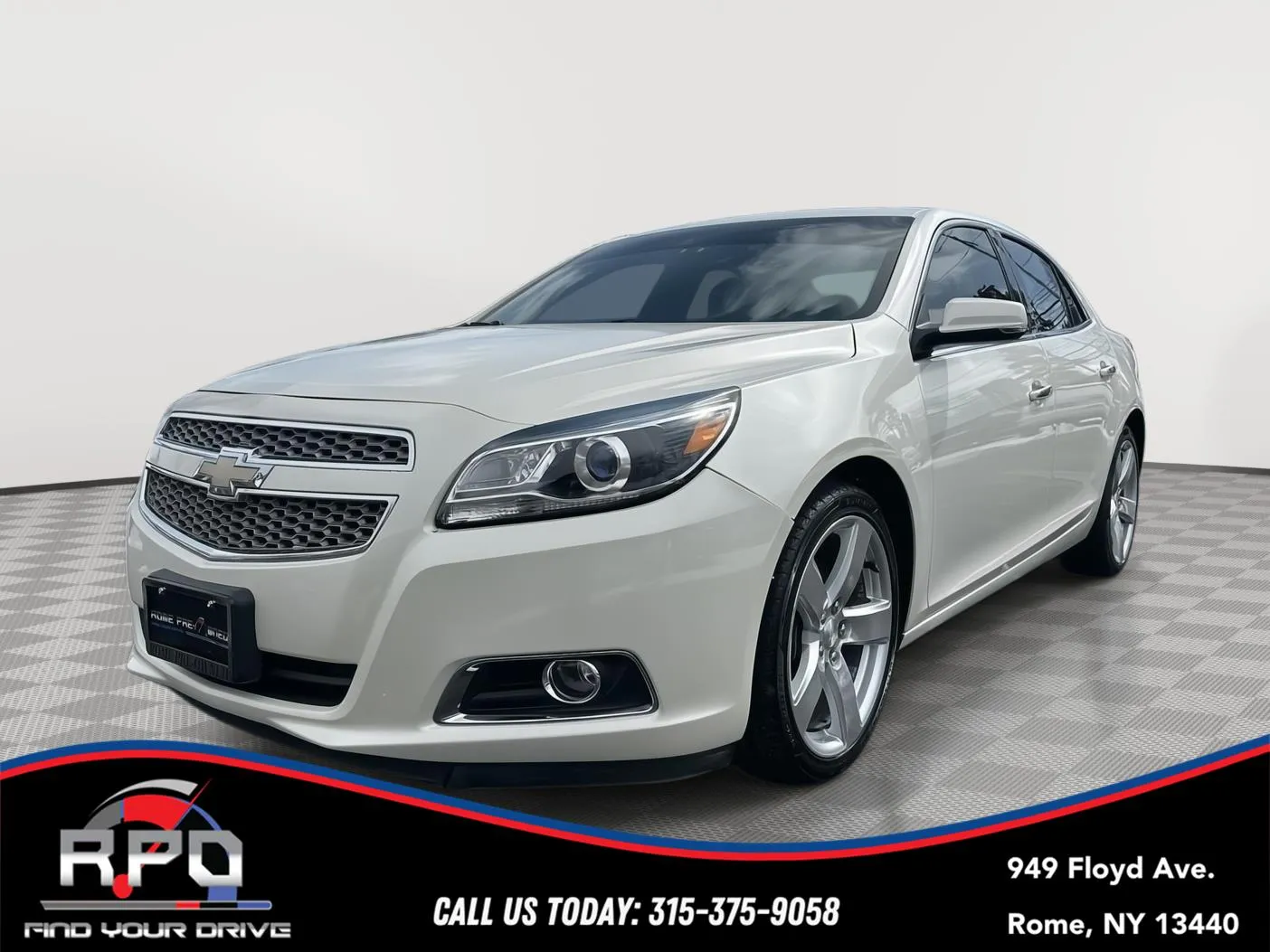
The 2013 Chevrolet Malibu LTZ Turbo is the high-performance flagship of the eighth-generation Malibu, featuring a 2.0-liter turbocharged Ecotec engine that produces 259 horsepower and 260 lb-ft of torque. This model marked Chevrolet’s pivot from traditional V6 power to forced-induction four-cylinder engines, offering a premium interior, robust safety features, and a more European-inspired driving character.
The Evolution of the Eighth-Generation Malibu
When the 2013 Chevrolet Malibu debuted, it represented a significant shift for General Motors. Built on the global Epsilon II platform—shared with the Buick Regal and the Opel Insignia—this generation was designed to be a "world car." For the 2013 model year, Chevrolet took a bold step by eliminating the 3.6L V6 engine option entirely, replacing it with the 2.0L turbocharged inline-four as the top-tier powertrain.
In the context of 2026, the 2013 Malibu LTZ Turbo is now viewed as a pivotal "bridge" vehicle. It was the first to fully embrace the downsizing trend that defines the modern automotive landscape. While the 2013 model faced some criticism at launch for its slightly tighter rear legroom compared to the 2012 model, the LTZ Turbo variant was consistently praised for its refined power delivery and high-end cabin materials.
The LTZ trim was the highest available, positioning the Malibu as a legitimate competitor to entry-level luxury sedans. By selecting the Turbo package, buyers received not just a faster engine, but a revised suspension tuning and aesthetic upgrades that distinguished it from the base LS and mid-range LT trims.
Powertrain and Performance Specifications
The heart of the 2013 Malibu LTZ Turbo is the 2.0L LTG Ecotec engine. This powerplant was a marvel of engineering for its time, utilizing a twin-scroll turbocharger to minimize lag and provide a broad torque curve. Unlike many turbocharged engines of that era that felt "peaky," the LTG engine delivered its maximum 260 lb-ft of torque starting at just 1,700 RPM, maintaining that pull through 5,500 RPM.
Engine Architecture
The engine features a dual-overhead-cam (DOHC) design with continuously variable valve timing (VVT) and high-pressure direct injection. The use of direct injection was critical for achieving the high compression ratio necessary for efficiency while still allowing the turbocharger to boost performance without causing engine knock. In 2026, these engines are still respected for their power-to-weight ratio, though they require diligent maintenance regarding carbon buildup on the intake valves—a common trait of early direct-injection systems.
Transmission and Drivetrain
All 2013 Malibu LTZ Turbo models were equipped with the Hydra-Matic 6T70 six-speed automatic transmission. This heavy-duty version of GM’s six-speed transaxle was specifically chosen to handle the high torque output of the 2.0L engine. The transmission features "TAPshift" controls on the shift knob, allowing drivers to manually select gears, though the execution was more focused on utility (such as hill climbing or towing) than sporty paddle-shifting.
Performance Figures
On the road, the LTZ Turbo could accelerate from 0 to 60 mph in approximately 6.3 seconds. This performance put it comfortably ahead of the naturally aspirated competitors of the time, such as the Honda Accord EX-L or the Toyota Camry XLE. The top speed was electronically limited, but the mid-range passing power—from 50 to 70 mph—remained its most impressive feat.
Interior Luxury and Technological Features
The LTZ trim was designed to be the "Cadillac-lite" of the Chevrolet lineup. The 2013 interior featured a "dual-cockpit" design inspired by the Corvette, with a flowing dashboard that integrated seamlessly into the door panels.
Premium Amenities
Inside the 2013 Malibu LTZ Turbo, you will find:
- Leather-Appointed Seating: High-quality leather with contrast stitching was standard on the LTZ.
- Heated Front Seats: Featuring multi-level heating elements.
- Dual-Zone Automatic Climate Control: Allowing separate temperature settings for the driver and front passenger.
- Ambient Lighting: Ice-blue LED piping along the dashboard and door pockets, a signature Chevy design element of the early 2010s.
Infotainment and Connectivity
The 2013 model year introduced the Chevrolet MyLink system. This featured a 7-inch high-resolution touch screen that actually flipped up to reveal a hidden, illuminated storage cubby—a clever use of space for smartphones and wallets. The system supported Bluetooth audio streaming and integrated apps like Pandora and Stitcher, which was cutting-edge for 2013. Most LTZ Turbo models were also equipped with a nine-speaker Pioneer premium audio system, delivering 250 watts of high-fidelity sound.
Ride, Handling, and Chassis Tuning
The LTZ Turbo received a specific chassis calibration known as the "Sport" suspension in internal GM documentation. While it didn't turn the Malibu into a track car, it significantly reduced the body roll often associated with mid-size American sedans.
The steering system utilized ZF premium rack-and-pinion gear with electric power assist. This system was tuned to provide more feedback at higher speeds while remaining light enough for easy parking maneuvers. The LTZ Turbo came standard with 18-inch aluminum wheels, with 19-inch wheels available as an option. The larger wheels, combined with the lower-profile tires, improved lateral grip but resulted in a slightly firmer ride over broken pavement compared to the base Malibu.
In terms of braking, the Turbo models utilized larger front ventilated discs to compensate for the higher speeds the vehicle could achieve. The pedal feel was generally described as firm and progressive, providing confidence during high-speed deceleration.
Technical Specifications Summary
| Feature | Specification |
|---|---|
| Engine Type | 2.0L Turbocharged DOHC 4-Cylinder (LTG) |
| Horsepower | 259 hp @ 5,300 RPM |
| Torque | 260 lb-ft @ 1,700–5,500 RPM |
| Transmission | 6-speed Automatic (6T70) |
| 0-60 MPH | ~6.3 Seconds |
| Fuel Economy (EPA) | 21 City / 30 Highway / 24 Combined MPG |
| Fuel Tank Capacity | 15.8 Gallons |
| Curb Weight | Approx. 3,660 lbs |
| Wheelbase | 107.8 Inches |
| Cargo Volume | 16.3 Cubic Feet |
Safety Ratings and Reliability Records
Safety was a primary selling point for the 2013 Malibu. It was one of the first cars in its class to offer 10 standard airbags, including knee airbags for the driver and front passenger and head-curtain side-impact airbags.
Safety Awards
The 2013 Malibu earned a 5-Star Overall Vehicle Score for safety from the National Highway Traffic Safety Administration (NHTSA). It was also named a Top Safety Pick by the Insurance Institute for Highway Safety (IIHS), scoring the highest rating of "Good" in moderate overlap frontal, side, roof strength, and head restraint tests.
Common Issues and Maintenance in 2026
As the 2013 Malibu LTZ Turbo enters its 13th year of service in 2026, potential owners and current drivers should be aware of specific mechanical trends:
- Turbocharger Wear: The seals in the twin-scroll turbocharger may begin to leak oil after 120,000 miles. High-pitched whining or blue smoke from the exhaust are primary indicators.
- Carbon Buildup: Like many early GDI (Gasoline Direct Injection) engines, the 2.0L LTG is prone to carbon deposits on the intake valves. Periodic "walnut blasting" or specialized chemical cleaning is often necessary to maintain fuel economy and idle smoothness.
- Electronic Gremlins: The MyLink screen's motorized flip-up mechanism and the touch interface can become laggy or fail with age.
- Oil Consumption: Some high-mileage units exhibit increased oil consumption. Checking oil levels every 1,000 miles is a recommended practice for this specific powertrain.
- Suspension Components: The heavy front-end weight of the Turbo model can lead to premature wear of the control arm bushings and struts compared to the 2.5L base model.
Fuel Efficiency and Real-World Economics
While the EPA rated the 2013 Malibu LTZ Turbo at 30 MPG on the highway, real-world results often varied based on driving style. Because the turbocharger provides significant power, frequent "heavy-footed" driving can drop the combined average well below 20 MPG.
For the best longevity and performance, Chevrolet recommended using premium 91 octane fuel or higher. While the car can run on 87 octane, the engine controller will retard ignition timing to prevent knock, resulting in a noticeable loss of horsepower and a slight decrease in fuel efficiency. In 2026, given the rising costs of fuel, the LTZ Turbo is a vehicle for those who prioritize the "fun to drive" factor over absolute economy.
Comparison: LTZ Turbo vs. 2.5L Naturally Aspirated
For most 2013 Malibu buyers, the choice was between the standard 2.5L engine and the 2.0L Turbo. The 2.5L offered 197 horsepower and slightly better fuel economy (around 34 MPG highway). However, the 2.5L lacked the effortless passing power of the Turbo.
The LTZ Turbo also came with aesthetic differences, such as dual chrome exhaust tips integrated into the rear fascia and specific "Turbo" badging. Inside, the LTZ Turbo was almost always equipped with the "Full Entertainment" package, which was an expensive add-on for the 2.5L LTZ models. For buyers in 2026 looking for a used Malibu, the Turbo remains the much more desirable "enthusiast" choice, whereas the 2.5L is the more conservative, budget-friendly option.
Frequently Asked Questions
Does the 2013 Chevy Malibu LTZ Turbo require premium gas?
While the 2013 Malibu LTZ Turbo can run on regular 87 octane gasoline, Chevrolet highly recommends 91 octane or higher for optimal performance. Using lower-grade fuel may result in reduced engine power and slightly lower fuel economy, as the engine's computer adjusts for the lower knock resistance.
Does the 2.0L Turbo engine have a timing belt or a timing chain?
The 2.0L LTG engine used in the 2013 Malibu LTZ Turbo uses a timing chain. Unlike timing belts, chains are designed to last the life of the engine. However, they rely on consistent oil pressure and clean oil to function correctly; neglecting oil changes can lead to premature chain stretch or tensioner failure.
What is the difference between the 2013 and 2014 Malibu?
The 2013 model was the first year of the 8th generation. Due to feedback regarding rear-seat room and front-end styling, Chevrolet performed a "rushed" refresh for 2014. The 2014 model has a slightly different front grille, reworked front seatbacks to increase rear knee room, and a small bump in torque for the Turbo engine (from 260 lb-ft to 295 lb-ft). However, the 2013 LTZ Turbo remains a solid choice for those who prefer its specific styling and internal layout.
Is the 2013 Malibu LTZ Turbo a reliable used car in 2026?
Reliability is considered average to good, provided the vehicle has a documented service history. The most critical factors for a used 2013 Turbo are the health of the turbocharger and the cleanliness of the intake valves. If the previous owner performed oil changes every 5,000 miles and used high-quality synthetic oil, the 2.0L LTG engine can easily exceed 150,000 miles.
How many 2013 Malibu LTZ Turbos were produced?
While General Motors does not typically release exact production numbers for specific engine-trim combinations, the Turbo model accounted for roughly 10% to 15% of Malibu sales in 2013. This makes the LTZ Turbo significantly rarer on the used market than the standard 2.5L or the Eco (eAssist) models.
Final Recommendations for Buyers
In 2026, the 2013 Chevrolet Malibu LTZ Turbo is an excellent choice for a driver who wants a sophisticated, powerful sedan without the high insurance premiums of a luxury brand. Its 10-airbag safety system keeps it relevant even by modern standards, and the 259-horsepower engine ensures it doesn't feel sluggish in modern highway traffic.
Before purchasing, ensure a technician performs a leak-down test on the cylinders and inspects the turbocharger's wastegate for play. If you find a well-maintained example with under 100,000 miles, it offers a level of comfort and "sleeper" performance that is difficult to match at its current market price point.