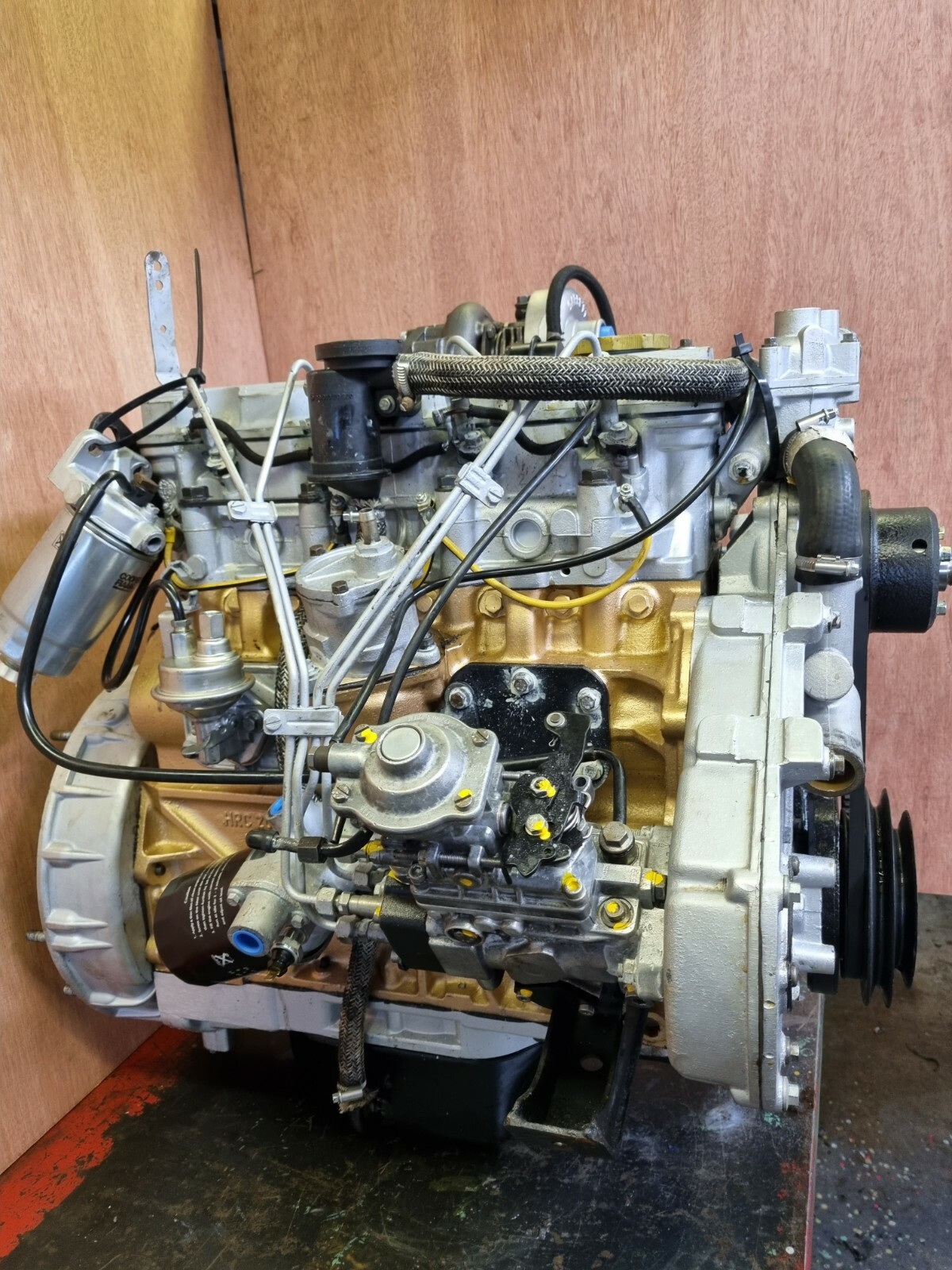
The Land Rover 200 Tdi is a 2.5-liter, four-cylinder, turbocharged direct-injection diesel engine produced between 1989 and 1994. Renowned for its mechanical simplicity and exceptional durability, it delivers 111 horsepower and 195 lb-ft of torque in its Discovery configuration, making it a legendary choice for off-road reliability and classic Land Rover engine conversions.
The Evolution of the 200 Tdi: Historical Context
To understand the 200 Tdi, one must understand the era of Land Rover’s transition from a utility-focused brand to a lifestyle and luxury contender. In the mid-1980s, Land Rover was struggling with its diesel offerings. The existing 2.5-liter Naturally Aspirated (NA) and the subsequent 2.5 Turbo Diesel (known by the factory code 19J) were derived from the older 2.25-liter block. While they were functional, the 19J specifically suffered from significant reliability issues, including cracked cylinder heads and piston failures under high thermal loads.
In 1989, as Land Rover prepared to launch the Discovery, they needed a power plant that could compete with the sophisticated Japanese diesel engines entering the UK and European markets. The result was "Project Gemini," which birthed the 200 Tdi. It was a revolutionary step for the company, moving from Indirect Injection (IDI) to Direct Injection (DI). This change meant fuel was sprayed directly into the combustion chamber rather than a pre-chamber, dramatically improving thermal efficiency, cold-start capability, and fuel economy.
By the time production ceased in 1994 to make way for the 300 Tdi, the 200 Tdi had cemented its status as "bombproof." In 2026, over three decades since the last unit rolled off the assembly line, these engines remain highly sought after by restorers and overlanders who prioritize a mechanical system that can be repaired in the field without the need for diagnostic computers.
Technical Specifications and Architecture
The 200 Tdi shares the same basic block dimensions as its predecessors (the 2.5D and 19J), but almost every internal component was strengthened or redesigned to handle the increased pressures of direct injection and turbocharging.
Core Engine Dimensions and Design
The engine is a longitudinal, inline-four configuration with a cast-iron block and an aluminum alloy cylinder head. The choice of a cast-iron block provides the rigidity necessary for high-compression diesel combustion, while the alloy head helps with heat dissipation.
| Feature | Specification |
|---|---|
| Engine Type | 4-Cylinder, Inline, Turbocharged Diesel |
| Displacement | 2495 cc (2.5 Liters) |
| Bore x Stroke | 90.47 mm x 97.0 mm |
| Compression Ratio | 19.0:1 |
| Injection System | Direct Injection (Bosch VE Mechanical Pump) |
| Aspiration | Turbocharged (Garrett T25) with Intercooler |
| Valvetrain | OHV (Overhead Valve), 2 valves per cylinder |
| Power Output (Discovery) | 111 bhp (83 kW) @ 4,250 rpm |
| Torque Output (Discovery) | 195 lb-ft (264 Nm) @ 1,800 rpm |
| Power Output (Defender) | 107 bhp (80 kW) @ 3,900 rpm |
| Torque Output (Defender) | 188 lb-ft (255 Nm) @ 1,800 rpm |
The Role of the Garrett T25 Turbocharger
The Garrett T25 turbocharger was a significant upgrade over the T2 used on the earlier 19J engine. It provided a more stable boost profile and was paired with an air-to-air intercooler. By cooling the intake air before it entered the cylinders, Land Rover was able to increase air density, allowing for more fuel to be burnt and thus generating more power without the catastrophic EGT (Exhaust Gas Temperature) spikes that plagued earlier models.
Fuel System: The Bosch VE Mechanical Pump
The defining characteristic of the 200 Tdi’s reliability is its fuel system. It utilizes the Bosch VE rotary injection pump. This is a purely mechanical unit; it does not require an Engine Control Unit (ECU) to function. As long as the engine has air and a 12V supply to the fuel shut-off solenoid (which can even be bypassed in an emergency), the engine will run.
Direct injection was achieved using two-stage injectors. This design helped mitigate the "diesel knock" typically associated with older DI engines by providing a small pilot injection followed by the main fuel charge. This resulted in a smoother combustion cycle, though by modern 2026 standards, the 200 Tdi is still considered a loud and agricultural engine.
Identifying Variants: Defender vs. Discovery
One of the most common points of confusion for owners is the difference between the 200 Tdi fitted to the Land Rover Defender and the one fitted to the Discovery (and early Range Rover Classics). While the internal blocks are largely identical, the external dressings are significantly different.
The Discovery/Range Rover 200 Tdi
In these models, the engine was designed to sit lower in the engine bay. The turbocharger is mounted low, tucked down by the side of the engine block. The manifold exits toward the rear, and the water pump is located in a position that suits the broader engine bay of the Discovery. This version produced slightly more power (111 bhp) due to a more efficient exhaust routing and a different intercooler setup.
The Defender 200 Tdi
The Defender engine bay was narrower and taller. To accommodate this, Land Rover moved the turbocharger to a high-mount position, sitting above the intake manifold. This version also used a different timing cover, water pump, and belt layout to clear the Defender's steering box and chassis rails. Because the Defender version was slightly more restricted in its breathing and cooling, it was factory-rated at a lower 107 bhp.
For those performing engine swaps, the Discovery engine is more common on the used market but requires modification to the exhaust and cooling plumbing to fit into a Defender or a Series Land Rover.
Longevity and Common Reliability Issues
In the automotive world, the term "bulletproof" is often used loosely, but the 200 Tdi earns it. With proper maintenance, these engines are known to exceed 300,000 to 500,000 miles. However, "mechanical" does not mean "maintenance-free."
The Timing Belt (Cambelt)
The most critical maintenance item is the timing belt. Unlike some modern engines with 100,000-mile intervals, the 200 Tdi requires a new belt every 60,000 miles (or 5 years). In harsh off-road environments, many enthusiasts change them every 40,000 miles. Because it is an interference engine, a belt snap will result in the pistons hitting the valves, leading to a costly rebuild.
Cylinder Head Gasket
While much stronger than the 19J, the 200 Tdi can still suffer from head gasket failure if the cooling system is neglected. Over time, the radiator can become silted up, leading to localized hotspots. Because the head is aluminum and the block is iron, they expand at different rates; excessive heat can cause the head to warp or the gasket to "fire ring" fail.
P-Gasket Failure
A common but minor annoyance is the "P-gasket." This is the gasket behind the water pump housing. When it fails, it causes a slow coolant leak that is often hard to trace because the coolant evaporates on the hot block before hitting the ground. Replacing it is a standard part of a 200 Tdi "freshen up."
Performance in the Modern Era (2026)
As we look at the 200 Tdi from the perspective of 2026, its performance metrics may seem modest compared to modern common-rail diesels. However, its value lies in its torque delivery. The engine produces its peak torque at just 1,800 rpm, which is ideal for towing, green-laning, and low-speed technical off-roading.
Fuel economy remains surprisingly competitive. In a well-tuned Defender 90, a 200 Tdi can achieve between 25 and 30 MPG (UK), which is often better than the later, more complex TD5 or early Puma engines. In the current era of high fuel costs and a focus on vehicle longevity, the ability to run on various grades of diesel (and even filtered vegetable oil in some jurisdictions, where legal) adds to its utilitarian appeal.
Maintenance Checklist for Owners
To keep a 200 Tdi running optimally in 2026, the following service schedule is recommended:
- Oil and Filter: Every 6,000 miles. Use a high-quality 15W-40 mineral or semi-synthetic oil.
- Valve Clearances: Every 12,000 miles. This is a simple task involving a feeler gauge and a wrench, but it is vital for maintaining power and reducing engine noise.
- Fuel Filter: Every 12,000 miles. The Bosch pump is robust but sensitive to water contamination.
- Cooling System Flush: Every 2 years. Using the correct anti-corrosion coolant is essential for protecting the aluminum cylinder head.
- Turbocharger Inspection: Periodically check for axial play in the turbo shaft and ensure the wastegate is moving freely.
Comparison: 200 Tdi vs. 300 Tdi
The 300 Tdi replaced the 200 Tdi in late 1994. While the 300 Tdi was quieter and featured a single "serpentine" drive belt, many purists still prefer the 200 Tdi.
The 200 Tdi block is considered by some engine builders to be slightly stronger due to the way the head bolts are anchored. Furthermore, the 200 Tdi is a direct "bolt-in" replacement for the older 2.5NA and 19J engines because it shares the same engine mount positions on the chassis. The 300 Tdi moved the engine mounts forward, requiring chassis welding for a conversion. For those restoring an older Land Rover 90 or 110, the 200 Tdi is the most logical and least invasive upgrade path.
Frequently Asked Questions
Is the 200 Tdi engine reliable?
Yes, it is widely regarded as one of the most reliable diesel engines ever produced by Land Rover. Its lack of electronic sensors and its heavy-duty cast-iron block make it exceptionally resilient to both high mileage and harsh operating conditions. Its primary "weakness" is simply the requirement for regular timing belt changes.
Can a 200 Tdi run on Biodiesel?
Because of the mechanical Bosch VE injection pump, the 200 Tdi is more tolerant of biofuels than modern common-rail engines. However, users should ensure that fuel lines are replaced with modern Viton materials, as older rubber lines can perish when exposed to certain biodiesels. Always check local environmental regulations regarding fuel types in 2026.
How do I tell a 200 Tdi from a 300 Tdi?
The easiest way is to look at the drive belts. The 200 Tdi uses multiple "V" belts for the alternator, power steering, and water pump. The 300 Tdi uses a single, wide, flat serpentine belt. Additionally, the 200 Tdi thermostat housing sits on the front of the head, whereas the 300 Tdi has a different layout with the water pump integrated more tightly into the timing cover.
What is the top speed of a 200 Tdi Defender?
A healthy 200 Tdi Defender 90 will comfortably cruise at 60–65 mph. While it can reach 75–80 mph, the high RPMs and aerodynamic drag of the vehicle make this uncomfortable for long periods. The engine is designed for torque and work, not high-speed highway cruising.
Why is the 200 Tdi so popular for engine swaps?
It is popular because it offers a significant power and efficiency boost over the original Series or early 90/110 engines without requiring a wiring harness or ECU. It essentially needs only a fuel feed, a return line, and a single wire to the stop solenoid to run, making it the ultimate "survivalist" engine.
Recommendations for Buyers and Restorers
If you are sourcing a 200 Tdi in 2026, prioritize finding an engine with a known service history. While the blocks are tough, an engine that has been overheated may have hairline cracks in the cylinder head that are not immediately visible. Always perform a compression test and check for excessive "blow-by" (pressure escaping from the oil filler cap), which indicates worn piston rings.
For those planning an expedition or a long-term restoration, the 200 Tdi remains the gold standard. It represents the pinnacle of Land Rover’s mechanical engineering before the industry-wide shift toward electronic complexity. Maintaining one requires basic tools and a fundamental understanding of mechanical systems, ensuring that this engine will likely continue to power vehicles well into the middle of the 21st century.